Matching skills Matching Worksheets for Ages 3-9
6 filtered results
-
From - To
Enhance your child's learning journey with our comprehensive "Matching Skills Worksheets" designed for ages 3-9! These fun and engaging worksheets foster essential cognitive skills as children practice identifying similarities and differences in various objects, letters, and numbers. Tailored to develop critical thinking and observational capabilities, our resources are perfect for at-home learning or classroom activities. With colorful illustrations and age-appropriate challenges, our matching worksheets aim to captivate young minds while reinforcing their understanding of core concepts. Watch your child thrive as they explore the joy of learning through hands-on activities that make mastering matching skills a delightful adventure!
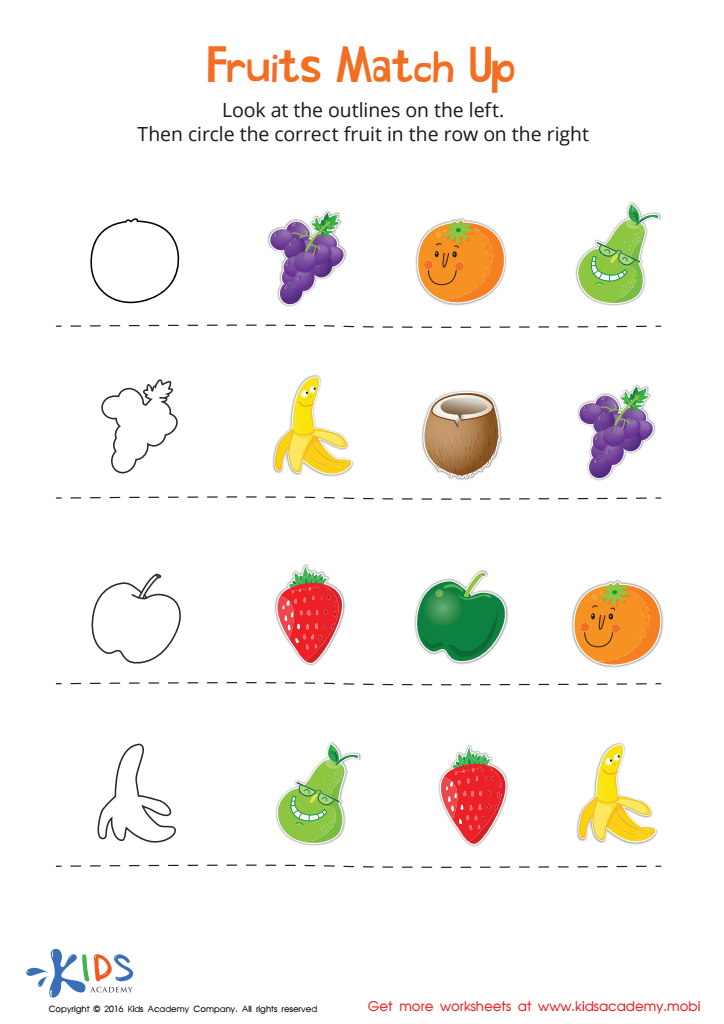
Fruits Match Up Worksheet
 Assign to My Students
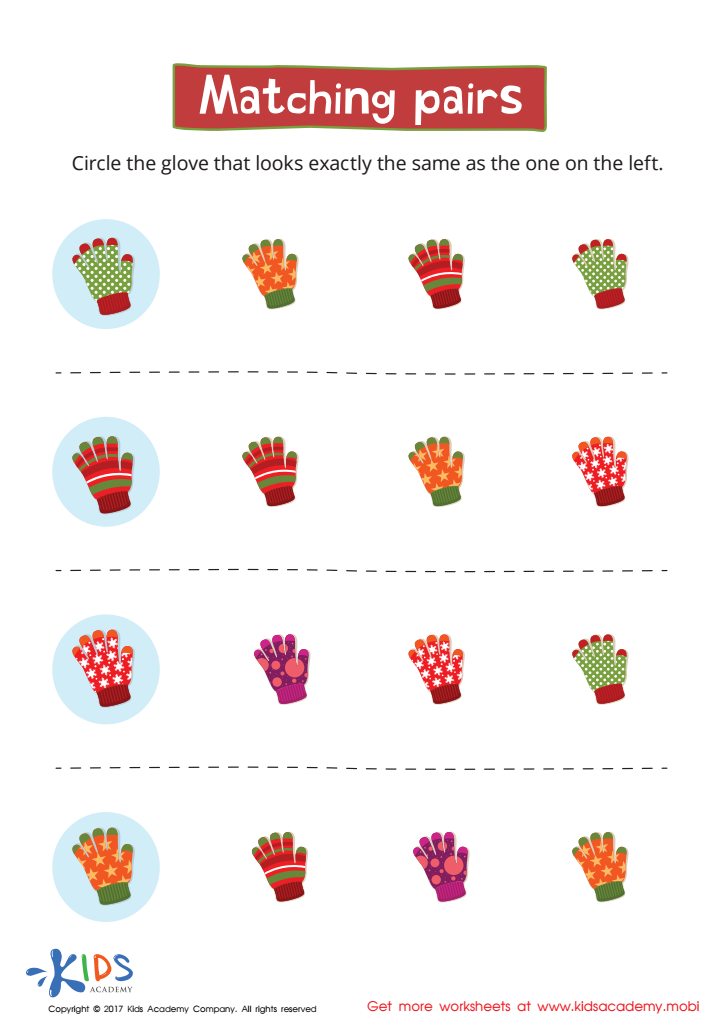
Matching: Matching Pairs Worksheet
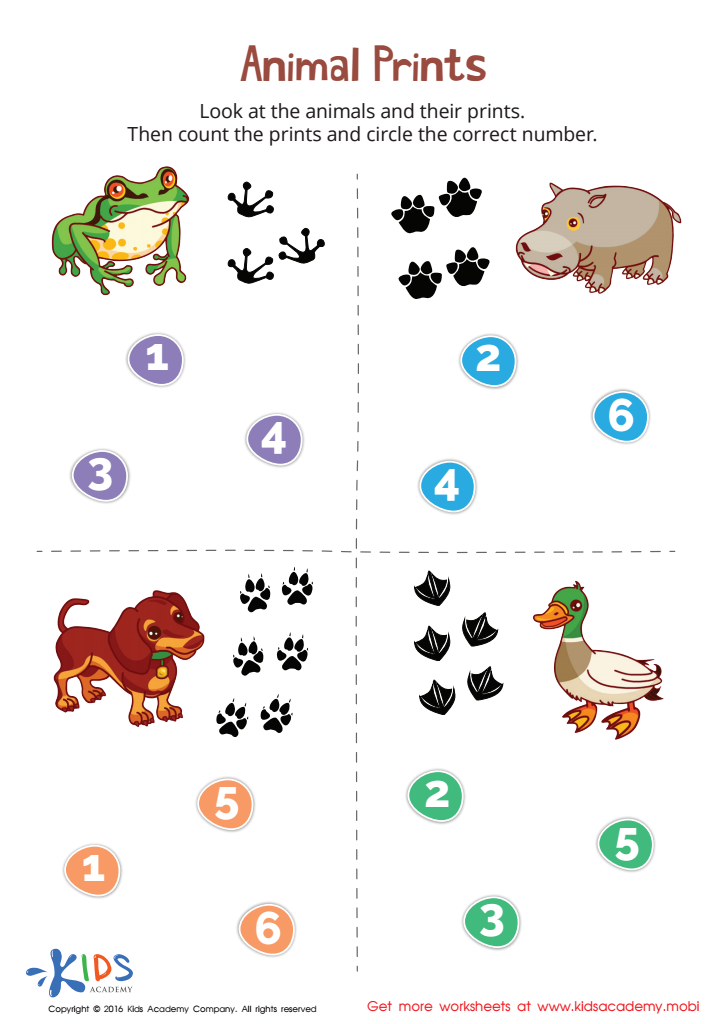
Animal Prints Match-Up Worksheet
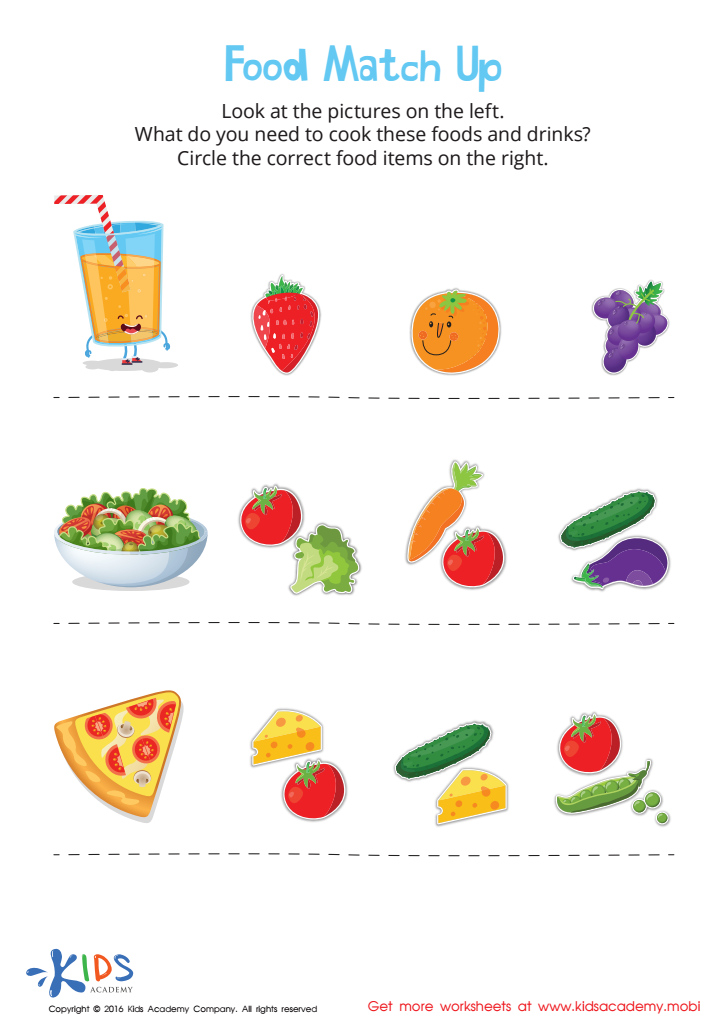
Food Match Up Worksheet
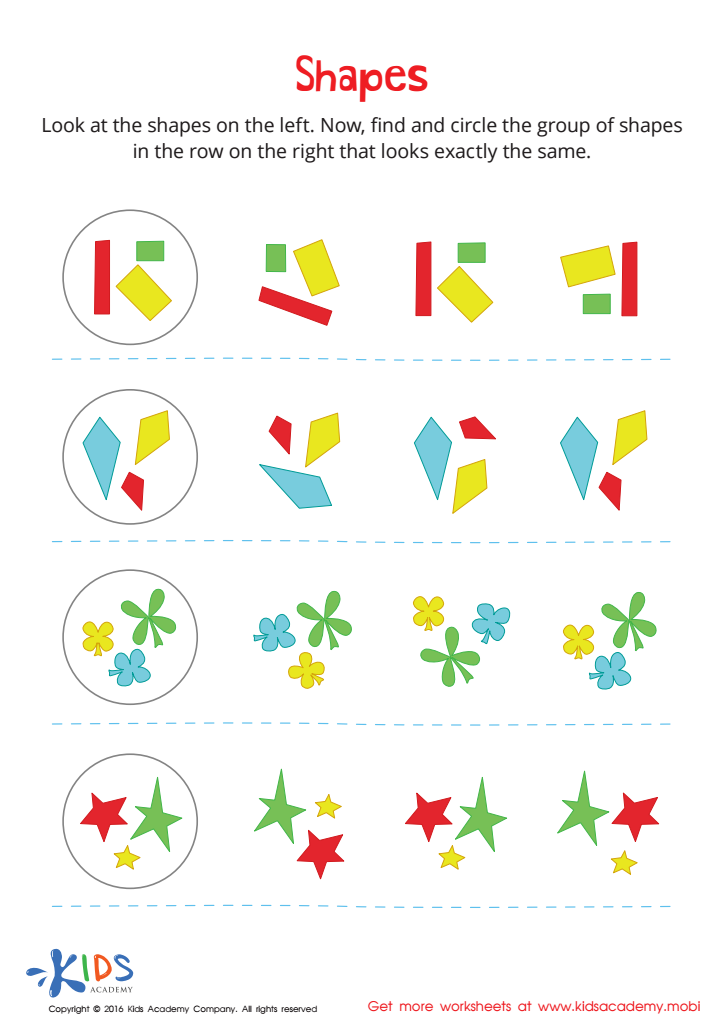
Shapes Worksheet







Matching skills, particularly for children aged 3-9, are pivotal in early childhood development for several reasons. Firstly, these skills lay the groundwork for cognitive development. As children learn to identify and pair similar items, they enhance their critical thinking abilities, observation skills, and understanding of relationships between objects. This exercise not only enriches their vocabulary but also introduces them to categories and classification, essential components of their early learning.
Additionally, matching activities foster fine motor skills as children manipulate objects during the process. These activities can include matching cards, shapes, colors, or even sounds, providing a multisensory approach to learning.
Socially, engaging in matching games promotes collaboration and communication skills among peers, helping children learn to work together, take turns, and support one another. For parents and teachers, incorporating matching skills into activities can make learning fun and dynamic while ensuring that essential developmental milestones are met.
Ultimately, promoting matching skills in young children supports their overall academic readiness, paving the way for more complex concepts as they progress in their education. Encouraging these skills at a young age helps set the foundation for lifelong learning and problem-solving abilities.








