Filters

64 filtered results

Clear all filters
Favorites
With answer key
Interactive

64 filtered results

Difficulty Level

Grade


Check out this FREE Trial Lesson on Multiplication for age 3-9!

Short and Long Vowel Sort

Favorites
With answer key
Interactive
  • 3-9
  • Multiplication practice
  • Multiplication
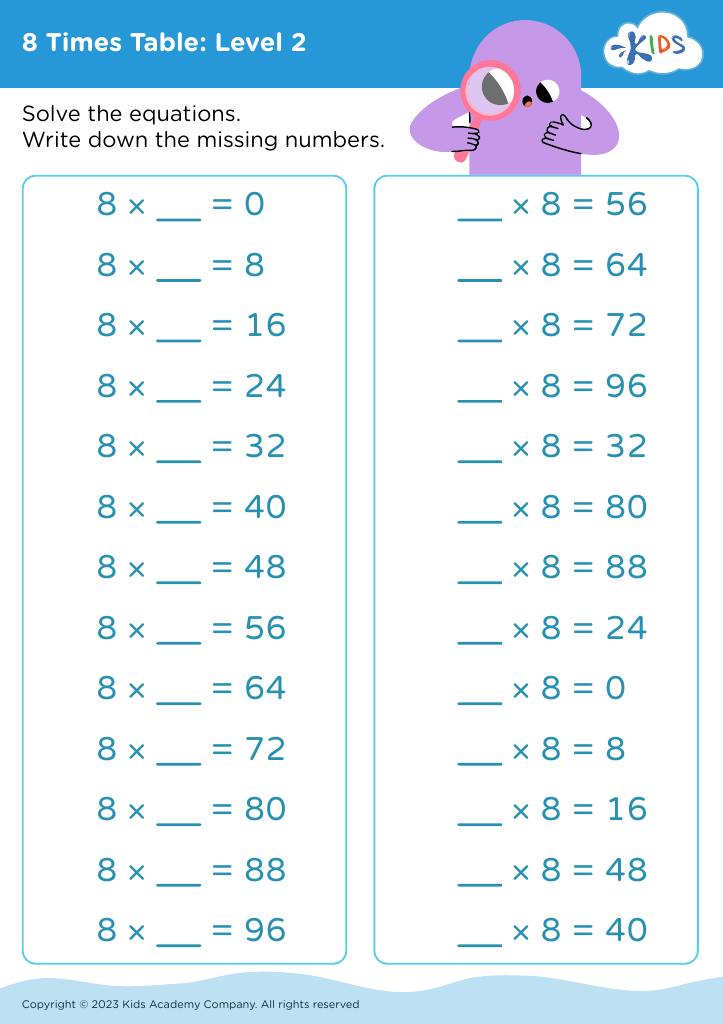
8 Times Table: Level 2

8 Times Table: Level 2

8 Times Table: Level 2
Worksheet
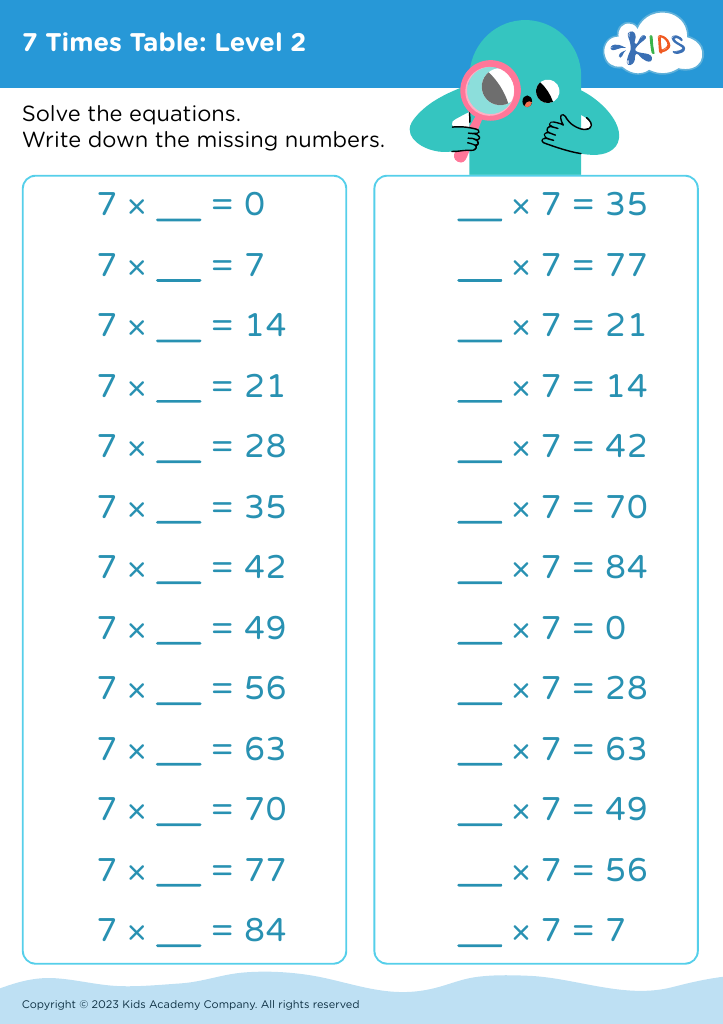
7 Times Table: Level 2

7 Times Table: Level 2

7 Times Table: Level 2
Worksheet
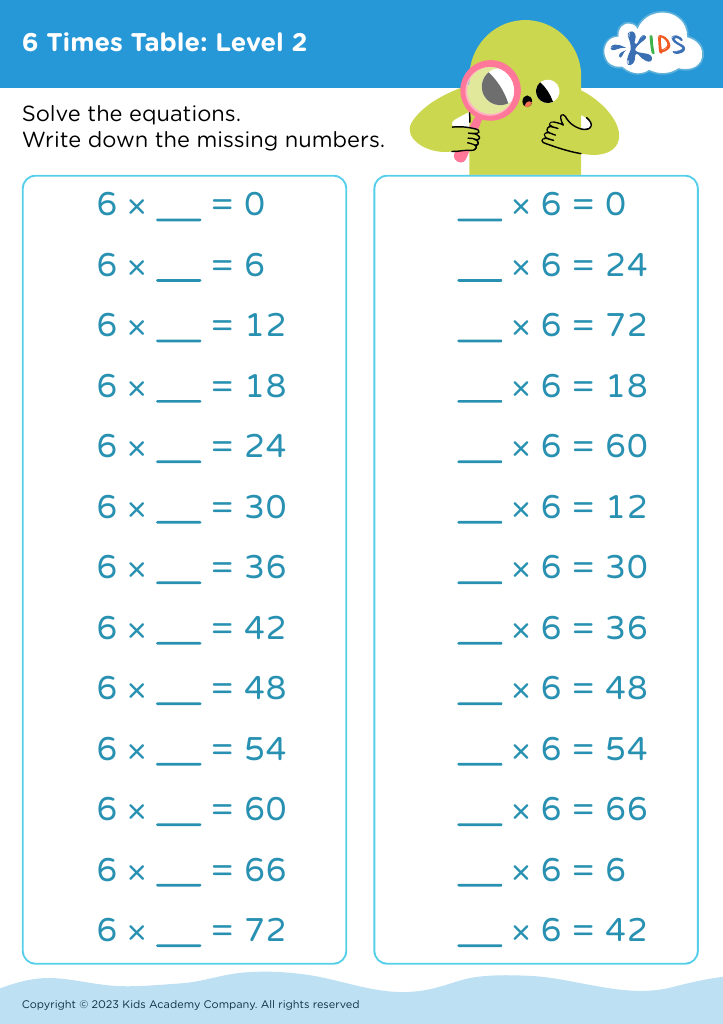
6 Times Table: Level 2

6 Times Table: Level 2

6 Times Table: Level 2
Worksheet
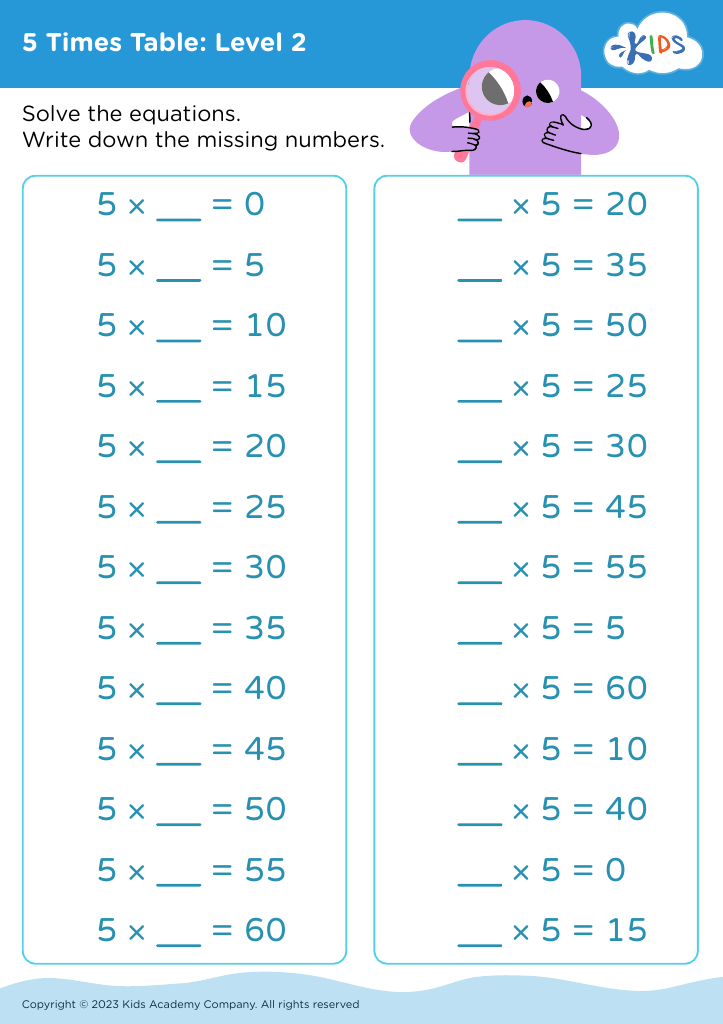
5 Times Table: Level 2

5 Times Table: Level 2

5 Times Table: Level 2
Worksheet
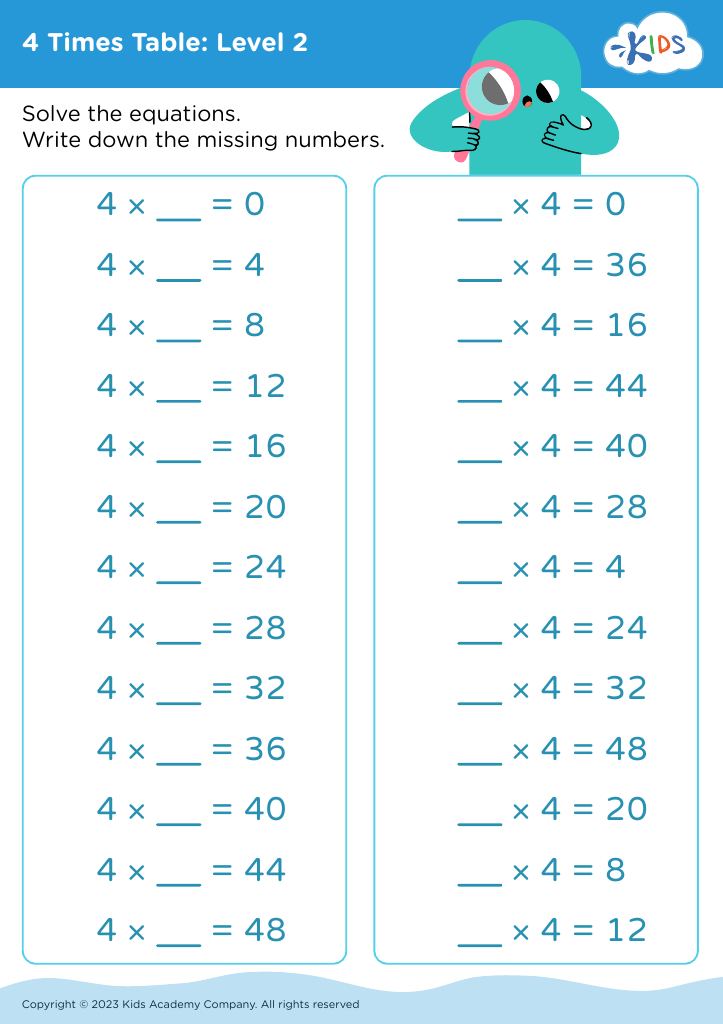
4 Times Table: Level 2

4 Times Table: Level 2

4 Times Table: Level 2
Worksheet
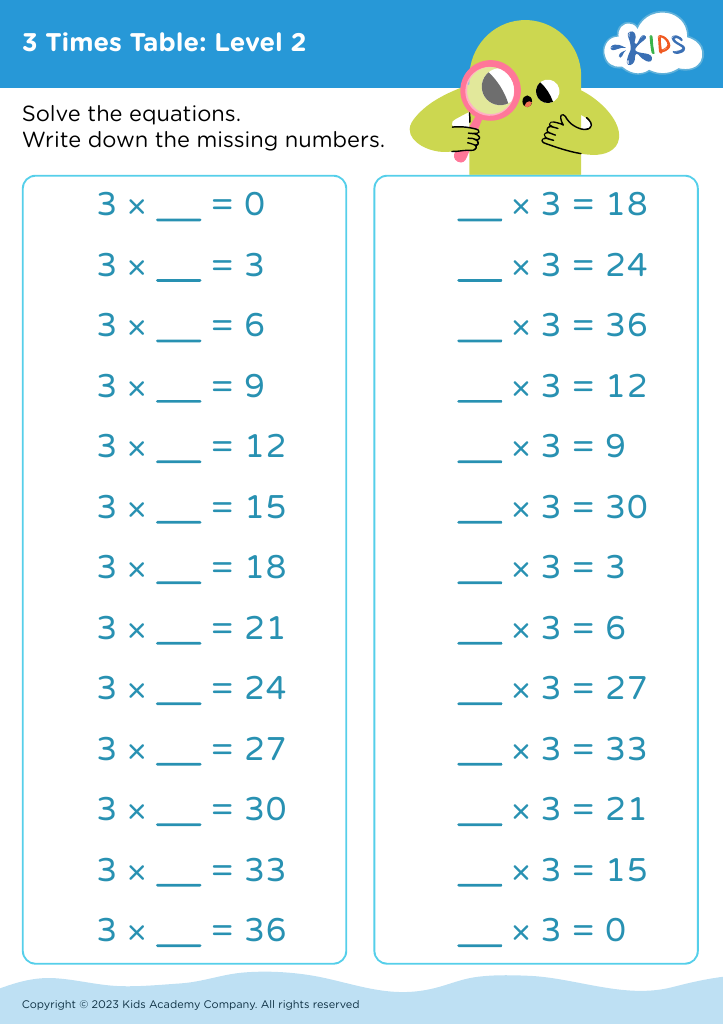
3 Times Table: Level 2

3 Times Table: Level 2

3 Times Table: Level 2
Worksheet
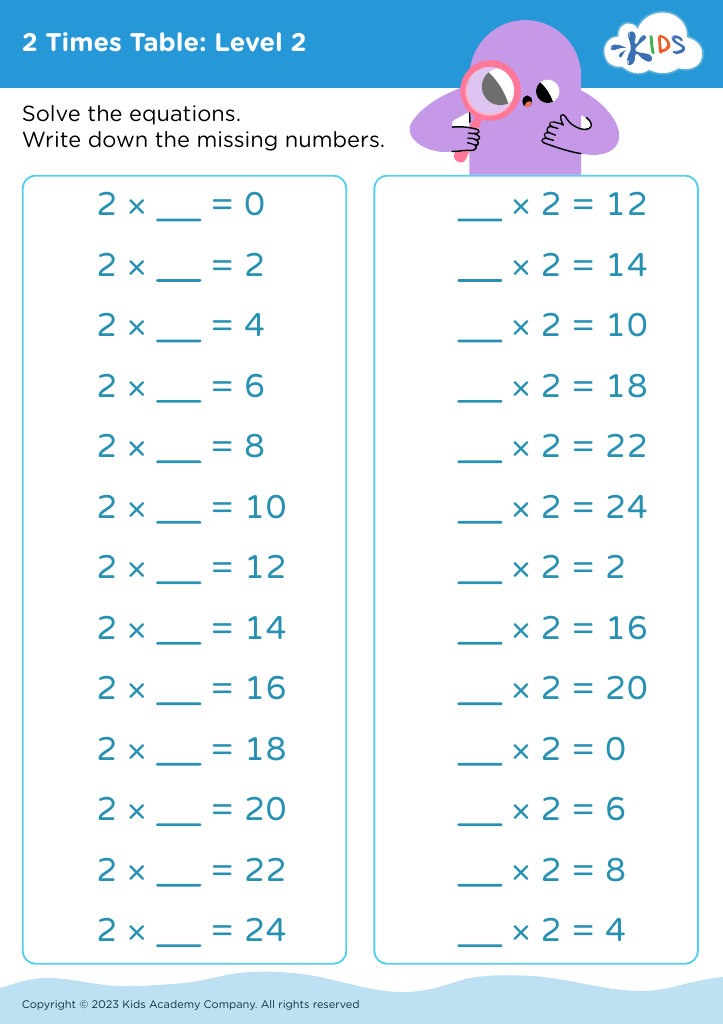
2 Times Table: Level 2

2 Times Table: Level 2

2 Times Table: Level 2
Worksheet
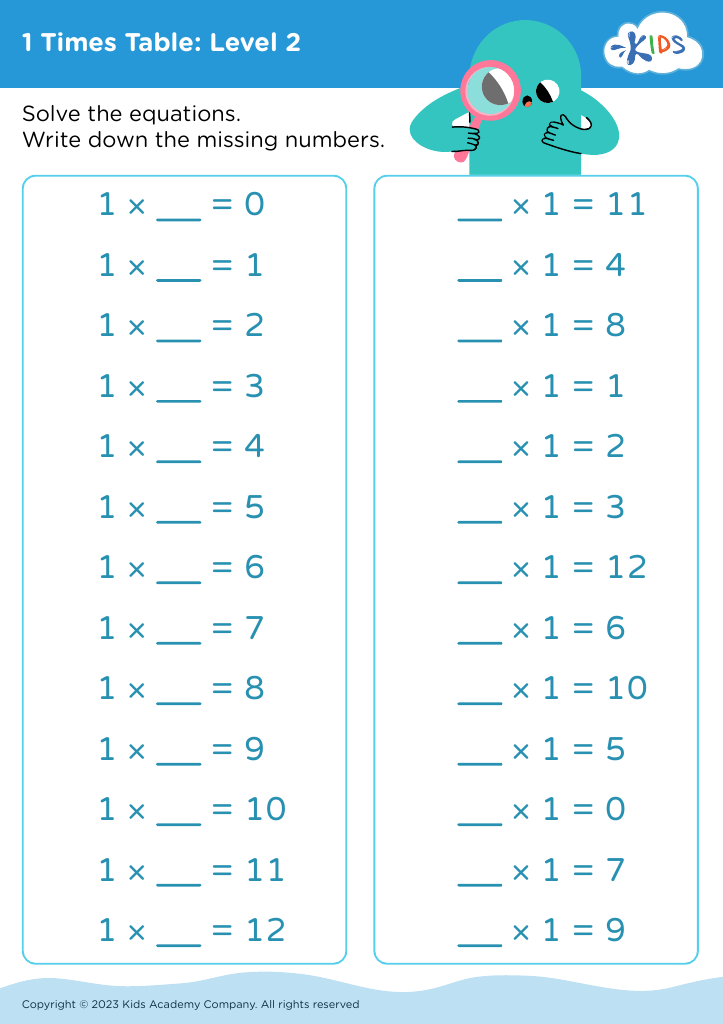
1 Times Table: Level 2

1 Times Table: Level 2

1 Times Table: Level 2
Worksheet
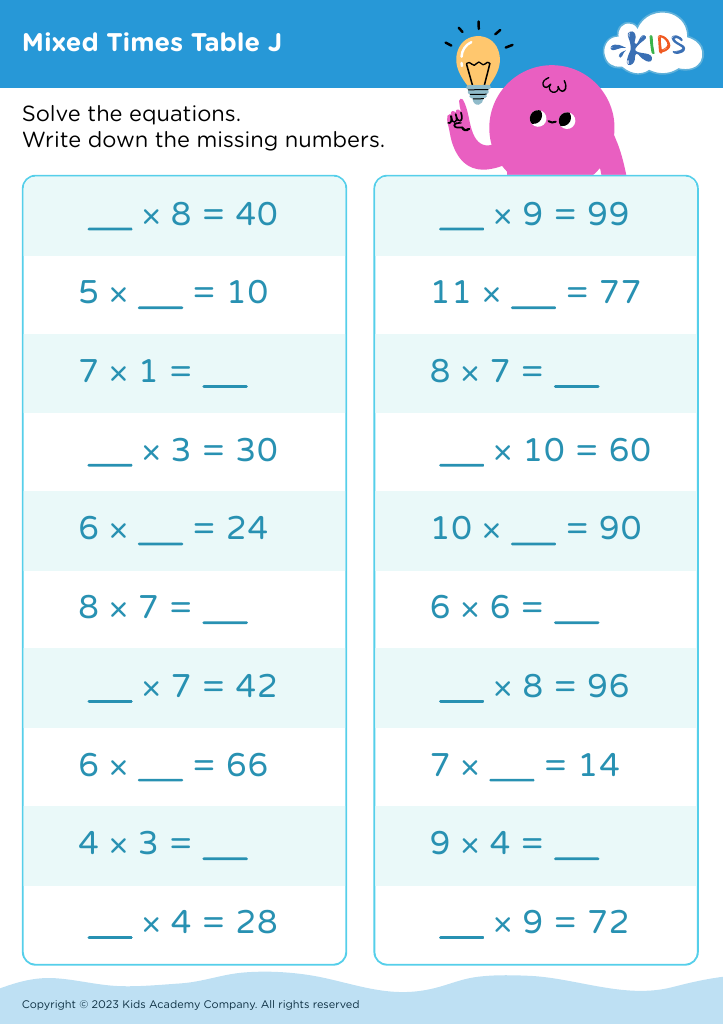
Mixed Times Table J
Mixed Times Table J

Mixed Times Table J

Mixed Times Table J
Worksheet
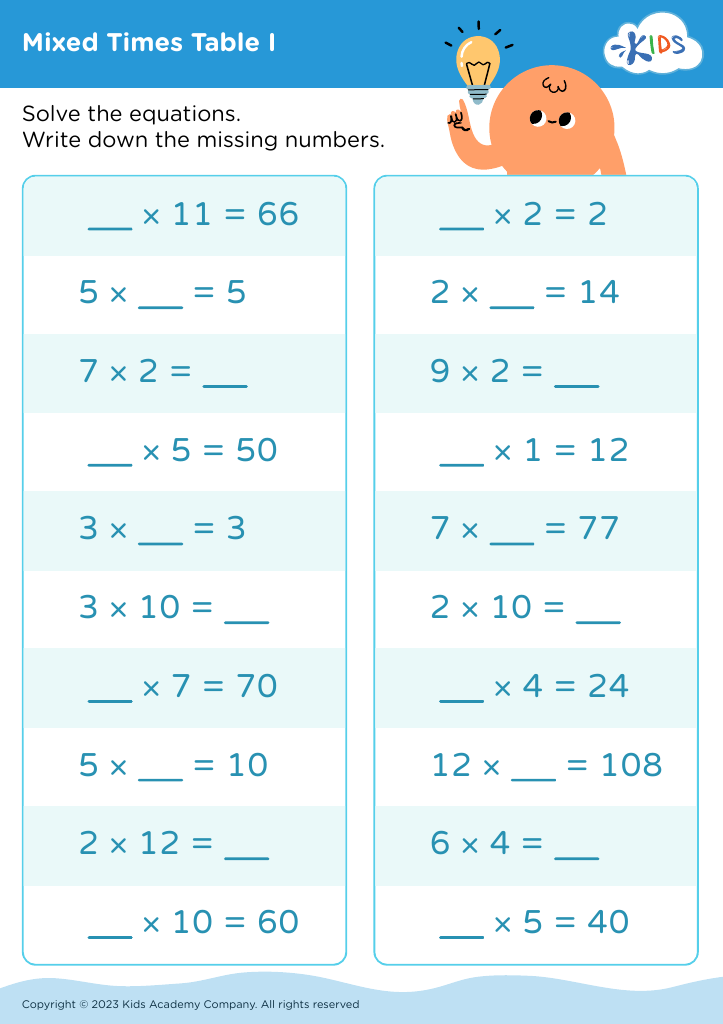
Mixed Times Table I
Mixed Times Table I

Mixed Times Table I

Mixed Times Table I
Worksheet
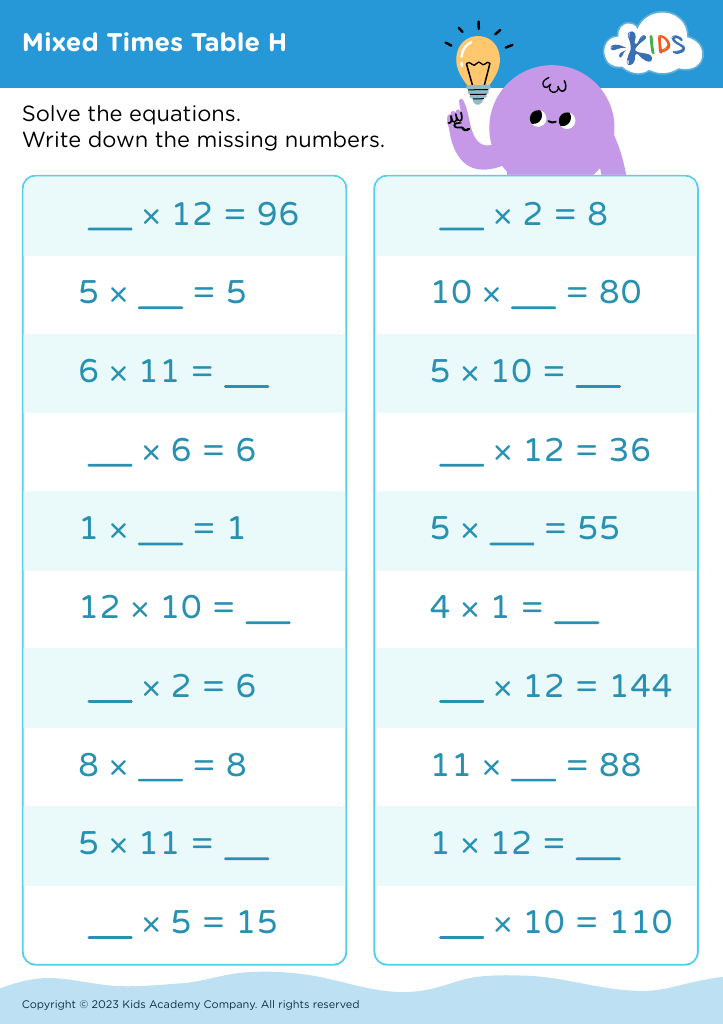
Mixed Times Table H
Mixed Times Table H

Mixed Times Table H

Mixed Times Table H
Worksheet
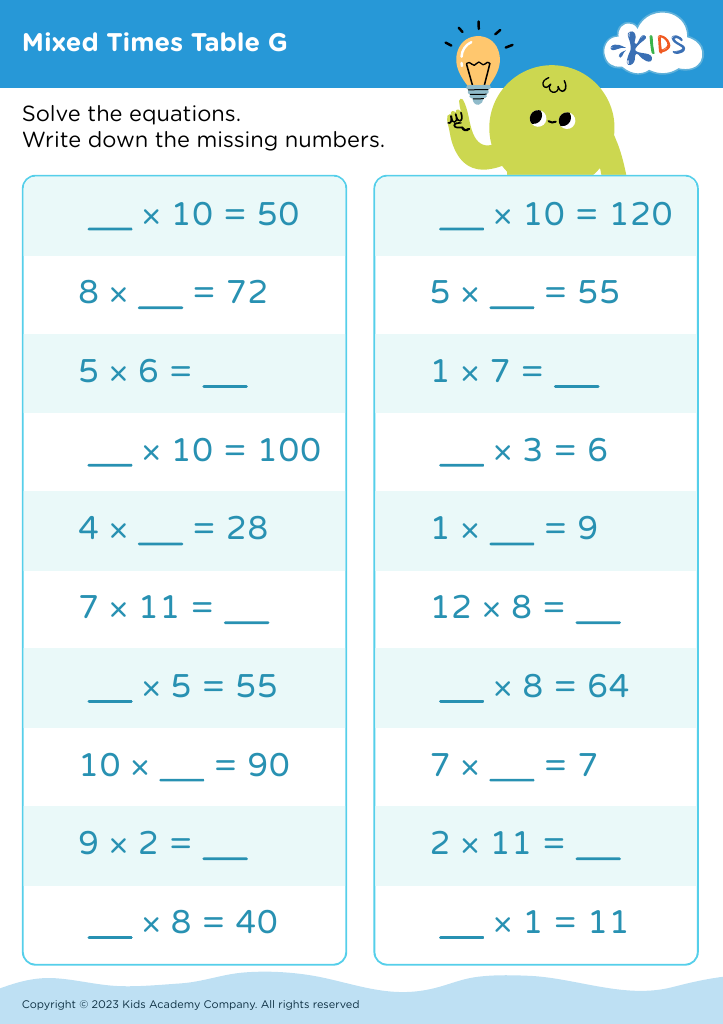
Mixed Times Table G
Mixed Times Table G

Mixed Times Table G

Mixed Times Table G
Worksheet
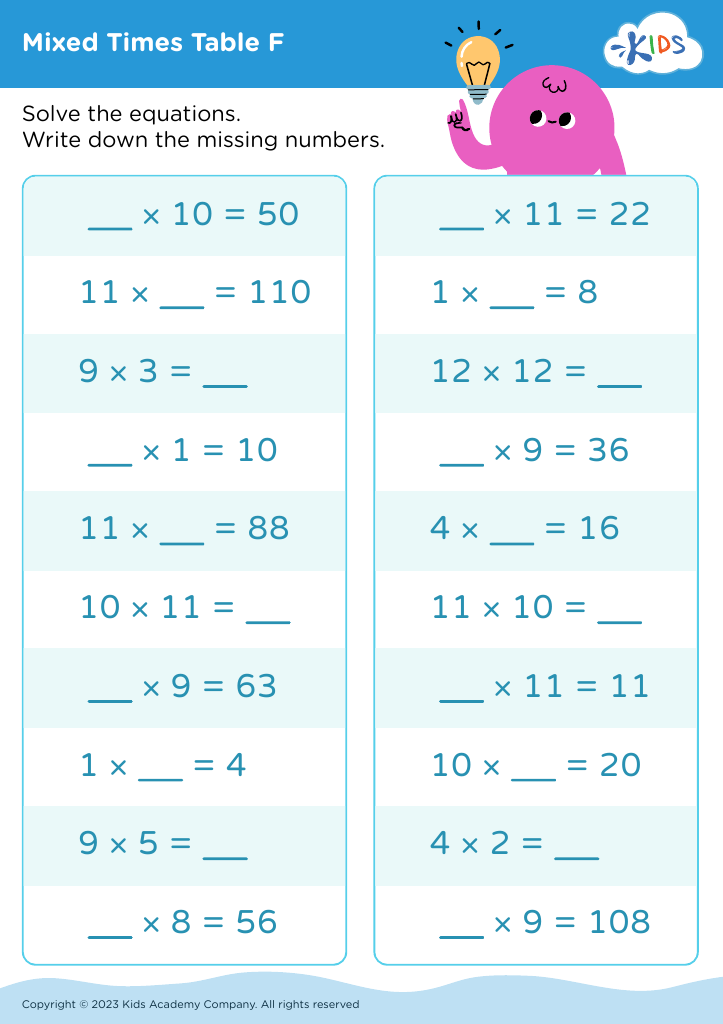
Mixed Times Table F
Mixed Times Table F

Mixed Times Table F

Mixed Times Table F
Worksheet
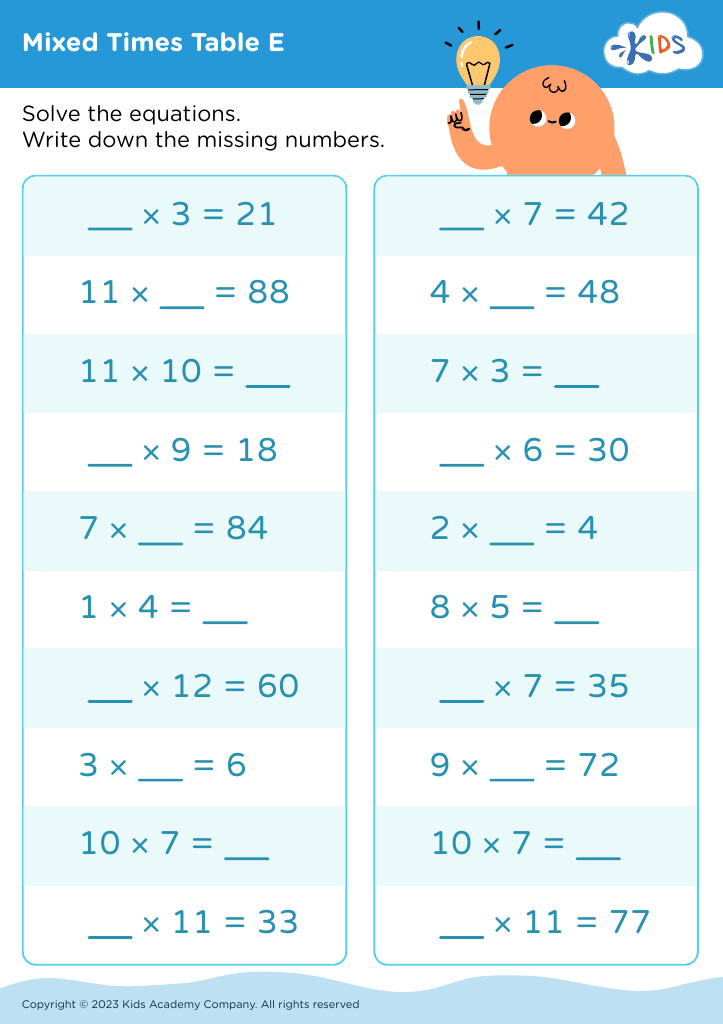
Mixed Times Table E
Mixed Times Table E

Mixed Times Table E

Mixed Times Table E
Worksheet
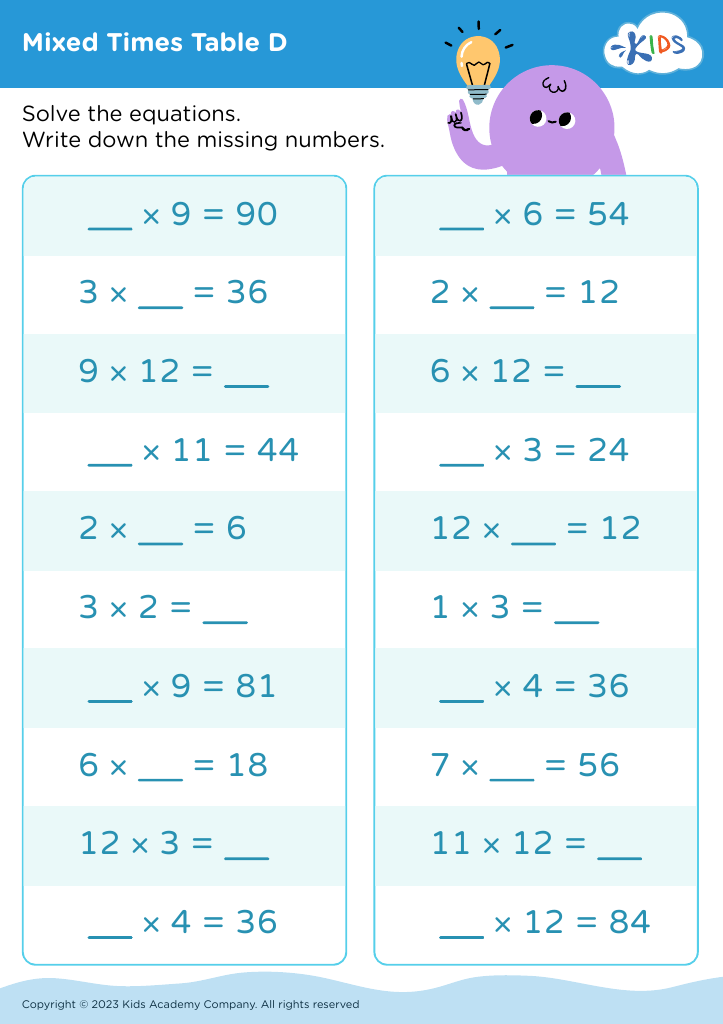
Mixed Times Table D
Mixed Times Table D

Mixed Times Table D

Mixed Times Table D
Worksheet
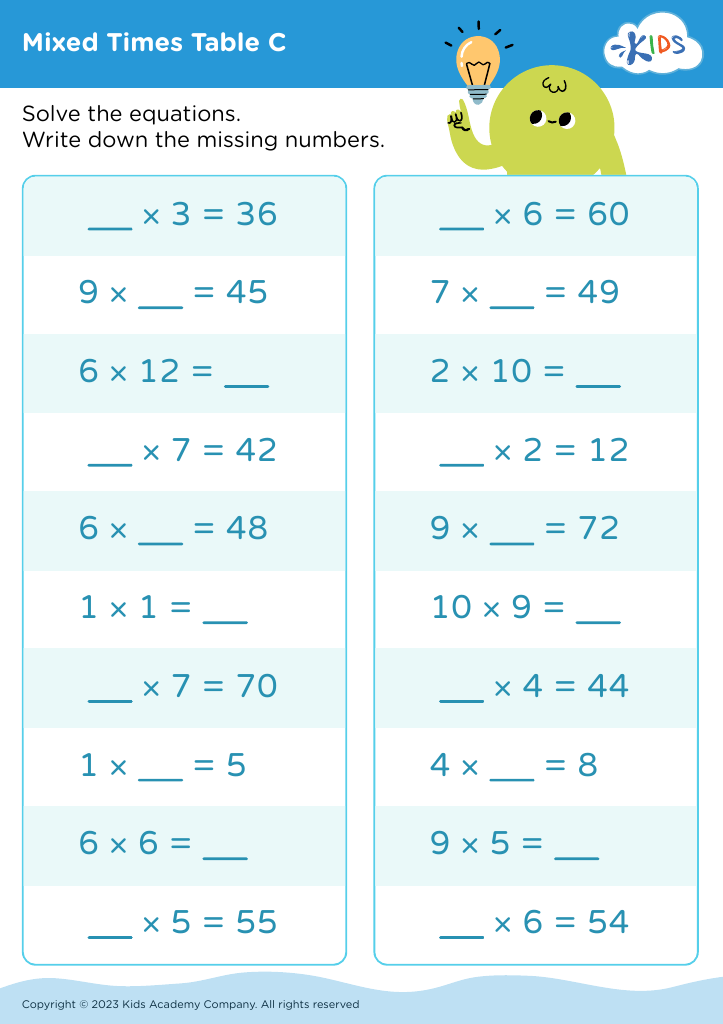
Mixed Times Table C
Mixed Times Table C

Mixed Times Table C

Mixed Times Table C
Worksheet


... 2 3

Parents and teachers should care about multiplication practice for children ages 3-9 because it sets a crucial foundation for their future mathematical understanding and cognitive development. At this young age, children's brains are highly adaptable and primed for learning new concepts. Introducing multiplication early helps them build numerical fluency, a key component in later mathematics such as division, fractions, and algebra.

Multiplication is more than just memorizing tables; it fosters logical thinking and problem-solving abilities. These critical thinking skills are essential not only within mathematics but across all subjects and everyday life. Regular multiplication practice can boost children's confidence, allowing them to approach complex tasks with a more positive mindset.

Moreover, early exposure to multiplication strengthens memory and improves focus. Children who practice regularly are better at recognizing patterns and making connections, which can be beneficial in diverse academic pursuits. They learn perseverance and the value of practice, instilling a growth mindset that can carry them through various challenges.

Additionally, engaging in multiplication activities can be fun and interactive, particularly through games, puzzles, and hands-on activities. This engagement makes learning more enjoyable and differentiates educational experiences. By prioritizing multiplication practice, parents and teachers equip children with the tools they need for long-term academic and personal success.