Number Recognition Multiplication Worksheets for Ages 3-9
4 filtered results
-
From - To
Introducing Number Recognition Multiplication Worksheets for Ages 3-9 from Kids Academy! Our engaging, fun, and educational worksheets are designed to help young learners master multiplication through number recognition. Tailored for children aged 3-9, these worksheets feature a variety of colorful exercises that make learning interactive and enjoyable. Perfect for parents and teachers, our printable resources support skill development by combining visual cues with multiplication practice. Prepare your child for advanced math concepts with our easy-to-follow materials that build confidence and promote a love for learning. Explore our collection and watch them excel in their math journey!
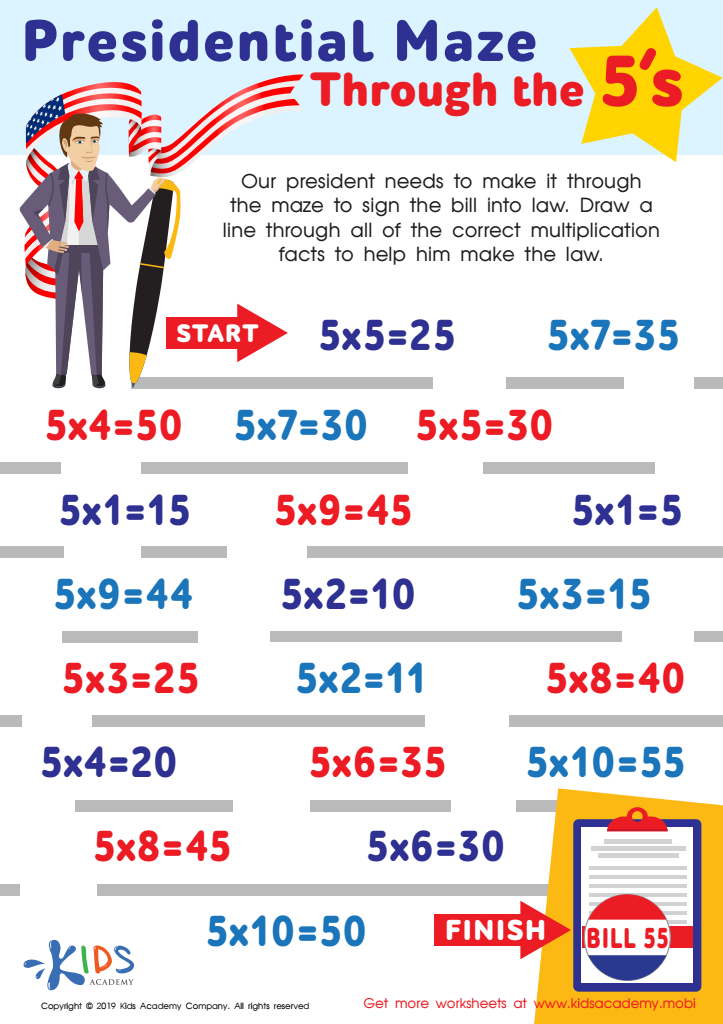
Presidential Maze Through the 5’s Worksheet
 Assign to My Students
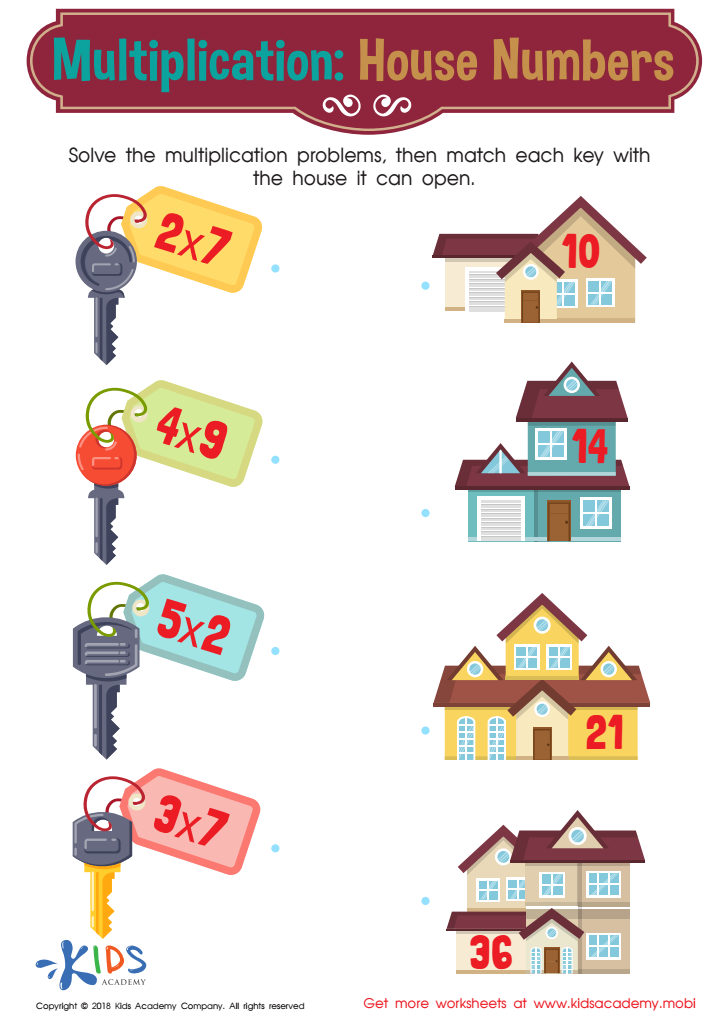
House Numbers Worksheet
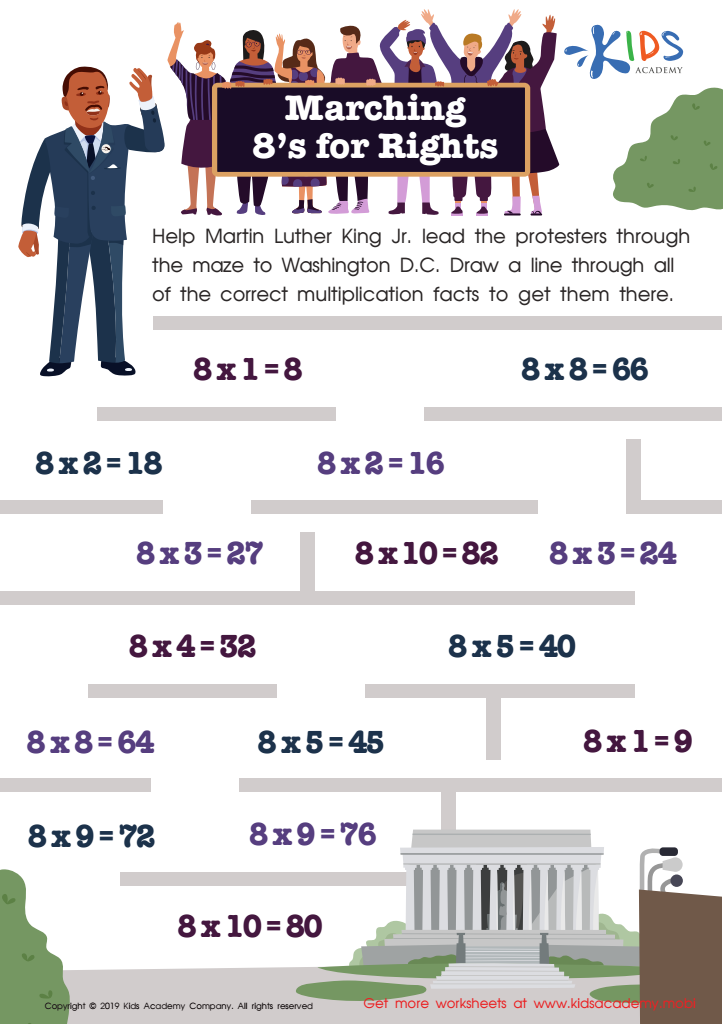
Marching 8’s for Rights Worksheet
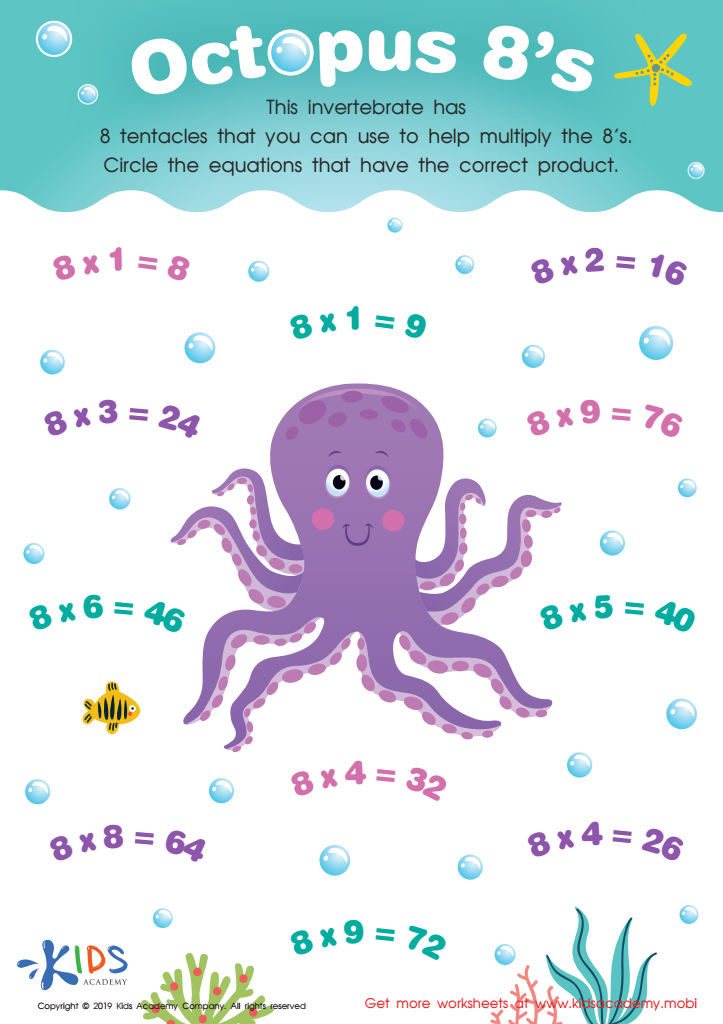
Octopus 8’s Worksheet








Number recognition and multiplication skills are foundational to a child's mathematical learning and broader cognitive development. For children aged 3-9, these skills are particularly crucial for several reasons.
First, recognizing numbers helps children understand more complex mathematical concepts in later years. It sets the stage for basic arithmetic, pattern recognition, and problem-solving skills. Without a solid grasp of basic numbers, children may struggle with more advanced topics as they progress through their education.
Second, early introduction to multiplication can foster a child's ability to think logically and analytically. Multiplication is essentially repeated addition, a concept that aids in the understanding of patterns and sequences. This cognitive skill is transferable to many areas of learning and daily life, from science to shopping.
Additionally, number recognition and multiplication scholarship build a child's confidence in their abilities. As they master these skills, they gain a sense of accomplishment that fuels a positive attitude toward learning in general. This creates a fruitful cycle: high confidence promotes better performance, and better performance boosts confidence.
Lastly, early math skills are important for academic success. Numerous studies indicate that early numeracy skills are good predictors of later academic achievement, not only in mathematics but across multiple areas.
In essence, emphasizing number recognition and multiplication for young children equips them with the tools needed for lifelong learning and problem-solving.








