
Number Recognition Numbers 11–20 Worksheets for Ages 3-9
10 filtered results
Difficulty Level
Grade
Age
-
From - To
Subject
Activity
Standards
Discover our engaging "Number Recognition Numbers 11–20 Worksheets" tailored for ages 3-9! Designed to captivate young learners, these worksheets help children master number recognition through fun and interactive activities. With a variety of exercises that include counting, matching, and tracing, kids will develop essential math skills while enjoying hands-on learning. Ideal for home schooling or classroom use, our resources make learning numbers 11-20 easy and enjoyable. Boost your child’s confidence and numeracy skills by introducing them to numbers beyond 10. Explore our collection today and pave the way for a strong foundation in mathematics!
Favorites
With answer key
Interactive
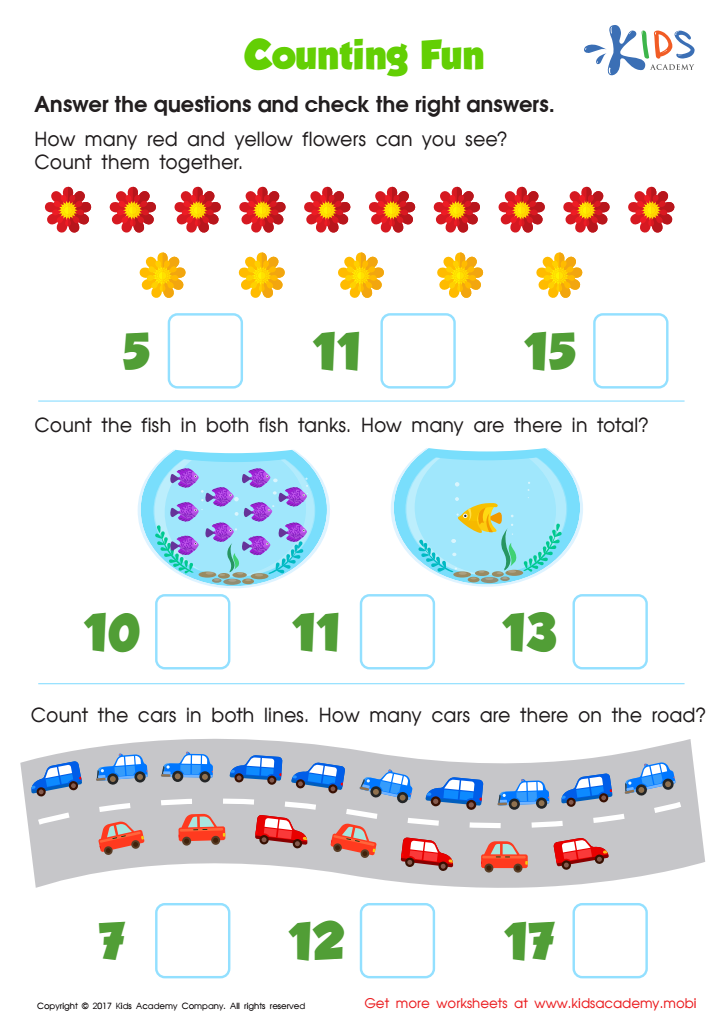
Counting Fun Worksheet
Math and fun can go hand-in-hand with this free PDF worksheet! Bright, colourful illustrations will activate your child's brain, as they count the red and yellow flowers. How many can you see? Count together and write down the total. Make learning and counting fun for your little ones!
 Assign to My Students
Counting Fun Worksheet
Worksheet
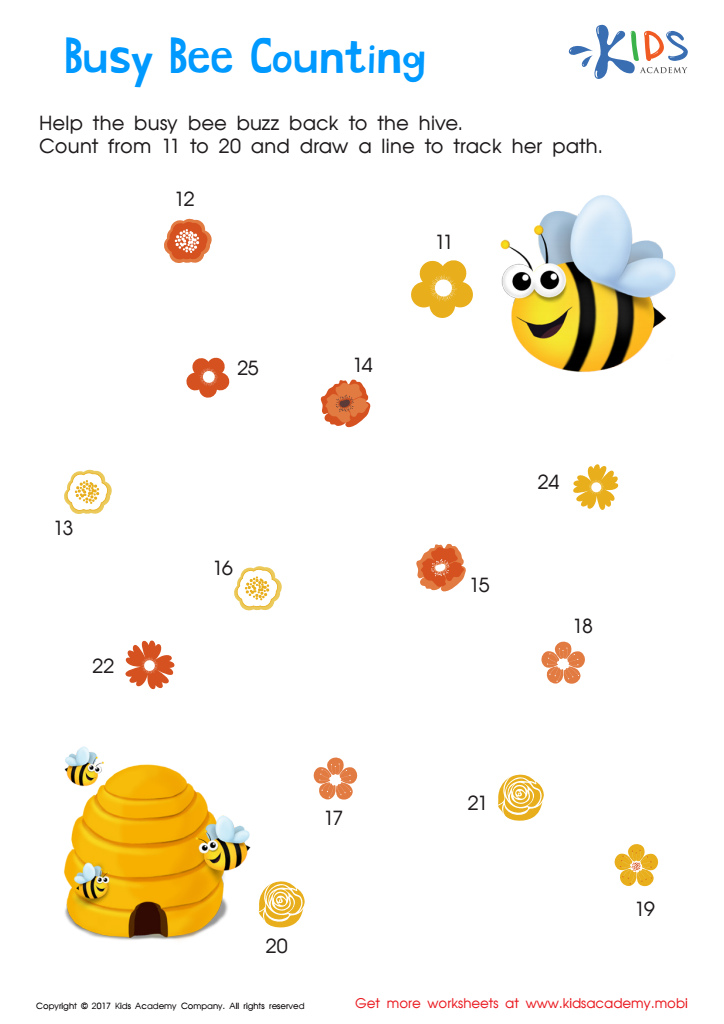
Ordering 11–20: Busy Bee Counting Worksheet
Help your child master counting from 11 to 20 with our connect the dot counting worksheet. Kids will have fun counting, drawing and problem-solving with this vibrant worksheet. With clear directions, adorable pictures and a sense of purpose, your child will develop crucial numeracy skills without even knowing it!
Ordering 11–20: Busy Bee Counting Worksheet
Worksheet
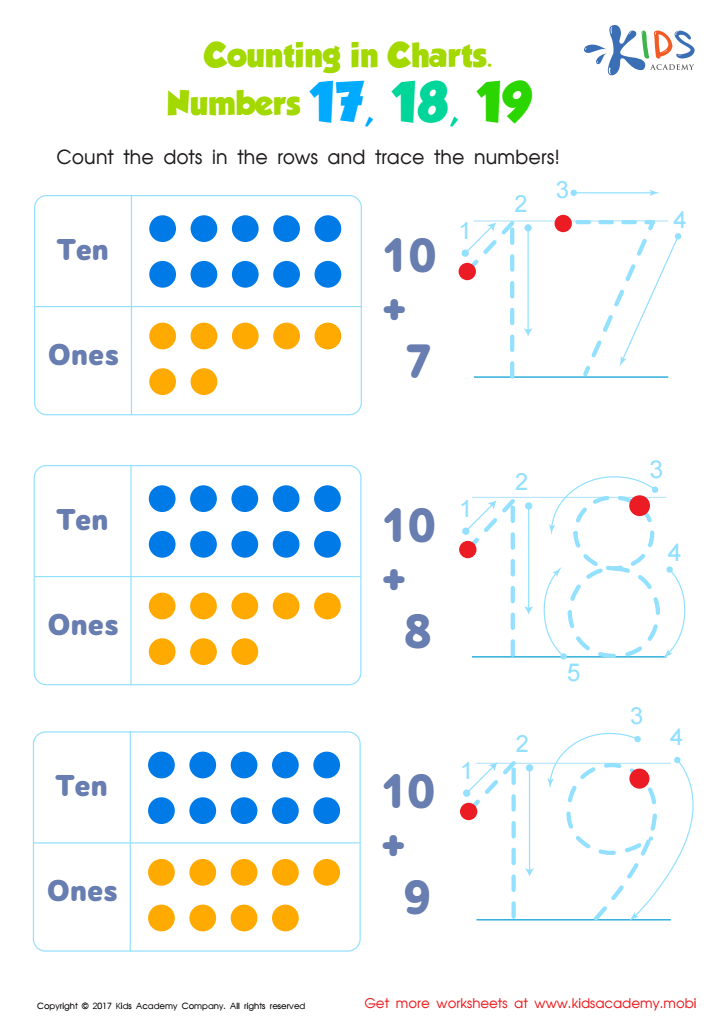
Kindergarten Number Tracing: Counting in Charts Worksheet
Little learners can find big numbers tricky! Help them practice counting and build early math skills, like place value and addition, with this kindergarten number tracing PDF worksheet. Count the dots to solve the problem and trace each answer!
Kindergarten Number Tracing: Counting in Charts Worksheet
Worksheet
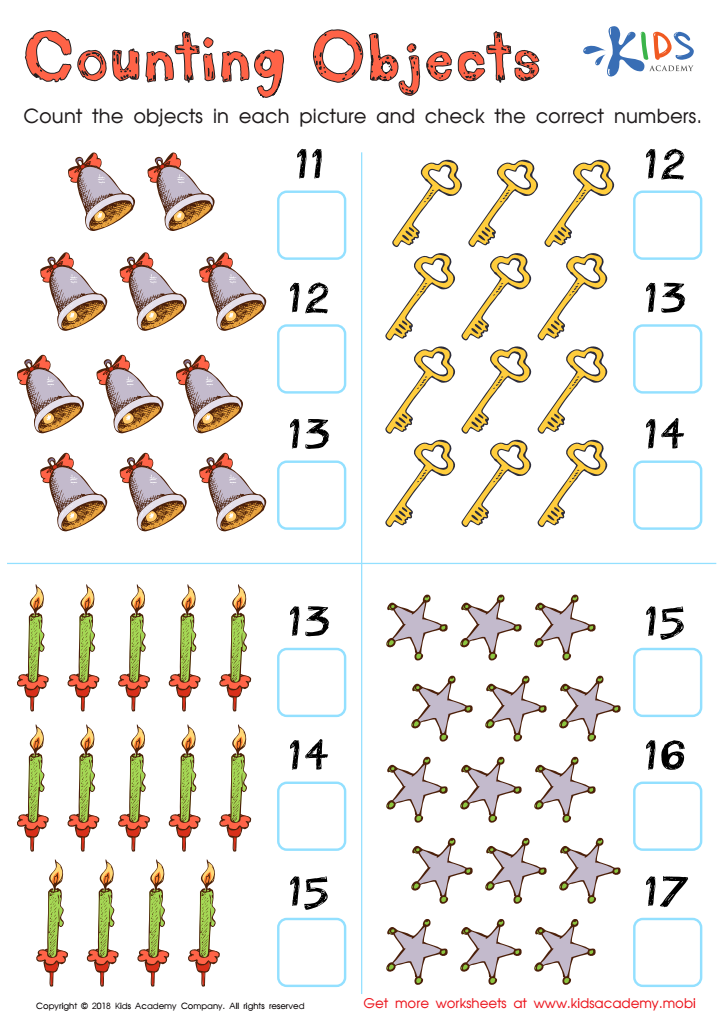
Counting Numbers Worksheet For Kindergarten
This worksheet is a great way to get your child practicing foundational math skills. With bright pictures to count, counting numbers just got a lot more fun! Get them ready for future math success and help them hone their early math skills.
Counting Numbers Worksheet For Kindergarten
Worksheet
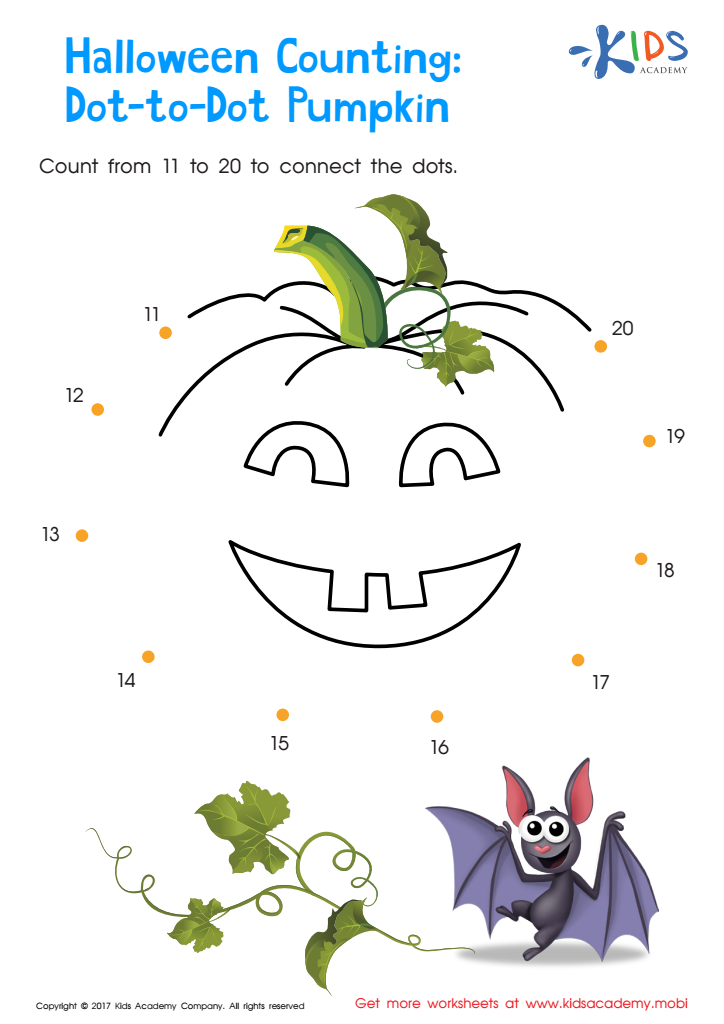
Ordering 11–20: Halloween Counting Worksheet
No matter the time of year, help your child get ready for Halloween with this worksheet. They'll practice counting from 11 to 20, recognizing numbers, and using a pencil to draw. By connecting the dots, they'll create a pumpkin picture, while unknowingly strengthening their early math skills. Print it today for an educational and fun experience!
Ordering 11–20: Halloween Counting Worksheet
Worksheet
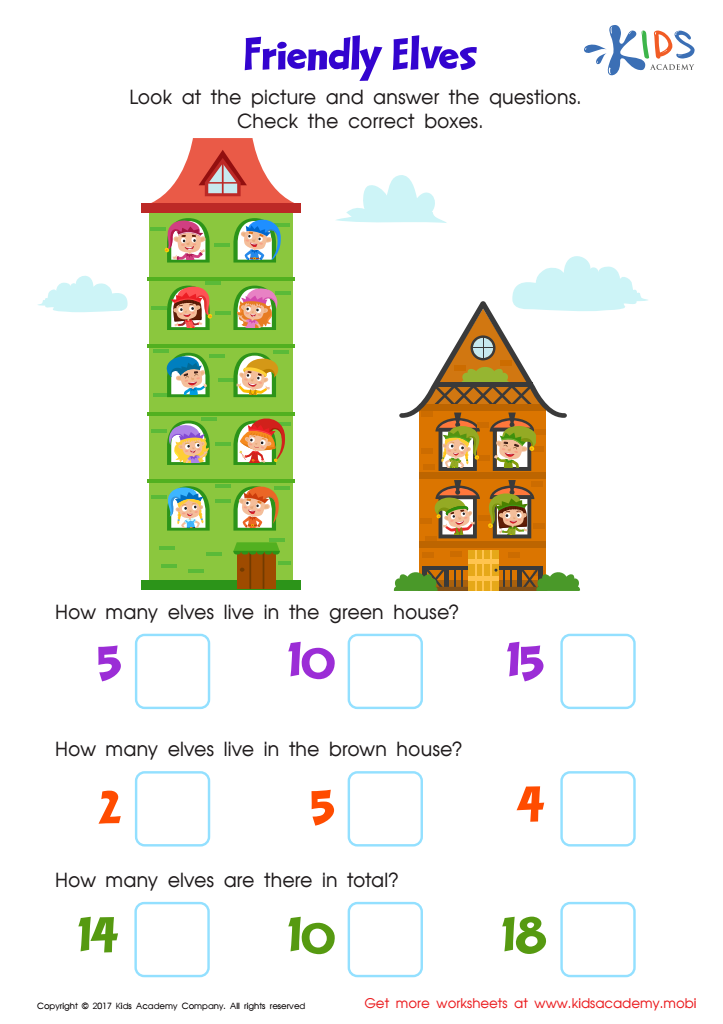
Place Value: Friendly Elves Worksheet
This fun worksheet teaches kids to count elves, answer questions about houses, and practice math! Look at the picture and count the elves in each house. How many are in the green and brown house? Tick the correct answer boxes. Perfect for young learners!
Place Value: Friendly Elves Worksheet
Worksheet
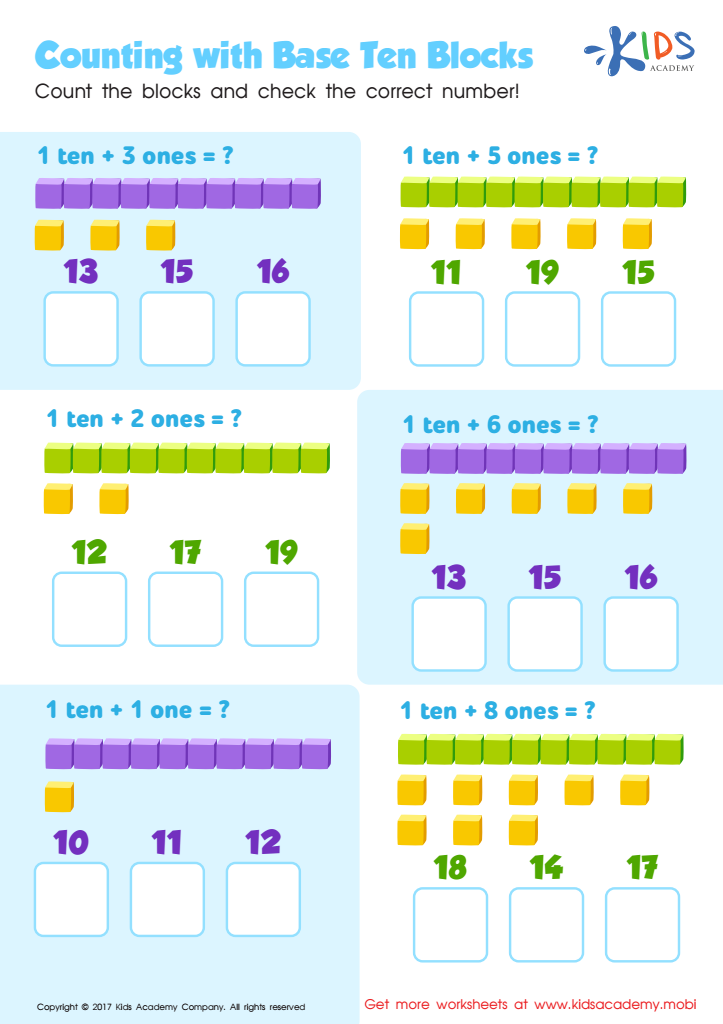
Counting with Base Ten Blocks Worksheet
Math has different levels and gets harder as your child progresses. Don't be surprised when they bring home an algebra worksheet! In this one, they will add 1 tens to varying numbers and fill in the total. This builds their understanding of base tens.
Counting with Base Ten Blocks Worksheet
Worksheet
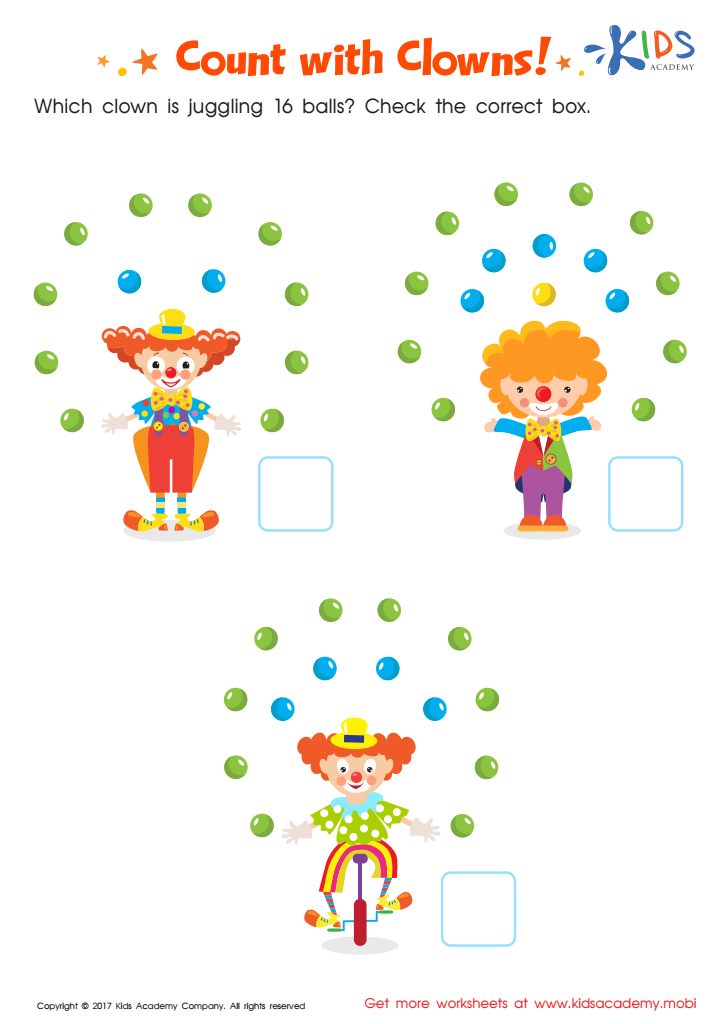
Count with Clowns Worksheet
Math may not be a laughing matter, but this worksheet sure is! Download the PDF and get ready to count balls with the clowns! Your child will have a blast and learn how to count at the same time. It's an easy, fun way to practice math!
Count with Clowns Worksheet
Worksheet
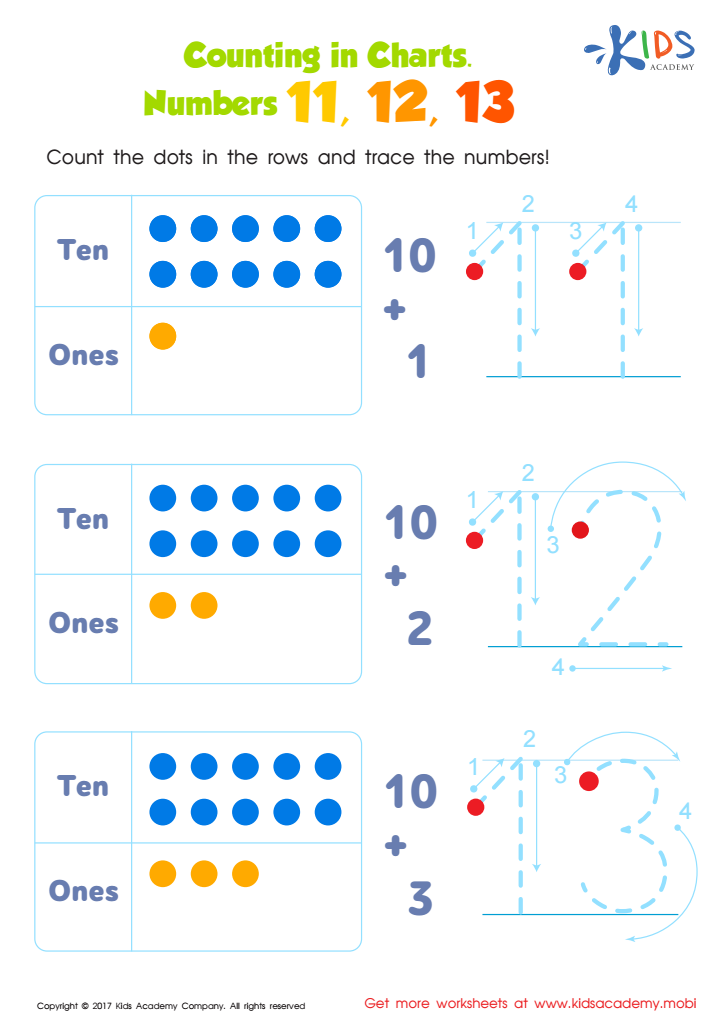
Number Tracing Worksheet For Kindergarten
Help your child develop addition skills and improve number recognition with this easy-to-use worksheet. Have them count the dots and add to solve each problem. Then, trace over the number to complete each row! It's a fun and simple way for kindergarteners to practice their math skills.
Number Tracing Worksheet For Kindergarten
Worksheet
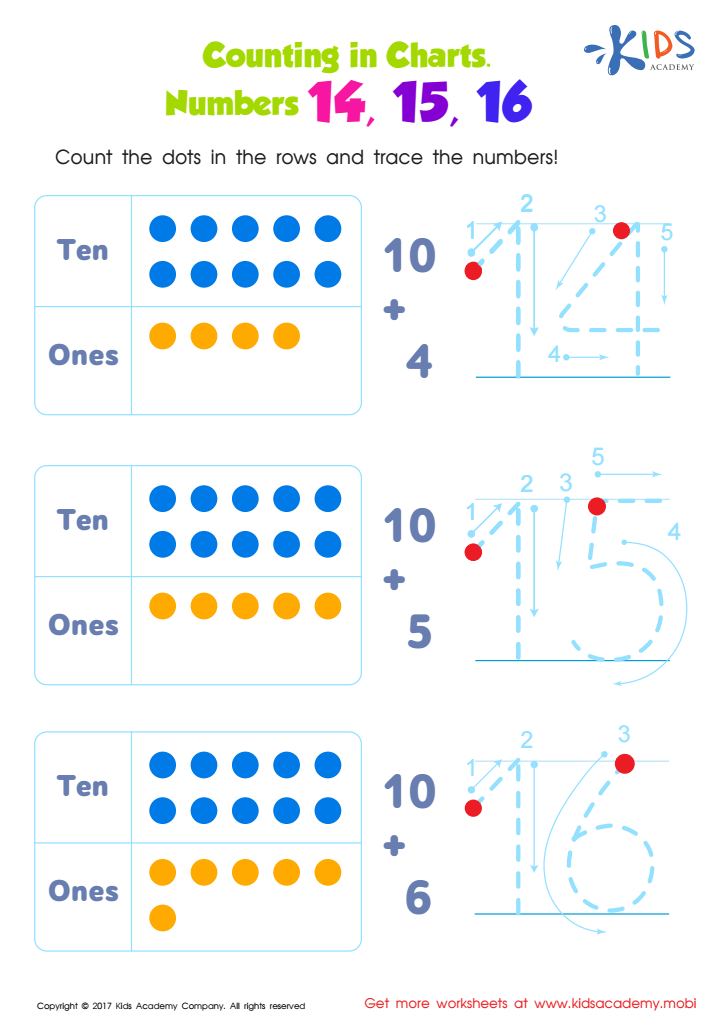
Number Tracing Worksheet
Kids learn math with counters and place value! This handy worksheet helps form a foundation for math skills and number sense! Have your child count the dots and trace the answers to the addition problems. It's a great way to support their math skills!
Number Tracing Worksheet
Worksheet
Join Kids Academy for Free
Who is primarily going to use this learning content?



Number recognition for numbers 11-20 is crucial for children aged 3-9 as it lays a foundation for future math concepts and skills. First, mastering these numbers fosters increased numeracy skills, helping children to understand the sequence of numbers and their values. Recognizing numbers 11-20 bridges the transition from single digits to double digits, allowing them to grasp more complex mathematical ideas later on.
Additionally, proficiency in number recognition enhances cognitive development. By identifying and categorizing numbers, children improve their memory, attention span, and problem-solving skills. These foundational skills contribute not only to mathematics but also to overall academic success.
From a social perspective, recognizing numbers helps children engage in cooperative games and activities, promoting teamwork and social interaction. Whether it's participating in counting games at home, using educational apps, or engaging in math-based crafts, the more children practice number recognition, the more confident they become.
Involving parents and teachers in this process creates a supportive learning environment. When both reinforce number recognition through everyday activities, kids experience consistent messages and encouragement. Ultimately, focusing on numbers 11-20 empowers children with essential skills and boosts their confidence, leading to lifelong learning and an appreciation for mathematics.








