Number Recognition Numbers up to 100 Worksheets for Ages 3-9 - Page 2
27 filtered results
-
From - To
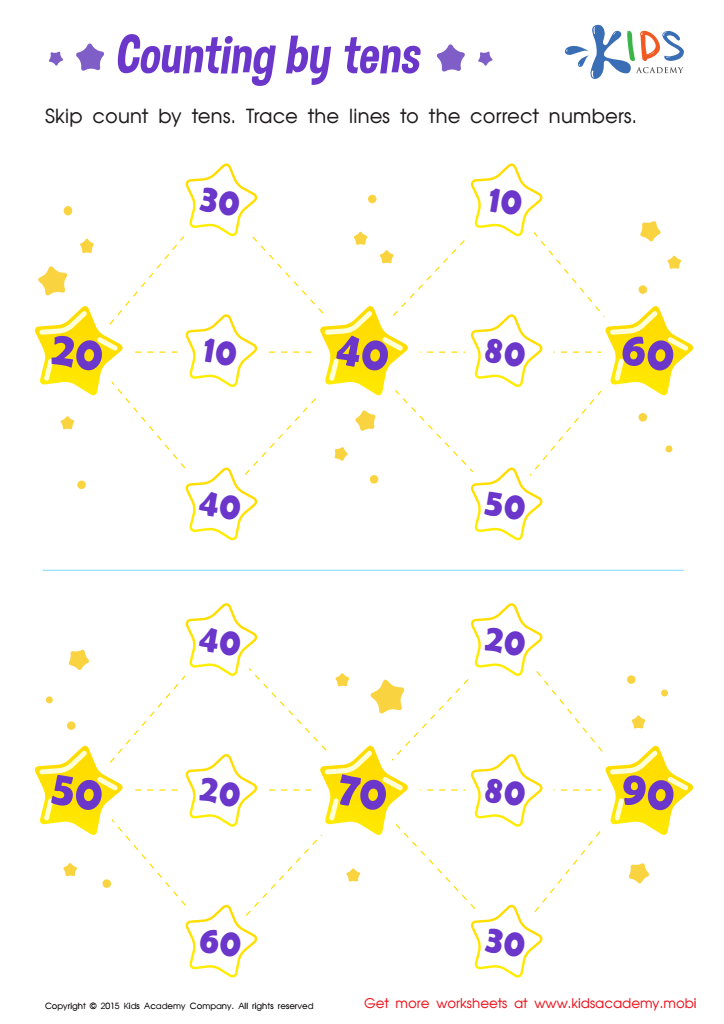
Learn Dozens: Counting by Tens Printable
 Assign to My Students
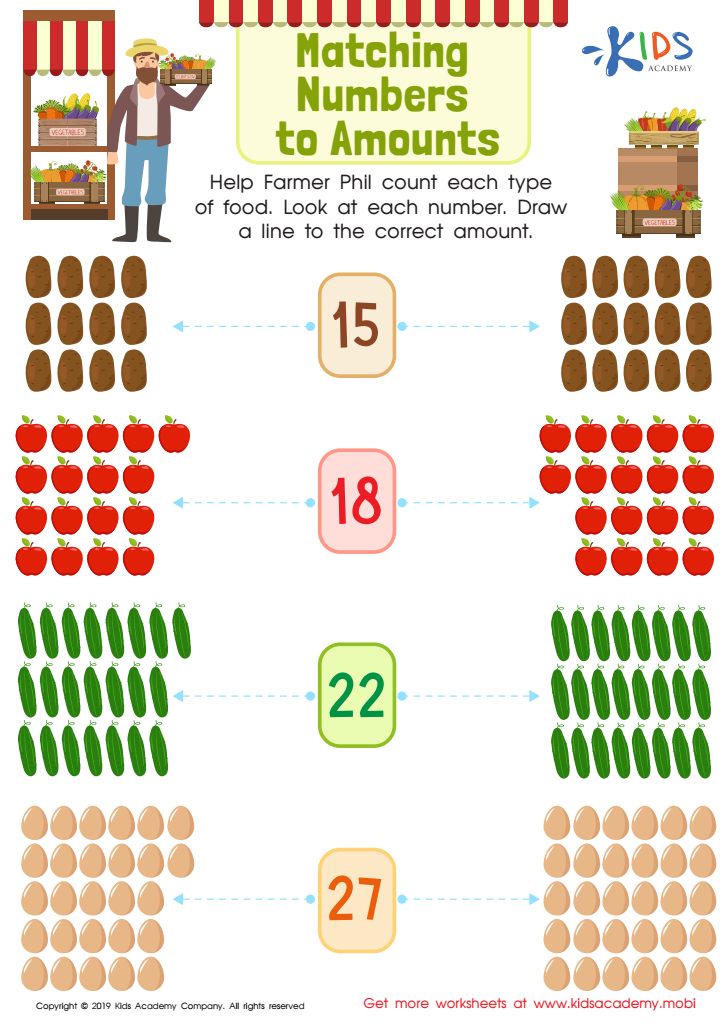
Matching Numbers to Amounts Worksheet

Counting on the City Skyline: Dot-to-Dot Worksheet








Number recognition is a fundamental skill for children aged 3-9 that lays the groundwork for their mathematical understanding and overall cognitive development. Parents and teachers should prioritize this skill because it enhances a child’s ability to recognize and understand numbers up to 100, which is crucial for everyday tasks and future learning.
Early number recognition fosters confidence and motivation in young learners, making math more approachable. As children become familiar with numbers, they can better understand concepts like counting, addition, and subtraction. This foundational knowledge not only supports academic performance but also equips children with essential life skills, such as managing money, telling time, and understanding quantities.
Additionally, number recognition encourages critical thinking and problem-solving skills as children start to compare quantities and relate numbers to their surroundings. Engaging them in varied, interactive activities can make this learning fun and effective. The social aspect of learning—whether in a classroom setting or at home—also plays a crucial role as children share their experiences and insights.
By caring about and investing in number recognition, parents and teachers contribute to building a solid mathematical foundation, promoting lifelong skills that will benefit children in both academic and real-world situations.








