Pattern recognition Patterns Worksheets for Ages 3-9
5 filtered results
-
From - To
Discover engaging Pattern Recognition Worksheets designed for children ages 3-9! These thoughtfully crafted activities promote critical thinking and cognitive development by helping kids identify, create, and complete various patterns. Featured on our user-friendly platform, these worksheets incorporate fun visuals and interactive elements to make learning enjoyable and effective. Ideal for both classroom settings and at-home practice, our resources support essential math skills while fostering children’s ability to recognize sequences. Encourage your child’s growth and confidence in math with these dynamic worksheets, perfect for developing early problem-solving abilities. Explore our collection today and enhance your child’s learning journey!
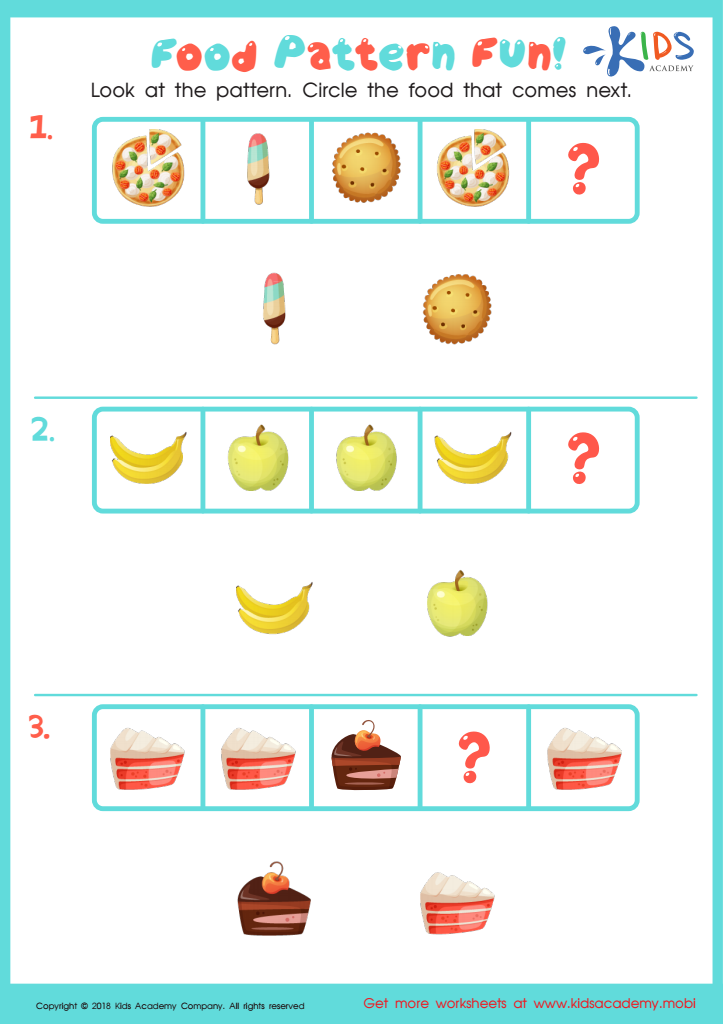
Food Pattern Fun Worksheet
 Assign to My Students
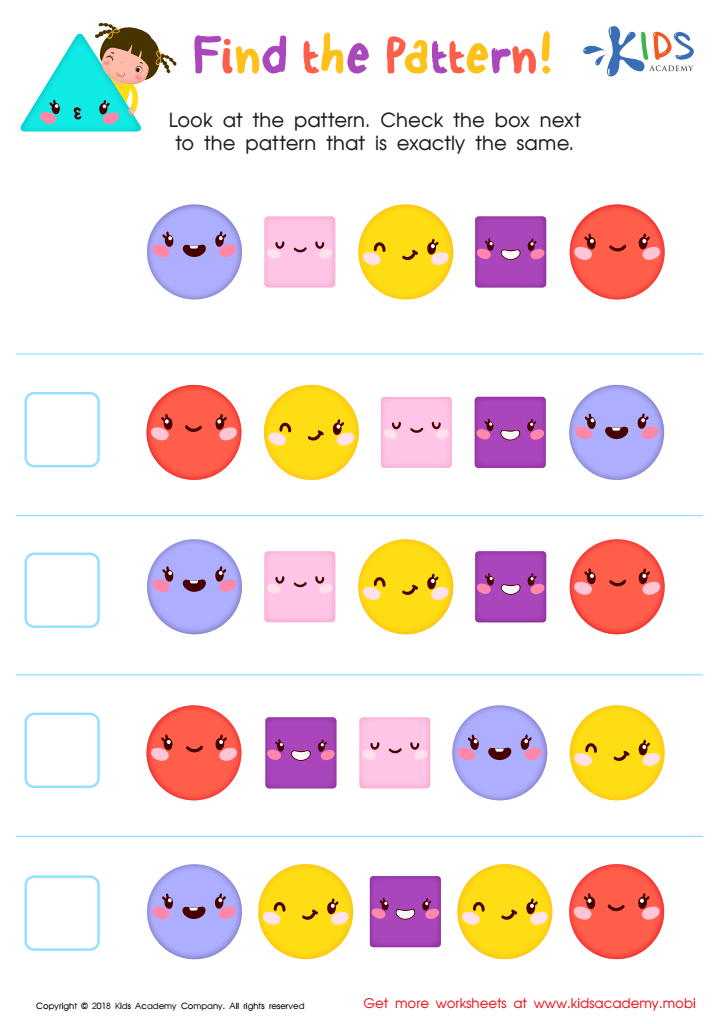
Find the Pattern Worksheet
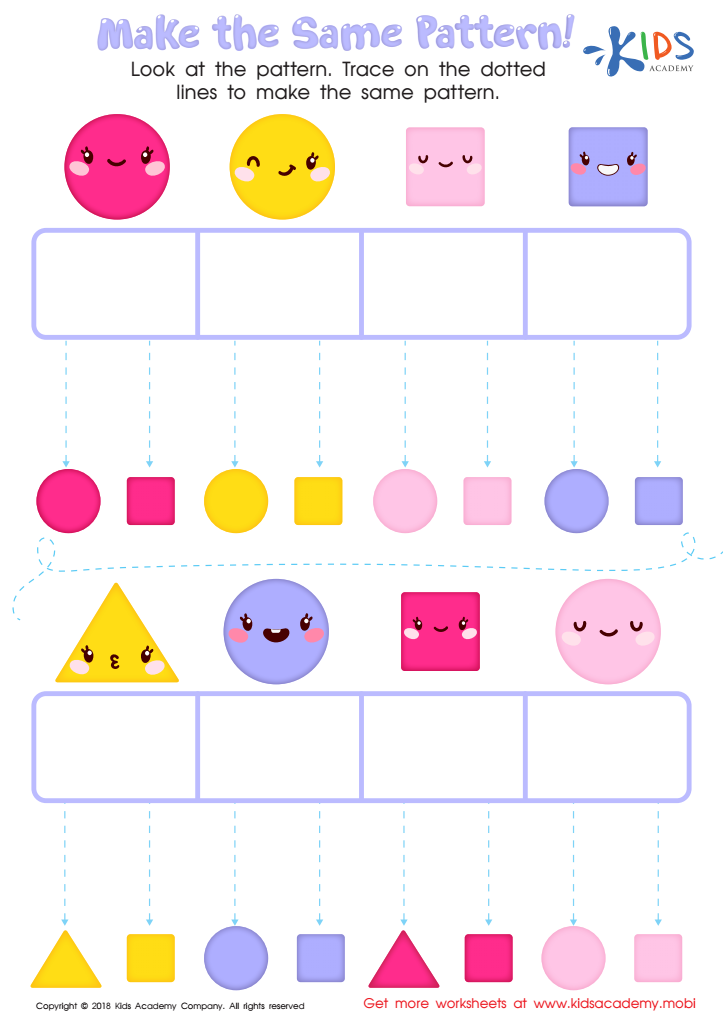
Make the Same Pattern Worksheet
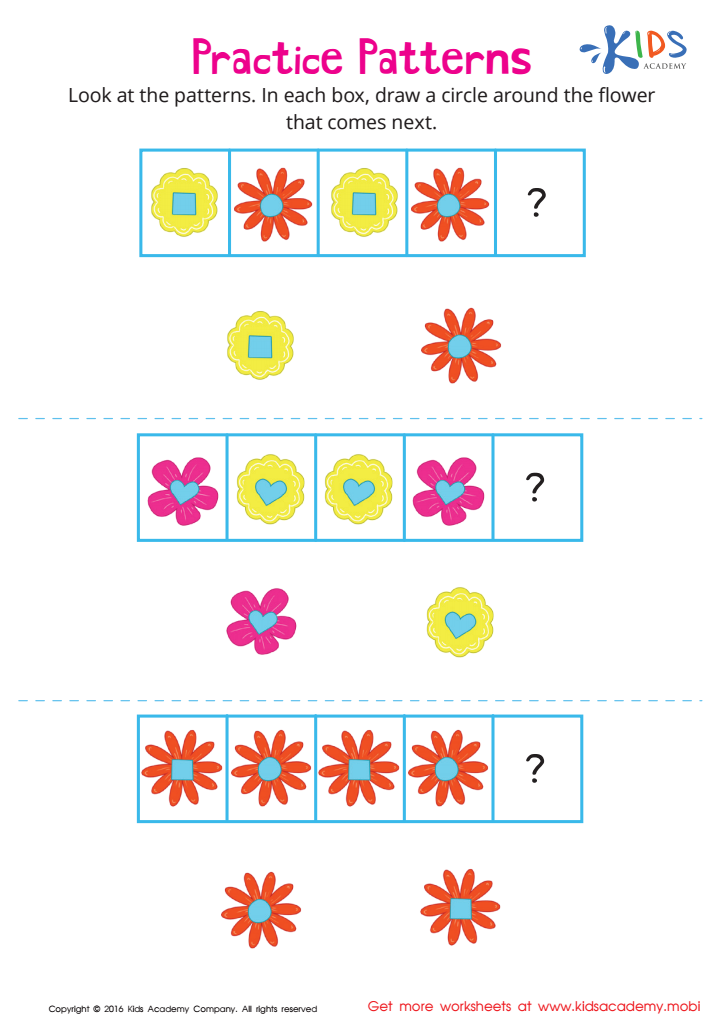
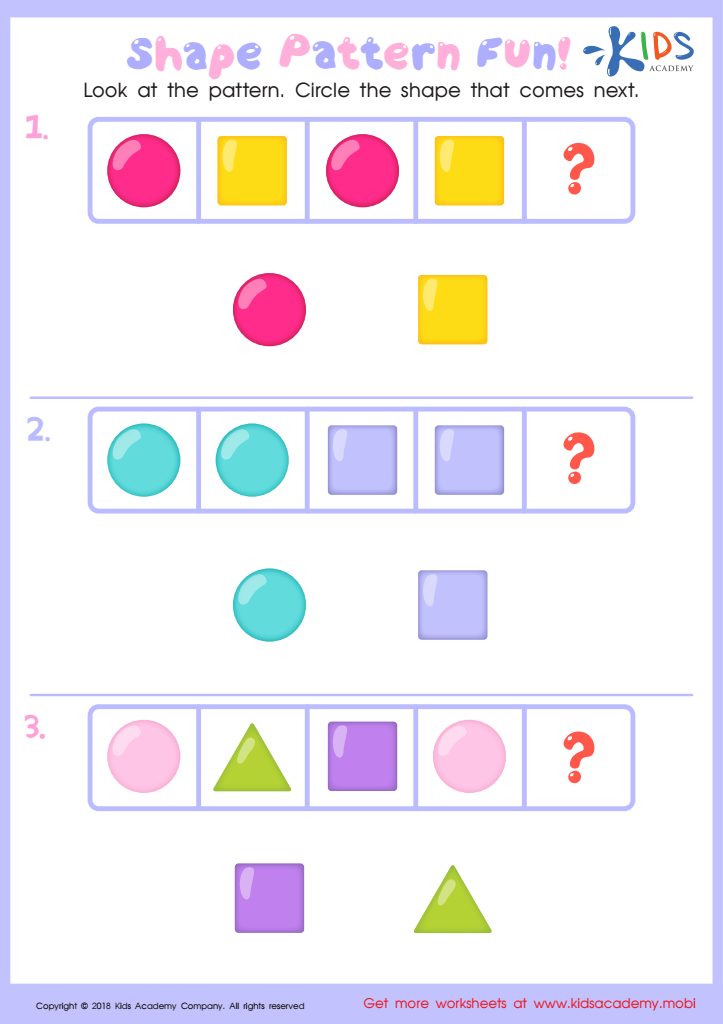
Shape Pattern Fun Worksheet







Pattern recognition is a fundamental skill that forms the basis for more complex cognitive processes, particularly in early childhood education. For children ages 3-9, engaging with patterns supports their mathematical development, problem-solving abilities, and critical thinking skills. Understanding patterns helps young learners identify similarities, differences, and sequences, laying the groundwork for math concepts like counting, addition, subtraction, and more advanced operations later on.
Parents and teachers should care about teaching pattern recognition because it enhances children's cognitive flexibility—the ability to adapt their thinking and approach problems in various ways. This skill translates to everyday life, allowing children to make predictions, draw conclusions, and recognize trends well beyond academic subjects.
Moreover, pattern recognition activities promote specific early literacy skills, as recognizing structures in stories and language can lead to better comprehension and reading abilities. By incorporating pattern recognition exercises—whether through games, art, music, or storytelling—educators and caregivers can create a strong foundation in both math and literacy. This holistic approach not only fosters a love for learning but also equips children with vital life skills essential for future academic success and everyday decision-making. Ensuring children master this skill now sets them on a path for lifelong learning and critical thinking.








