Contextual understanding Building Vocabulary Worksheets for Ages 3-9
9 filtered results
-
From - To
Enhance your child's vocabulary with our Contextual Understanding Building Vocabulary Worksheets for ages 3-9! These engaging materials promote word recognition and comprehension, ideal for early learners. By incorporating fun and educational activities, our worksheets help kids grasp new words in context, boosting their reading and language skills. Each worksheet is thoughtfully designed to provide age-appropriate challenges, encouraging children to explore, understand, and effectively use new vocabulary. Perfect for parents and educators seeking a comprehensive resource to support early literacy development. Explore our collection and give your child the foundation they need for successful reading and communication!
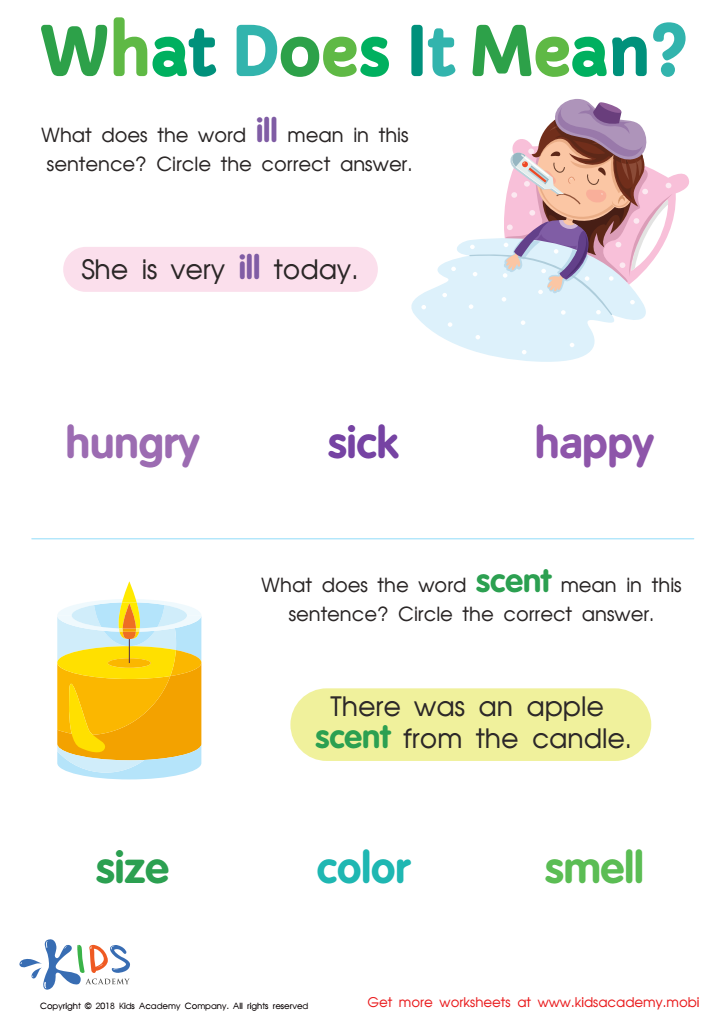
What Does It Mean? Worksheet
 Assign to My Students











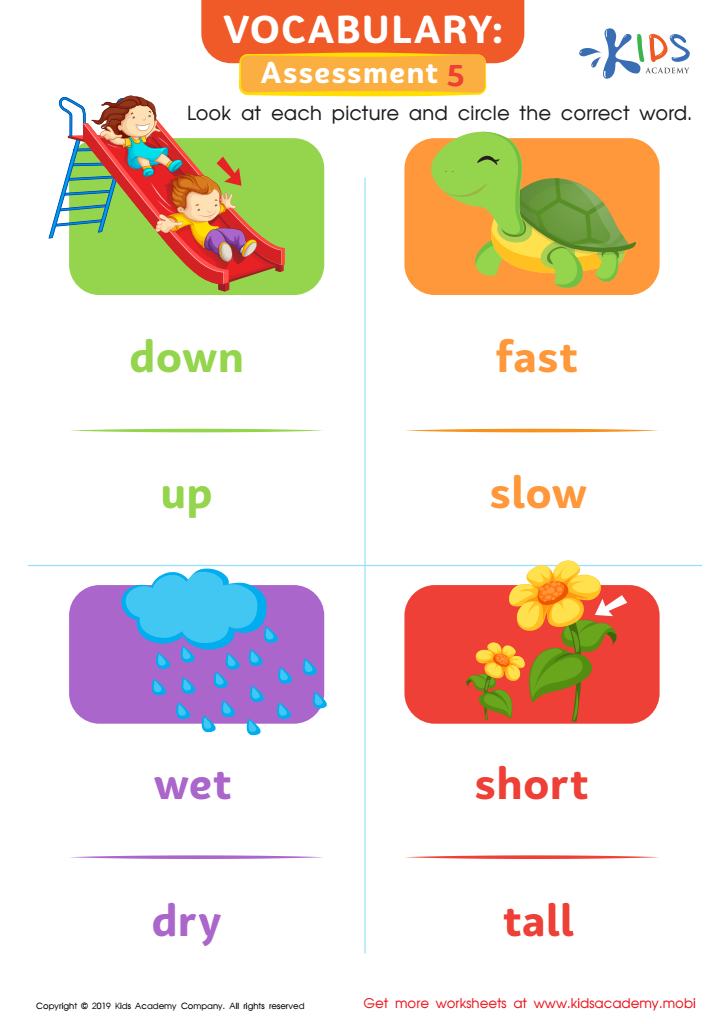
Vocabulary: Assessment 5 Worksheet
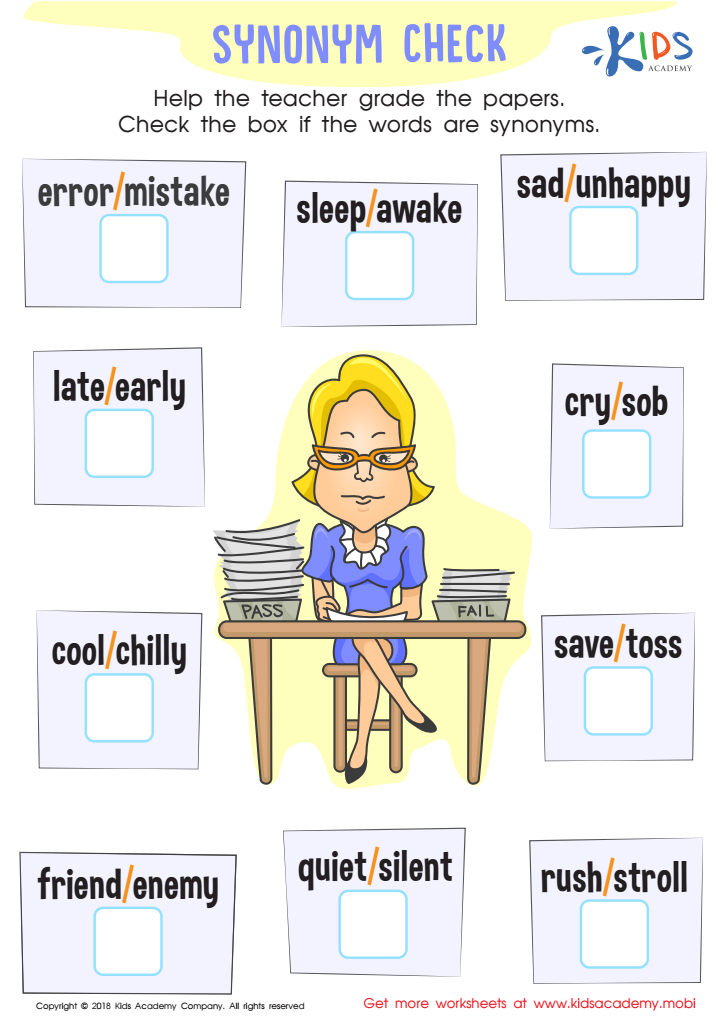
Synonym Check Worksheet
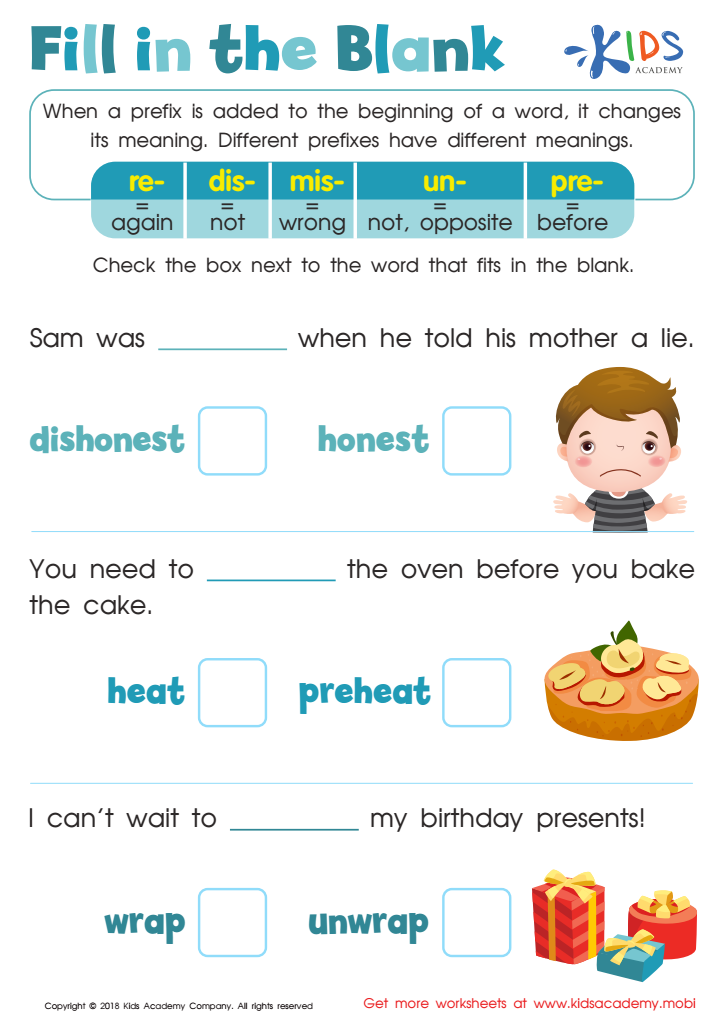
Reading: Fill in the Blank Worksheet
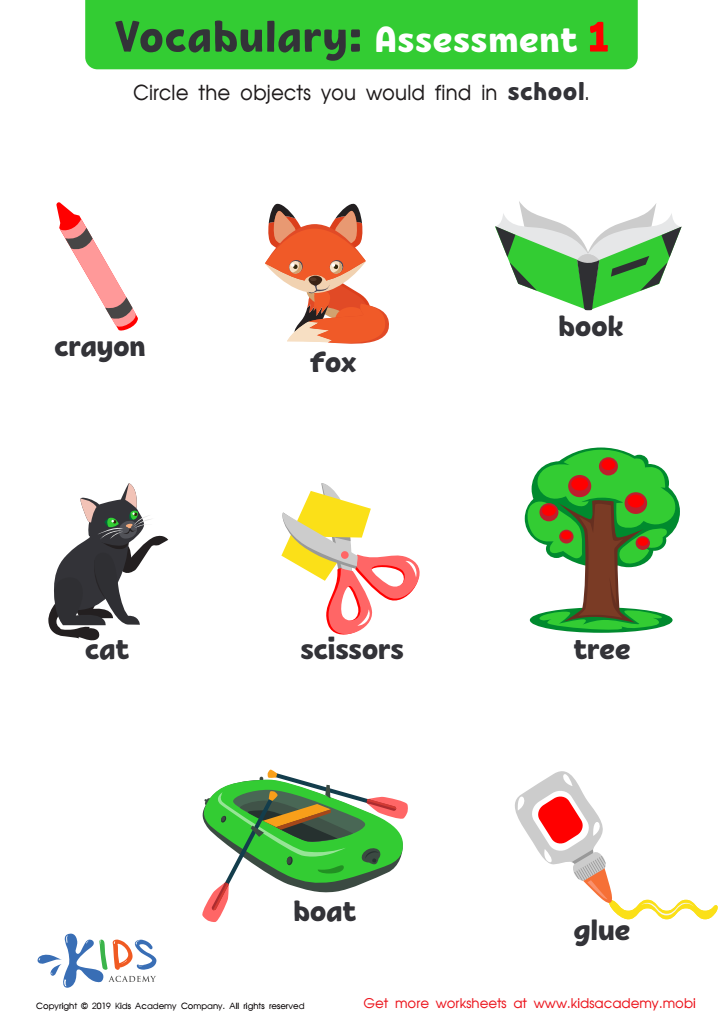
Vocabulary: Assessment 1 Worksheet
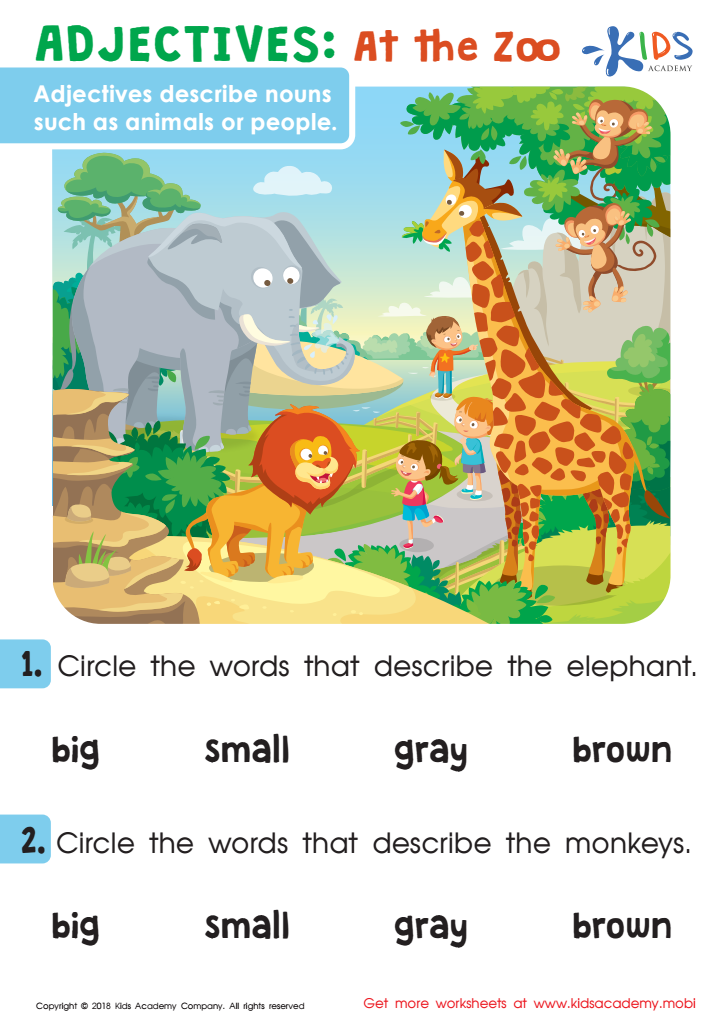
Adjectives: At The Zoo Worksheet
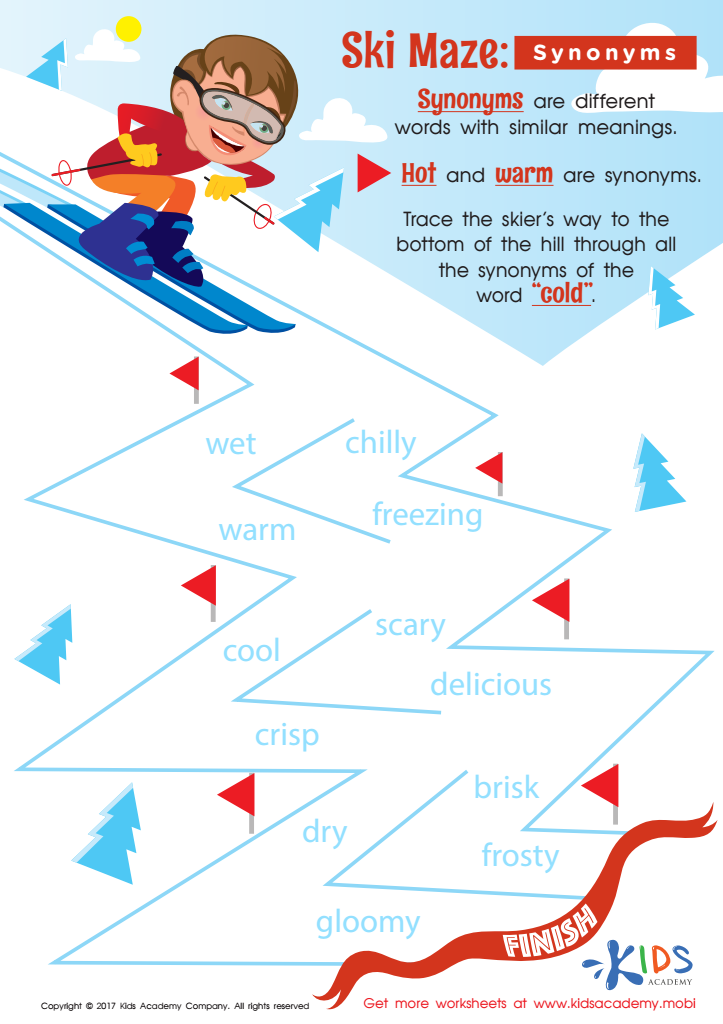
Free Printable Synonym Worksheet
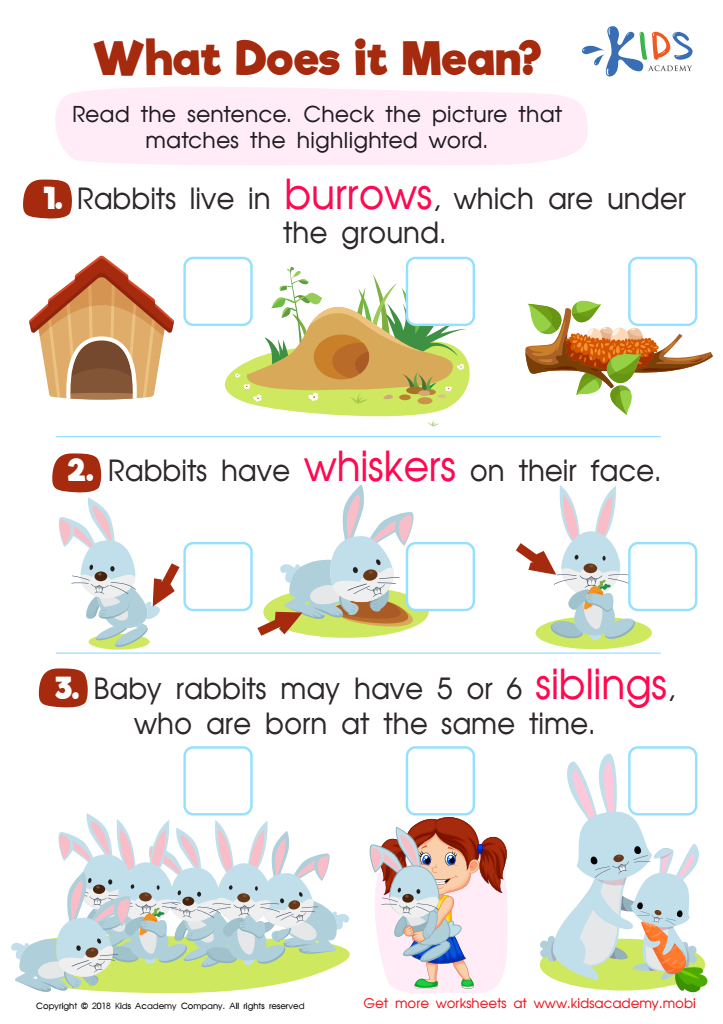
What Does It Mean? Worksheet
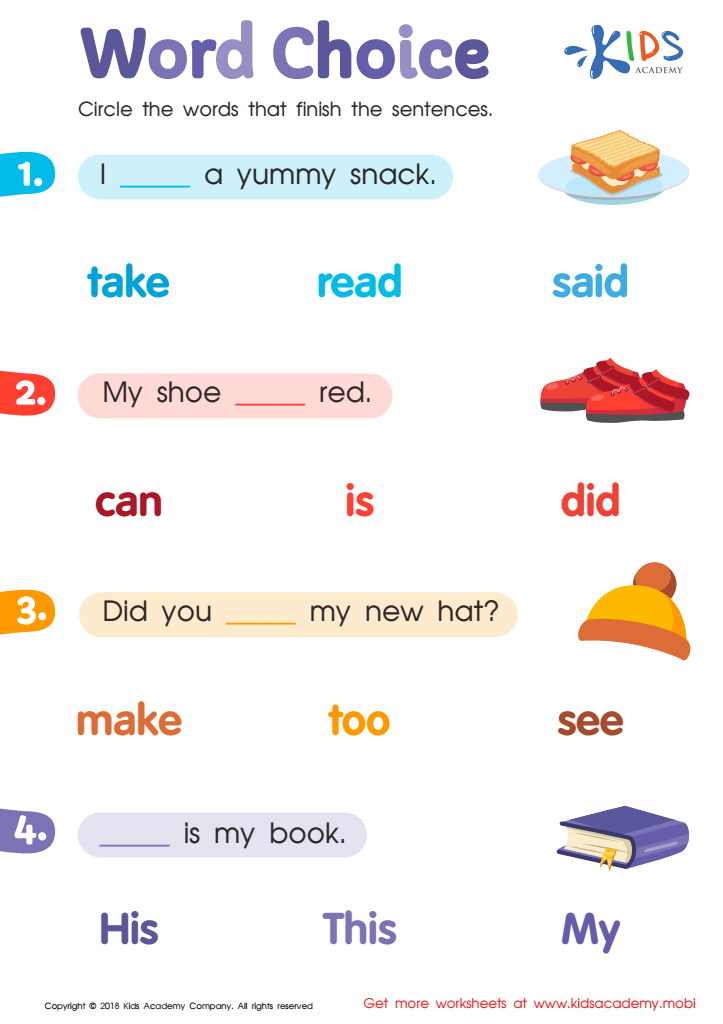
Word Choice Worksheet








Contextual understanding and vocabulary building are crucial components of early childhood development for children aged 3-9. Parents and teachers should prioritize these aspects because they lay the foundation for future communication skills, academic success, and cognitive development.
Firstly, contextual understanding helps children grasp the meaning of words within different situations, making their language use more robust and versatile. This skill enables children to navigate social interactions effectively, as they become adept at deciphering meaning based on context clues.
Secondly, building a rich vocabulary is integral for reading comprehension. A child with a broader vocabulary is more likely to understand and enjoy reading materials, fostering a love for learning. This, in turn, supports success in school, as reading is central to almost every subject area.
Moreover, a well-developed vocabulary and contextual understanding enhance critical thinking skills. As children explore new words and contexts, they learn to compare, contrast, and synthesize information, which is vital for problem-solving.
Lastly, effective communication nurtures self-confidence. A child who can express thoughts and emotions clearly is better equipped to build strong relationships and navigate various life situations.
Investing in these skills early sets the stage for lifelong learning and well-being, making it a paramount focus for parents and teachers.








