Word association Building Vocabulary Worksheets for Ages 3-9
3 filtered results
-
From - To
Enhance your child's vocabulary with our engaging Word Association Building Vocabulary Worksheets, designed for ages 3-9. These worksheets encourage early literacy skills through fun and interactive activities that promote word recognition and associations. Children will enjoy connecting words with images, enhancing their understanding and usage of vocabulary in everyday contexts. Our specially crafted exercises cater to various learning styles, ensuring that each child can thrive. Perfect for classroom use or at-home learning, these worksheets make vocabulary building an exciting adventure! Download now and help your child develop essential language skills that will benefit their reading, writing, and communication abilities.
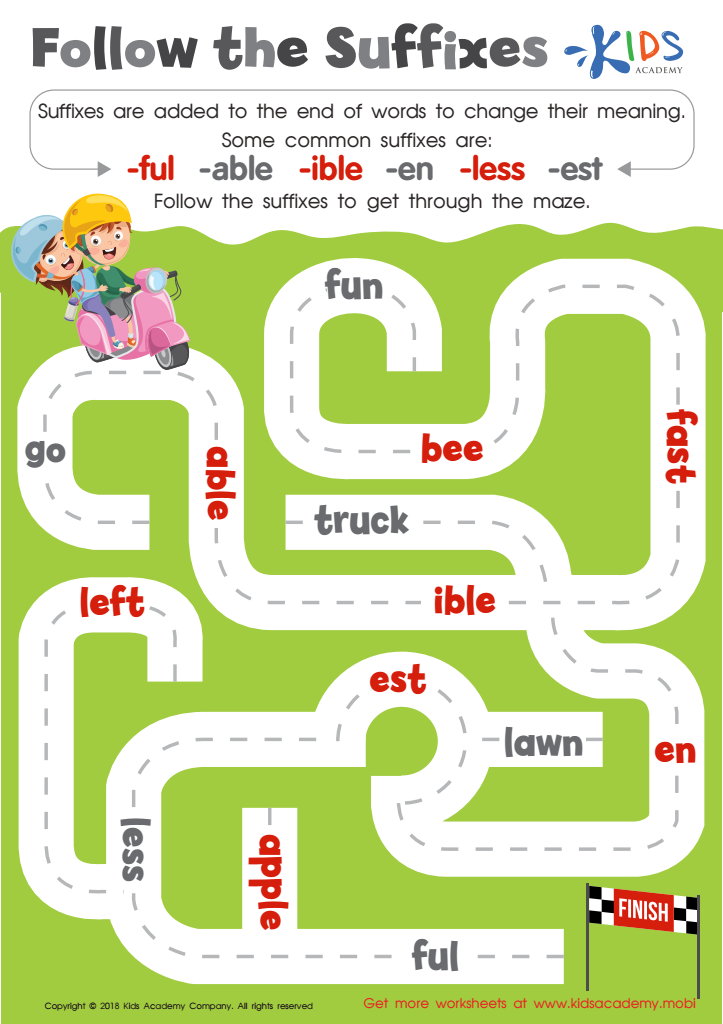
Reading: Follow the Suffixes Worksheet
 Assign to My Students











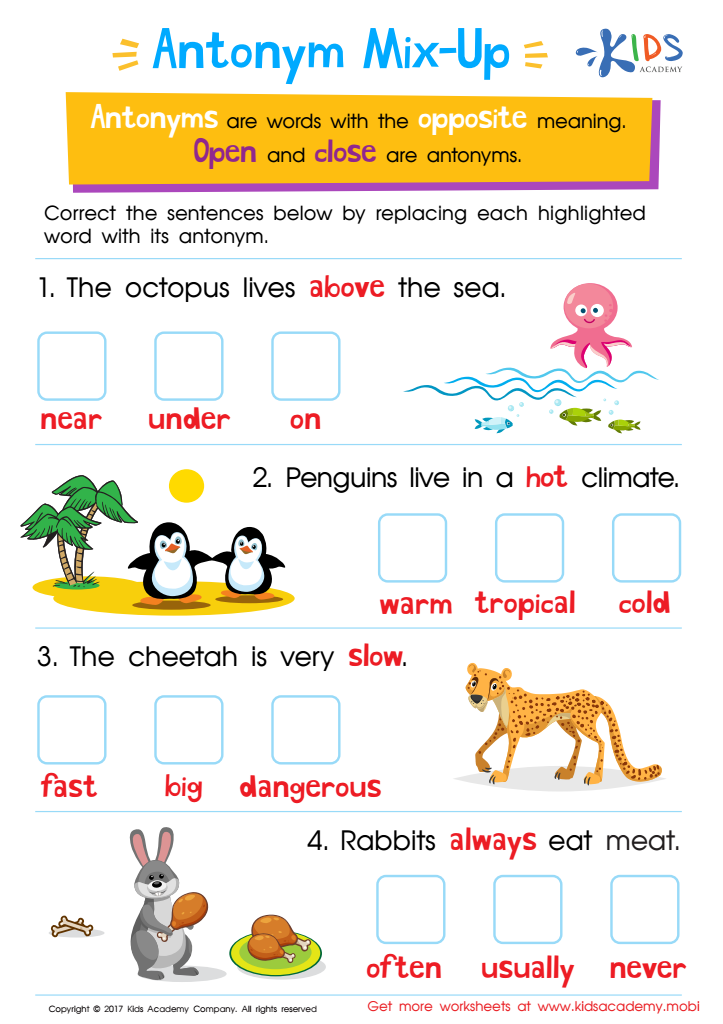
Vocabulary Antonyms Worksheet
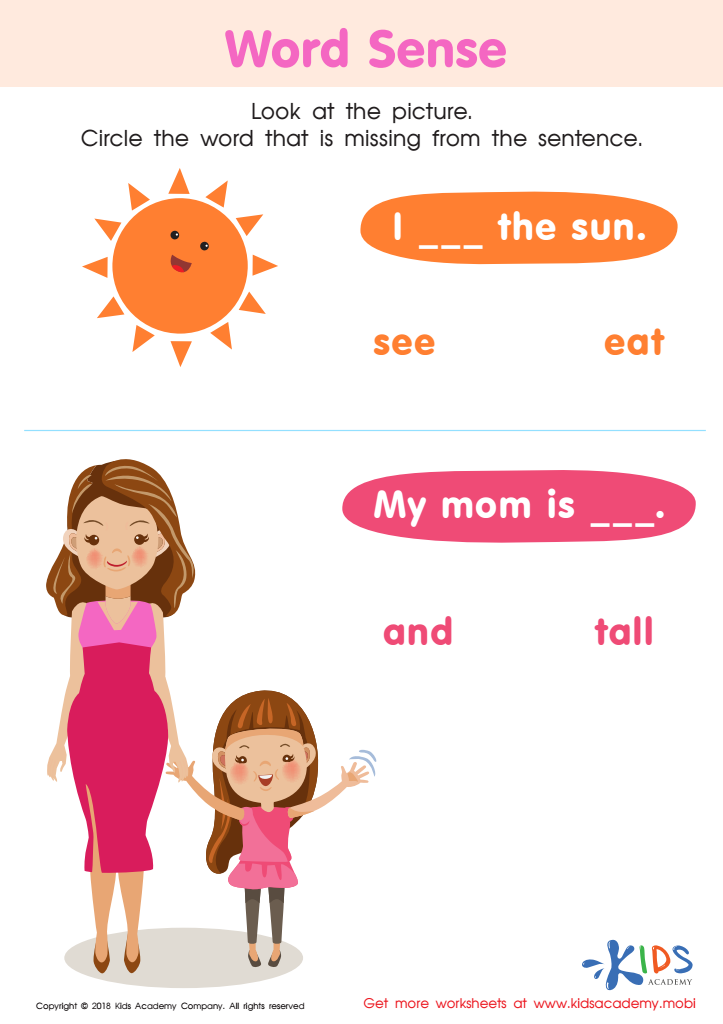
Word Sense Worksheet








Word association is a powerful tool for building vocabulary in children ages 3 to 9. During these formative years, children are rapidly developing their language skills, and engaging in word association activities can significantly enhance their understanding of language. By connecting words with similar meanings, categories, or even emotional responses, children learn to recognize patterns in language and develop critical thinking skills.
Parents and teachers should care about this approach because it fosters a deeper comprehension of the world around children. Strong vocabulary skills directly correlate with improved literacy, reading comprehension, and overall communication abilities. By making learning interactive and enjoyable—through games, storytelling, or simple conversation—adults can create a rich linguistic environment that encourages children to explore and express their thoughts creatively.
Furthermore, developing a robust vocabulary early on sets the foundation for academic success in later years. As children learn to associate words with concepts, they become better equipped to navigate complex texts, articulate their ideas, and engage in meaningful discussions. Investing in vocabulary enhancement through word association is not just an educational exercise; it’s an essential part of nurturing well-rounded, articulate individuals who are confident in their ability to express themselves.








