
Creativity stimulation Reading Worksheets for Ages 3-9
4 filtered results
Difficulty Level
Grade
Age
-
From - To
Subject
Activity
Standards
Discover our Creativity Stimulation Reading Worksheets designed for young minds aged 3-9! Nurture your child's imagination and creativity while enhancing critical learning skills. These engaging worksheets incorporate fun reading activities, vivid illustrations, and thought-provoking prompts to inspire originality and expressive thinking. Tailored to fit various reading levels, each sheet aids in developing comprehension, vocabulary, and creative expression. Perfect for home or classroom use, our expertly crafted resources will ignite a lifelong love for reading. Unlock a world of creativity one worksheet at a time—because every young reader deserves the chance to shine and succeed!
Favorites
With answer key
Interactive
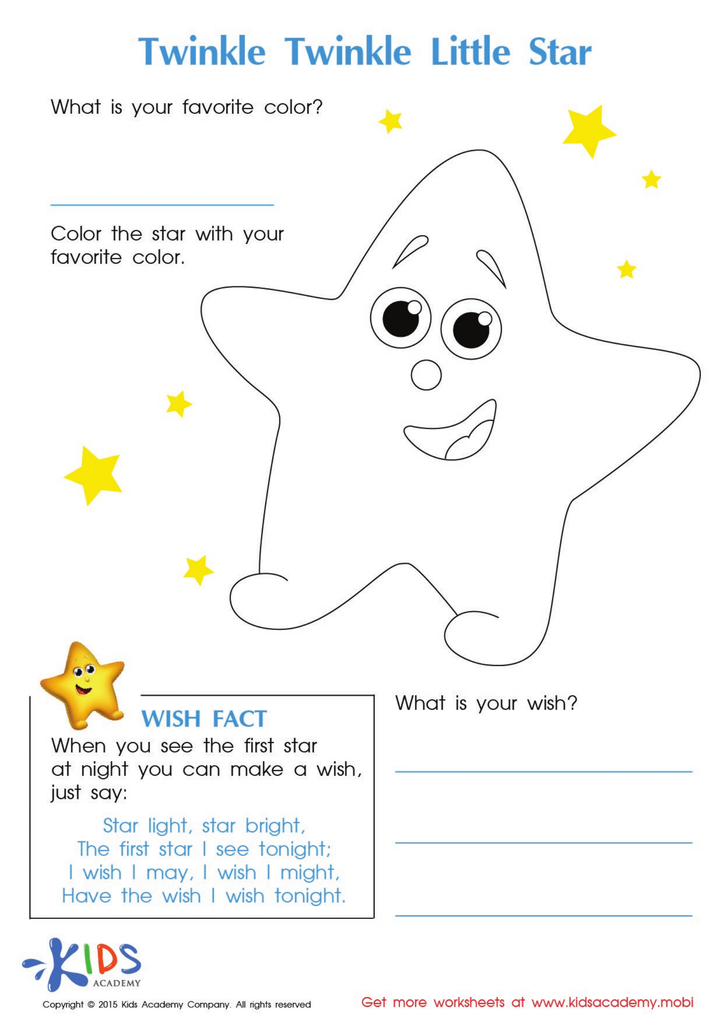
Twinkle Little Star Coloring Worksheet
Let your child color the Twinkle Little Star page - they can choose whatever color they like! Then sing the song and encourage them to make a wish when they spot a star in the sky. If they can write, let them record the wish themselves. If not, write it down for them. Enjoy the starry night sky together!
Twinkle Little Star Coloring Worksheet
Worksheet
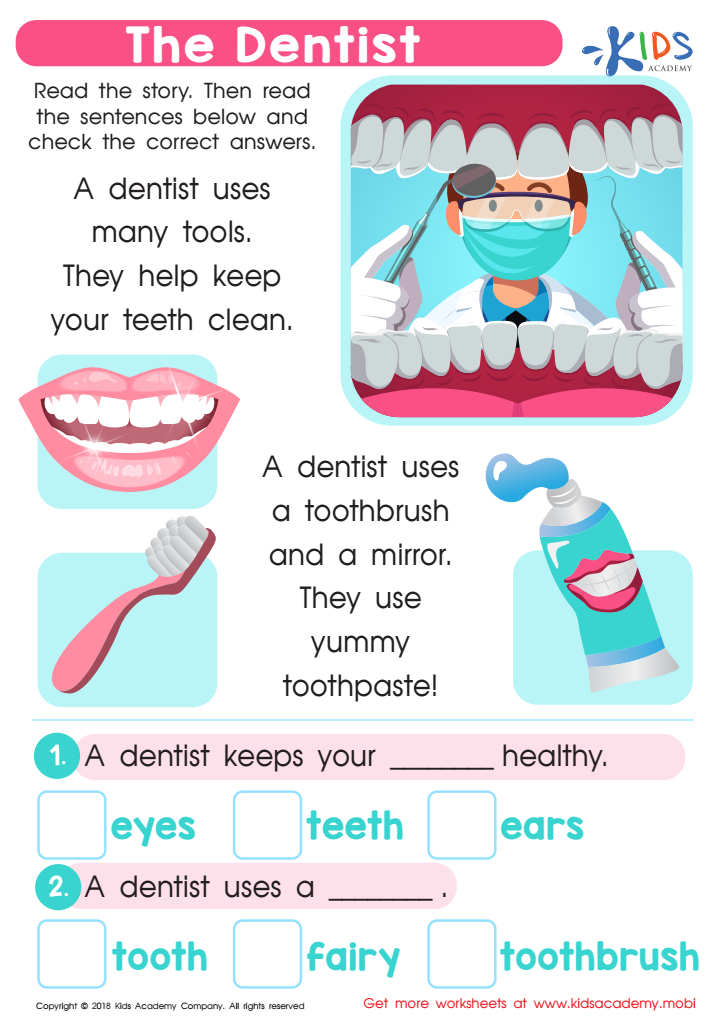
The Dentist Worksheet
Community helpers are essential for our wellbeing. This vibrant worksheet is a great way to introduce children to the dentist and their tools. They'll read the text, use the pictures and answer questions about what the dentist does and what they use. It's a great way to make the dentist more approachable, as well as help with comprehension.
The Dentist Worksheet
Worksheet
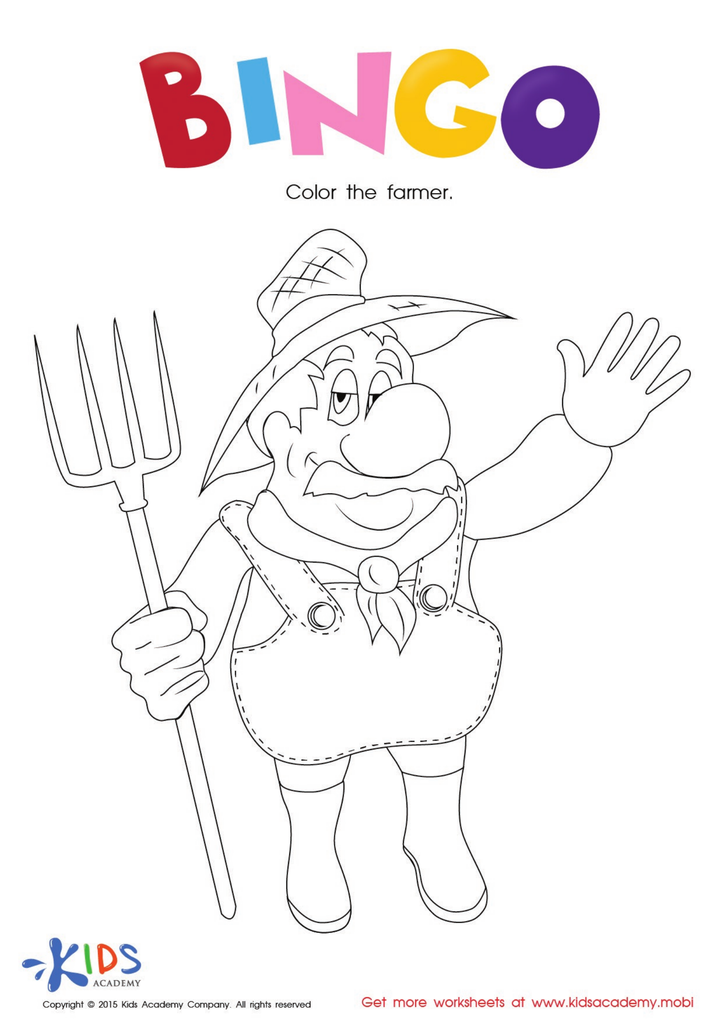
The Bingo Song: Coloring The Farmer Worksheet
Introduce The Bingo Song with concept questions then get your kids to color the free PDF coloring page. Visualize the characters while they sing and make the activity more fun with free nursery rhymes worksheets from our website. Clap along to The Bingo Song and enjoy!
The Bingo Song: Coloring The Farmer Worksheet
Worksheet
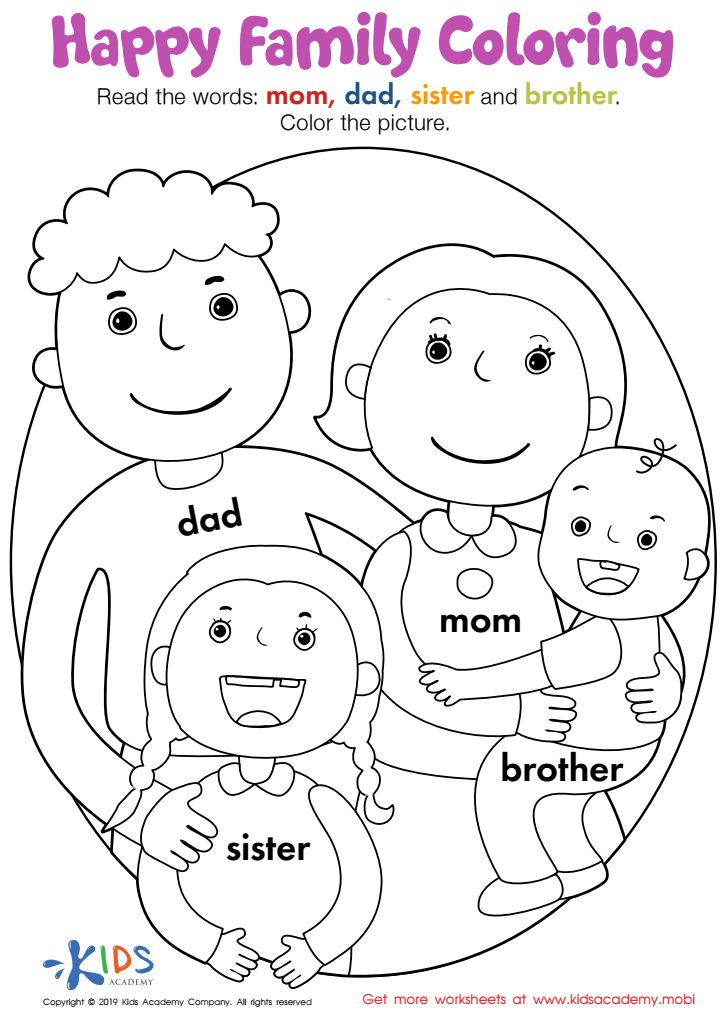
Happy Family Coloring Worksheet
Help your students gain confidence in family vocabulary with this worksheet. Labelled images of a family (dad, mom, sister, brother) are featured, along with an accompanying activity to colour in the picture. Your students will feel a sense of accomplishment after reading and completing the printable.
Download (PDF)
 Assign to My Students
Assign to My Students
Happy Family Coloring Worksheet
Worksheet
Join Kids Academy for Free
Who is primarily going to use this learning content?








Creativity stimulation during early reading for children ages 3-9 is crucial for their cognitive, emotional, and social development. For parents and teachers, integrating creativity into reading activities fosters greater engagement and enthusiasm for learning. Creative reading helps expand a child’s vocabulary, improve comprehension, and spark imaginative thinking—all fundamental tools for academic success.
When children encounter stories that encourage thinking beyond the pages—like imagining alternate endings or creating stories of their own—they cultivate problem-solving skills and improve their ability to think critically. Such stimulation early on is priceless; it nurtures an innate curiosity and a lifelong love for learning.
Moreover, creativity in reading can also bolster social and emotional learning. Exploring different characters, emotions, and scenarios allows children to develop empathy and understand complex social dynamics, helping them become more well-rounded individuals. Encouraging children to express their thoughts or recreate stories through drawings, puppets, or play also promotes emotional expression and communication skills.
In sum, paying attention to creative reading not only enhances traditional literacy skills but also fosters holistic development, preparing children to become innovative thinkers and empathetic adults. The ripple effect from these benefits underscores the imperative for parents and teachers to prioritize creativity in reading.








