Enhancing observation skills Reading Worksheets for Ages 3-9
5 filtered results
-
From - To
Unlock the power of observation with our "Enhancing Observation Skills Reading Worksheets" designed for children aged 3-9. These engaging, interactive worksheets foster critical thinking and comprehension by encouraging kids to closely observe details in texts and images. The activities focus on identifying patterns, making connections, and drawing inferences, all while reinforcing essential reading skills. Perfect for both classroom use and at-home learning, these worksheets promote active engagement and nurturing curiosity. Help young learners sharpen their observation skills and build a strong foundation for future academic success. Explore our collection today to make reading a fun and enriching experience for your child!
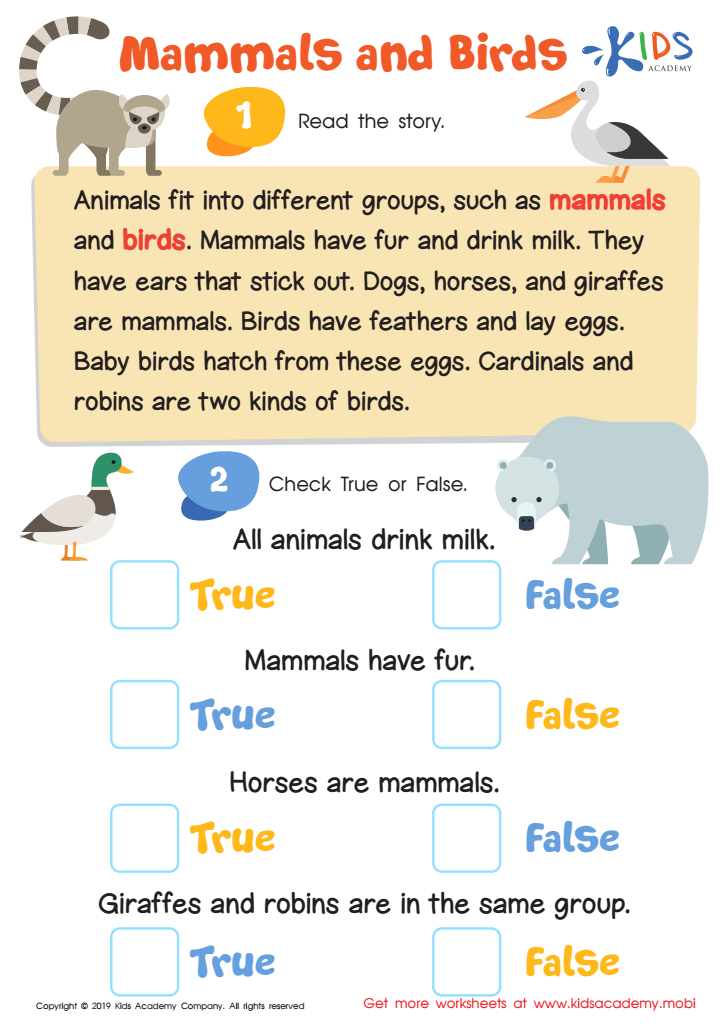
Mammals and Birds Worksheet
 Assign to My Students
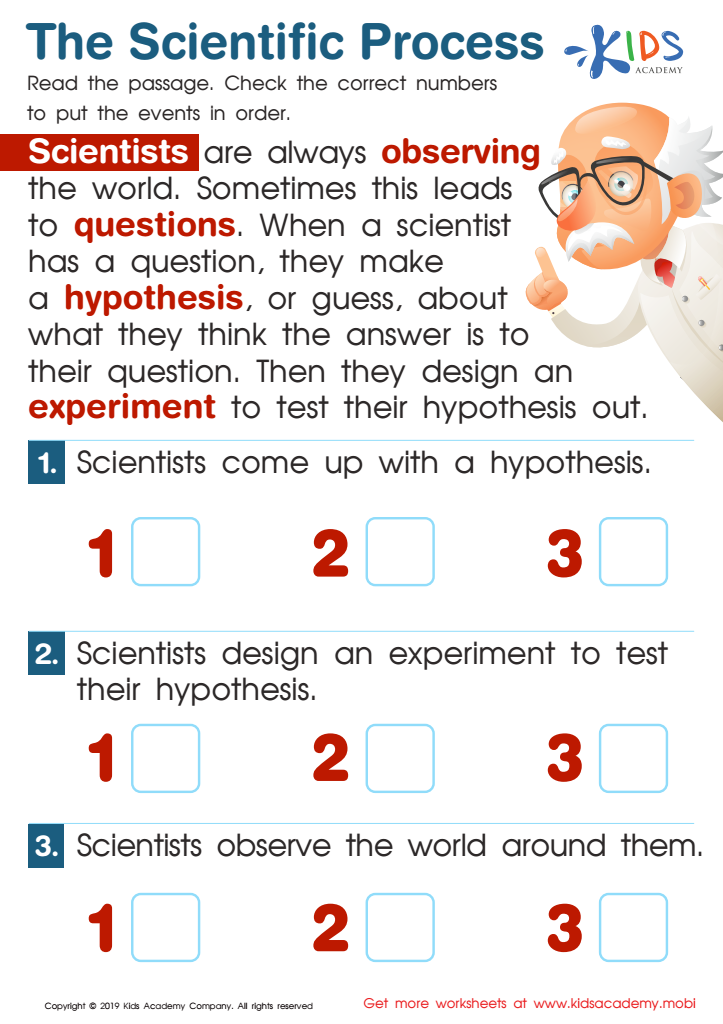
The Scientific Process Worksheet
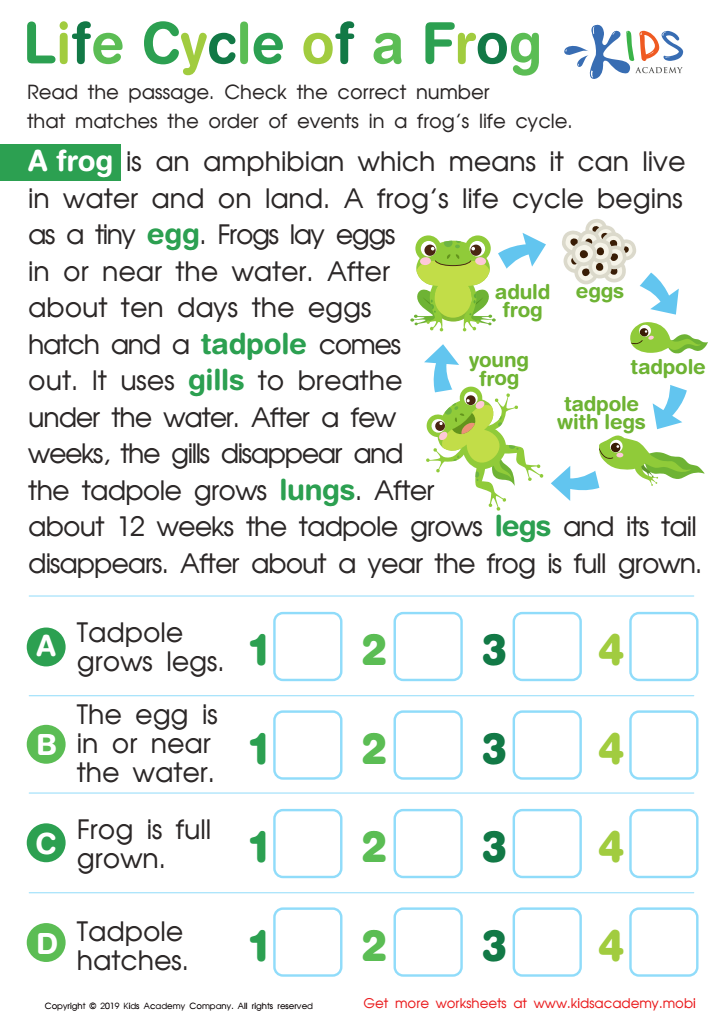
Life Cycle of a Frog Worksheet
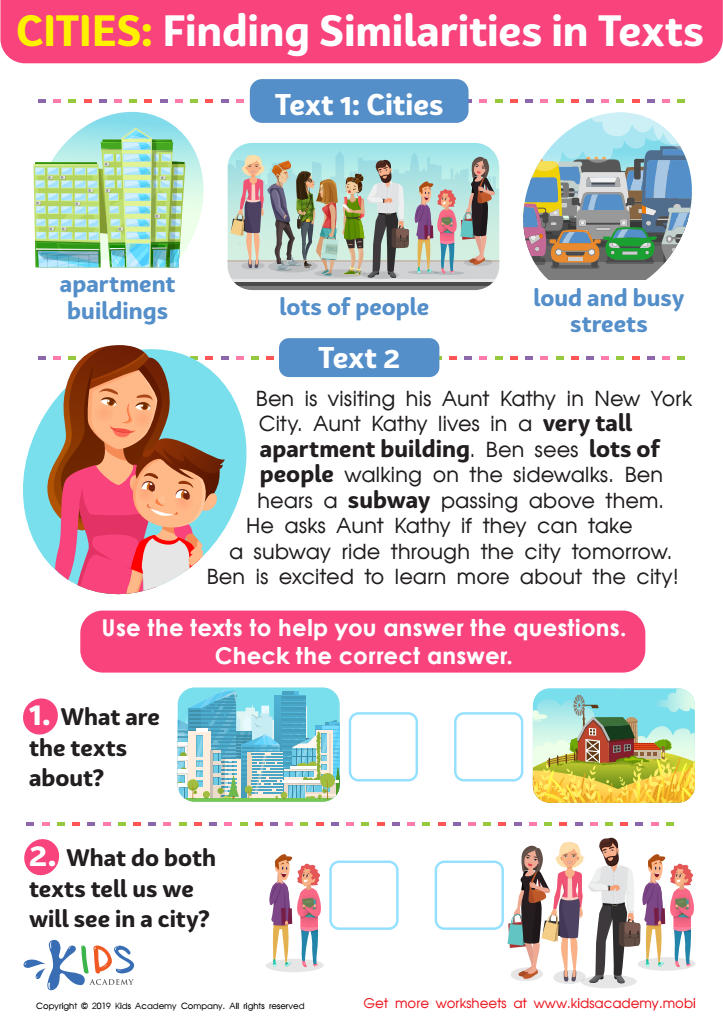
Cities: Finding Similarities Worksheet
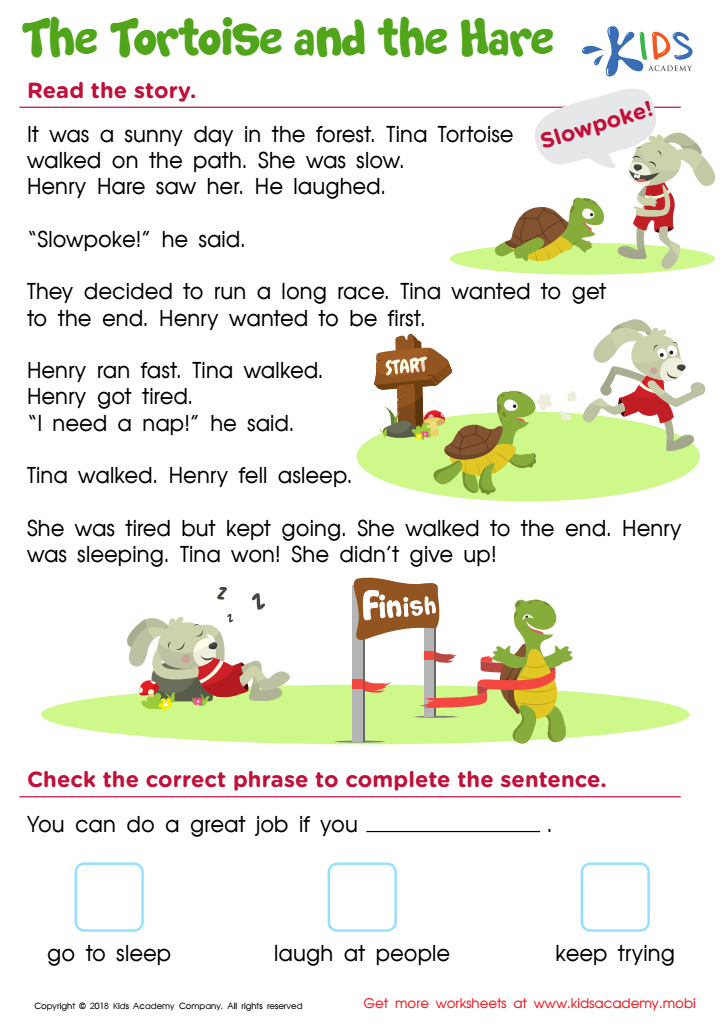
The Tortoise and the Hare Worksheet








Enhancing observation skills in reading for children aged 3-9 is critical because it lays the foundation for effective literacy development. Observation skills enable young learners to analyze and interpret information more deeply, fostering critical thinking abilities. When teachers and parents encourage children to notice details in illustrations, plot developments, and character behaviors, they cultivate an engaging reading experience that goes beyond mere text recognition.
These skills also support vocabulary expansion and comprehension by prompting children to make connections between the text and their experiences. Improved observation encourages questioning, curiosity, and discussion, which can transform reading sessions into interactive learning opportunities. This open communication enhances relationships, as parents and teachers can share insights while guiding children through literary exploration.
Moreover, strong observation skills help young readers become more confident and independent learners. As they practice these skills, they learn to monitor their understanding, identify unfamiliar words, and derive meaning from context. This empowerment is essential for their overall academic success.
Ultimately, by prioritizing observation skills, parents and teachers play a vital role in nurturing well-rounded, thoughtful readers who are prepared for lifelong learning and engagement with literature, thereby fostering their cognitive and emotional development.








