Identification skills Reading Worksheets for Ages 3-9
3 filtered results
-
From - To
Enhance your child's reading abilities with our Identification Skills Reading Worksheets, specially designed for ages 3-9. These engaging worksheets focus on developing crucial identification skills like letter recognition, word matching, and visual discrimination. With colorful illustrations and interactive activities, children will find learning fun and enjoyable! Our resources cater to various developmental levels, ensuring that each child can progress at their own pace. Perfect for home learning or classroom use, these worksheets will boost your child's confidence and reading skills. Explore our collection to inspire early literacy and lay a strong foundation for future learning success!
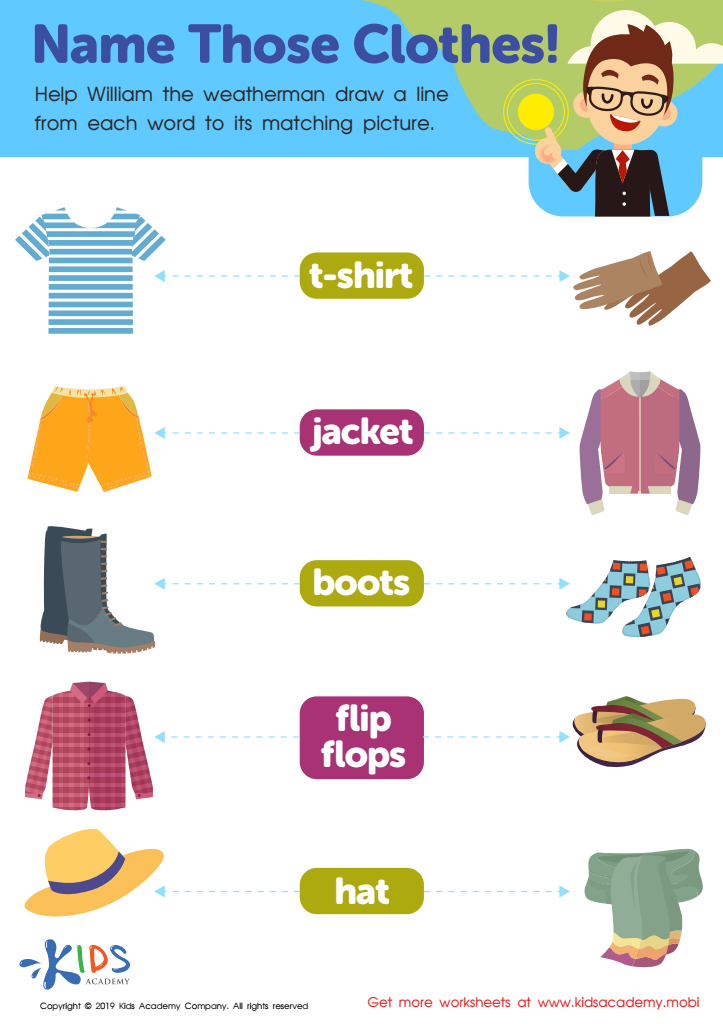
Name Those Clothes Worksheet
 Assign to My Students
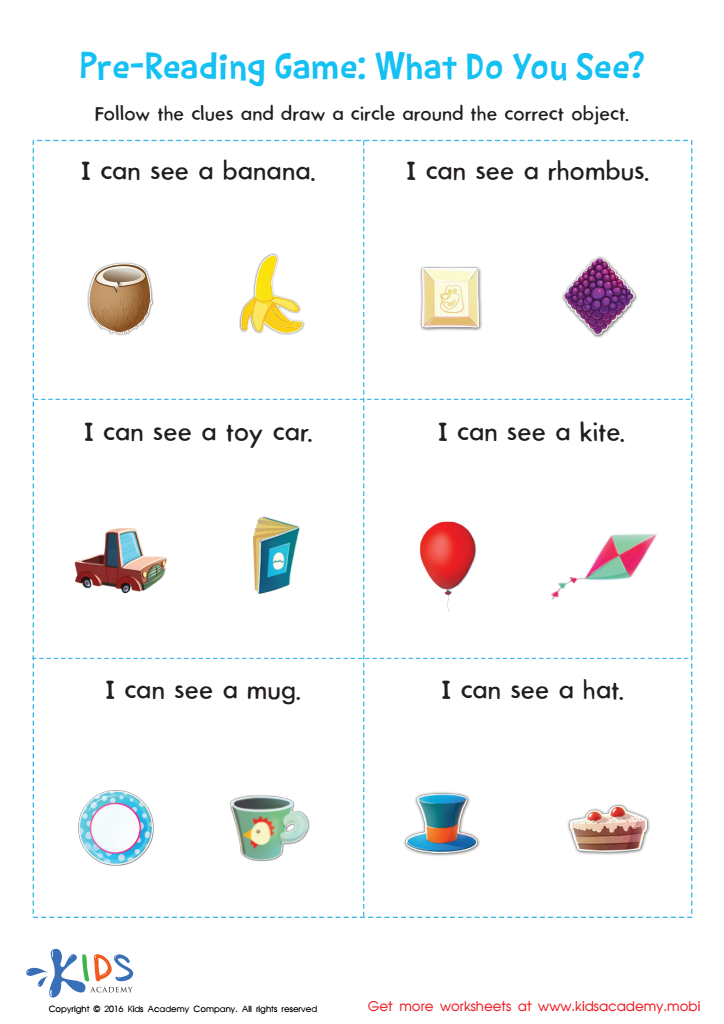
Pre–reading Worksheet: What Do You See?
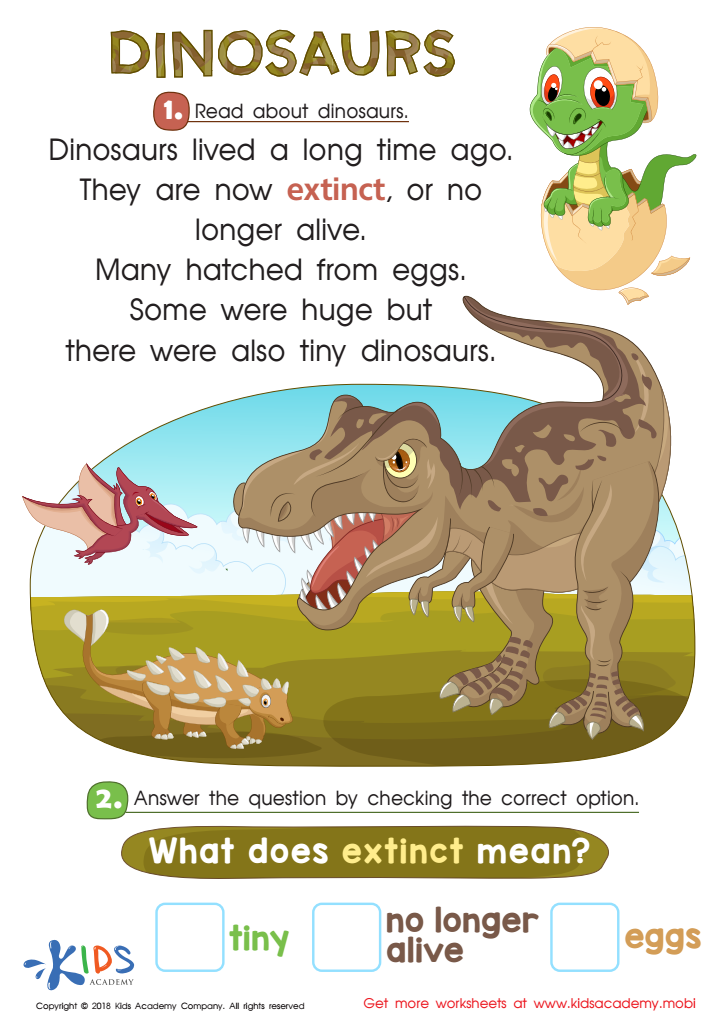
Dinosaurs Worksheet








Identification skills in reading are crucial for children aged 3-9, as they lay the foundation for literacy development. These skills include recognizing letters, sounds, and basic word patterns, which are essential for effective communication and comprehension. When parents and teachers prioritize developing these skills, they empower children to decode text and engage with reading early on.
By fostering identification skills, caregivers help build a child’s confidence and enthusiasm for reading. This sets the stage for lifelong learning and intellectual curiosity. Early readers are more likely to excel academically, as strong literacy skills correlate with future success across subjects. Additionally, reading strengthens cognitive abilities, enhances vocabulary, and improves critical thinking.
Parents and teachers also play a pivotal role in creating an environment rich in language. Engaging young learners in interactive reading sessions, using phonetic games, and encouraging letter recognition can transform the reading experience from mundane to exciting. By focusing on identification skills, caregivers not only equip children with the tools they need for academic success but also instill a love for reading that can cultivate imagination and empathy. In short, investing time and resources in reading identification skills yields enormous benefits that extend beyond the classroom into lifelong learning journeys.








