Moral lesson understanding Reading Worksheets for Ages 3-9
5 filtered results
-
From - To
Unlock your child's potential with our "Moral Lesson Understanding Reading Worksheets for Ages 3-9." Designed to engage young readers, these worksheets enhance comprehension while instilling valuable life lessons. Kids dive into captivating stories, unravel moral dilemmas, and learn to distinguish right from wrong. Our age-appropriate, interactive exercises encourage critical thinking and thoughtful discussions. Foster empathy and ethical reasoning in your child, ensuring strong moral foundations. Whether at home or in the classroom, these worksheets make learning both fun and meaningful. Give your child the tools to excel in reading and grow as a compassionate, ethical individual.
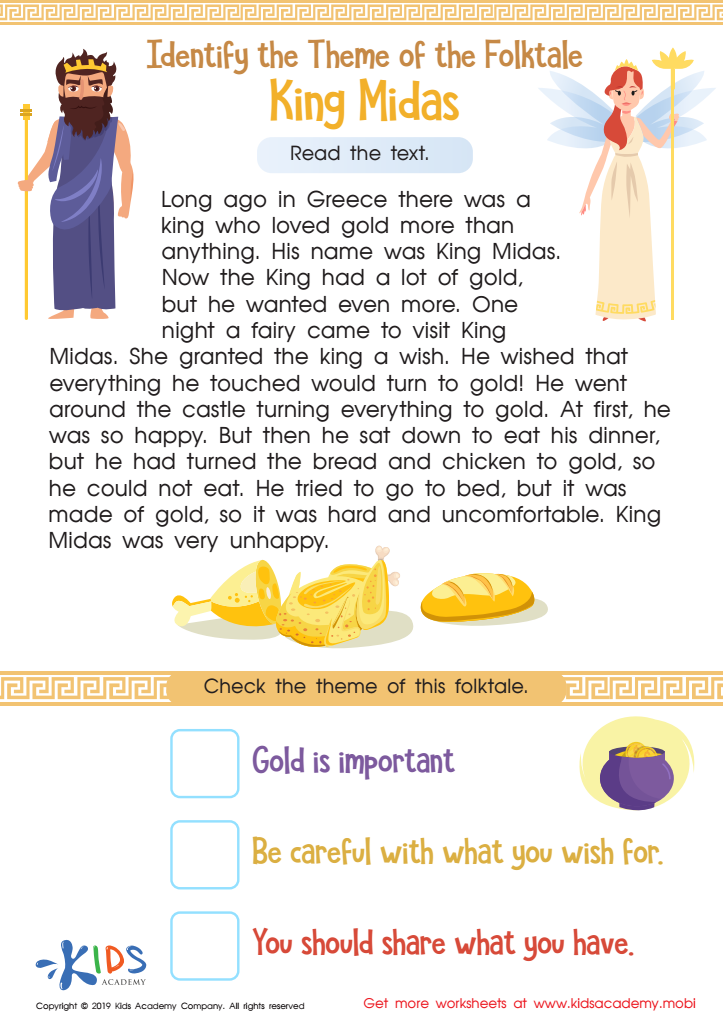
King Midas Worksheet
 Assign to My Students
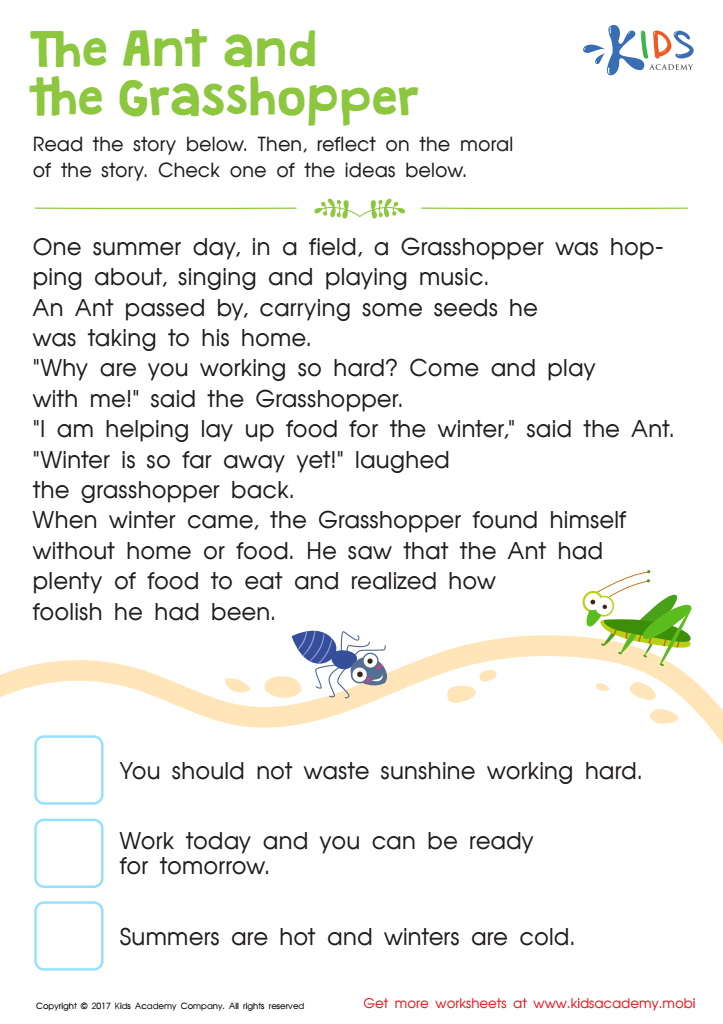
The Ant and The Grasshopper Printable
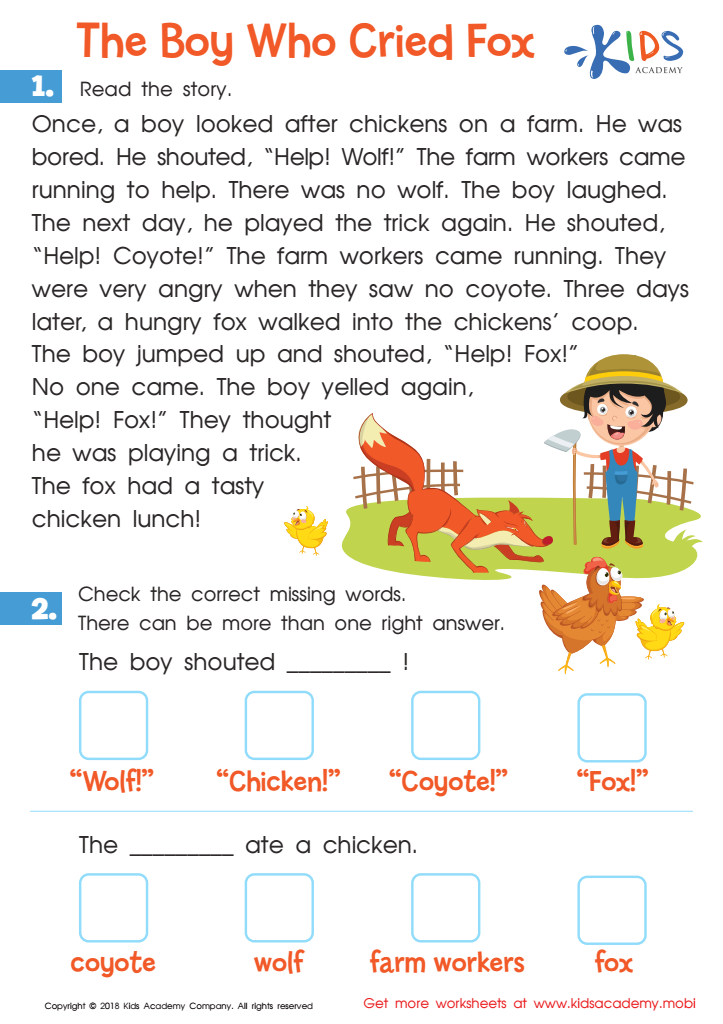
The Boy Who Cried Fox Worksheet
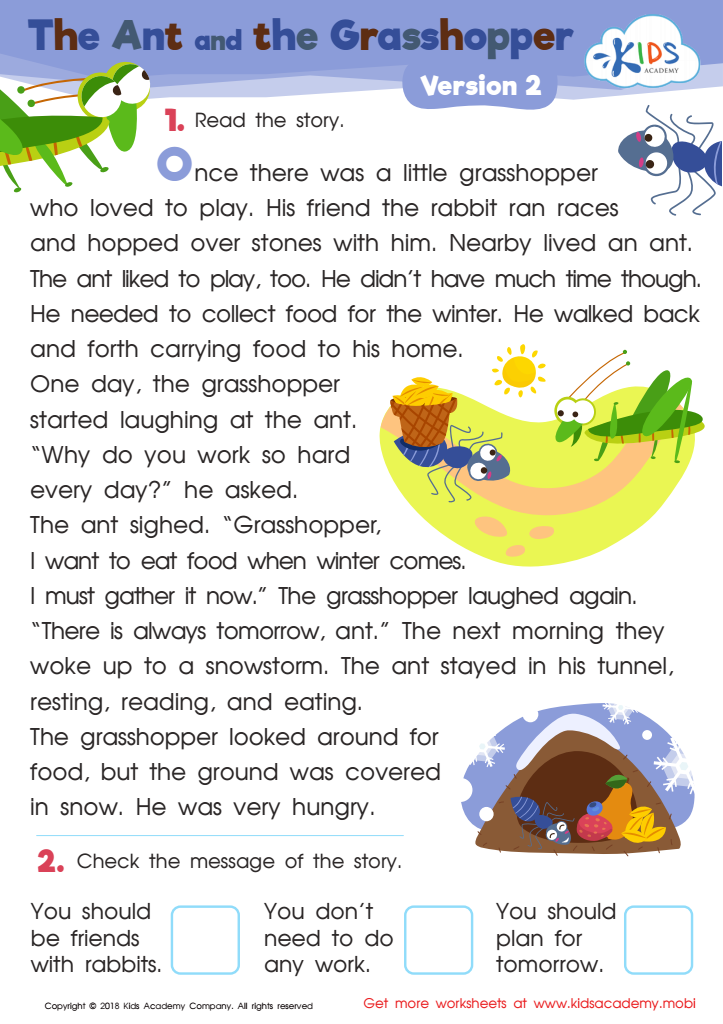
The Ant and The Grasshopper Version 2 Worksheet
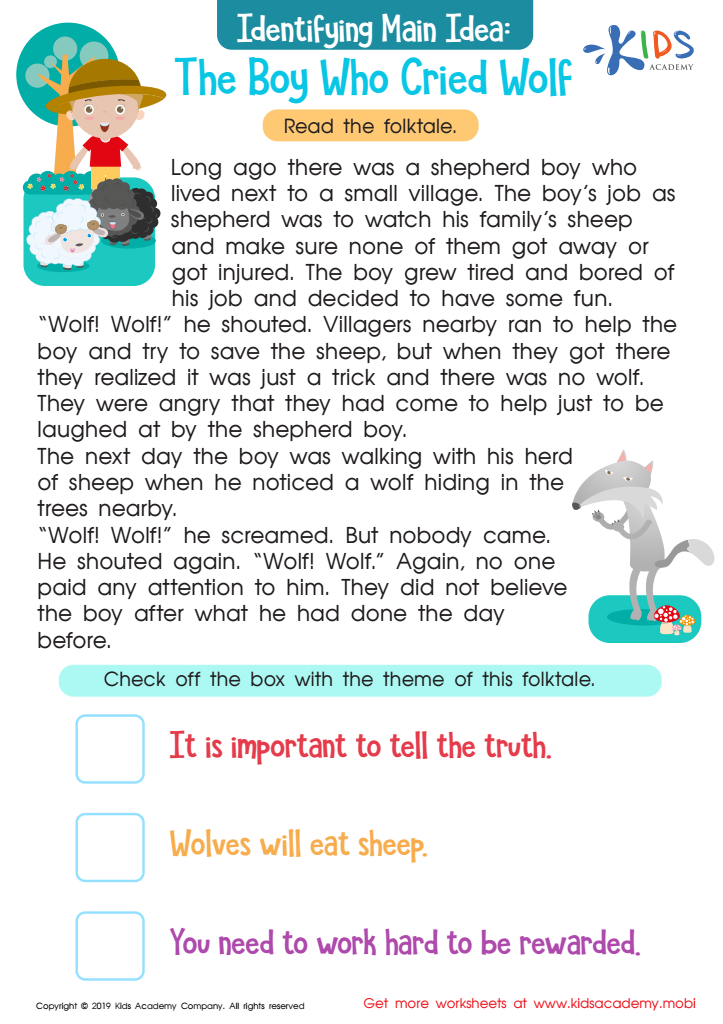
The Boy Who Cried Wolf Part 2 Worksheet








Introducing moral lessons to children aged 3-9 through reading is crucial for their development. Firstly, these years are formative, and children's brains are incredibly receptive to new information, including values and ethical principles. By integrating moral lessons in stories, parents and teachers help children understand right from wrong.
Moral stories often present complex scenarios in simple contexts, making them more relatable and easier for young minds to grasp. For instance, stories about sharing, honesty, or kindness teach empathy and social skills. Kids learn that their actions have consequences, fostering a sense of responsibility and helping them make better decisions.
Moreover, reading these stories together strengthens the bond between parents, teachers, and children. It opens up dialogues where children feel safe expressing their thoughts and questions about what they've read. These discussions provide adults an opportunity to guide children further and personalize lessons to their real-life experiences.
As children internalize these moral lessons, they build a strong moral foundation that influences their behavior not only in childhood but throughout their lives. In essence, reading moral stories to young children is not just about fostering a love for reading but also about nurturing compassionate, ethical, and socially responsible individuals.








