Understanding directions Reading Worksheets for Ages 3-9
3 filtered results
-
From - To
Enhance your child’s ability to follow instructions with our "Understanding Directions" reading worksheets, designed for ages 3-9. At Kids Academy, our engaging activities help children develop critical listening and comprehension skills, fundamental for academic success. With a variety of fun exercises tailored to different learning levels, kids practice following directions through interactive stories, colorful illustrations, and step-by-step tasks. These worksheets not only boost reading proficiency but also foster confidence and independence. Ideal for home or classroom use, our printable resources support children in becoming attentive and effective learners. Unlock your child's potential today with Kids Academy!
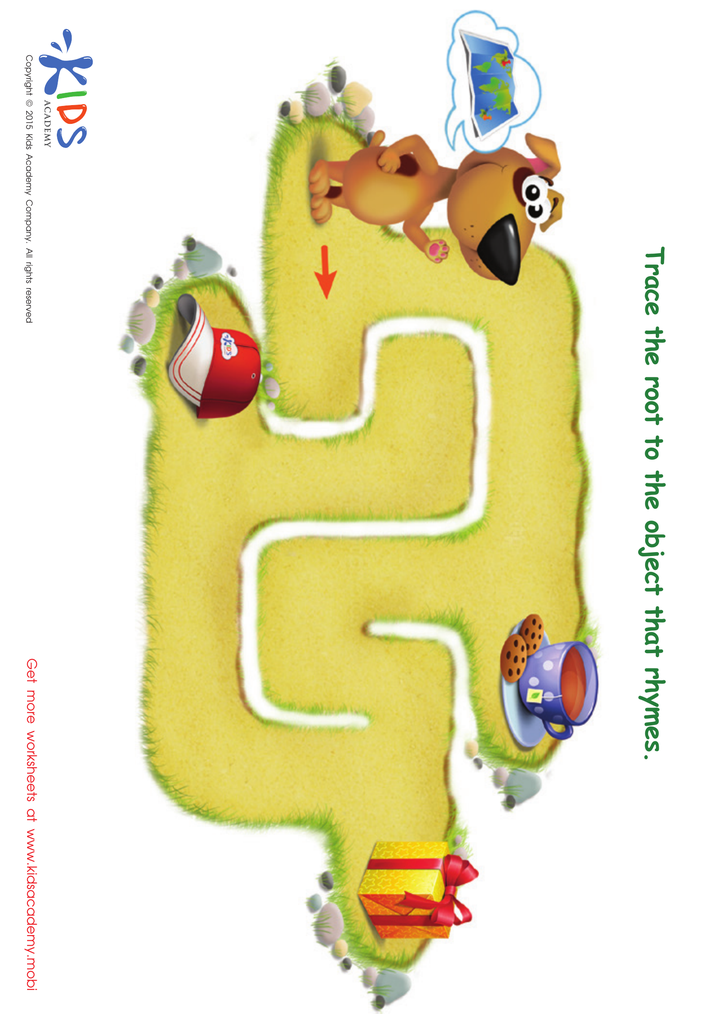
Map Rhyming Words Worksheet
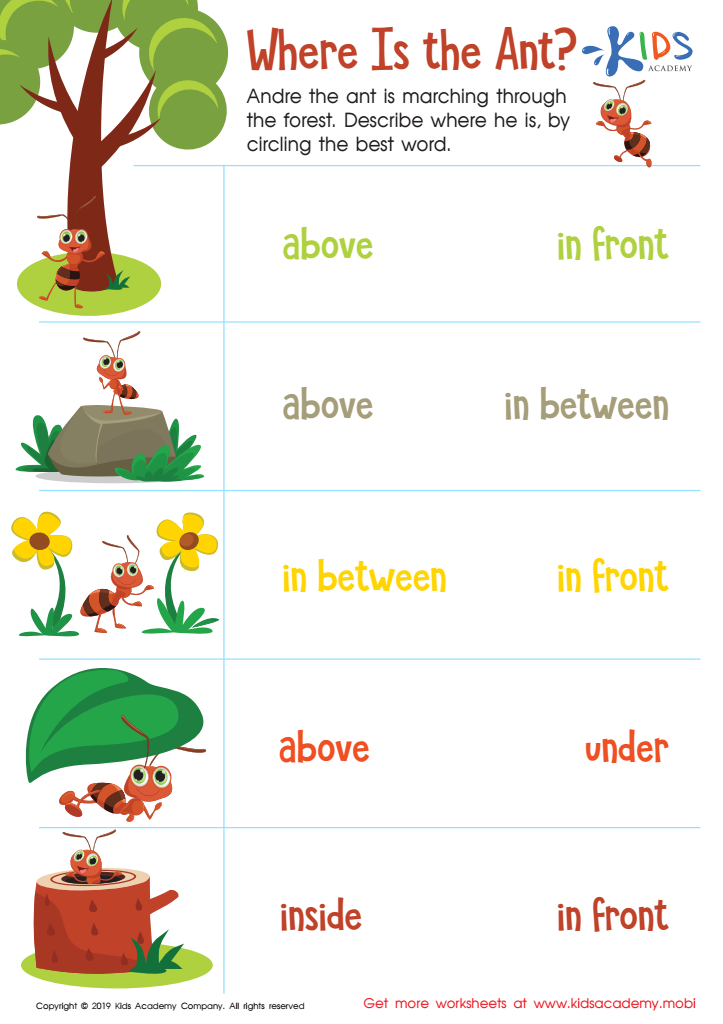
Where Is the Ant? Worksheet
 Assign to My Students
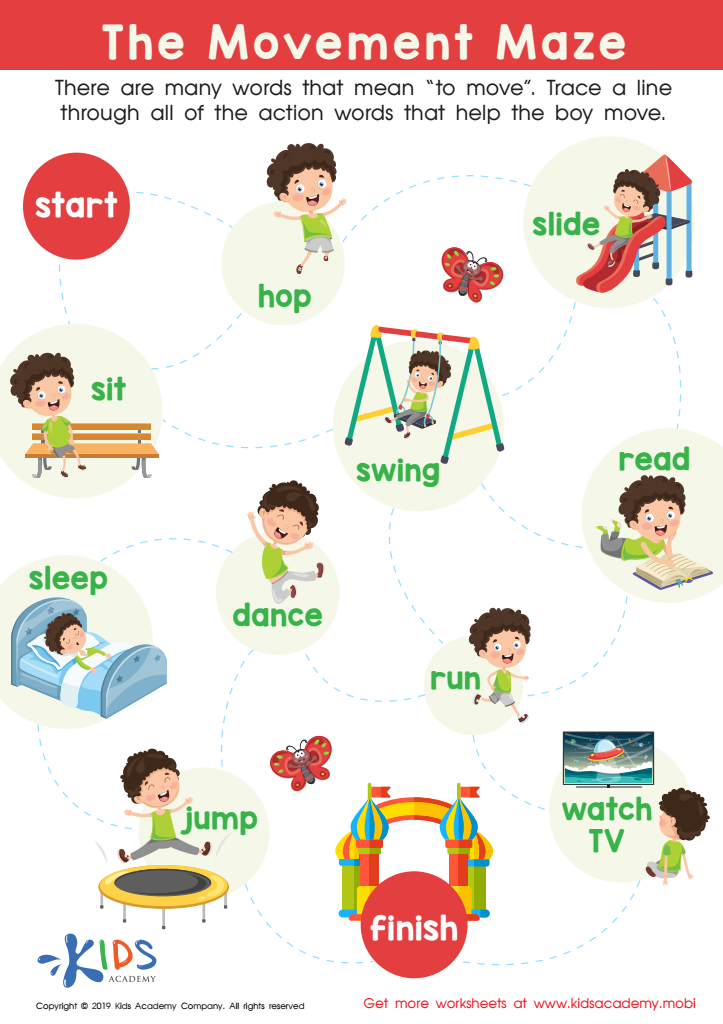
The Movement Maze Worksheet







Understanding directions is a foundational skill for young children aged 3-9, playing a crucial role in their overall development. Parents and teachers should care about fostering this ability because it significantly impacts a child's cognitive, social, and academic growth. Firstly, comprehending directions—whether written, verbal, or visual—enhances cognitive functions such as attention, memory, and processing speed. When children can follow instructions accurately, they are better equipped to engage in learning activities, complete tasks, and solve problems.
Socially, understanding directions helps children navigate social norms and routines. It allows them to participate effectively in group settings, follow games, and perform everyday activities, fostering a sense of independence and confidence. This skill also promotes safety; children need to understand and adhere to safety rules and directions to avoid potential hazards.
Academically, many school tasks, from reading comprehension to mathematical problem-solving, require the ability to understand and apply given directions. Proficiency in this area sets the foundation for critical thinking capabilities and effective study habits, leading to future academic success.
Parents and teachers can nurture this skill by providing clear, consistent directions, using age-appropriate language, and offering guided practice. Encouraging active listening and giving positive reinforcement also help children become proficient direction-followers, enhancing their learning experience and overall development.








