Understanding perspectives Reading Worksheets for Ages 3-9
3 filtered results
-
From - To
Enhance your child's reading skills with our "Understanding Perspectives" worksheets, designed for ages 3-9. These engaging activities help young learners recognize different viewpoints in stories, fostering empathy and critical thinking. By exploring various characters’ thoughts and feelings, children develop a deeper comprehension of narrative elements. Our worksheets are colorful, interactive, and aligned with educational standards, making learning enjoyable and effective. Parents and teachers can easily use these resources to support literacy development at home or in the classroom. Bring stories to life and cultivate a love for reading while encouraging your child to appreciate diverse perspectives. Start exploring today!
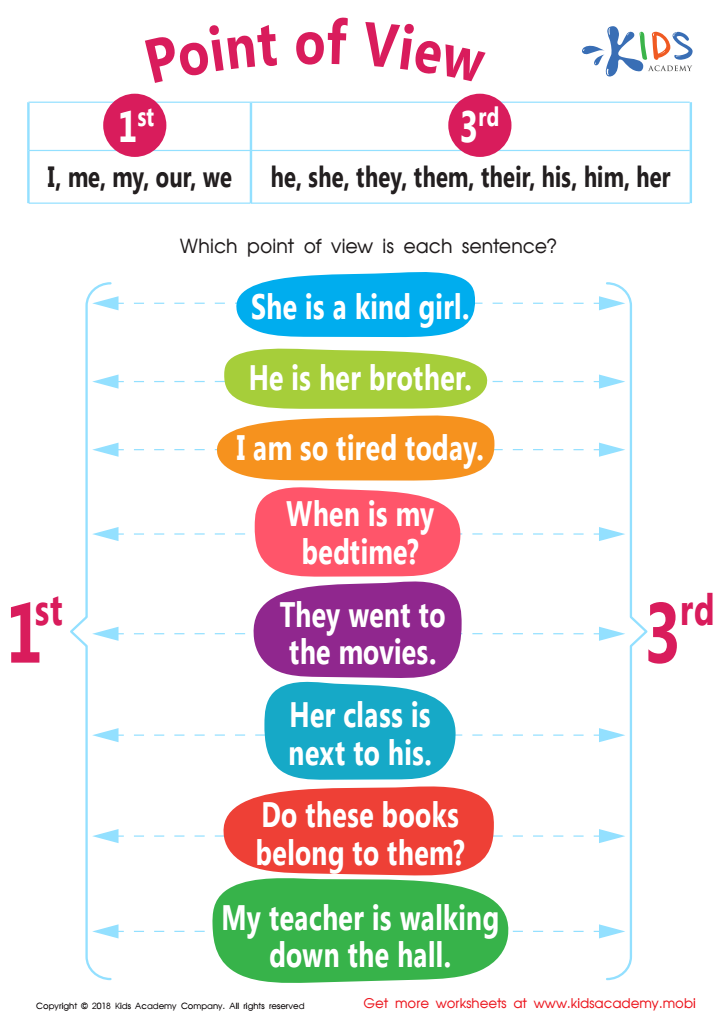
Point of View Worksheet
 Assign to My Students
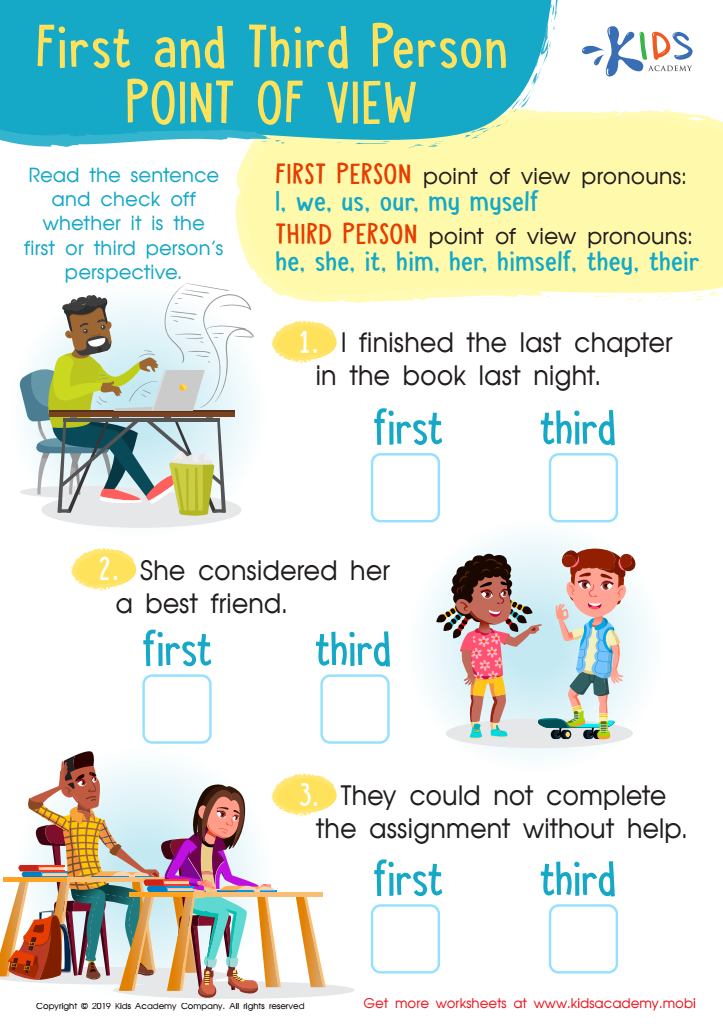
First and Third Person Point of View Worksheet
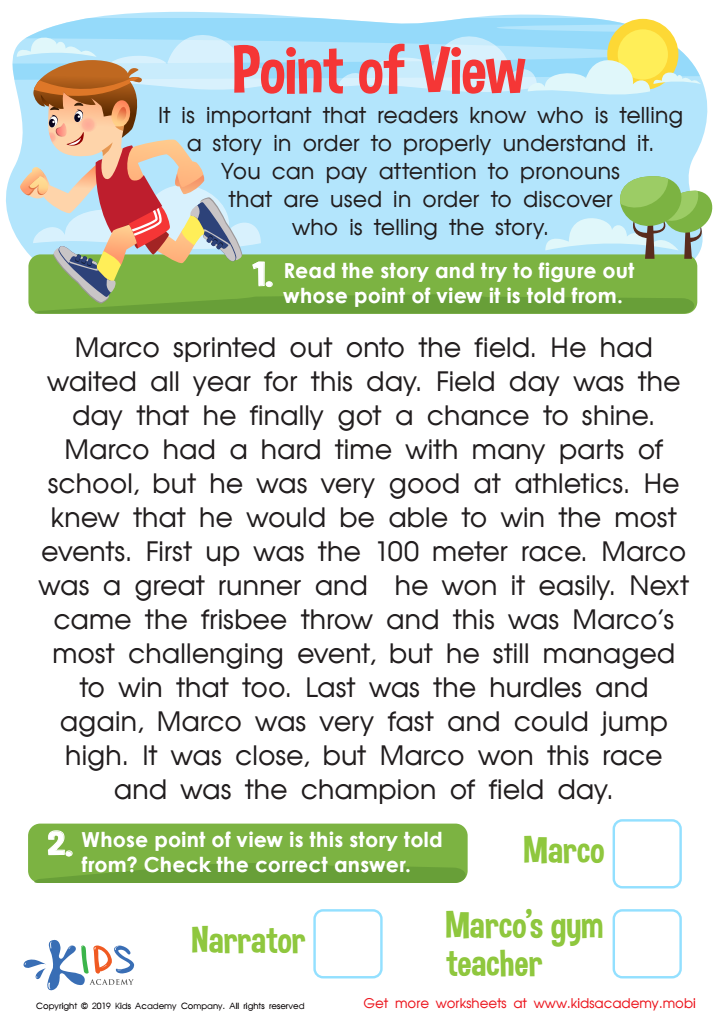
Point of View Worksheet







Understanding perspectives in reading is a crucial skill for children aged 3-9, as it lays the foundation for empathy, critical thinking, and effective communication. For parents and teachers, nurturing this skill fosters a more profound connection with literature, encouraging children to engage with stories beyond mere words.
When children learn to recognize different viewpoints, they develop the ability to empathize with characters and understand varied situations, which reflects directly on their social skills. This perspective-taking ability is vital as it enhances conflict resolution and promotes a sense of empathy in real-life scenarios, translating into better relationships with peers and adults.
Moreover, understanding perspectives aids comprehension and retention of information. When children grasp the motives, emotions, and backgrounds of characters, they become more invested in the narrative, resulting in improved analytical skills and enjoyment of reading.
Furthermore, this skill promotes diversity and inclusivity, as children are introduced to stories from a range of cultures and experiences. Engaging with diverse perspectives not only enriches their literary experience but also prepares them to navigate an increasingly complex world. Thus, supporting perspective-taking in reading is essential for holistic development, urging parents and teachers to prioritize this practice in early education.








