Understanding Rhymes Reading Worksheets for Ages 3-9
3 filtered results
-
From - To
Explore our engaging "Understanding Rhymes" reading worksheets designed for children aged 3-9! These worksheets help young learners recognize and appreciate the sounds in words through fun rhyming activities. With a variety of exercises, including matching, filling in the blanks, and more, children will develop phonemic awareness while enhancing their vocabulary and reading skills. Our colorful and interactive printable worksheets cater to different learning styles, making reading a joyful experience. Perfect for parents and educators, these resources foster creativity and early literacy. Dive into the wonderful world of rhymes and watch your child’s love for reading blossom!
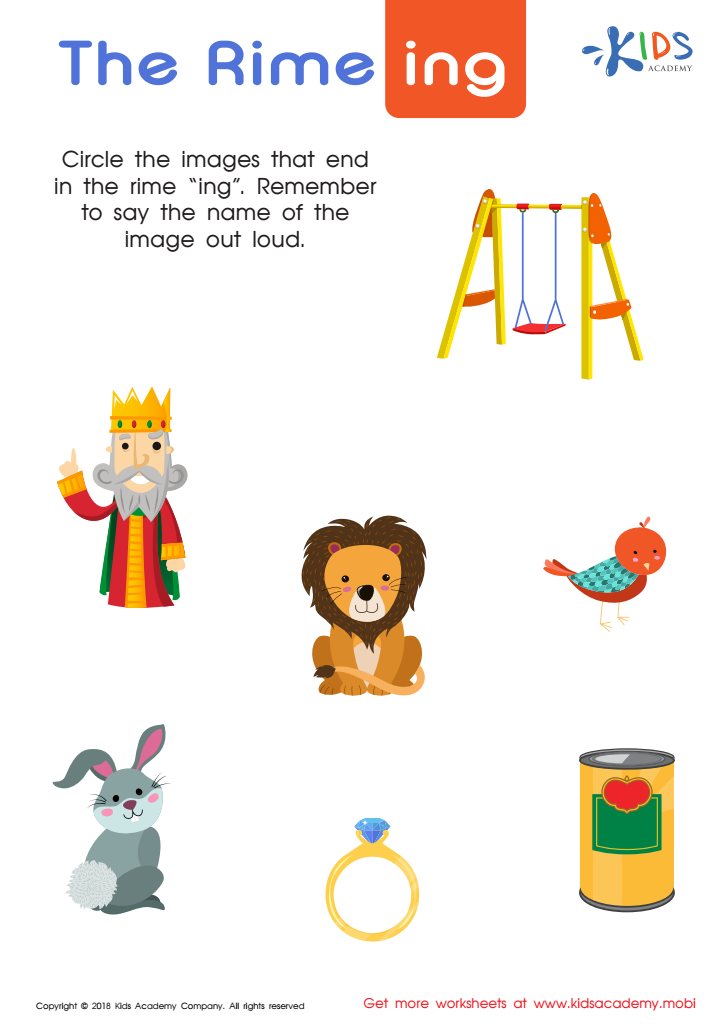
The Rime "ing" Worksheet
 Assign to My Students
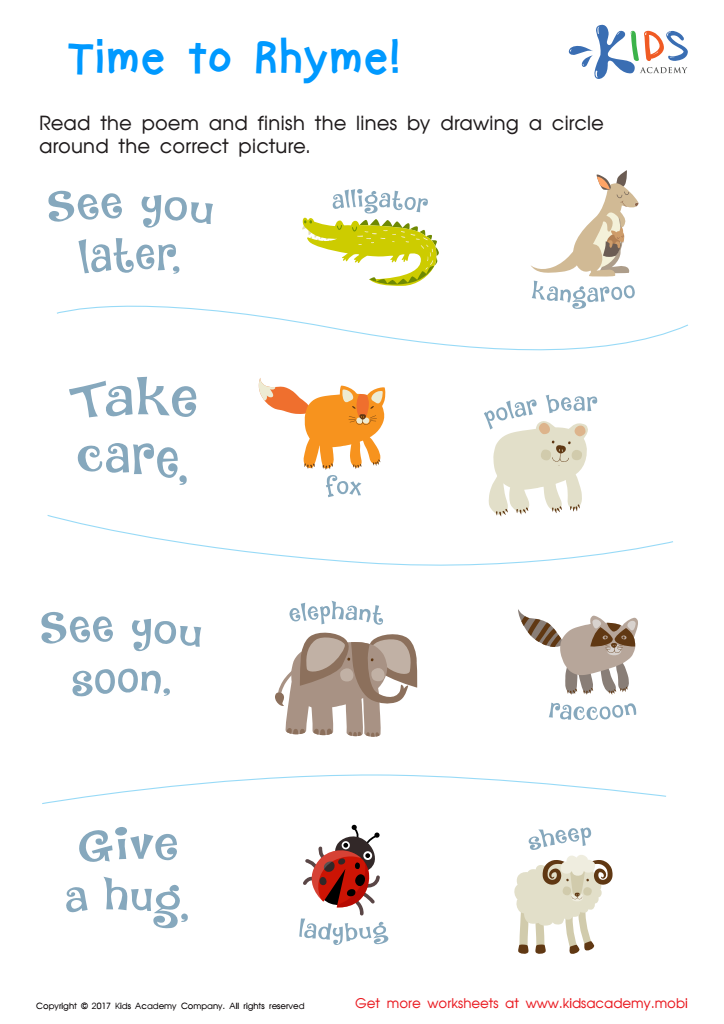
Time to Rhyme Rhyming Worksheet
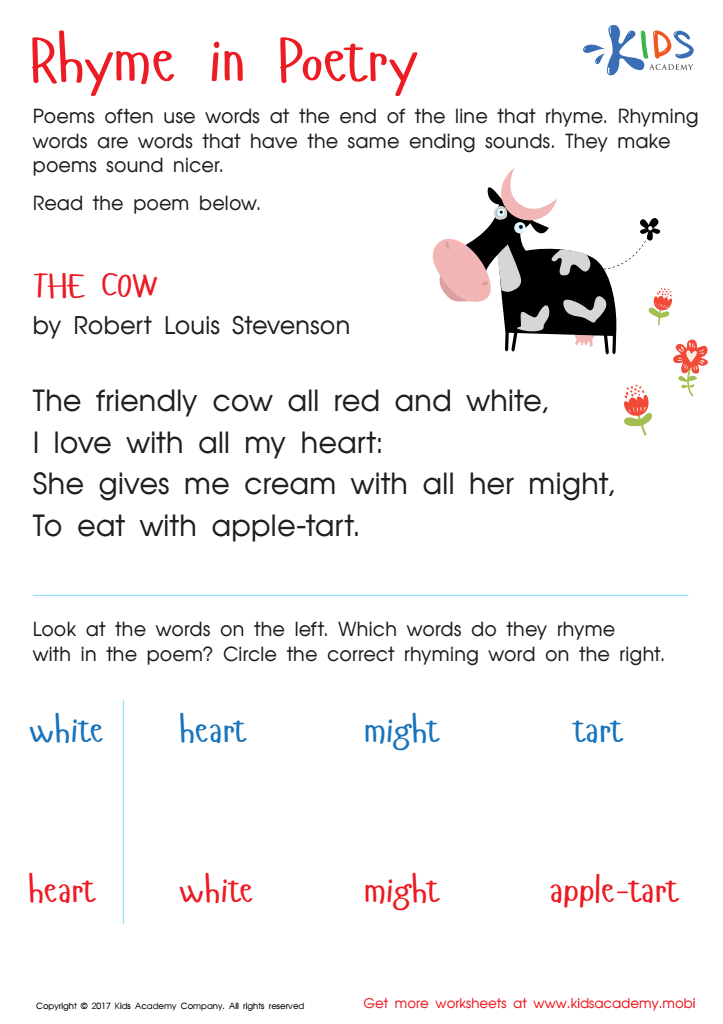
Rhyme In Poetry Worksheet






Understanding rhymes is a crucial aspect of early literacy development for children aged 3 to 9. For parents and teachers, nurturing a child's appreciation for rhyme can significantly impact their language skills, phonemic awareness, and overall reading proficiency.
Rhyming helps children recognize the sounds within words, which enhances their ability to decode and encode language. This phonological awareness is a foundational skill that makes reading easier and more intuitive. Engaging with rhymes also stimulates memory and fosters listening skills, as children begin to anticipate sounds and patterns in language.
Moreover, rhymes captivate children's attention and make learning fun. When children can engage with playful language through nursery rhymes, songs, and stories, they develop a love for reading and a deeper understanding of rhythm and tone. This can lead to increased vocabulary and creativity in expression.
For educators and parents, incorporating rhymes into daily activities can promote bonding and offer an enjoyable way to engage with literacy. Ultimately, understanding and appreciating rhymes paves the way for children to become skilled and confident readers, setting a solid foundation for their educational journey ahead. Thus, prioritizing rhyming activities is essential for fostering a lifelong love of language and learning.








