
Word identification Reading Worksheets for Ages 3-9
7 filtered results
Difficulty Level
Grade
Age
-
From - To
Subject
Activity
Standards
Explore our engaging Word Identification Reading Worksheets designed specifically for ages 3-9! These interactive resources help young learners develop essential reading skills through fun activities tailored to their age and learning level. Our worksheets focus on identifying common words, enhancing vocabulary, and building confidence in reading. With a variety of colorful and engaging designs, children will enjoy practicing letter recognition and word formation. Perfect for both classroom settings and home learning, these worksheets offer parents and educators a valuable tool for teaching early literacy. Visit us now to inspire a love for reading and accelerate your child’s learning journey!
Favorites
With answer key
Interactive
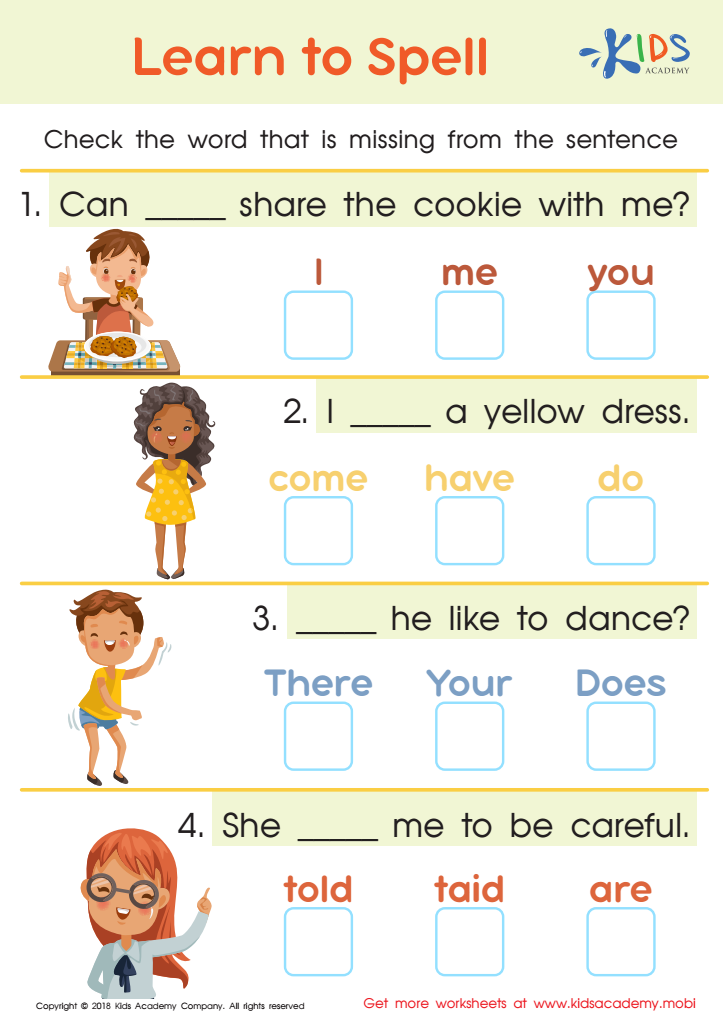
Learn to Spell Worksheet
Help sharpen spelling skills with a simple worksheet. Read sentences aloud and show which word is missing. Ask students to pick the correct word from the options. Ensure they check the missing word for accuracy.
 Assign to My Students
Learn to Spell Worksheet
Worksheet
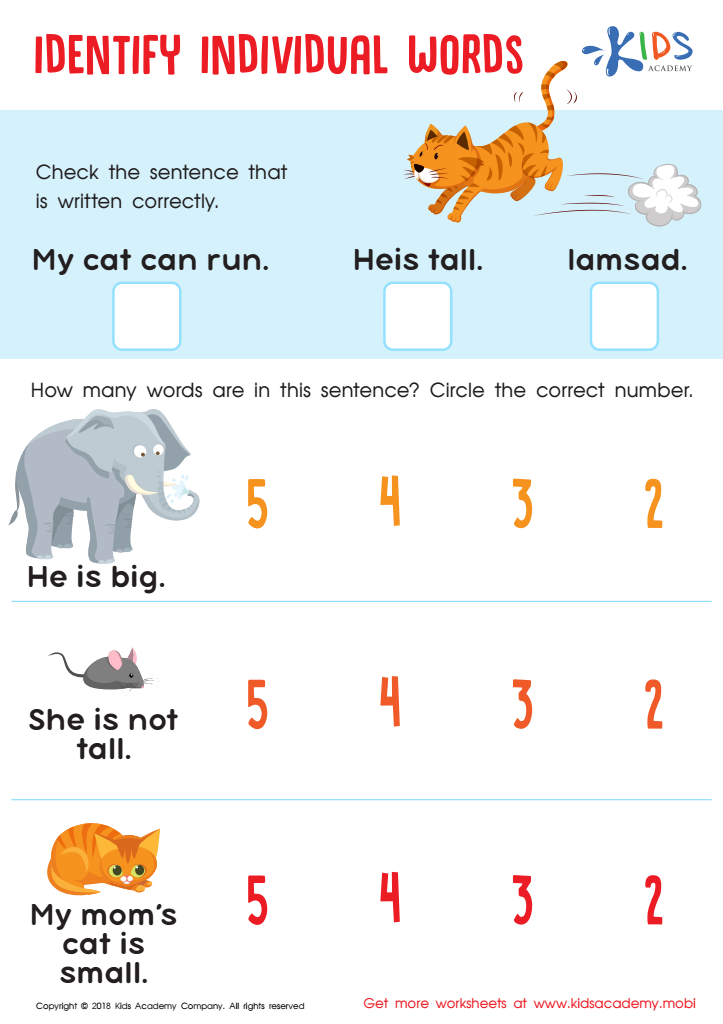
Identify Individual Words Worksheet
Does your child have trouble constructing sentences? Check out this worksheet! It will help them identify words that make up sentences and assess how well they can read and answer questions. The first part tests how well they can recognize a written sentence. The second part has them read questions and circle the correct number of words. Give it a try!
Identify Individual Words Worksheet
Worksheet
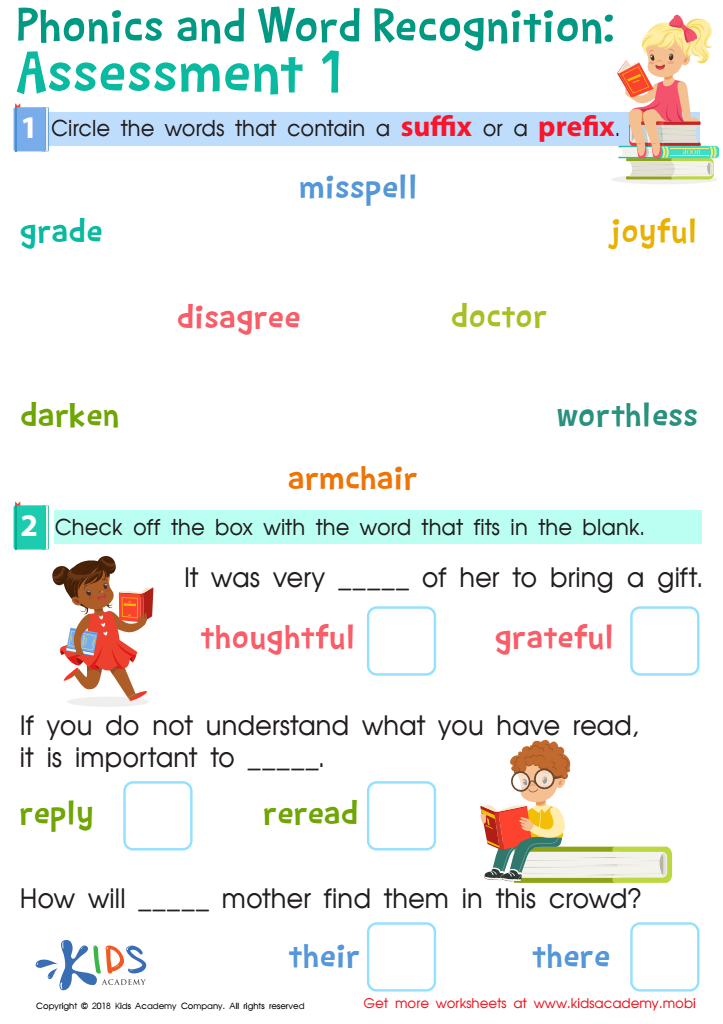
Phonics and Word Recognition: Assessment 1 Worksheet
Explain prefixes (words added to start of another word to give it a new meaning) and suffixes (added to end of word to change its meaning) to your kids with examples like 'unhappy' (prefix) and 'forgetful' (suffix). Now, help your child complete this worksheet, including circling words and checking boxes.
Phonics and Word Recognition: Assessment 1 Worksheet
Worksheet
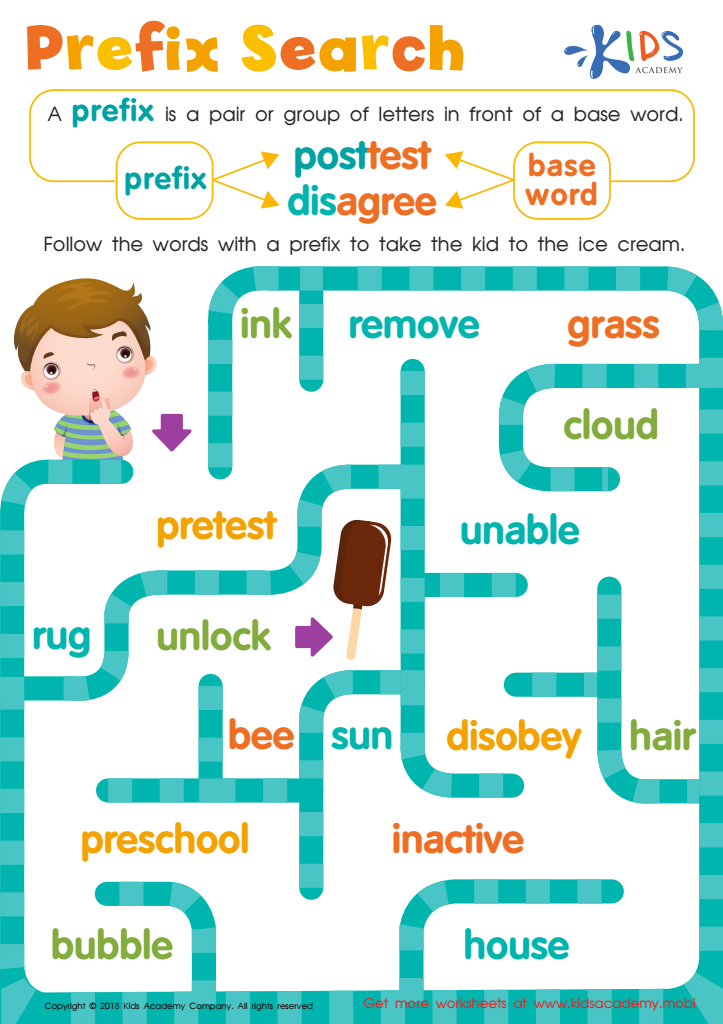
Reading: Prefix Search Worksheet
Maze your way through prefixes! This worksheet helps students practice reading new words with a prefix and figuring out the base word. An understanding of prefixes gives students the skills to comprehend new words. A fun and useful activity for the reading classroom!
Reading: Prefix Search Worksheet
Worksheet
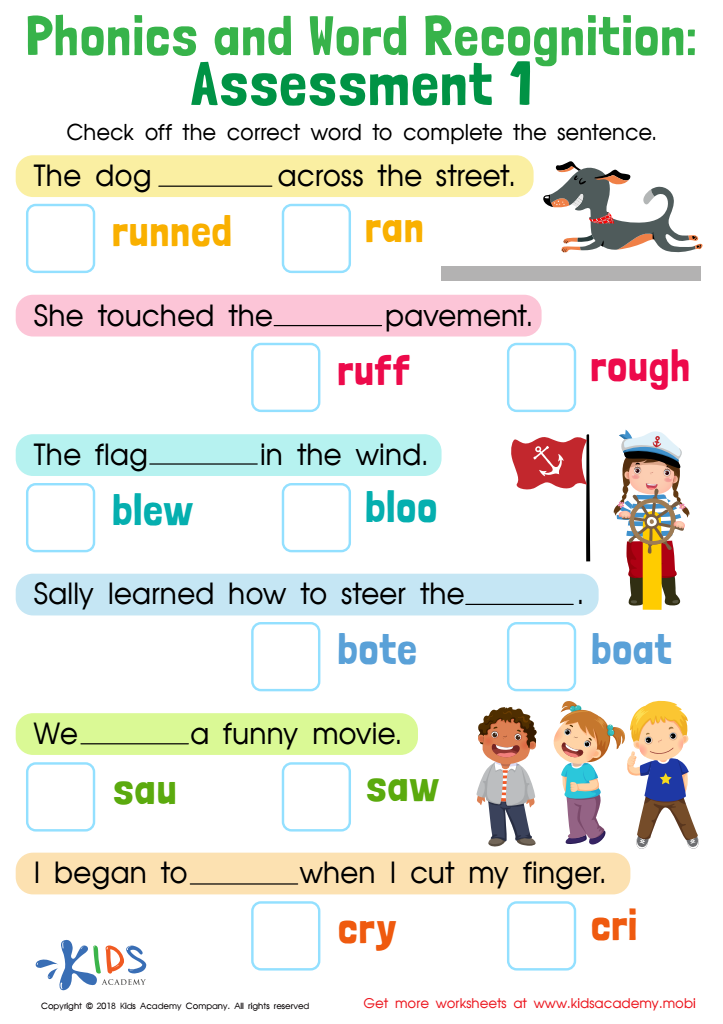
Phonics and Word Recognition: Assessment 1 Worksheet
This worksheet tests phonetics and word recognition. Students should be familiar with past tense verbs. Read incomplete sentences, then read multiple options and help students select the correct one.
Phonics and Word Recognition: Assessment 1 Worksheet
Worksheet
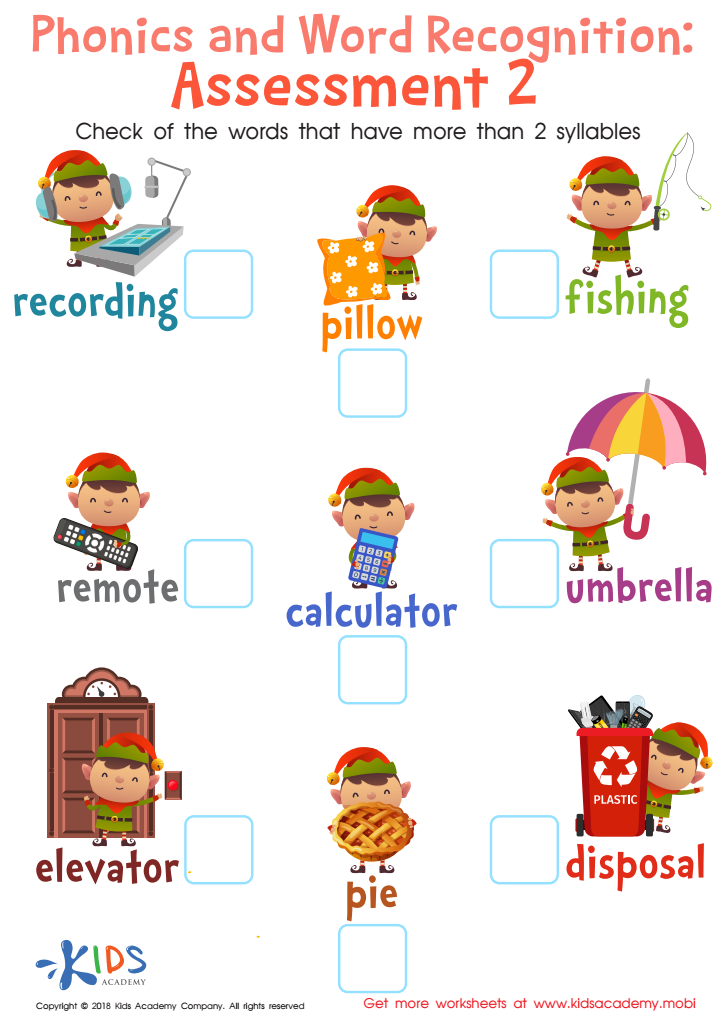
Phonics and Word Recognition: Assessment 2 Worksheet
Help your kids learn proper pronunciation by counting syllables. Most words they'll encounter have 1-3 syllables, making them simple to say. Have them repeat the words in your worksheet after you. Focus on longer words with more than two syllables.
Phonics and Word Recognition: Assessment 2 Worksheet
Worksheet
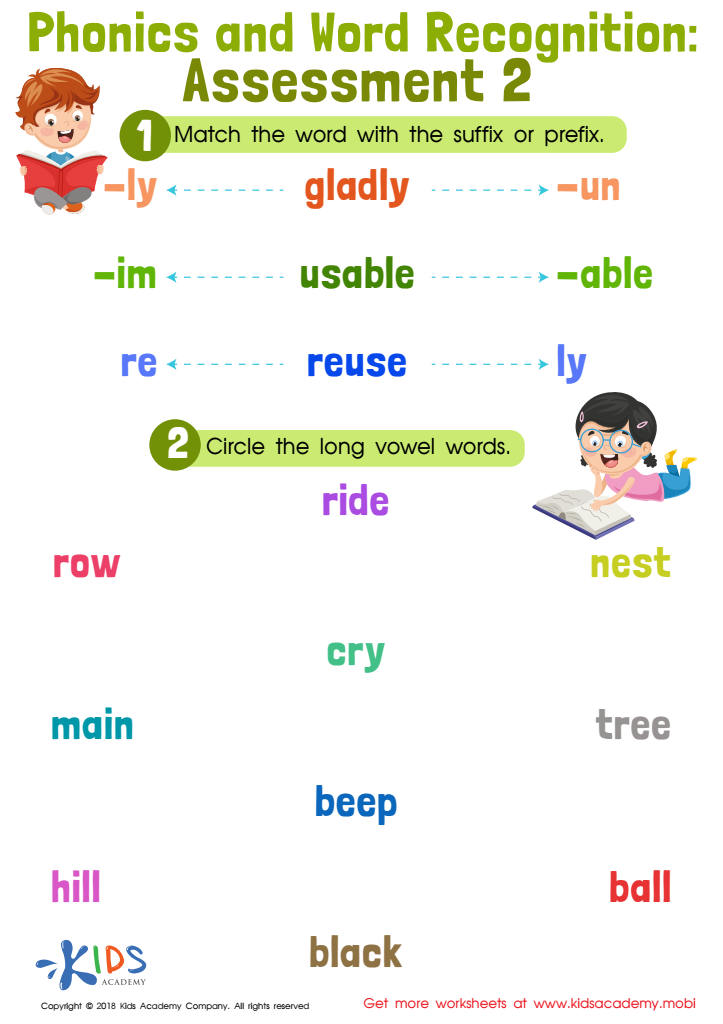
Phonics and Word Recognition: Assessment 2
Give kids common examples of suffixes and prefixes, such as "un-," "unhappy," "ness," "happyness." Ask them to match each word in the word recognition exercise to the correct suffix or prefix. Test phonetic understanding by having them circle the long vowel sounds.
Phonics and Word Recognition: Assessment 2
Worksheet
Join Kids Academy for Free
Who is primarily going to use this learning content?








Word identification reading is a crucial component of early literacy for children ages 3-9. Parents and teachers should care about this skill because it lays the foundation for effective reading and overall academic success. At this age, children are developing their language skills, and understanding how to recognize and decode words is essential for mastering reading comprehension.
When children improve their word identification skills, they become more confident readers. This confidence can lead to a greater enthusiasm for reading, encouraging lifelong learning habits. Additionally, proficient word identification supports vocabulary development; as children learn new words, they naturally expand their language usage, which in turn enhances their communication skills.
Moreover, early intervention in word identification can address potential literacy challenges before they become significant hurdles. Recognizing and tackling such issues early leads to better outcomes, reducing the risk of future struggles in reading and academic performance.
Finally, by fostering strong word identification skills, parents and teachers promote independent reading. Children who can identify words on their own not only enjoy books more but are also empowered to explore various subjects, broadening their horizons. Overall, an emphasis on word identification reading is fundamental for developing skilled, confident readers and successful learners.








