
Counting practice Reading Comprehension Worksheets for Ages 3-9
6 filtered results
Difficulty Level
Grade
Age
-
From - To
Subject
Activity
Standards
Enhance your child's learning experience with our Counting Practice Reading Comprehension Worksheets, designed specifically for ages 3 to 9. These engaging worksheets not only foster early reading skills but also intertwine essential counting exercises, turning learning into a fun adventure. Each activity stimulates curiosity and critical thinking, allowing students to interpret texts while practicing mathematical concepts. Perfect for classrooms or home learning, our materials cater to various learning styles and skill levels. Help your child build a strong foundation in both literacy and numeracy with our vibrant, age-appropriate worksheets—making learning enjoyable and effective every step of the way!
Favorites
With answer key
Interactive
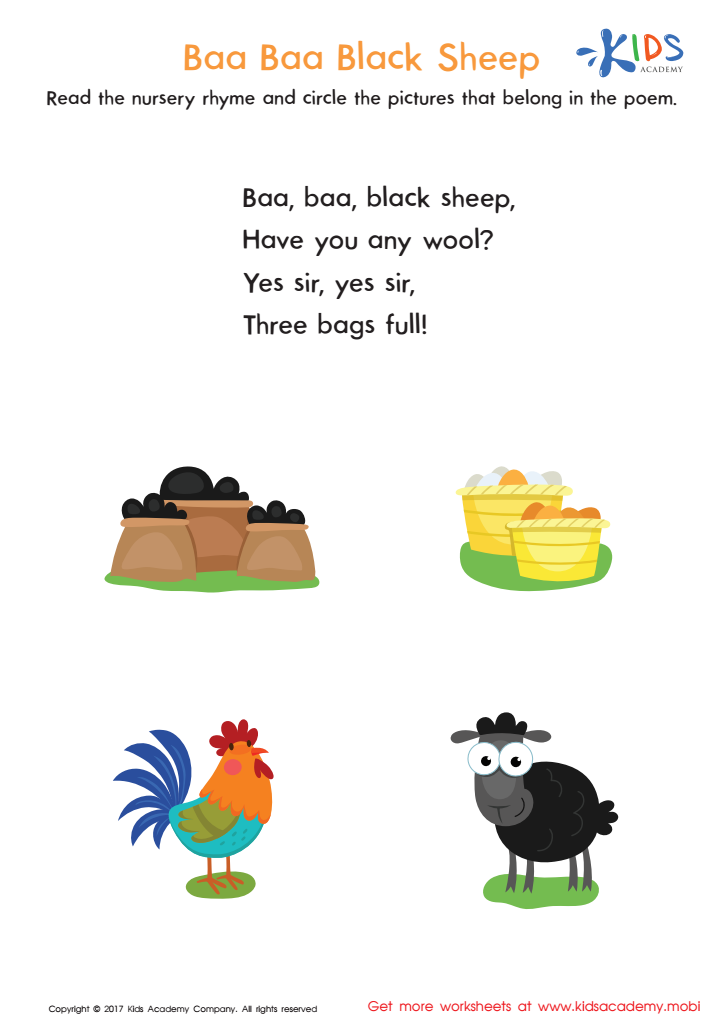
Baa Baa Black Sheep Printable
Jumpstart your child's reading skills with this printable Baa Baa Black Sheep worksheet! Recite the lines with them, then have them select the pictures associated with the poem to test comprehension. Fun and educational!
 Assign to My Students
Baa Baa Black Sheep Printable
Worksheet
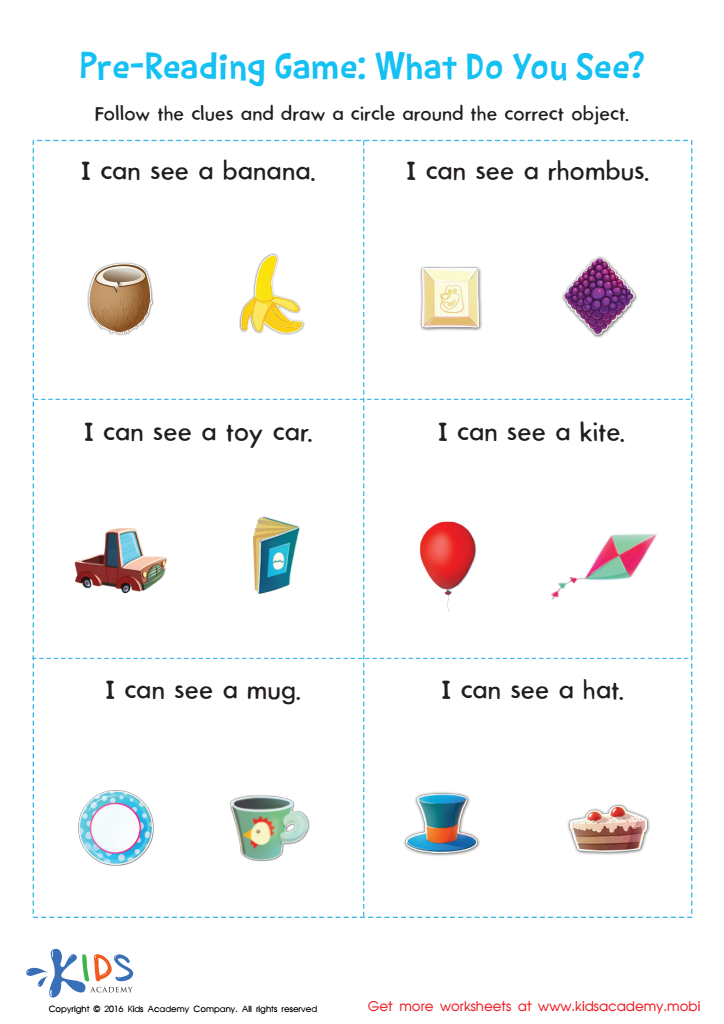
Pre–reading Worksheet: What Do You See?
Get started with this pre-reading worksheet to build your child's early literacy skills. Model, read aloud, and provide consistent repetition for successful learning.
Pre–reading Worksheet: What Do You See?
Worksheet
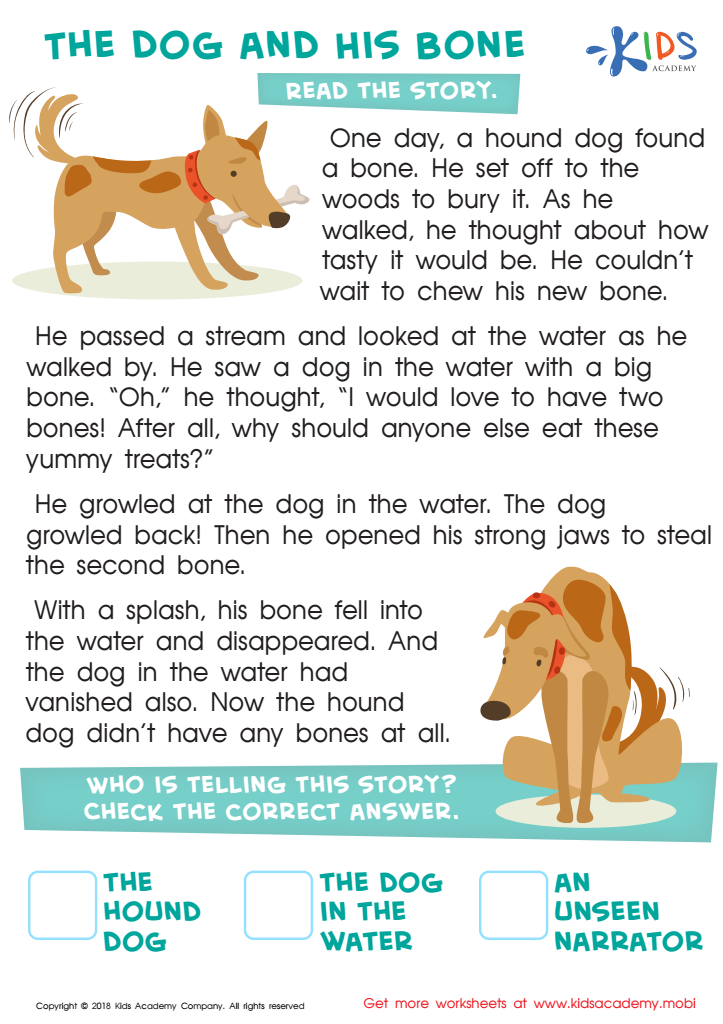
The Dog and His Bone Worksheet
Read the story of The Dog and His Bone to your kids, making sure they take in the details. Ask them the questions in this worksheet and help them check the answers. Encourage them to think carefully.
The Dog and His Bone Worksheet
Worksheet
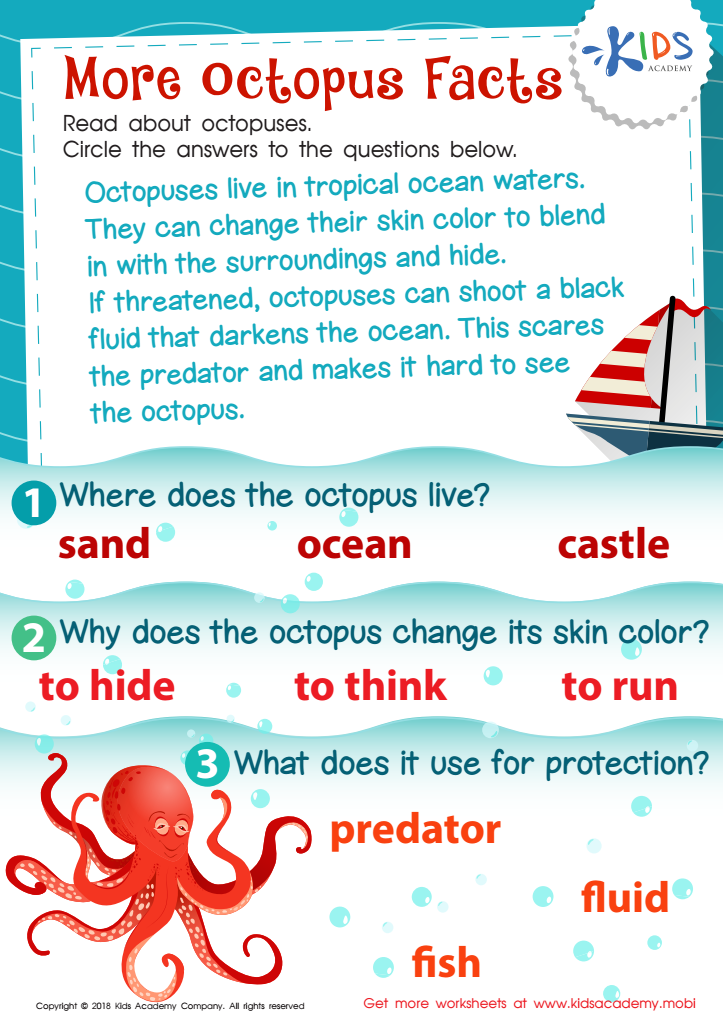
More Octopus Facts Worksheet
This worksheet will help your kids learn about the Octopus. Read the text carefully and have kids read with you. Now, ask them questions based on it and help them answer them by circling the right choices. Teaching your kids facts about animals will help them in the long run.
More Octopus Facts Worksheet
Worksheet
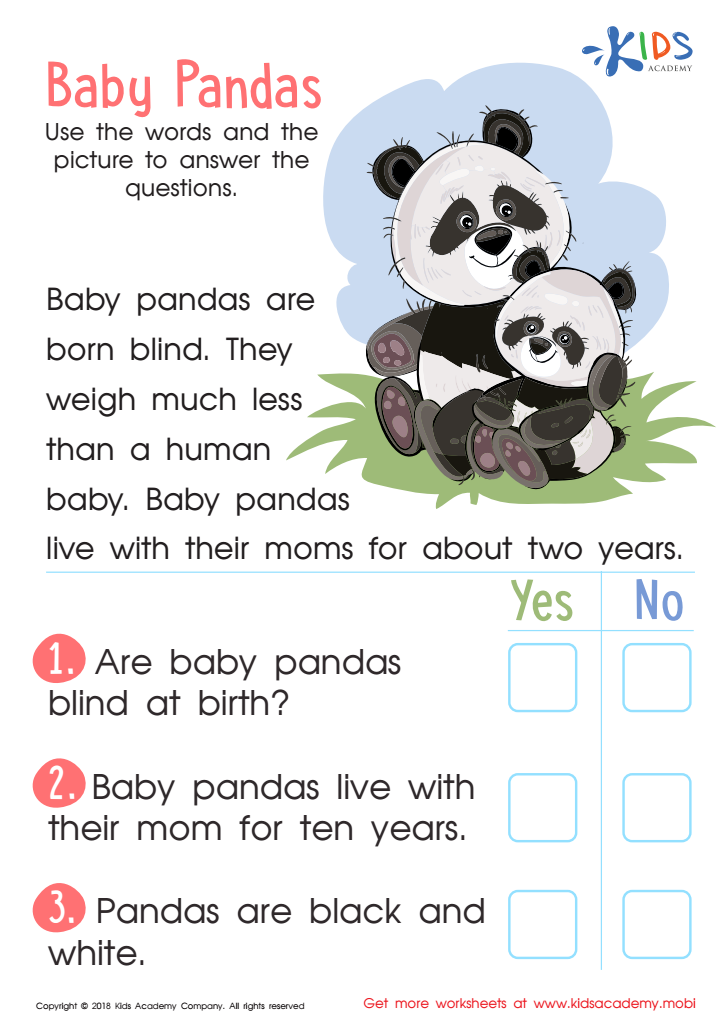
Baby Pandas Worksheet
Kids can't usually see pandas in person, but they can learn more about them with this fun worksheet! It includes a passage and picture, plus questions at the end to check kids' reading comprehension. Just ask them to read the text, check the "yes" and "no" boxes, and enjoy the fascinating facts about baby pandas!
Baby Pandas Worksheet
Worksheet
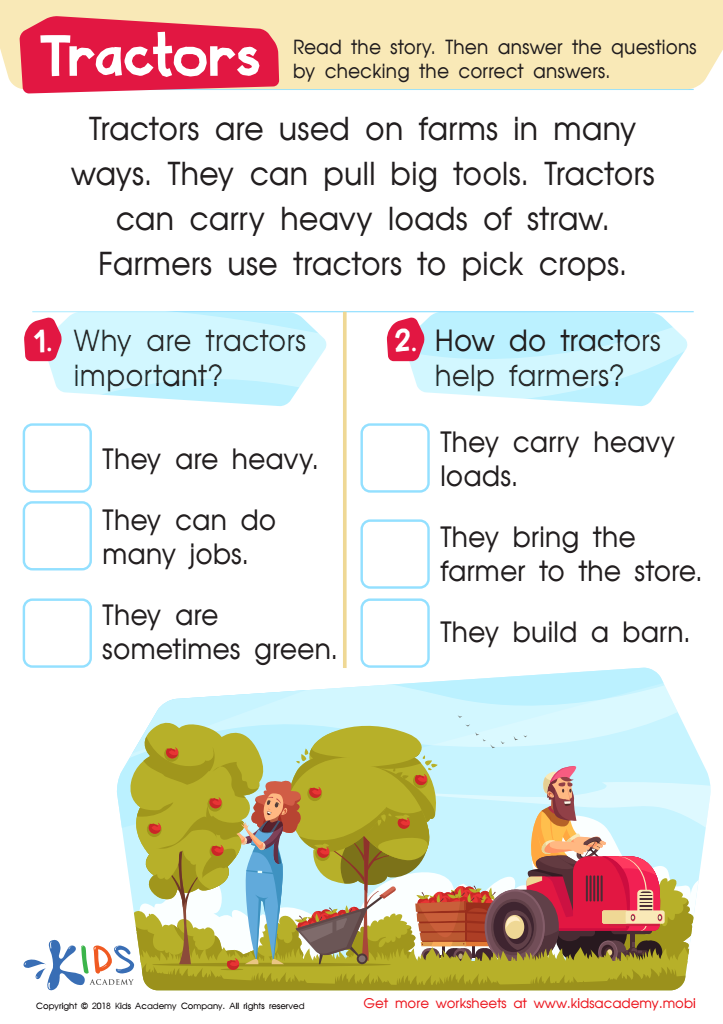
Tractors Worksheet
Kids love tractors! Let them read about what they do, what they use, and who uses them with this free worksheet. After reading, they can answer reading comprehension questions to test their knowledge; multiple choices make it easy! Little do they know, they're boosting their literacy skills along the way!
Tractors Worksheet
Worksheet
Join Kids Academy for Free
Who is primarily going to use this learning content?







Counting practice and reading comprehension are foundational skills that significantly influence a child's early academic success. For parents and teachers, nurturing these competencies in children ages 3-9 is crucial for several reasons.
Firstly, counting practice develops a child's numerical sense, which is vital for understanding more advanced mathematical concepts later on. As children learn to count, they begin to grasp the concept of quantity, patterns, and basic operations, laying a solid ground for future math skills critical in everyday life.
Similarly, reading comprehension fosters language development, critical thinking, and creativity. When children engage with stories and texts, they learn to interpret information, make connections, and understand context, which enhances their overall cognitive abilities. Strong comprehension skills also result in better communication, increased vocabulary, and improved writing skills.
These practices are interconnected; as children count objects in a story, they engage both numeracy and literacy, reinforcing learning across subjects. Moreover, active participation in counting and reading activities fosters a love for learning, making education a joyful experience. By prioritizing these skills, parents and teachers equip children with the tools they need for lifelong success and a smoother transition into more complex academic challenges.








