Moral understanding Reading Comprehension Worksheets for Ages 3-9
5 filtered results
-
From - To
Discover our engaging Moral Understanding Reading Comprehension Worksheets for ages 3-9, designed to enhance young learners' social and emotional skills. These worksheets help children grasp essential moral values through fun stories and intriguing questions, fostering discussions about kindness, honesty, empathy, and respect. Tailored to fit early grade curriculums, our resources encourage critical thinking and reflection, enabling kids to connect stories to real-life situations. With colorful illustrations and age-appropriate content, these worksheets make learning enjoyable while building a strong moral foundation. Perfect for classrooms and home study, they ensure children not only understand stories but also appreciate their life lessons. Explore our collection today!
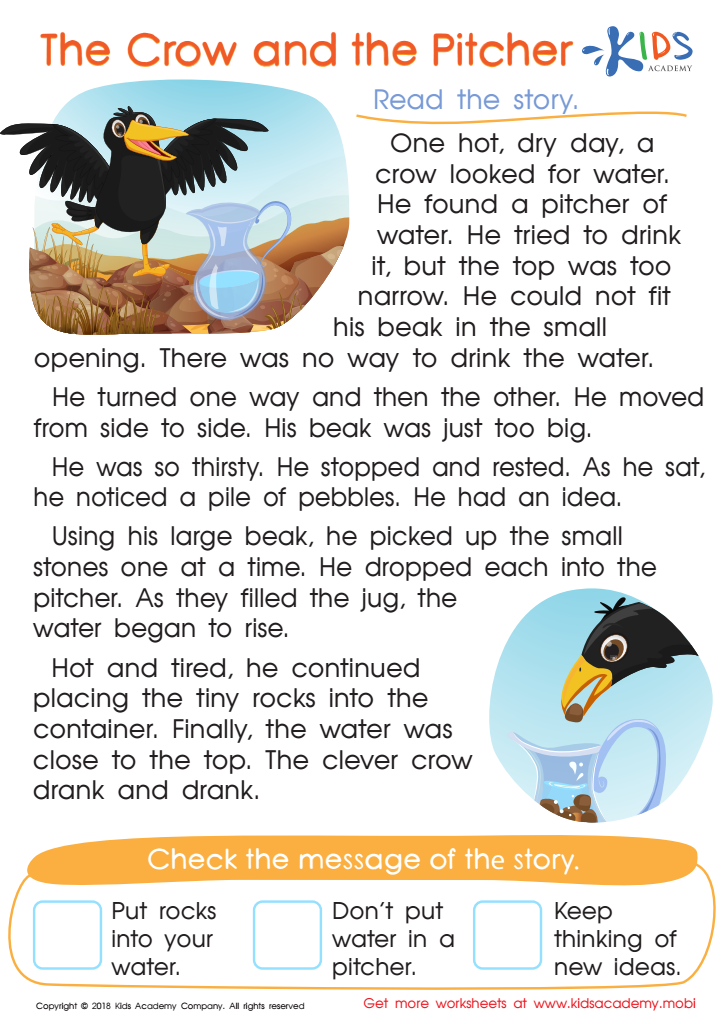
The Crow and the Pitcher Worksheet
 Assign to My Students
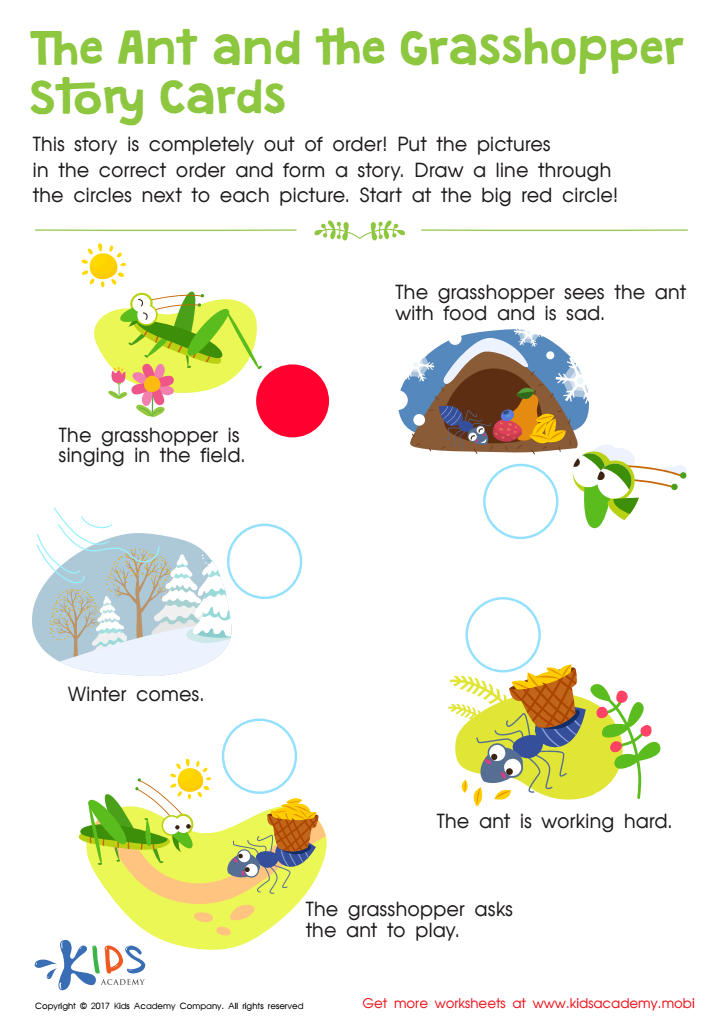
The Ant and The Grasshopper Worksheet
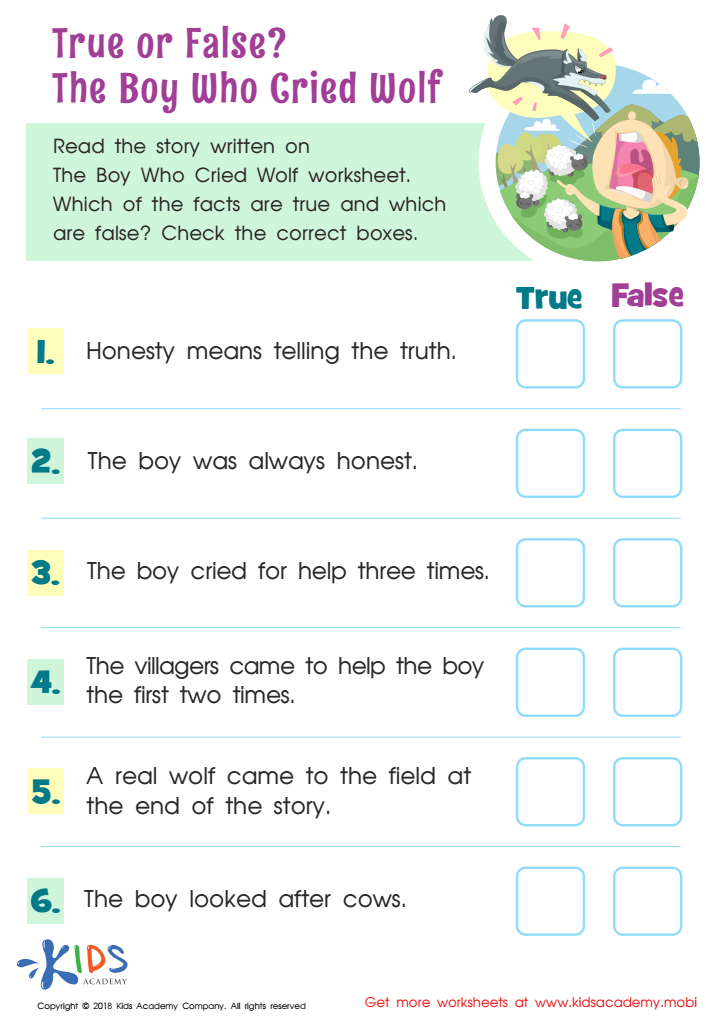
True or False? The Boy Who Cried Wolf Worksheet
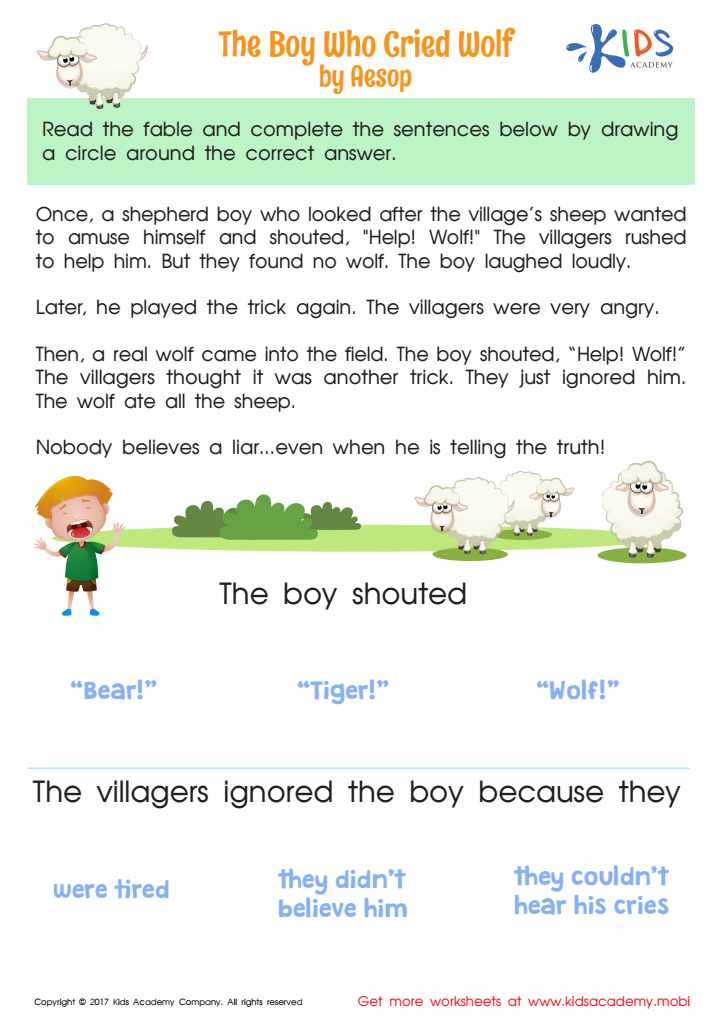
The Boy Who Cried Wolf Worksheet
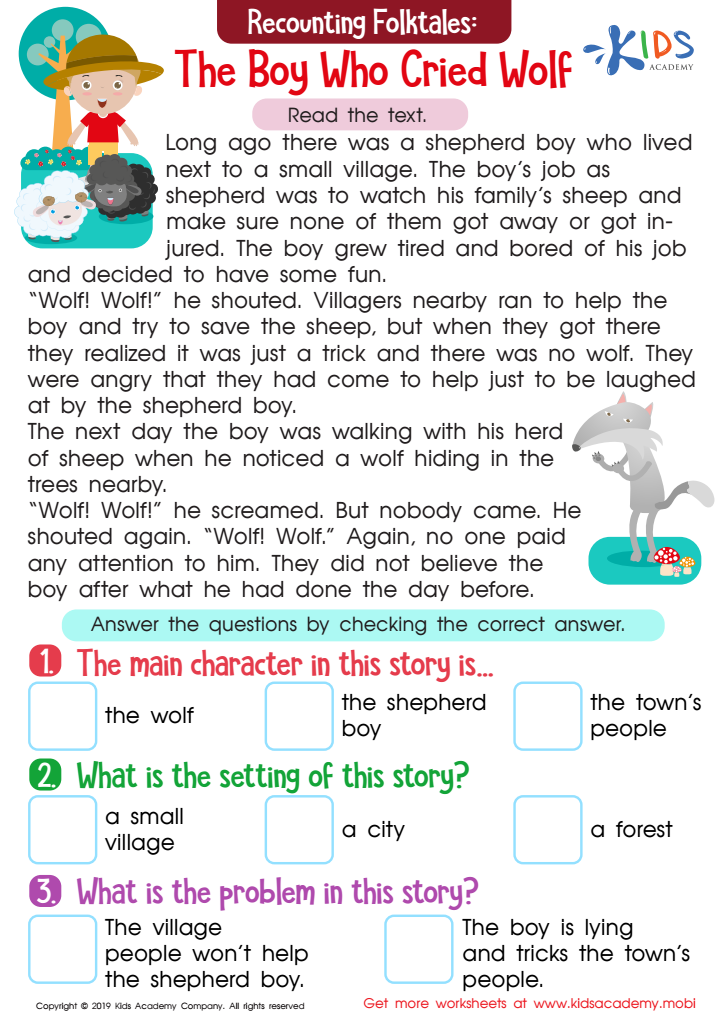
The Boy Who Cried Wolf Part 1 Worksheet








Moral understanding in reading comprehension is crucial for children aged 3-9 as it fosters both their cognitive and emotional development. During these formative years, literature becomes a powerful tool through which children interpret the world around them, encounter diverse perspectives, and grasp complex socio-emotional concepts. When parents and teachers emphasize moral lessons in stories, they help children develop empathy, critical thinking, and ethical reasoning.
Engaging with narratives that highlight themes of kindness, honesty, and cooperation encourages young readers to reflect on their own values and behaviors. This introspection not only strengthens their comprehension skills, allowing them to derive meaning from texts, but also nurtures their ability to understand and express emotions, leading to improved social interactions with peers.
Moreover, discussions around moral dilemmas in stories create safe spaces for young readers to explore right and wrong, equipping them with the tools to make responsible decisions in real life. Emphasizing moral understanding alongside traditional reading skills allows children to develop not only as proficient readers but also as compassionate individuals who can contribute positively to society. Thus, parents and teachers play a vital role in cultivating both literacy and moral awareness within their young learners.








