Categorization skills Science Worksheets for Ages 3-9
5 filtered results
-
From - To
Enhance your child's learning experience with our Categorization Skills Science Worksheets, designed for ages 3-9! These engaging worksheets encourage young learners to explore the fascinating world of science while developing essential categorization skills. Each activity introduces children to sorting, grouping, and classifying various objects and concepts, fostering critical thinking and observational abilities. Perfect for at-home learning or classroom settings, our worksheets help children boost their cognitive skills in a fun and interactive way. With beautifully illustrated activities tailored for different learning levels, your child will gain confidence and competence in science concepts while enjoying the journey of discovery. Download now and inspire curiosity!
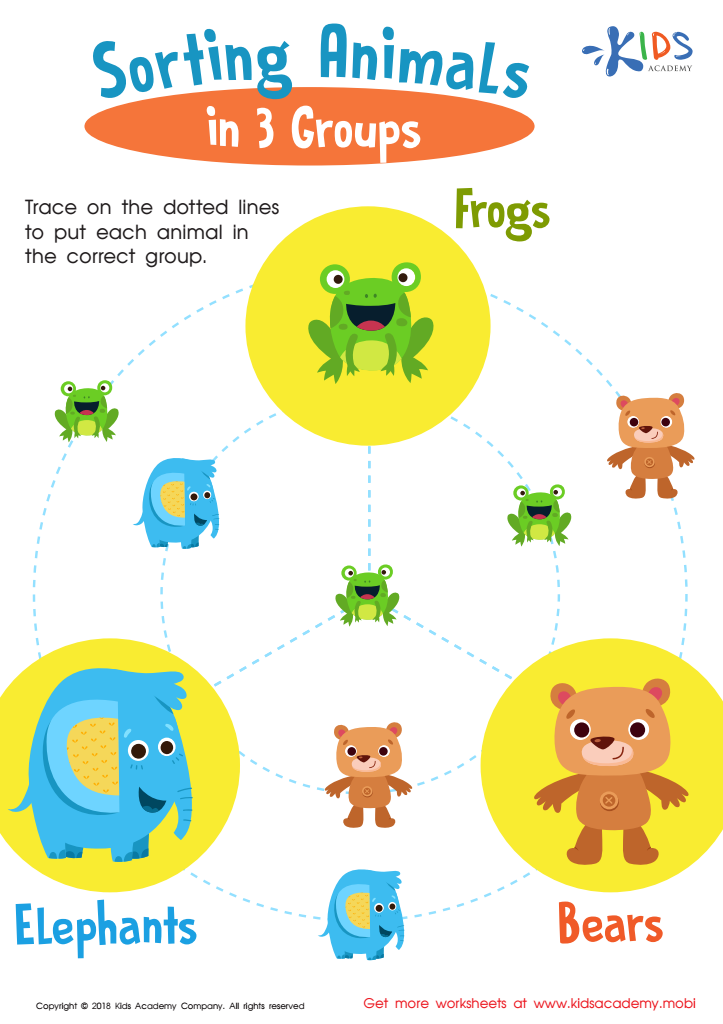
Sorting Animals in 3 Groups Worksheet
 Assign to My Students
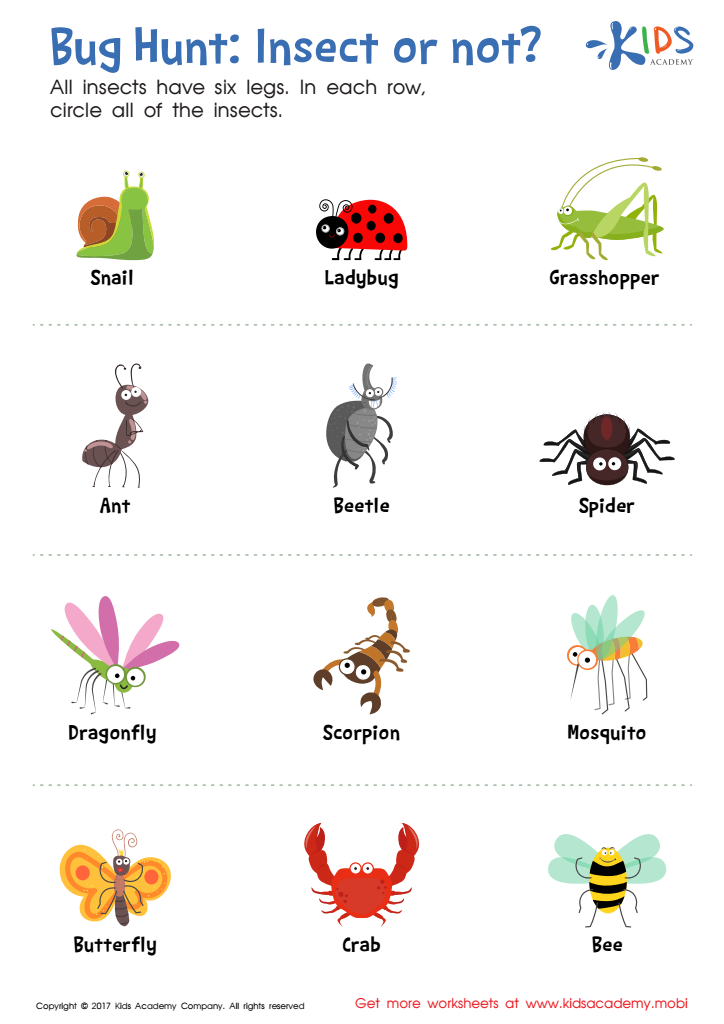
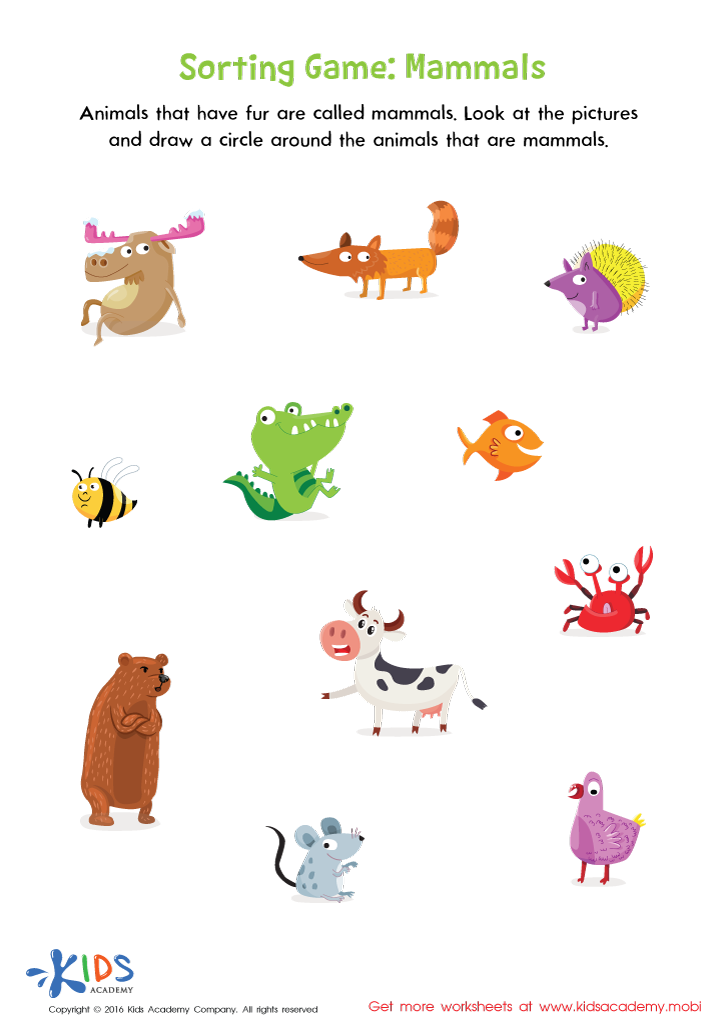
Mammals Sorting Worksheet
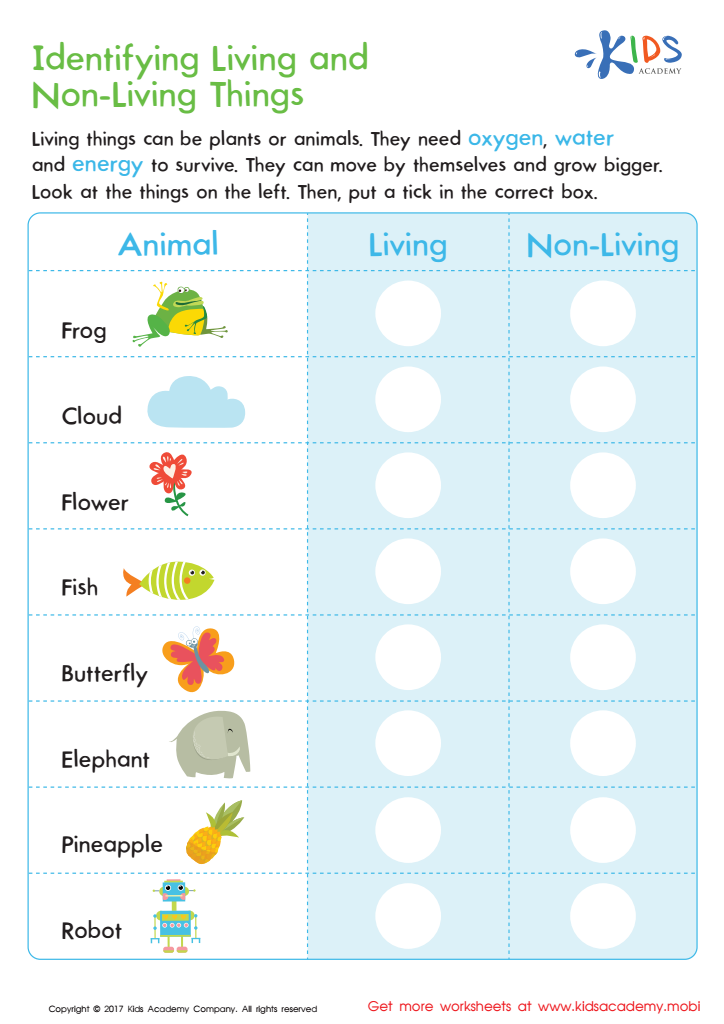
Identifying Living or Non–living Worksheet
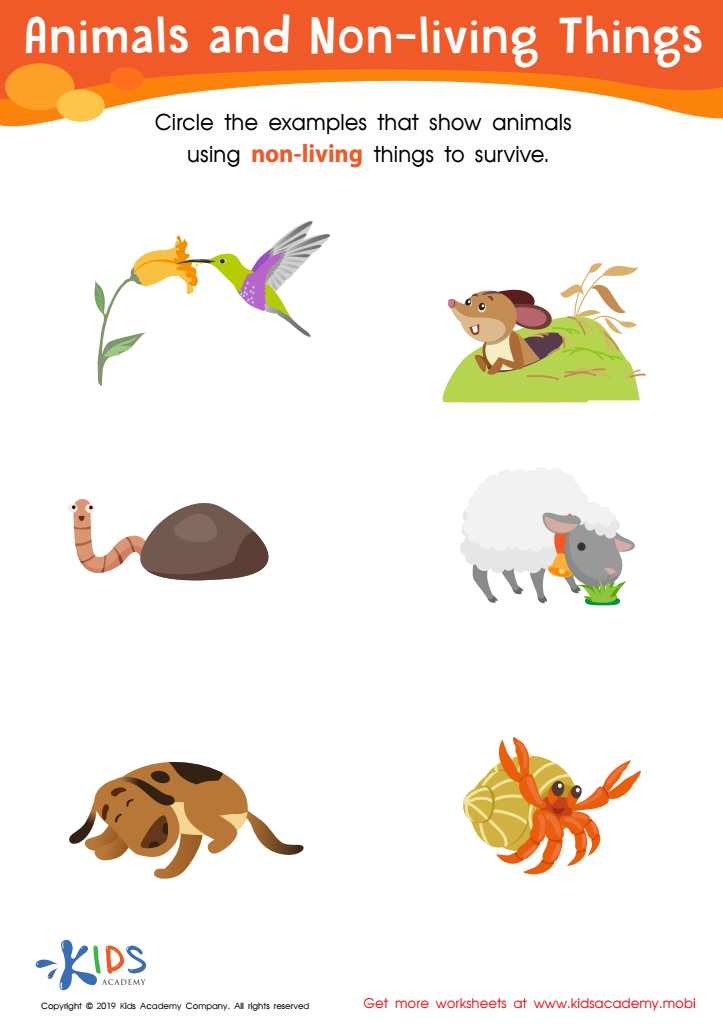
Animals and Non-Living Things Worksheet







Categorization skills are vital for children aged 3-9, as they play a crucial role in cognitive development and early learning. At this stage, children actively explore and interact with their environments, and effective categorization enhances their ability to make sense of the world around them. For parents and teachers, fostering these skills helps develop essential cognitive functions such as organization, memory, and problem-solving.
Understanding categories helps children group similar objects, ideas, and experiences, facilitating comprehension and communication. For instance, sorting animals by type or grouping toys promotes critical thinking and reinforces concepts in science and mathematics. Furthermore, strong categorization skills contribute to reading and vocabulary development, as children learn to associate words with their meanings.
In a classroom or home setting, intentionally engaging children in activities like sorting games and categorization exercises nurtures their analytical thinking of various subjects like science, social studies, and even language arts. Overall, prioritizing categorization skills lays a solid foundation for advanced learning, allowing children to transition smoothly into more complex thought processes in later years. By supporting this learning, parents and teachers invest in a child’s future academic success and independence, equipping them with the tools necessary for lifelong learning.







