
Matching skills Science Worksheets for Ages 3-9
5 filtered results
Difficulty Level
Grade
Age
-
From - To
Subject
Activity
Standards
Explore our engaging "Matching Skills Science Worksheets for Ages 3-9," designed to ignite young learners' curiosity about the world around them! These worksheets encourage children to develop essential matching skills through fun and interactive science-themed activities. Perfect for preschool and early primary students, these resources foster critical thinking, observation, and connection-making. With colorful illustrations and age-appropriate tasks, kids will enjoy matching images with words while discovering concepts related to nature, animals, and the environment. Parents and educators will find these worksheets invaluable for reinforcing learning at home or in the classroom. Start your child's scientific adventure today!
Favorites
With answer key
Interactive
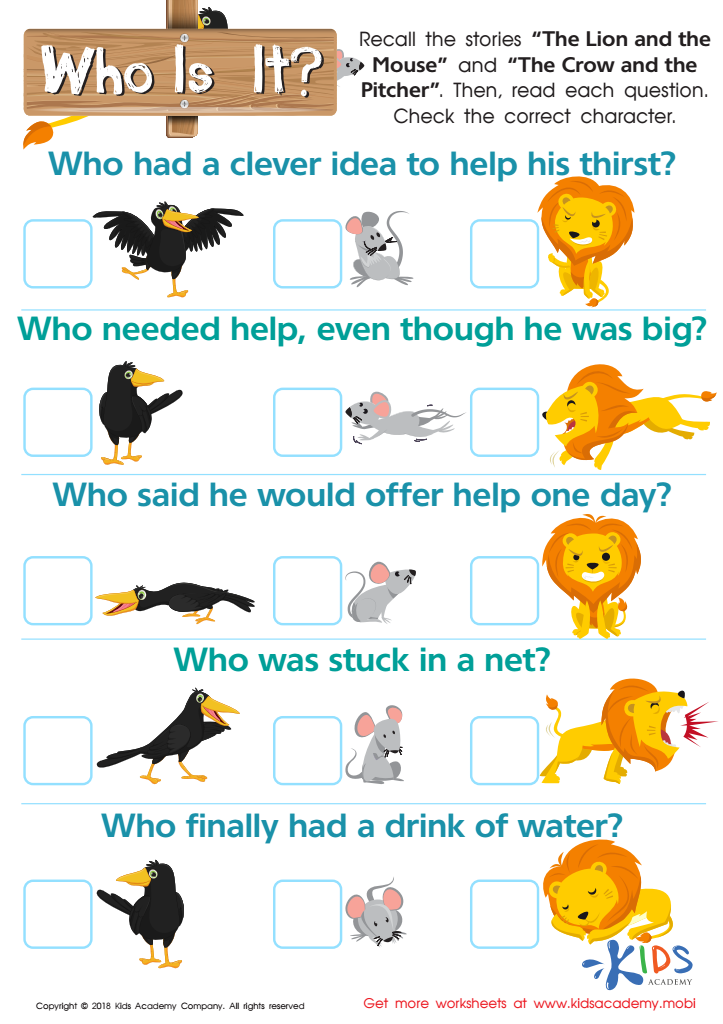
Who Is It? Worksheet
This worksheet helps students recall details from The Crow and the Pitcher and The Lion and the Mouse stories. Students will answer questions about the characters' actions. Use it to assess their understanding of both stories, as this is a key comprehension skill.
Who Is It? Worksheet
Worksheet
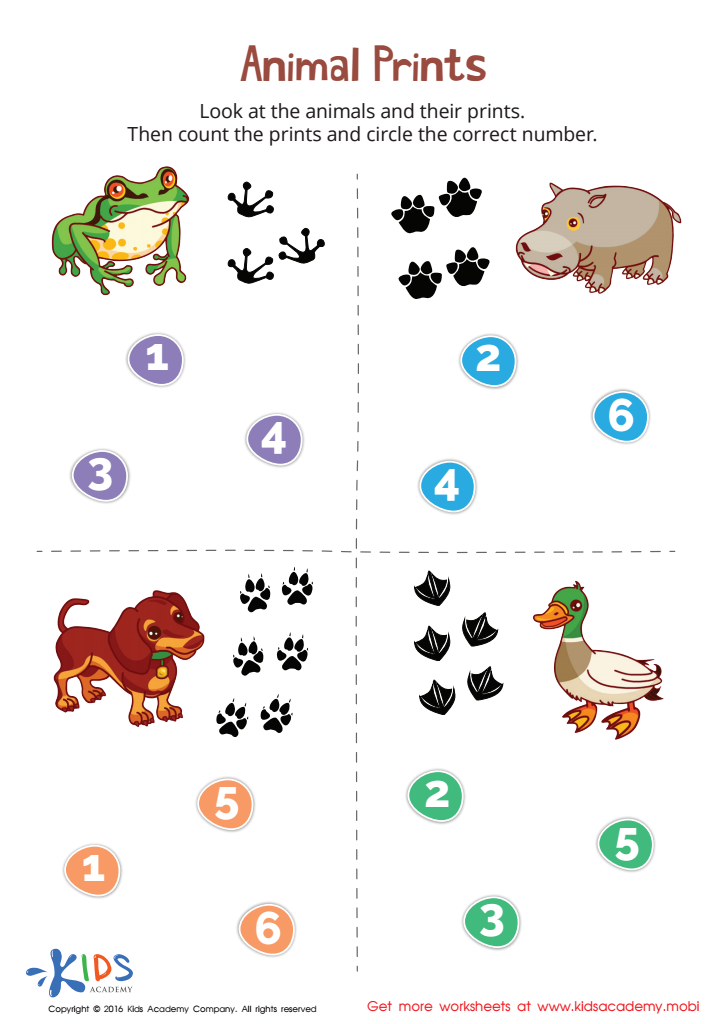
Animal Prints Match-Up Worksheet
Help your little learner build early math skills with this fun animal paw prints worksheet. With it, they'll count, recognize numbers, and learn about the animals that make the paw prints. Talk to them about the prints and ask them to count. They'll love exploring and learning about the different animals, all while sharpening essential math skills!
Animal Prints Match-Up Worksheet
Worksheet
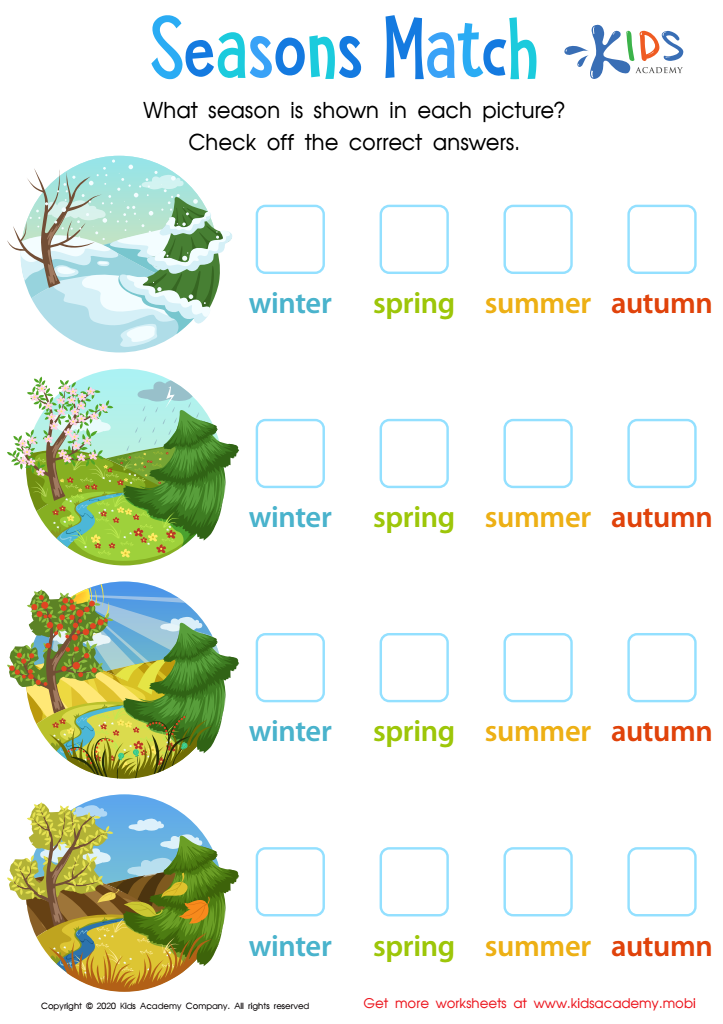
Seasons Match Worksheet
Preschoolers should begin learning about seasons and weather early. Most can tell what season it is by upcoming holidays or school activities. Test their knowledge with a printable PDF worksheet. It asks them to match each image with its corresponding season!
Seasons Match Worksheet
Worksheet
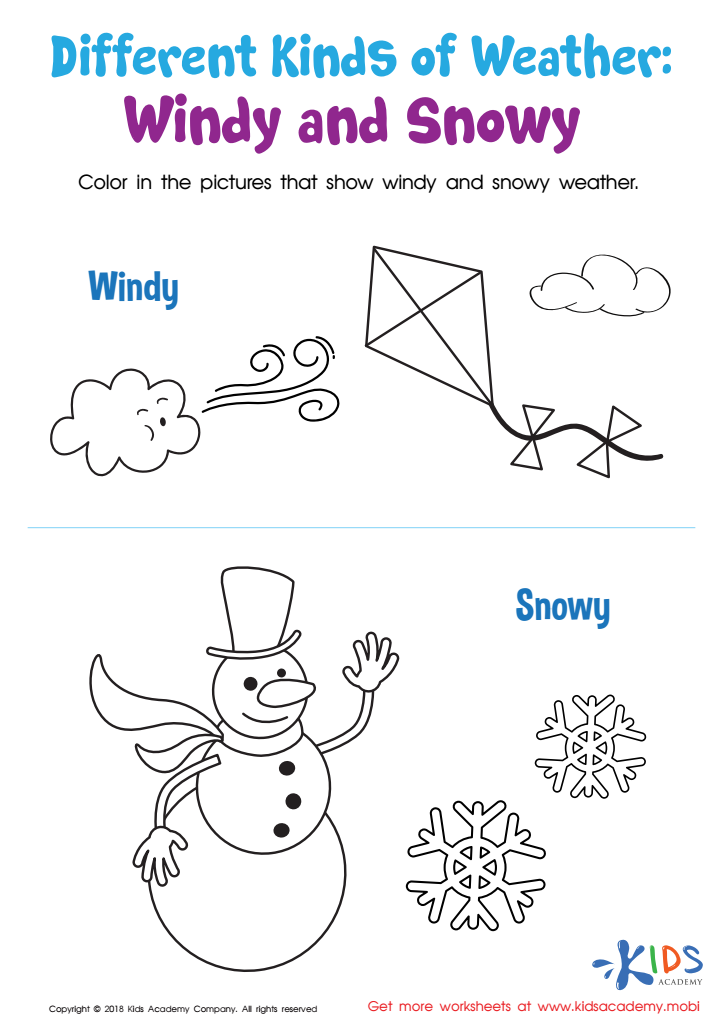
Different Kinds of Weather: Windy and Snowy Worksheet
Invite your little learner to practice their fine motor skills and learn about nature with this fun and charming PDF worksheet! Reinforce weather patterns and examine their environment as they color, giving them a foundation for understanding how weather affects them. No matter the weather, your learner will have a blast!
Download (PDF)
 Assign to My Students
Assign to My Students
Different Kinds of Weather: Windy and Snowy Worksheet
Worksheet
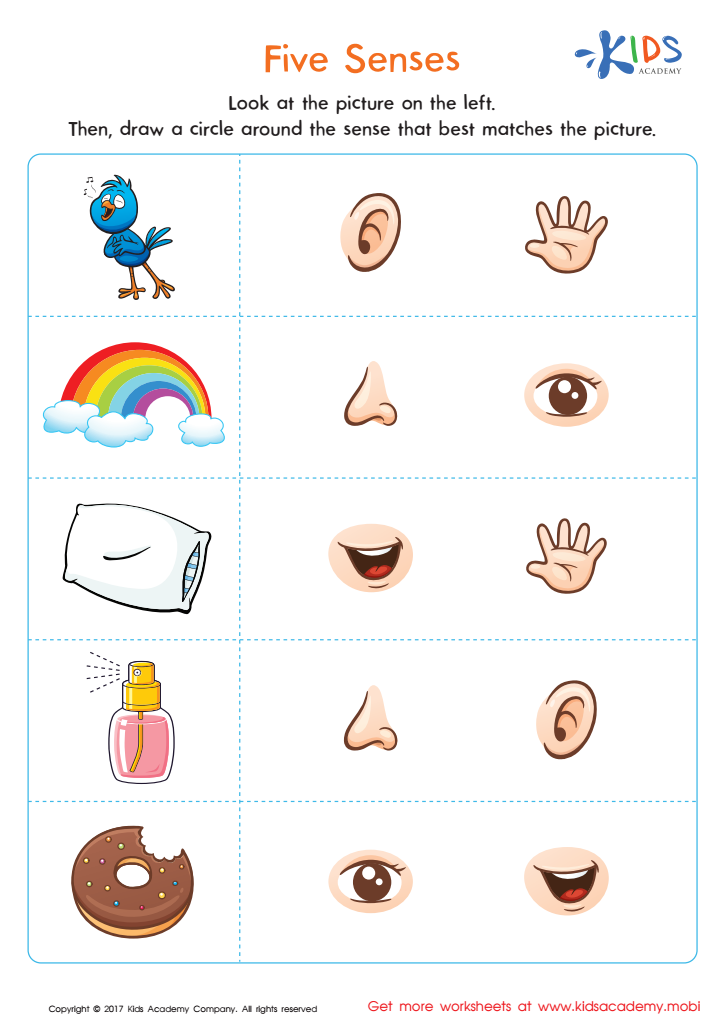
Five Senses Printable
For an easy way to jumpstart your child's critical thinking and introduce the five senses, print our free worksheets! These are great for reviewing each sense and practicing critical thinking skills. Work with your child and discuss each image. After completing the worksheet, find objects around the house so they can quiz themselves!
Five Senses Printable
Worksheet
Join Kids Academy for Free
Who is primarily going to use this learning content?





.jpg)

Parents and teachers should care about matching skills in science for children aged 3-9 because these foundational skills significantly contribute to early cognitive development. Matching activities bolster children's abilities to recognize similarities and differences, a critical precursor to more complex concepts in science and other subjects. For example, through matching games involving colors, shapes, or animal types, children enhance their observational skills and attention to detail.
These activities also stimulate critical thinking and problem-solving abilities. As children figure out how items relate to each other, they learn to draw connections–an essential aspect of scientific inquiry. Moreover, matching skills promote language development as caregivers encourage discussions about similarities, transformations, and categorization, thereby expanding vocabulary related to science.
Engaging children in matching tasks helps foster concentration and memory skills, both of which are vital for academic success. The interactive nature of matching games makes learning fun and enjoyable, reinforcing positive associations with science and education. Early investment in these skills lays a strong foundation for lifelong learning and curiosity about the scientific world, ultimately equipping children with the essential tools they need to thrive academically and beyond. Thus, supporting this aspect of early education is crucial for holistic development.







