
Plant identification Science Worksheets for Ages 3-9
5 filtered results
Difficulty Level
Grade
Age
-
From - To
Subject
Activity
Standards
Discover our engaging Plant Identification Science Worksheets, specifically designed for children ages 3-9! With vibrant visuals and interactive activities, these worksheets encourage young learners to explore the fascinating world of plants. Kids will enhance their observation skills, learn to recognize different types of plants, and understand their important roles in the environment. Perfect for home or classroom use, our worksheets promote critical thinking and foster a love for science. Unlock your child's potential and inspire curiosity about nature with our thoughtfully crafted plant identification activities. Dive into the adventure of learning and watch your little ones thrive in their scientific journey!
Favorites
With answer key
Interactive
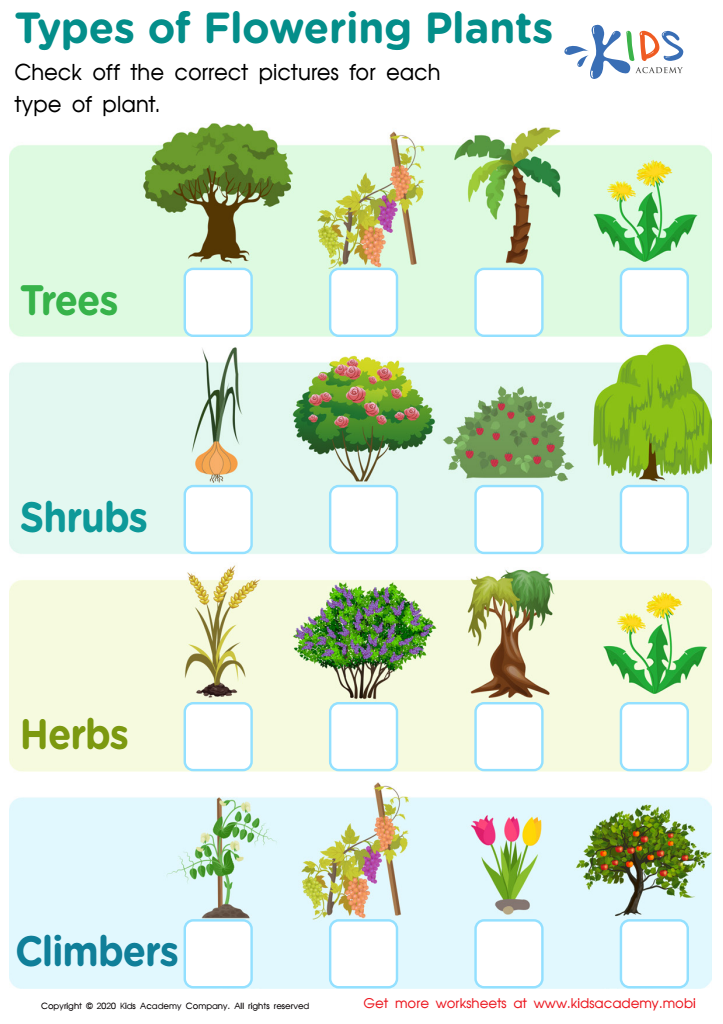
Types of Flowering Plants Worksheet
Help kids explore the variety of plants around them! Have them discover trees, shrubs, herbs, and vines with this fun science worksheet. Print it and let them match the plant pictures to their correct names. It's an exciting learning experience that'll let them check off the right images and explore the botanical world.
Types of Flowering Plants Worksheet
Worksheet
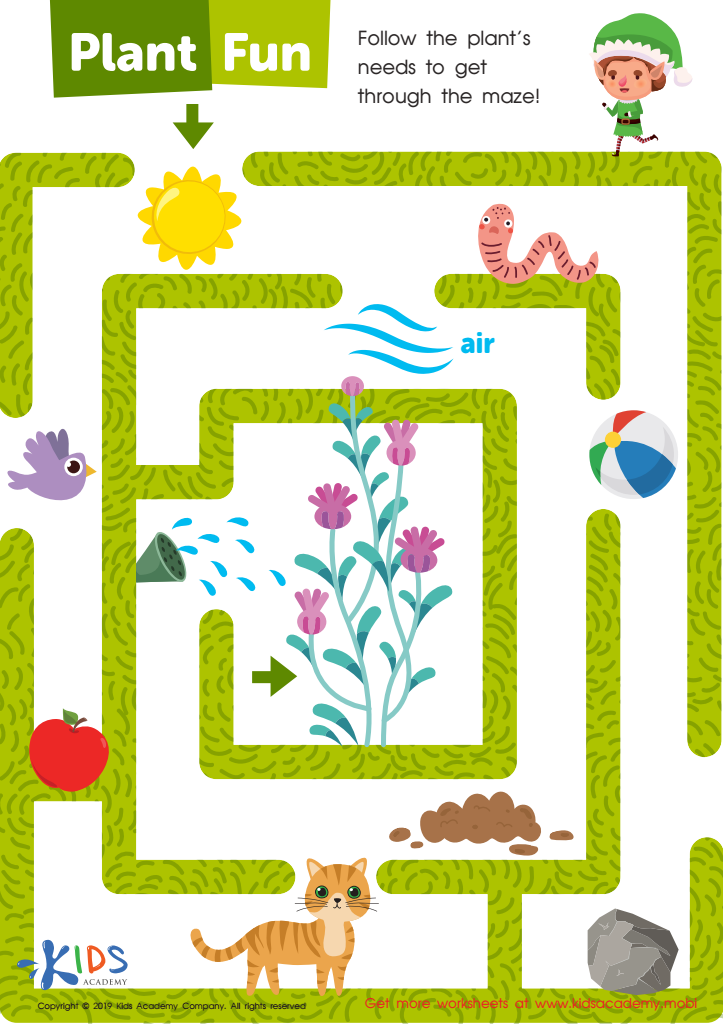
Plant Fun Worksheet
Engage your kid's mind by playing a learning maze! Ask them what plants do for us and what we need to do for the plants to help them grow. Then, help them find their way out of the maze while following the things that plants need.
Plant Fun Worksheet
Worksheet
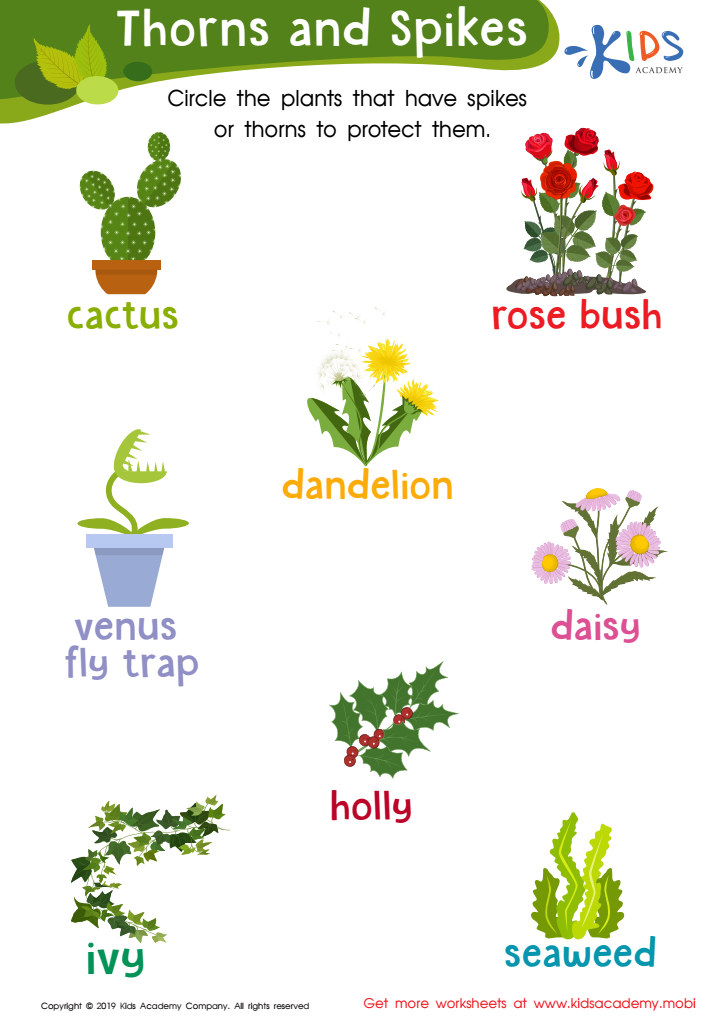
Thorns and Spikes Worksheet
Can your students name and identify the plants and flowers in this worksheet? Ask them to read out the names and circle the ones with spikes or thorns. Help them appreciate nature's beauty and understand how plants protect themselves.
Thorns and Spikes Worksheet
Worksheet
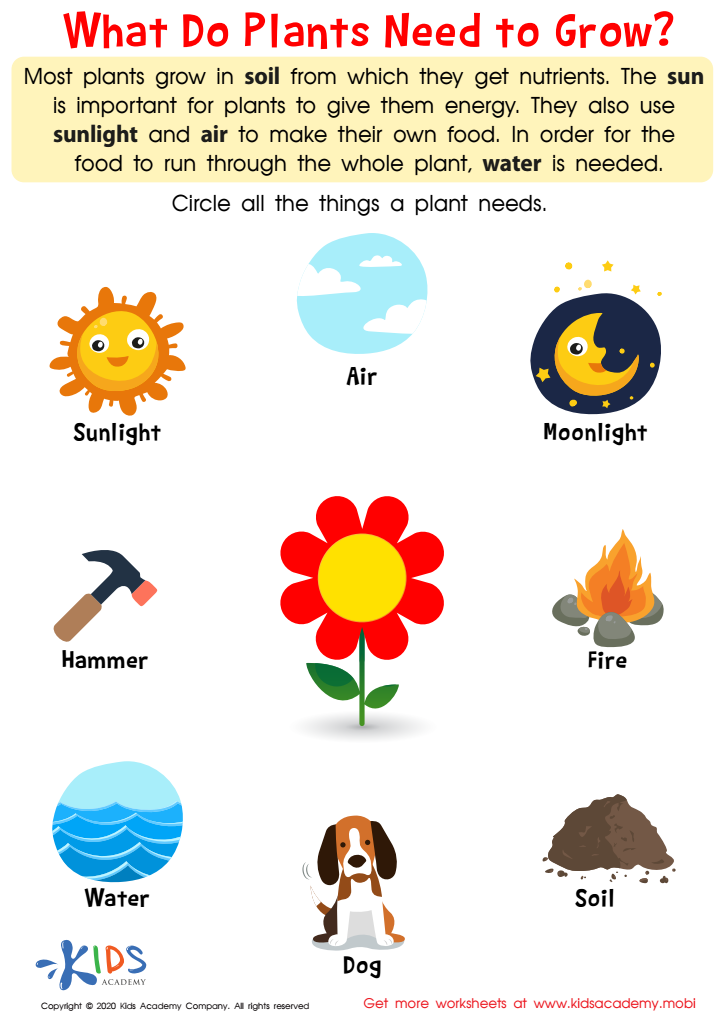
What Do Plants Need to Grow Worksheet
Help your child explore and discover the world of plants with this fun how do plants grow worksheet! They'll gain knowledge, sharpen problem solving skills, and build science foundations as they identify what plants need to grow. Afterward, plant a seed together and watch it sprout right before their eyes!
What Do Plants Need to Grow Worksheet
Worksheet
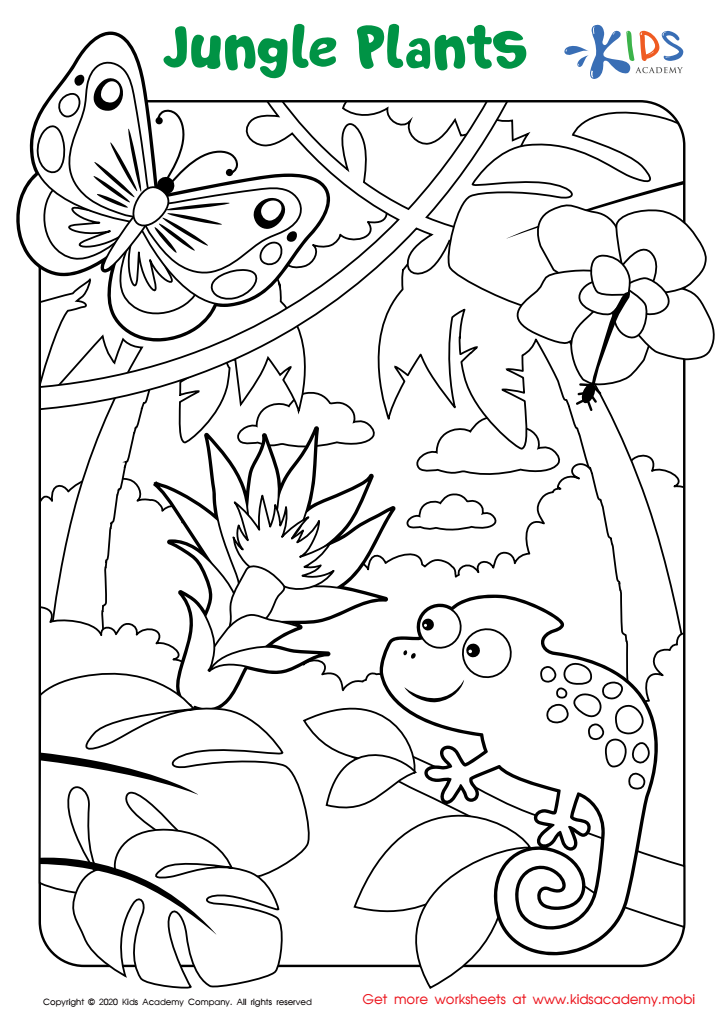
Jungle Plants Worksheet
Coloring pages can be fun and educational for kids! Print this adorable jungle worksheet with plants, a butterfly, and a lizard. Ask preschoolers to choose colors to bring the scene to life, while discussing rainforest plants and animals.
Download (PDF)
 Assign to My Students
Assign to My Students
Jungle Plants Worksheet
Worksheet
Join Kids Academy for Free
Who is primarily going to use this learning content?








Plant identification science is essential for children ages 3-9 because it nurtures their understanding of the environment and cultivates a sense of curiosity. Engaging with plants promotes hands-on learning and instills key scientific skills such as observation, classification, and critical thinking. By learning to identify different plants, children gain insight into biodiversity and the interconnectedness of life. This foundational knowledge fosters an early appreciation for nature and encourages eco-friendly practices.
Furthermore, plant identification supports literacy and numeracy. Creating simple identification charts or engaging in counting activities among various plants can enhance vocabulary and basic math skills, making these lessons both educational and interactive.
Additionally, connecting children with nature through plant identification can promote physical and mental well-being. Outdoor activities encourage movement, reduce stress, and strengthen emotional resilience.
Parents and teachers play a crucial role in facilitating these experiences. By incorporating plant identification lessons into curricula or family activities, they help children develop a lifelong love for learning and environmental stewardship. Overall, embracing plant identification science in early education enriches a child's cognitive development, promotes healthy lifestyles, and fosters a deeper connection to the world around them.







