Science vocabulary enhancement Science Worksheets for Ages 3-9
3 filtered results
-
From - To
Discover an engaging collection of science vocabulary enhancement worksheets designed for children ages 3-9! Our carefully crafted resources aim to boost young learners' understanding of essential scientific terms, igniting their curiosity about the world around them. These worksheets incorporate fun activities, colorful illustrations, and interactive exercises that make learning enjoyable and effective. From identifying basic concepts in nature to exploring simple scientific principles, children will expand their vocabulary and comprehension skills. Perfect for both classroom learning and at-home practice, these worksheets provide a solid foundation for young scientists. Spark your child's love for science today with our engaging and educational materials!
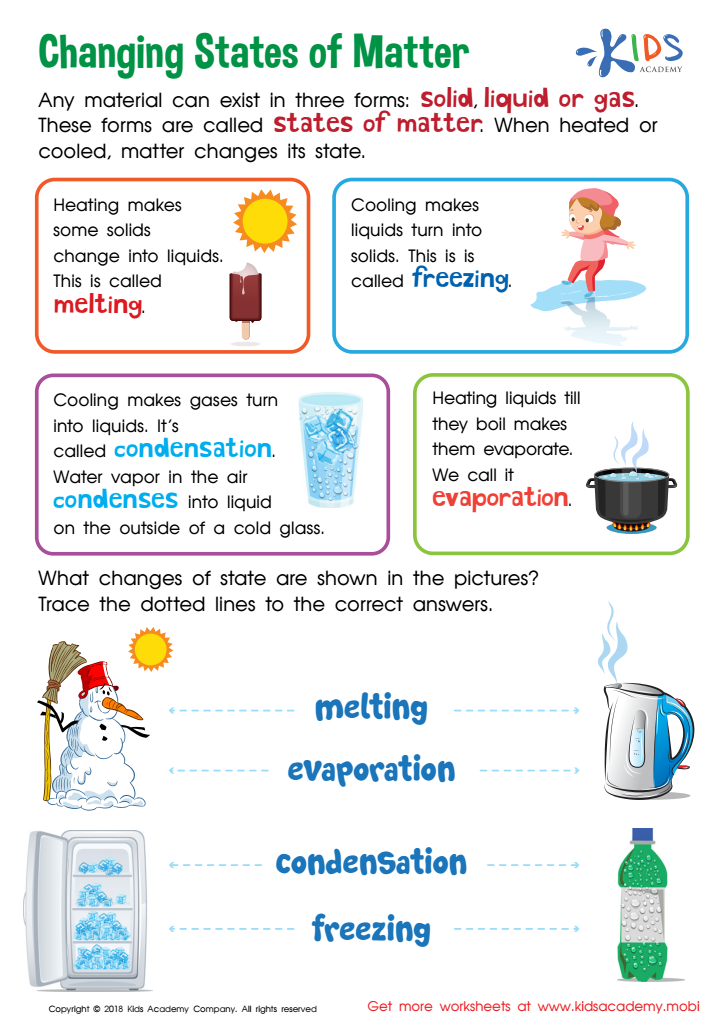
States of Matter Worksheet
 Assign to My Students
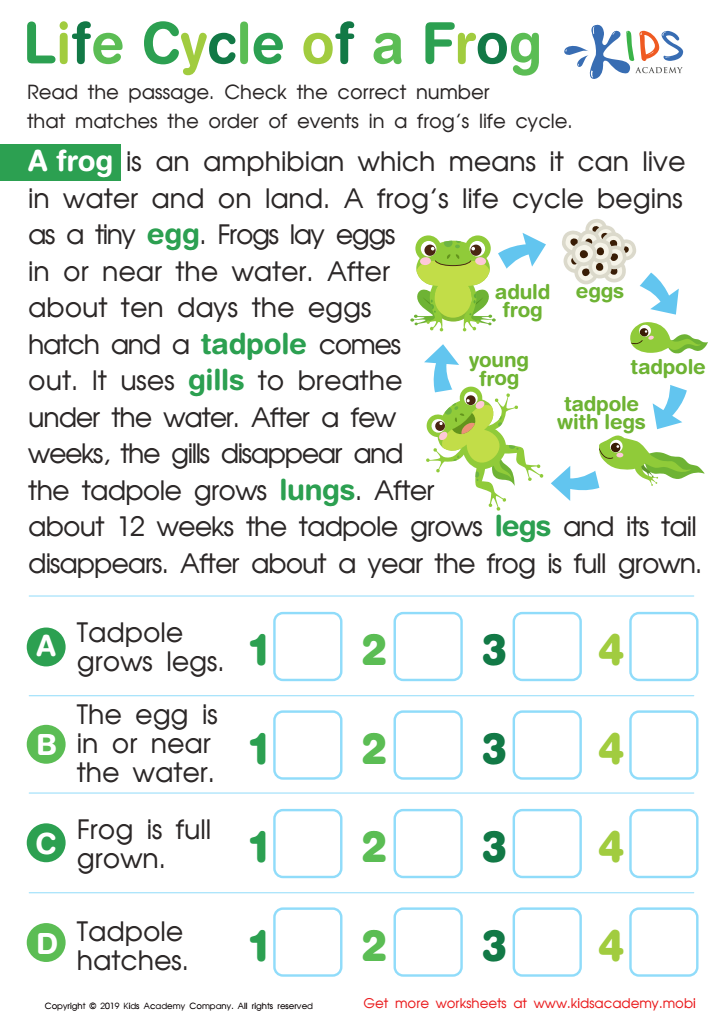
Life Cycle of a Frog Worksheet
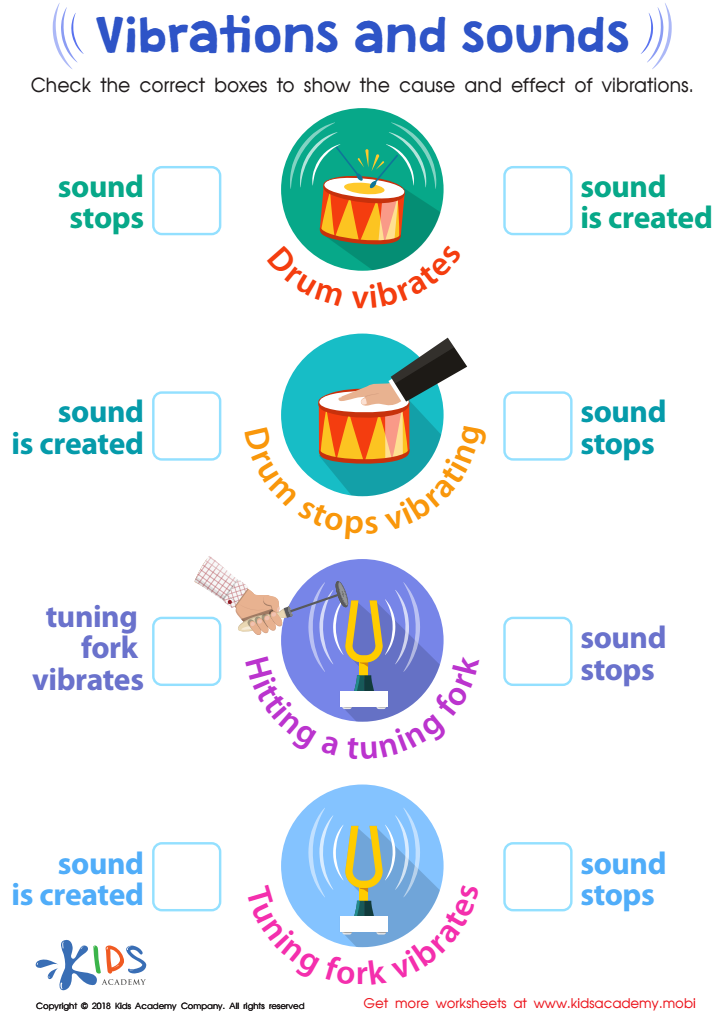
Vibrations and Sounds Worksheet






Parents and teachers should prioritize science vocabulary enhancement for children aged 3-9 for several key reasons. This developmental stage is critical, as young children are highly receptive to new language and concepts. Introducing and reinforcing science vocabulary during these formative years helps cultivate a foundational understanding of the world around them, fostering curiosity and a sense of inquiry.
Science vocabulary spans various fields, including biology, physics, and earth sciences, enriching children’s abilities to describe, explain, and explore their experiences. Engaging children in science through age-appropriate terminology encourages their ability to communicate findings, ask questions, and collaborate with peers. This vocabulary development not only enhances literacy skills but also supports critical thinking—fundamental in future scientific studies and everyday problem solving.
Moreover, a strong grasp of science language can inspire greater interest in STEM (science, technology, engineering, and mathematics) fields. By integrating science vocabulary into everyday conversations and activities, parents and teachers can create an enriched learning environment that promotes exploration and discovery. Ultimately, investing in science vocabulary at a young age lays the groundwork for lifelong learning, empowering future generations to better understand and address the complex challenges facing our world.







