
Understanding moon phases Science Worksheets for Ages 3-9
3 filtered results
Difficulty Level
Grade
Age
-
From - To
Subject
Activity
Standards
Explore the wonders of the night sky with our "Understanding Moon Phases Science Worksheets" designed specifically for ages 3-9! These engaging worksheets provide a fun and interactive way for young learners to grasp the concept of moon phases. With colorful illustrations and simple activities, children will learn about the different shapes of the moon throughout the month. Each worksheet fosters creativity and critical thinking, allowing kids to express their understanding through art and exploration. Ideal for both classroom settings and at-home learning, these worksheets spark curiosity and promote a lifelong love for astronomy. Start your journey into the cosmos today!
Favorites
With answer key
Interactive
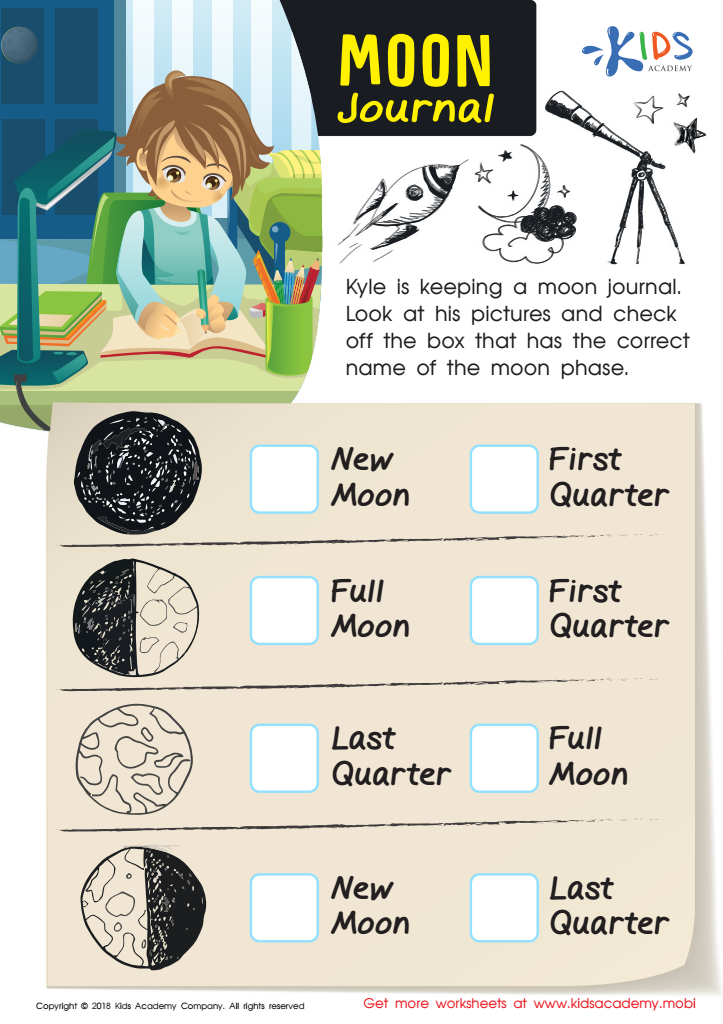
Moon Journal Worksheet
Observe the moon and its 8 phases with your child by downloading this free PDF worksheet from Kids Academy! Review the moon phases with them then help them label Kyle's moon journal. Select the right moon phase for each picture to complete the page!
 Assign to My Students
Moon Journal Worksheet
Worksheet
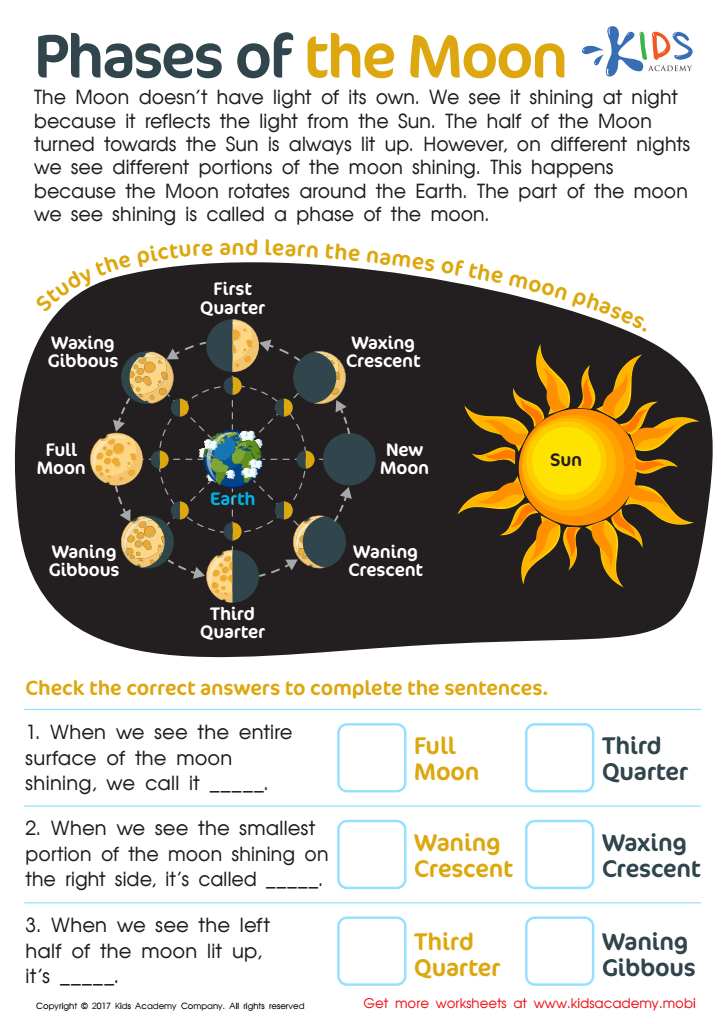
Phases of The Moon Worksheet
It'll show kids the fascinating phases and journey the moon takes around Earth. They'll be amazed to learn it's not always shining!
Phases of The Moon Worksheet
Worksheet
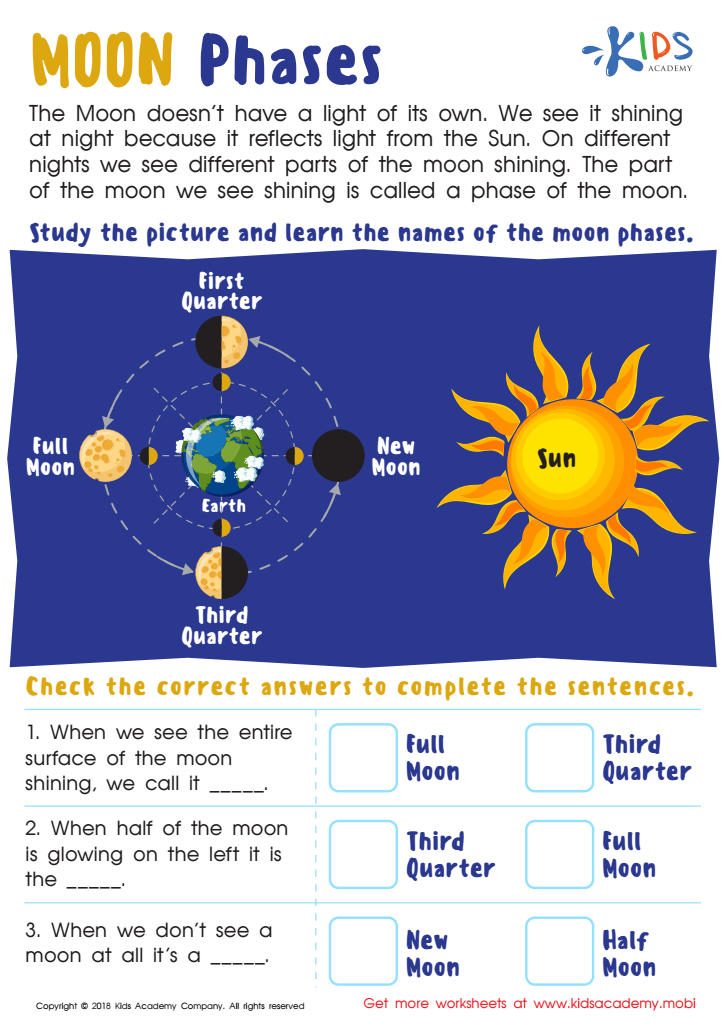
Moon Phases Worksheet
Gaze up at the night sky and the moon's appearance may change from night to night. Encourage your child to learn more about the sun, the moon, and space with this science worksheet. Have them read the text then study the picture. Finally, read the sentences and check the answers to identify the moon's phases.
Moon Phases Worksheet
Worksheet
Join Kids Academy for Free
Who is primarily going to use this learning content?








Understanding moon phases is vital for young learners aged 3-9 as it fosters a sense of wonder about the natural world and enhances scientific literacy. Teaching children about the moon encourages curiosity and exploration, serving as a doorway to broader topics in astronomy, science, and nature.
For parents and teachers, engaging young children in lunar science can stimulate critical thinking and observational skills. Learning about the moon’s phases teaches concepts like cycles, change, and time, laying foundational skills for mathematics and science. Activities such as moon phase crafts or observing the night sky together can reinforce learning and create quality bonding moments.
Moreover, understanding the moon's impact on Earth—such as how it affects tides and its relationship with the sun—promotes environmental awareness and connection with the planet. These topics also align with early curriculum standards in science and geography, making learning relevant and enjoyable.
Incorporating moon phases into educational settings can harness children's inherent curiosity, promoting lifelong learning habits. Additionally, connecting scientific concepts to storytelling and art can engage diverse learning styles, ensuring that children find meaningful connections to the subject. Ultimately, knowledge of moon phases builds a strong foundation for scientific understanding and inquiry as they grow.







