Understanding pollination Science Worksheets for Ages 3-9
3 filtered results
-
From - To
Discover the fascinating world of pollination with our engaging science worksheets designed specifically for children aged 3-9. These resources provide young learners an introduction to the essential role of pollination in nature. Through colorful images, simple instructions, and age-appropriate activities, kids will explore how plants reproduce with the help of insects and wind. Enhance their understanding of ecosystems while developing critical thinking and fine motor skills through interactive tasks. Our worksheets encourage curiosity and foster a love for science, making learning about this vital process both fun and educational. Perfect for classroom or home use, these worksheets will inspire the next generation of budding scientists!
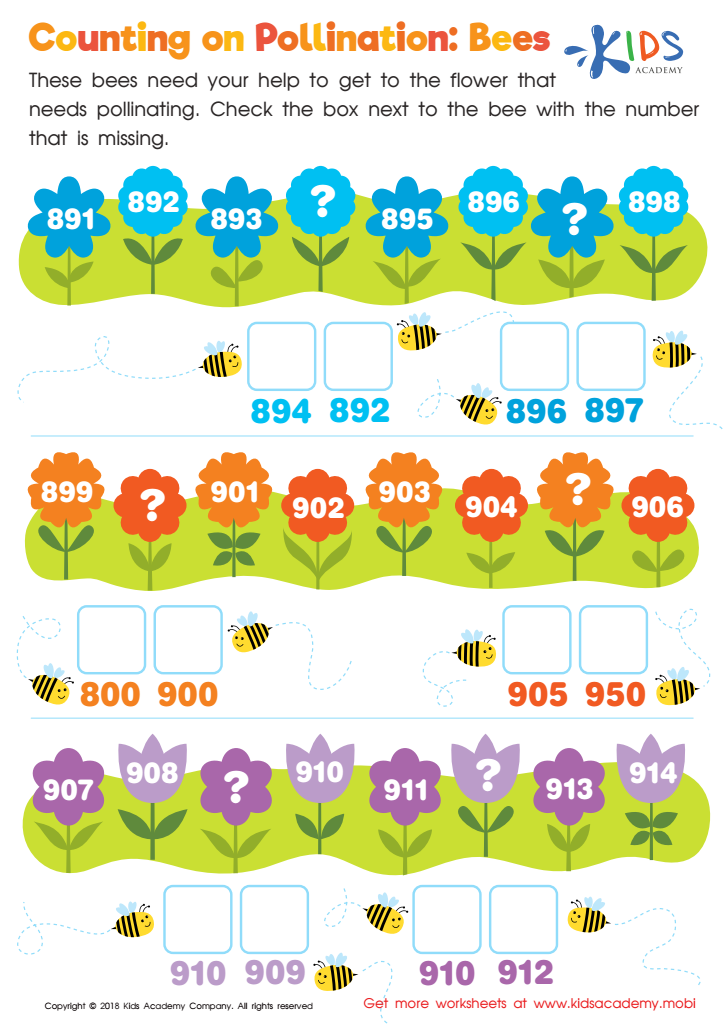
Counting on Pollination: Bees Worksheet
 Assign to My Students
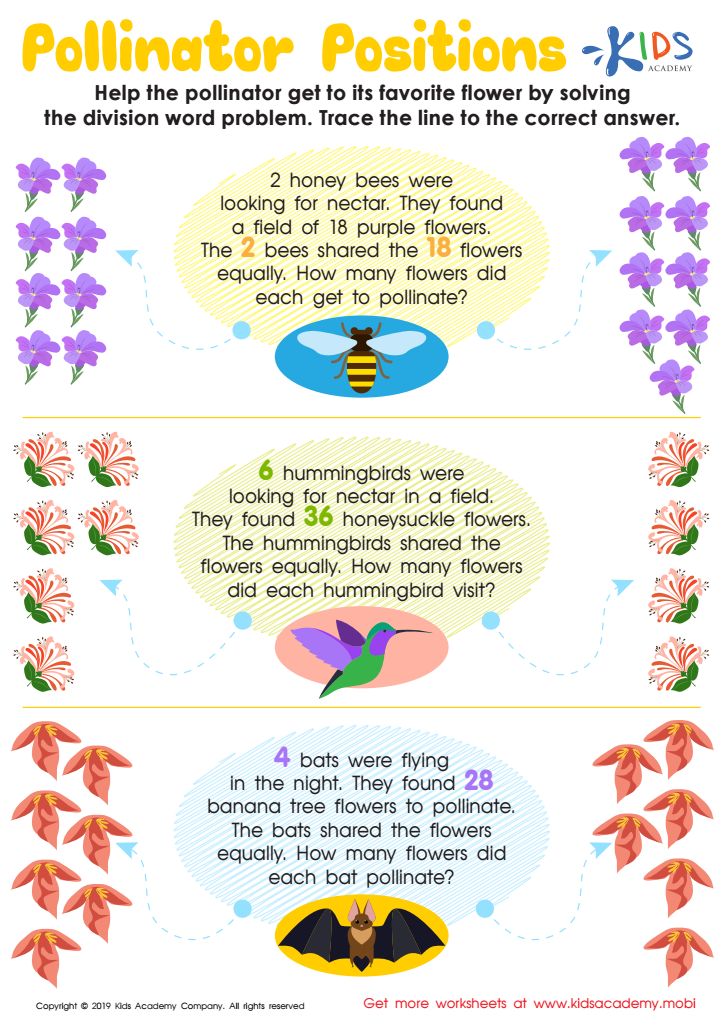
Pollinator Positions Worksheet
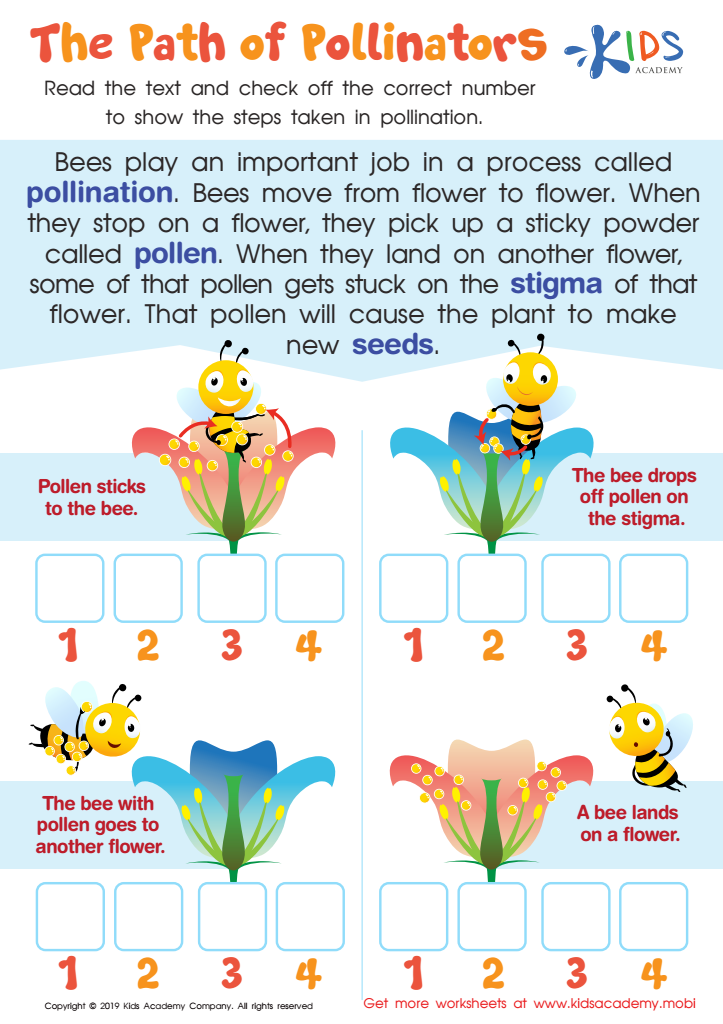
The Path of Pollinators Worksheet






Understanding pollination science is vital for both parents and teachers of children aged 3-9 for several reasons. First, it introduces young learners to essential concepts of nature and science, laying the groundwork for future educational growth. Pollination is a fundamental ecological process that supports food production and biodiversity, making it crucial for children to appreciate the interconnections within ecosystems.
By learning about pollination, children become aware of the importance of bees, butterflies, and other pollinators. This awareness fosters a sense of responsibility towards these creatures and instills environmental stewardship at an early age, promoting a lifelong commitment to conservation.
Moreover, teaching about pollination can be engaging and hands-on. Activities like planting seeds or observing garden insects allow children to experience these concepts firsthand, enhancing their curiosity and observational skills. This experiential learning can make science enjoyable, igniting a passion for discovery.
Lastly, understanding pollination science can lead to engaging conversations between parents and children. Such discussions can enhance vocabulary and communication skills, while also deepening the family bond through shared learning experiences. Overall, appreciating pollination science enriches children's education and encourages a caring attitude toward nature.







