Categorization skills Plants and Animals Worksheets for Ages 3-9
5 filtered results
-
From - To
Enhance your child's understanding of the natural world with our "Categorization Skills: Plants and Animals" worksheets, designed for ages 3-9. These engaging activities help young learners sort and classify various plants and animals, fostering critical thinking and recognition skills. Through fun and interactive exercises, children will develop their ability to categorize living organisms based on characteristics such as habitat, size, and type. Perfect for both classroom and home learning, our worksheets encourage creativity, promote curiosity about nature, and lay a strong foundation for future scientific knowledge. Dive into the world of plants and animals while building essential skills today!
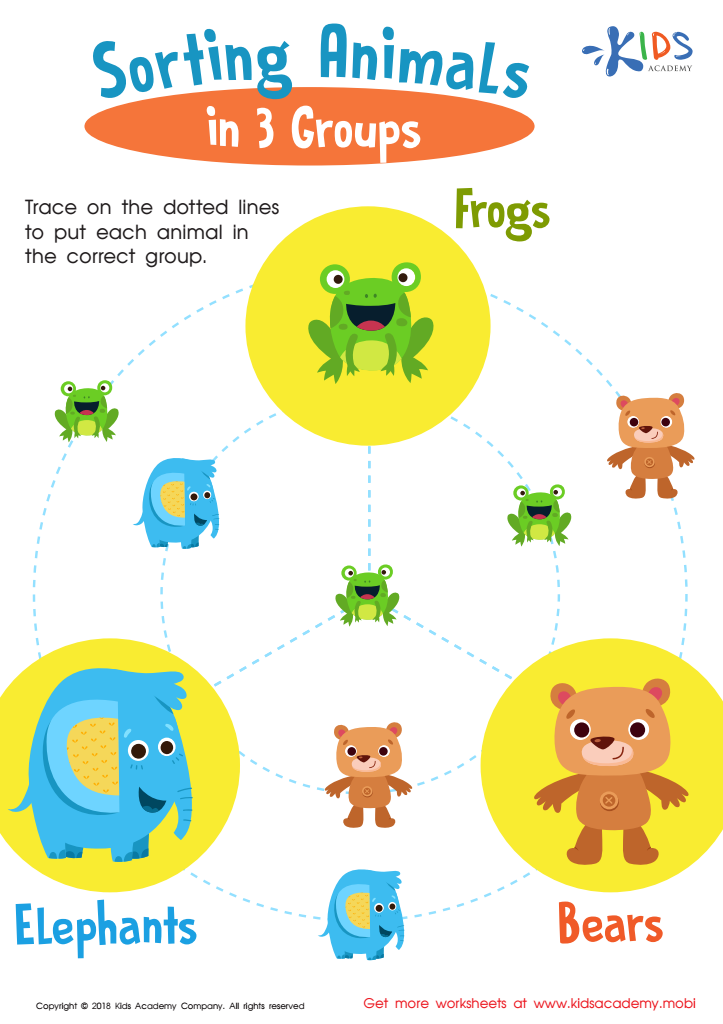
Sorting Animals in 3 Groups Worksheet
 Assign to My Students











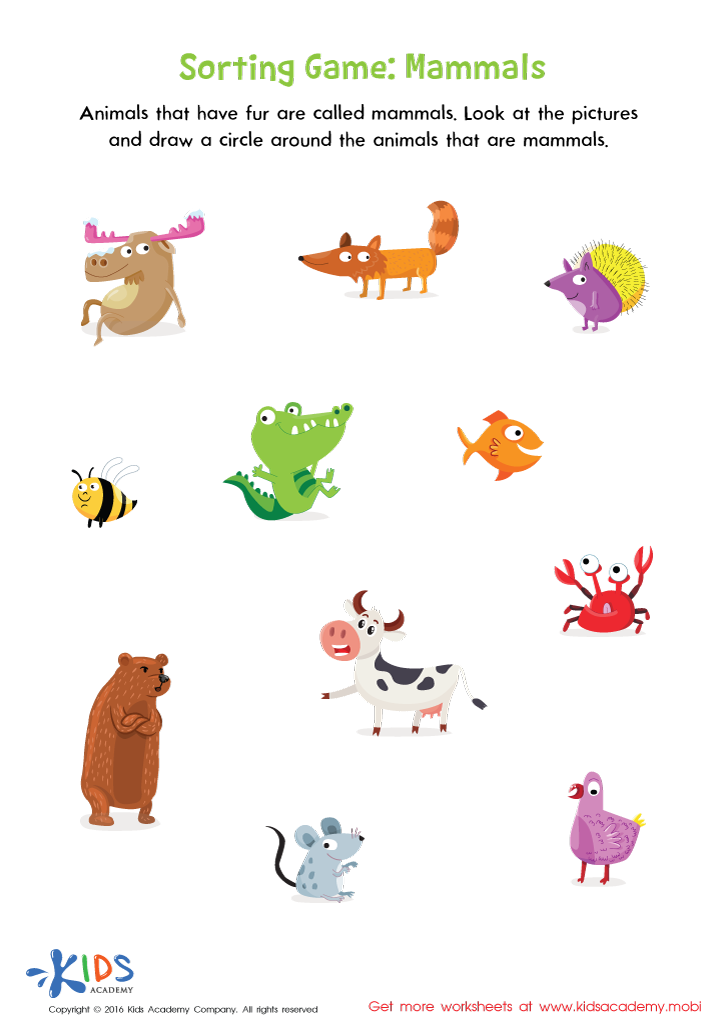
Mammals Sorting Worksheet
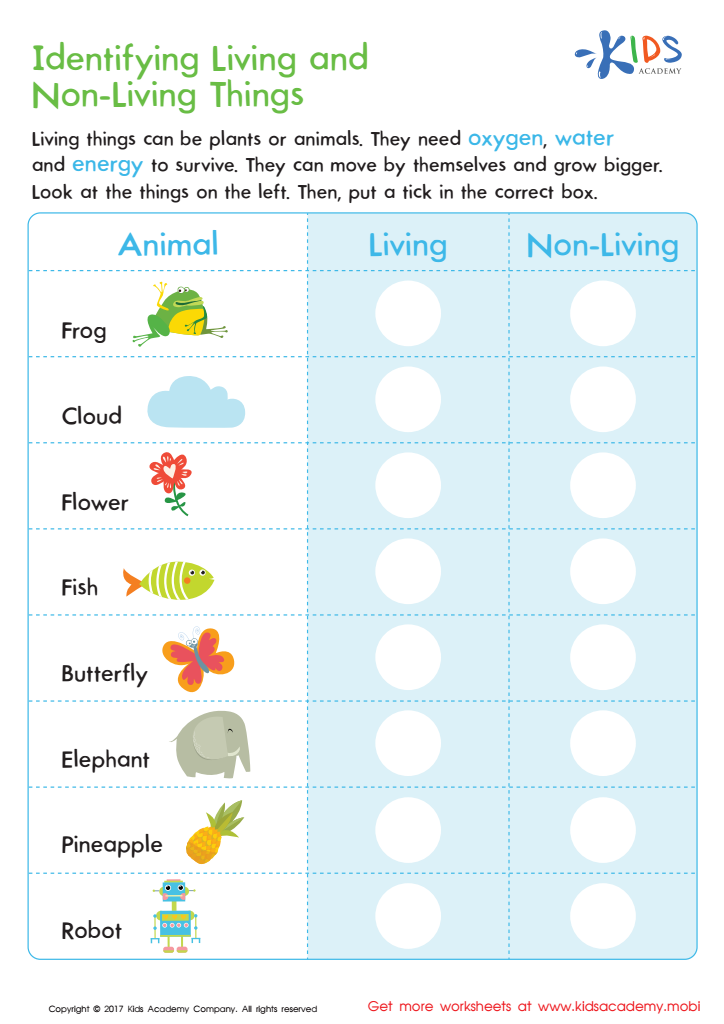
Identifying Living or Non–living Worksheet
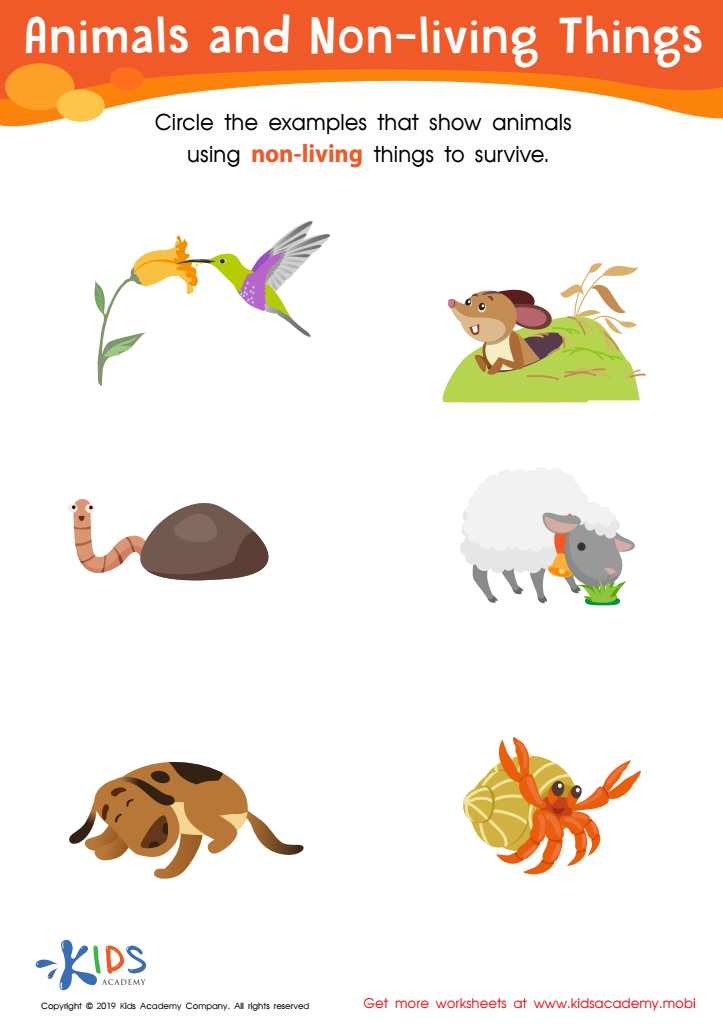
Animals and Non-Living Things Worksheet







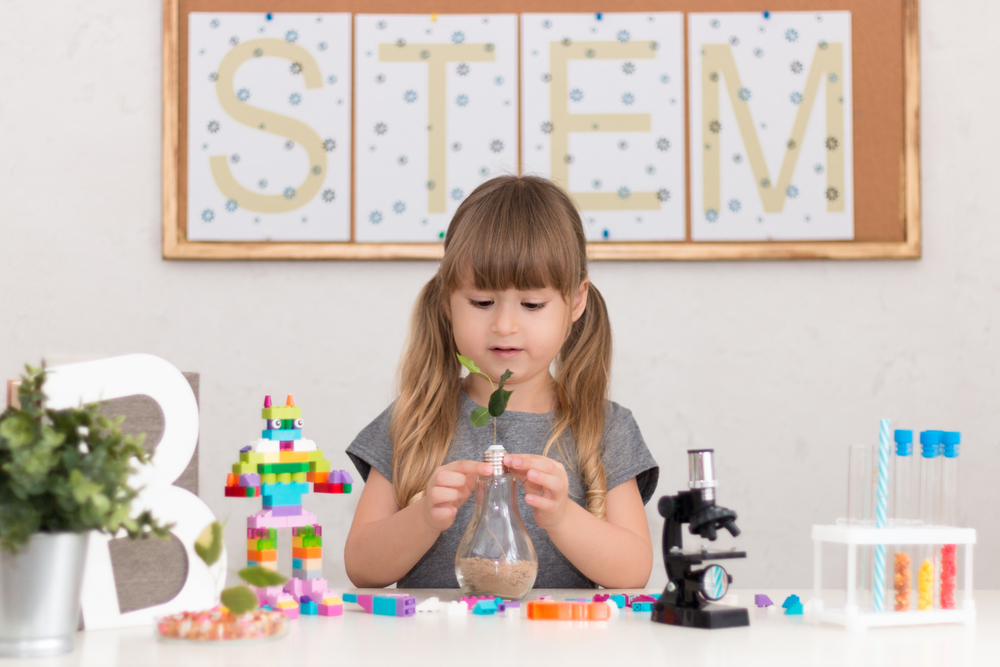
Categorization skills, especially in the context of plants and animals, are crucial for children aged 3-9 as they lay the foundation for critical thinking and cognitive development. Understanding how to categorize objects helps children make sense of the world around them. For instance, distinguishing between different types of plants and animals fosters observational skills and enhances reasoning abilities. By recognizing similarities and differences, children develop categorization skills that contribute to their ability to classify and organize information effectively.
Moreover, learning about plants and animals nurtures curiosity and engenders a sense of connection with nature, promoting environmental awareness from an early age. This awareness is essential as children grow and learn to appreciate biodiversity, which is crucial for future conservation efforts.
Parents and teachers should care about these skills because they support not only academic learning but also emotional and social development. These skills encourage collaborative learning, as children often work together to categorize and discuss their findings. Ultimately, focusing on categorization in the context of plants and animals provides children with essential tools for problem-solving, decision-making, and a lifelong appreciation of the natural world, equipping them for future learning experiences.








