Color Identification Community Worksheets for Ages 3-9
3 filtered results
-
From - To
Introduce your young learners (ages 3-9) to the fascinating world of colors with our engaging Color Identification Community Worksheets. These educational worksheets are thoughtfully designed to bring together the basics of color recognition and social studies concepts. By identifying and coloring various community-themed images, children enhance their visual differentiation, cognitive skills, and social awareness. Perfect for classrooms, homeschooling, or just for fun, our worksheets provide a fun, interactive way to promote essential early learning skills. Make learning vibrant and enjoyable with our Color Identification Community Worksheets, and watch your children discover the world of colors in their community!

Fireman Worksheet
 Assign to My Students
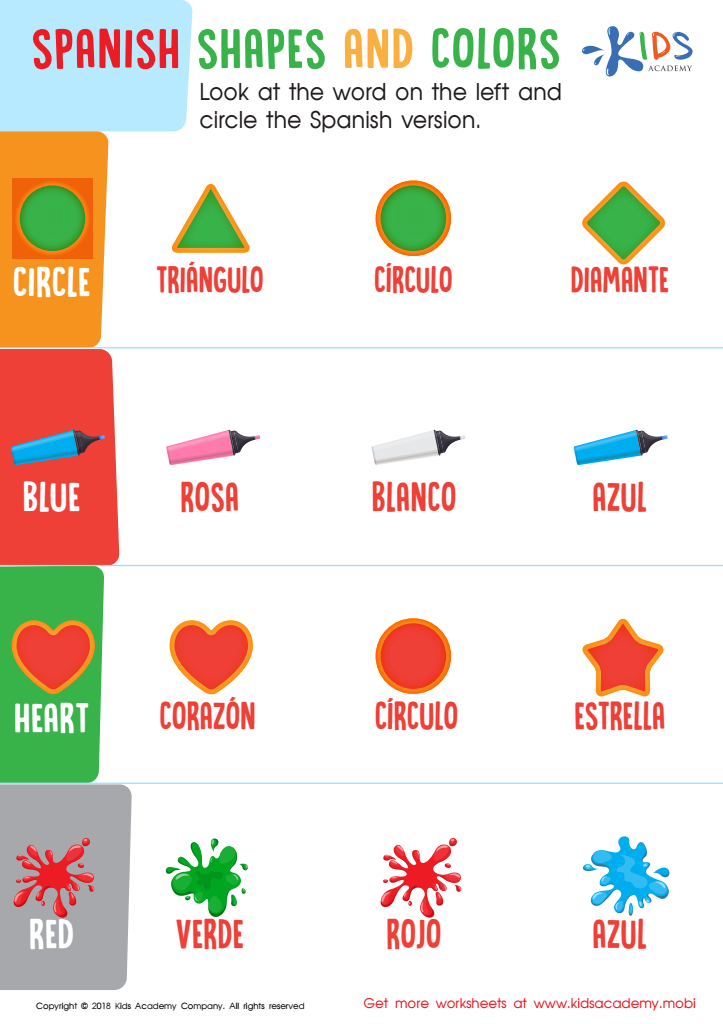
Spanish Shapes and Colors Worksheet
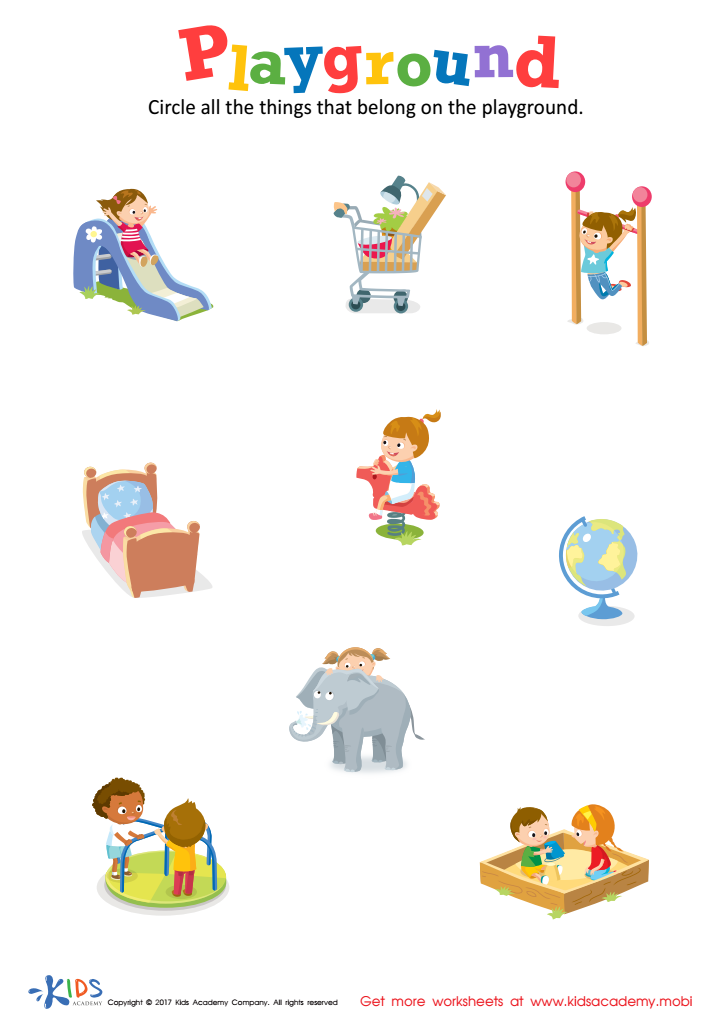
Playground Worksheet








Color identification is a fundamental skill that aids a child's cognitive and perceptual development, making early identification and guidance crucial, especially for ages 3-9. Parents and teachers should prioritize and invest in resources like a Color Identification Community to optimize children's learning.
Firstly, recognizing and naming colors enhance cognitive abilities related to categorization, memory, and differentiation. Engaging in activities focused on color helps children refine their visual discrimination, aiding in early reading and math skills. For instance, understanding similarities and differences among objects based on color can facilitate more complex cognitive tasks like patterning and sorting.
Secondly, color identification plays a crucial role in communicative development. When children learn colors, they often start to use descriptive language, thereby expanding their vocabulary and enhancing verbal skills. Suggestive discussions about colorful environments provide interaction avenues that bolster expressive language abilities.
Thirdly, participating in a Color Identification Community fosters social engagement. Children collaborate in group settings which enhances social skills like sharing, listening, and team-based problem-solving while exploring vibrant, colorful activities together.
Ultimately, by emphasizing color identification through a structured community approach, parents and teachers can ensure children make steady, enjoyable progress in vital areas of their developmental spectrum, setting a strong foundational pillar for future academic endeavors.