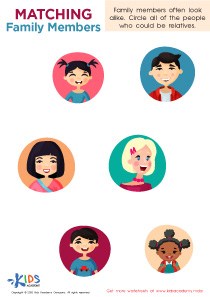
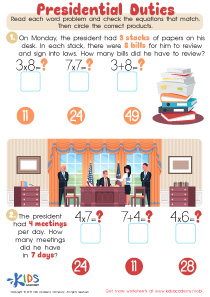
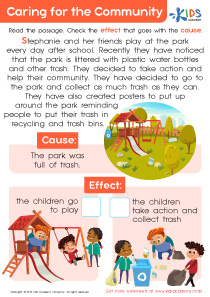
Visual perception improvement Social Studies Worksheets for Ages 3-9
3 filtered results
-
From - To
Enhance your child's visual perception skills with our engaging Social Studies worksheets, designed specifically for ages 3-9! These worksheets promote critical thinking and observation by involving kids in diverse activities that strengthen their ability to interpret visual information. Children will explore various themes related to their community, culture, and environment while developing key skills essential for lifelong learning. Our visually appealing resources make learning fun and interactive, ensuring kids stay engaged as they complete exercises tailored to their developmental level. Promote cognitive growth and understanding of the world around them with our thoughtfully crafted Social Studies visual perception worksheets today!
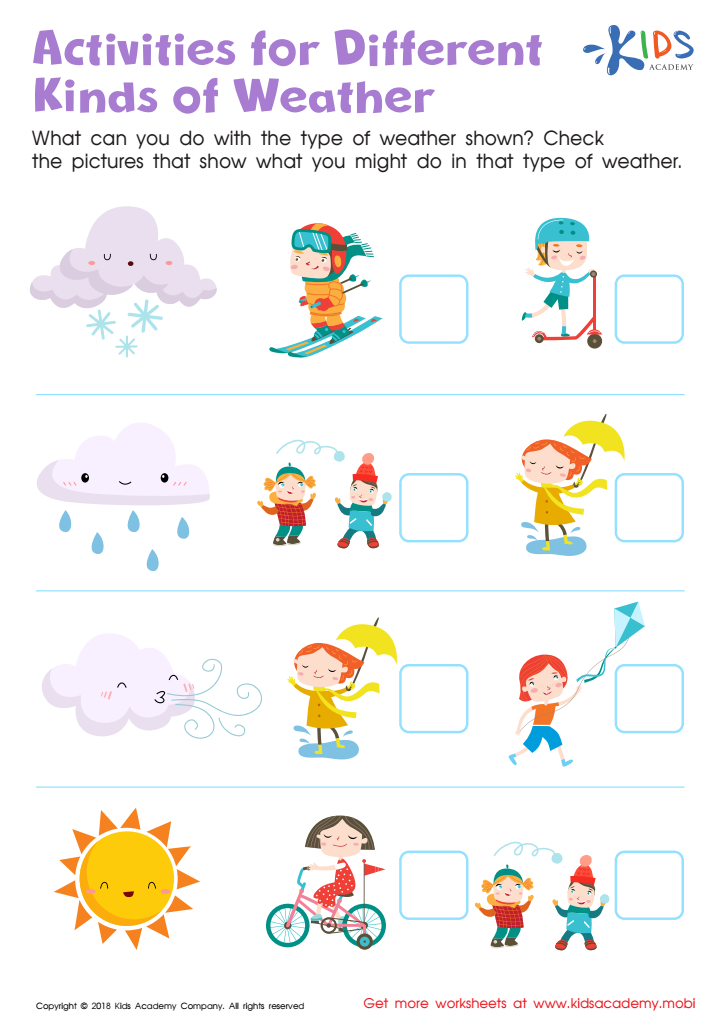
Activities for Different Kinds of Weather Worksheet
 Assign to My Students

My Bedroom Worksheet
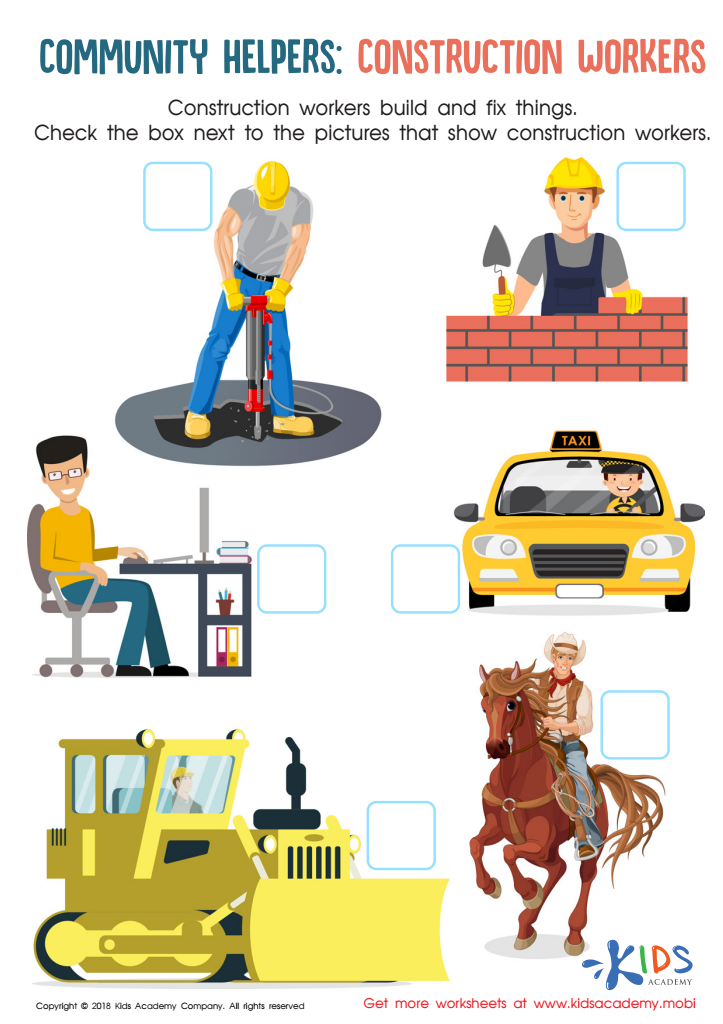
Construction Workers Community Helpers Worksheet







Parents and teachers should prioritize visual perception improvement in social studies for children aged 3-9 because it plays a crucial role in overall cognitive development and academic success. Visual perception refers to the brain's ability to interpret and make sense of what the eyes see, which is essential for recognizing shapes, letters, and symbols. In social studies, these skills help children navigate maps, charts, and images, enabling them to engage with concepts related to community, history, and culture.
By enhancing visual perception skills, children develop better observation skills, problem-solving abilities, and critical thinking. This lays a solid foundation for understanding complex topics in social studies and other subjects, as children learn to draw connections between visual information and ideas. Moreover, children are naturally curious, and engaging visual activities—such as exploring maps, posters, and interactive games—help channel that curiosity into meaningful learning experiences.
Improving visual perception also fosters greater attention and focus, making it easier for young learners to absorb information in a subject that often relies on interpreting visual data. Thus, by recognizing the importance of visual perception in social studies, parents and teachers can help nurture a generation of informed, engaged, and critical thinkers.