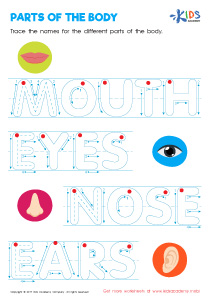
Color Identification World Around Us Worksheets for Ages 3-9
3 filtered results
Difficulty Level
Grade
Age
-
From - To
Subject
Activity
Standards
Discover engaging "Color Identification World Around Us Worksheets for Ages 3-9" designed to enhance your child’s understanding of colors through observation and interaction with their surroundings. These worksheets offer diverse activities that make learning fun and effective, helping young learners identify and name colors found in everyday life. Perfect for home or classroom use, they support visual learning and critical thinking while sparking creativity and curiosity. Ideal for ages 3-9, our worksheets cater to various skill levels and provide an excellent foundation for color recognition in a joyful learning journey. Get started and brighten your child's educational experience today!
Favorites
With answer key
Interactive
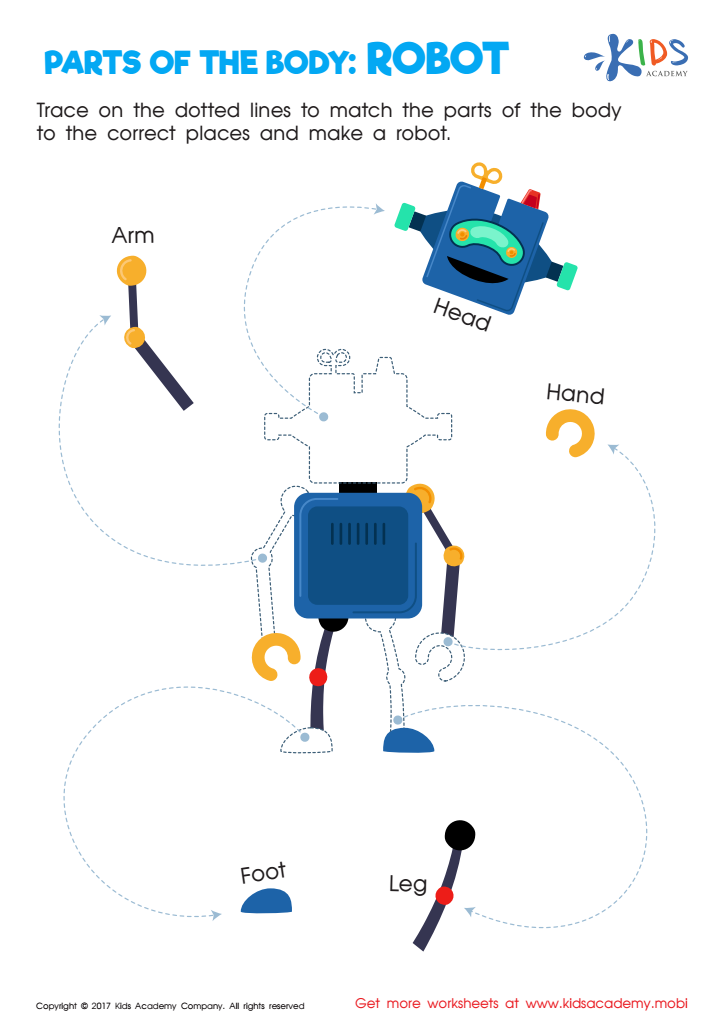
Robot Printable
Introduce your child to a fun robot and help her hone her matching skills with this parts of the body worksheet! Your child will trace dotted lines to match the robot's body parts to the right place, helping her focus, use abstract thinking and reason better. This worksheet is sure to get your child excited and help her build essential skills for future success!
 Assign to My Students
Robot Printable
Worksheet
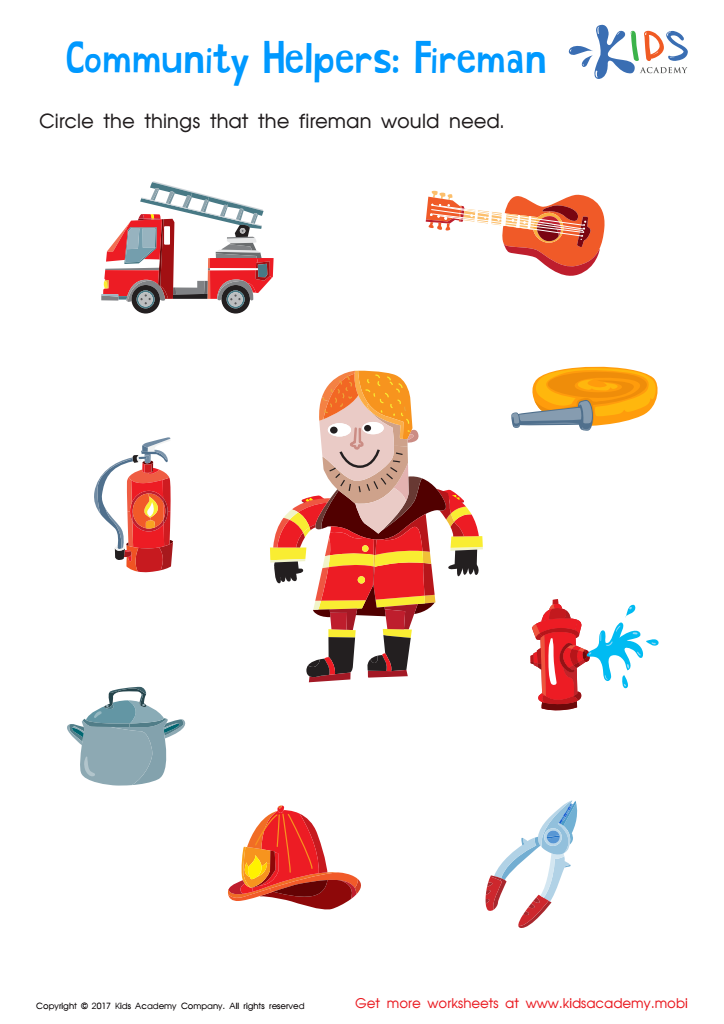
Fireman Worksheet
Kids love firemen and their big fire engines! Inspire your child to learn about their duties with this fun fireman worksheet. It'll help your child understand the role of firemen, as well as develop matching and problem solving skills. Get your kid started on understanding a key role in society and have fun too!
Fireman Worksheet
Worksheet
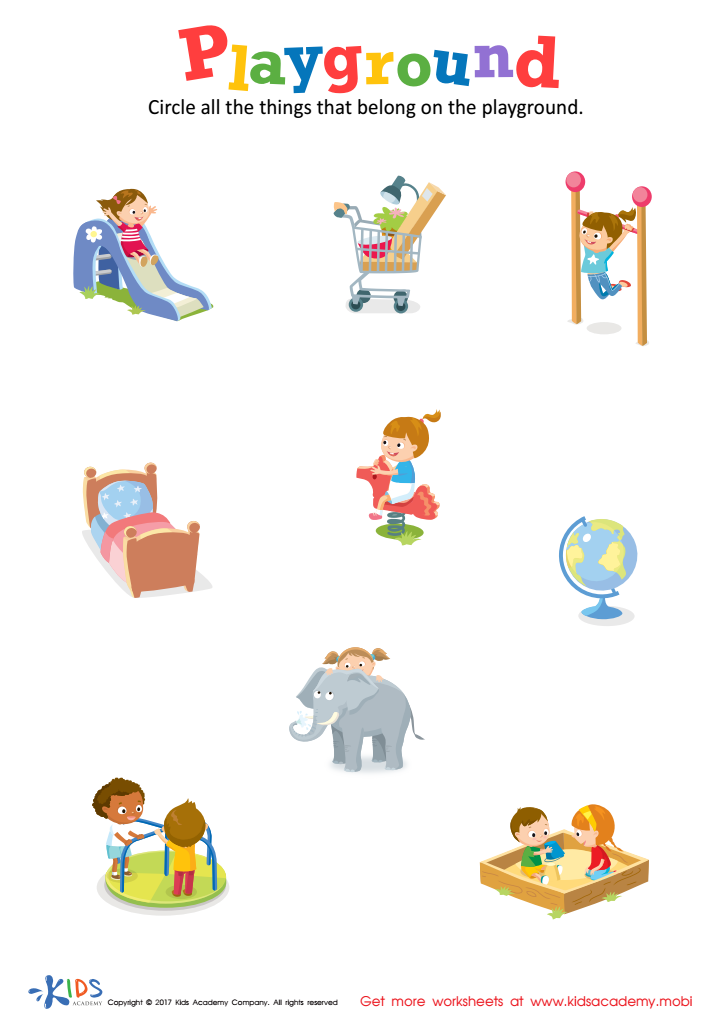
Playground Worksheet
Head to the park with this playground worksheet! It strengthens sorting and cognitive skills while encouraging problem solving. Plus, it's fun-filled and engaging! When finished, head out to the park to see what items your child finds in the playground!
Playground Worksheet
Worksheet
Join Kids Academy for Free
Who is primarily going to use this learning content?







Parents and teachers should care about color identification for children ages 3-9 because it serves as a foundational skill that supports cognitive, emotional, and social development. Color identification helps children with visual discrimination, which is essential for reading and writing. When children learn to distinguish between different colors, they are also practicing early math skills, such as sorting and categorizing.
Understanding colors also plays a key role in communication. Being able to name colors allows children to describe things more accurately, enhancing their descriptive language abilities. This skill feeds directly into more complex tasks, such as storytelling and vocabulary building. Furthermore, color identification can be a confidence booster. Successfully learning and naming colors boosts a child's self-confidence, encouraging them to take on new learning challenges.
On an emotional level, colors can influence mood and behavioral responses. A child who can identify and choose colors they feel connected to will find it easier to express their feelings and choices. Socially, color activities often involve collaboration and sharing, improving teamwork and negotiation skills.
Incorporating color identification into everyday experiences enriches a child's interaction with the world. Simple activities like sorting colored toys or identifying colors in nature can make learning seamless and enjoyable. Thus, nurturing this skill creates a strong educational foundation while making learning a natural part of daily life.