Verb recognition Grammar Worksheets for Ages 3-9
4 filtered results
-
From - To
Discover our Verb Recognition Grammar Worksheets designed for children ages 3-9 at Kids Academy. Our engaging, printable resources are perfect for early learners to identify and understand verbs in different contexts. With colorful illustrations and fun activities, kids can efficiently build fundamental grammar skills while enjoying the learning process. These worksheets help young learners differentiate between action words and other parts of speech, laying a strong foundation for language development. Ideal for parents and teachers, our verb recognition exercises foster a love for learning and ensure continued academic success. Explore our worksheets today and support your child's educational journey!
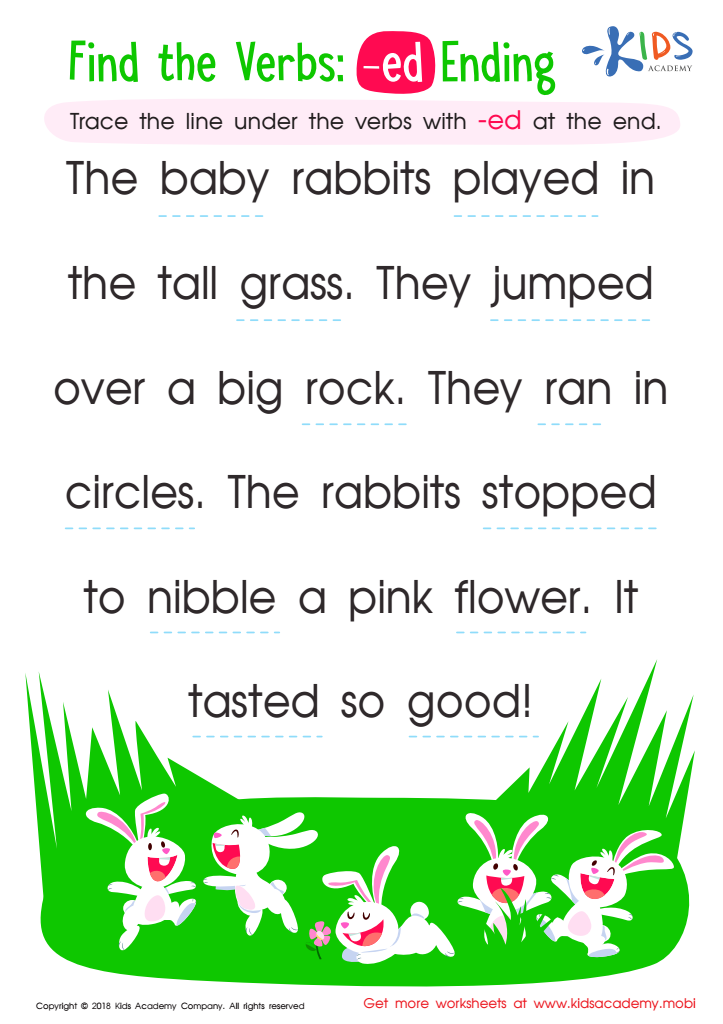
Find The Verbs: -ed Ending Worksheet
 Assign to My Students
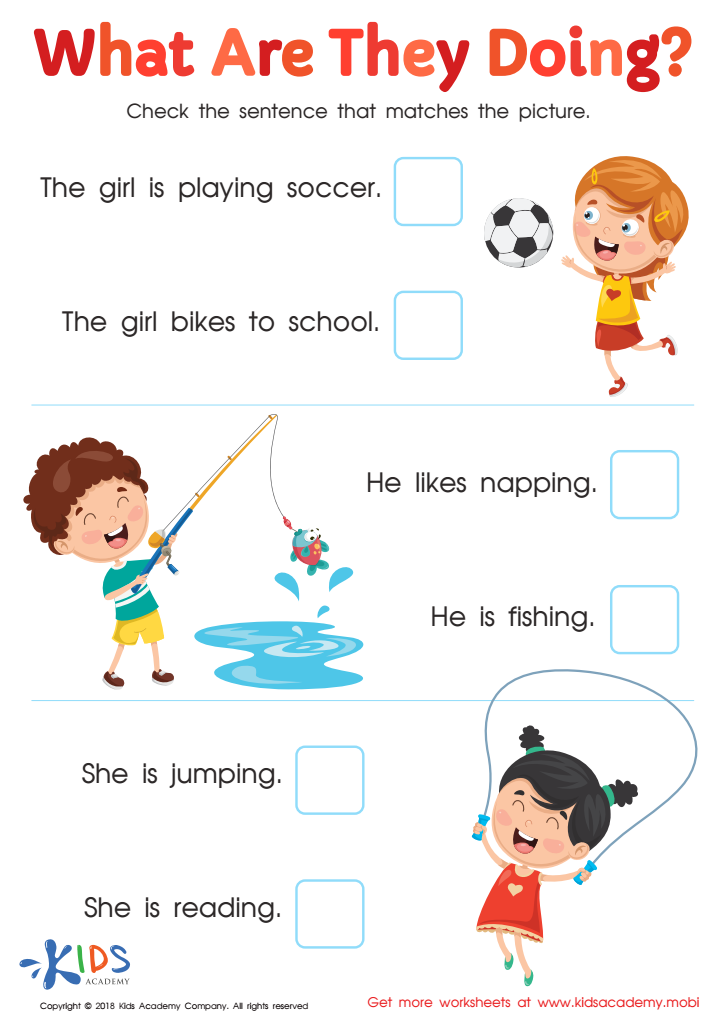
What Are They Doing? Worksheet
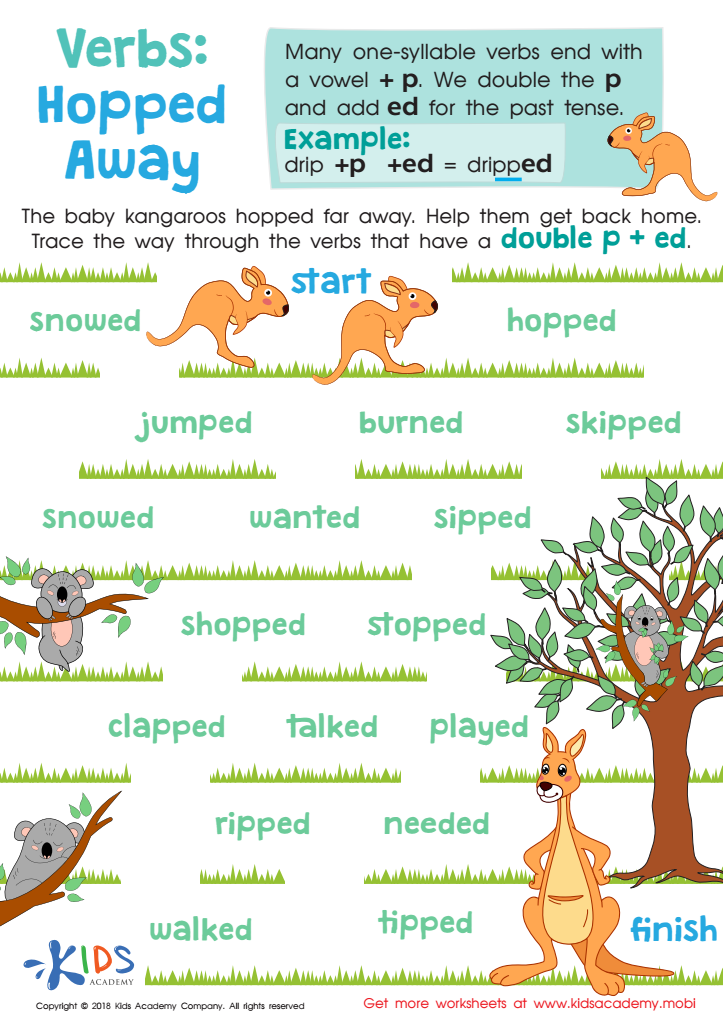
Verbs: Hopped Away Worksheet
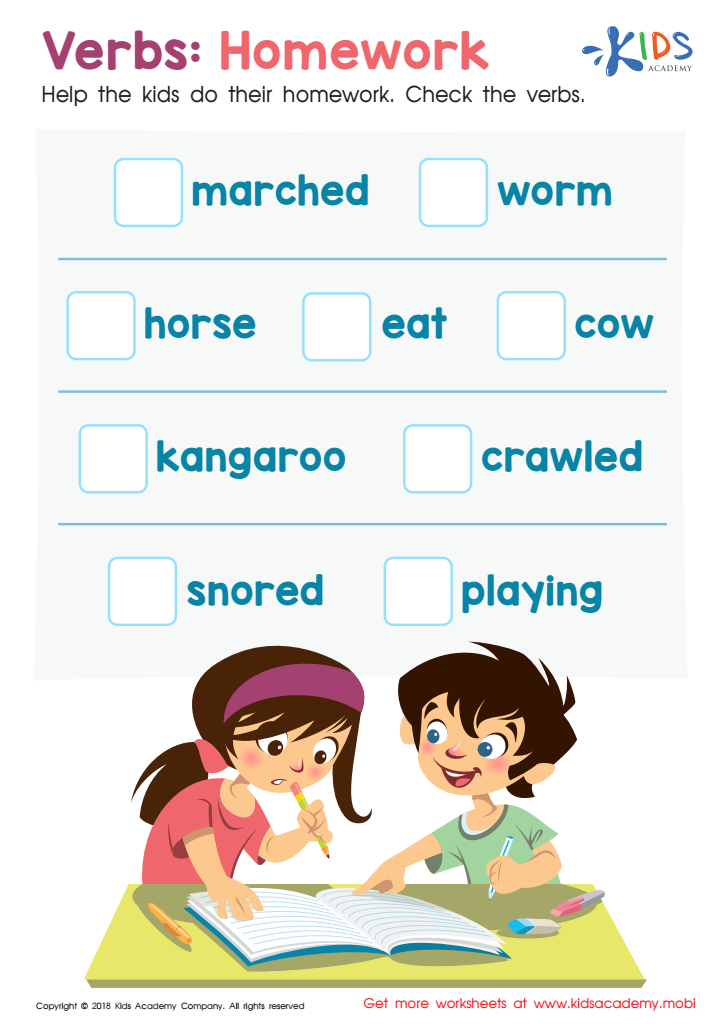
Verbs Homework Worksheet





.jpg)


Parents and teachers should care deeply about verb recognition for children aged 3-9 because it lays an essential foundation for effective communication, literacy, and overall academic success. During these formative years, children rapidly develop their language skills, and verbs—action words—are crucial for constructing meaningful and dynamic sentences. A solid grasp of verbs enables children to articulate their thoughts clearly, describe actions, and express needs more accurately.
Verb recognition aids in reading comprehension by helping young readers decode and understand text more efficiently. When children recognize verbs, they can better follow the action and storyline, making reading a more engaging and educational experience. Verb knowledge also supports writing abilities, allowing children to create more vivid stories and informative texts.
Additionally, understanding verbs enhances vocabulary development. By learning different verbs, children expand their word bank, which is directly linked to improved cognitive and communicative competencies. This aspect of grammar is also vital for learning additional languages, profound reasoning, and following instructions, making it a critical component of lifelong learning.
Thus, investing time and effort in teaching verb recognition in early childhood sets the stage for successful linguistic development and is a cornerstone for cultivating attentive, articulate, and intelligent young learners.








