Sight word recognition Writing Worksheets for Ages 3-9
6 filtered results
-
From - To
Discover our engaging Sight Word Recognition Writing Worksheets designed for children ages 3-9! These worksheets provide a fun and effective way for young learners to enhance their literacy skills. Each worksheet features colorful visuals and interactive activities tailored to support early readers in recognizing and writing essential sight words. Our resources promote fine motor skills development while fostering a love for reading. Perfect for both classroom and home use, these worksheets are ideal for reinforcing sight word mastery through repetition and practice. Ignite your child's learning journey today and watch their confidence soar as they become fluent readers!
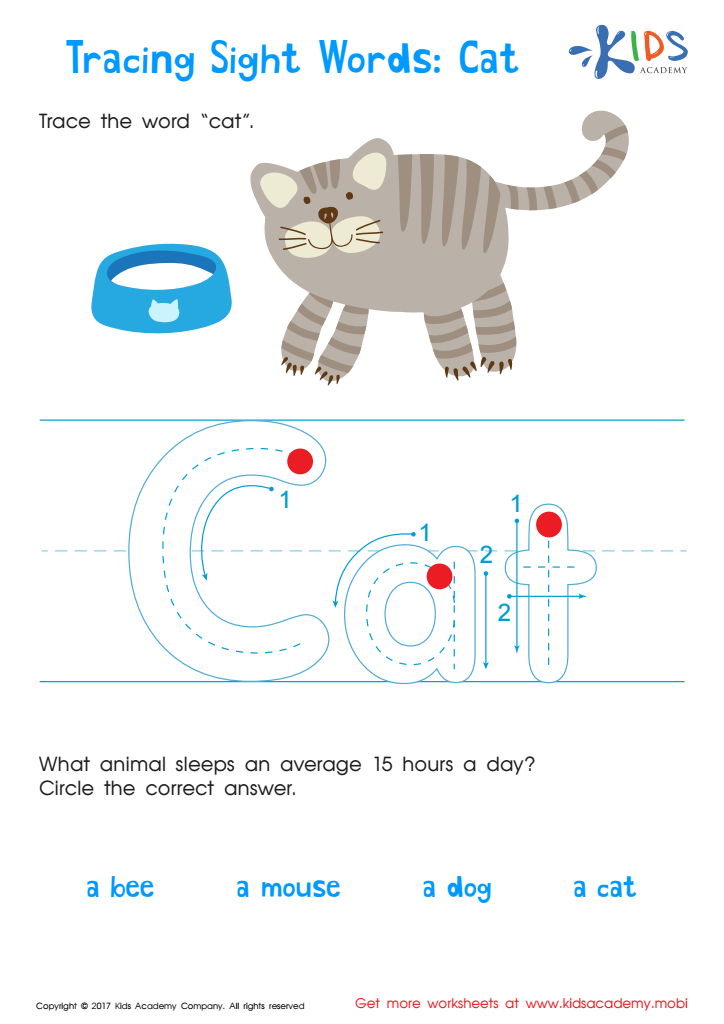
Cat Printable Sight Words Worksheet
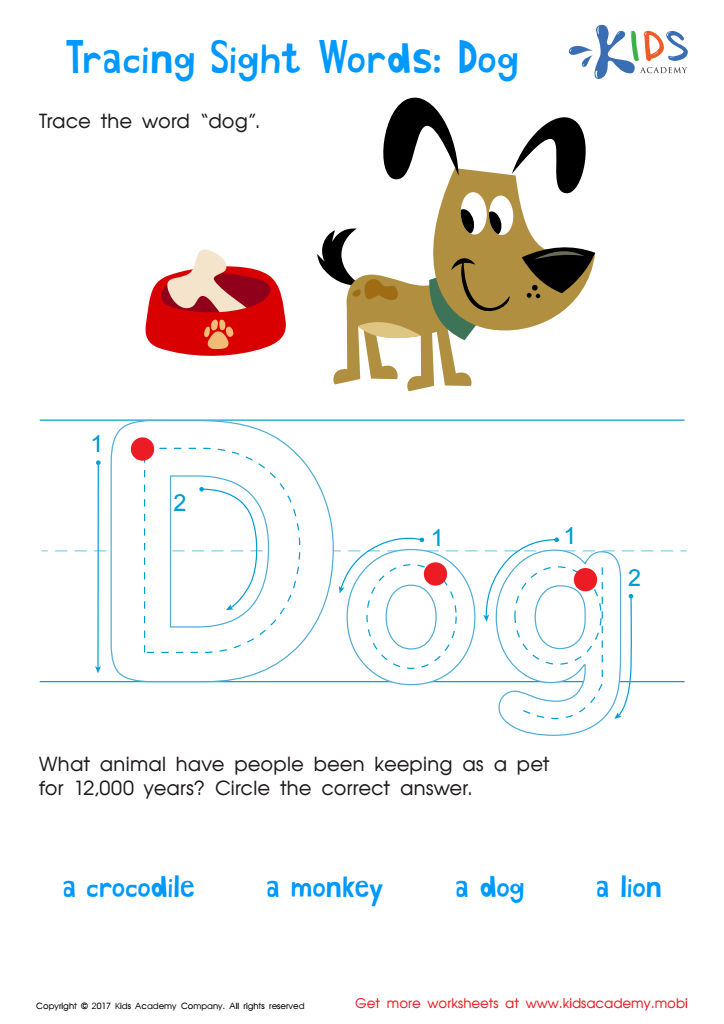
Dog Worksheet Sight Words Worksheet
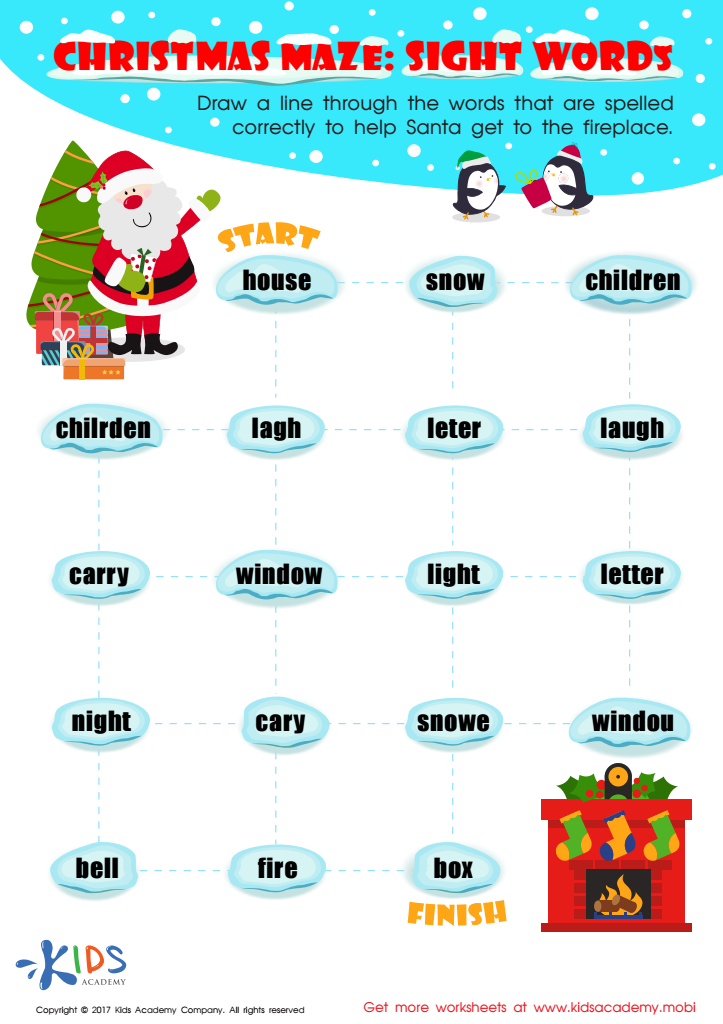
Sight Words Christmas Maze Printable
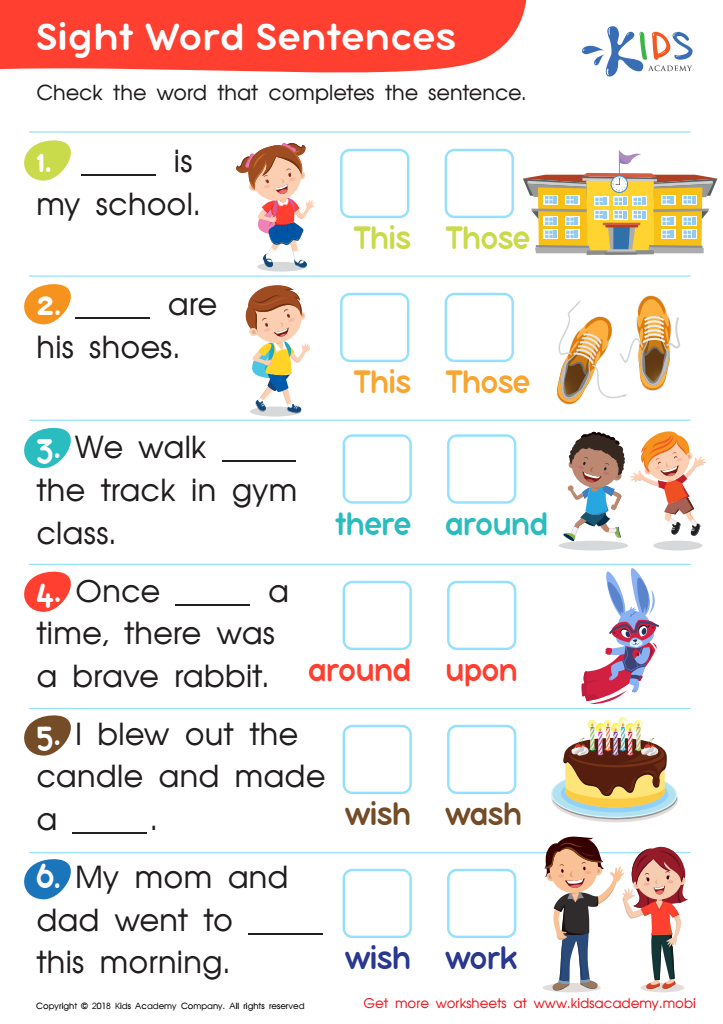
Sight Word Sentences Worksheet
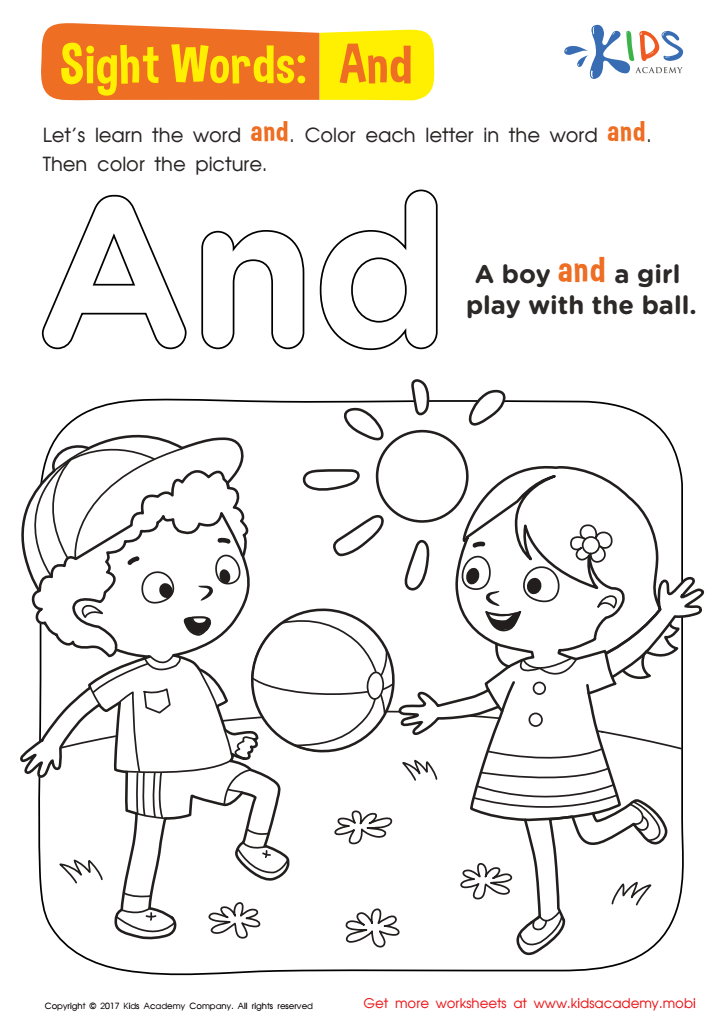
And Worksheet Sight Words Worksheet
 Assign to My Students








Sight word recognition is a crucial component of early literacy for children aged 3-9, making it imperative for parents and teachers to prioritize it in educational practices. Sight words are commonly used words that children are encouraged to recognize instantly without having to decode them. Mastery of these words lays the foundation for reading fluency, comprehension, and overall literacy skills.
Firstly, sight word recognition boosts confidence in young readers, empowering them to tackle more complex texts. When children can quickly identify sight words, they no longer stumble on familiar terms, allowing them to focus on understanding the story's meaning. This fluency enhances their enjoyment of reading, fostering a lifelong love for books.
Moreover, learning sight words facilitates smoother writing development. Children who recognize sight words can express their thoughts more clearly and confidently. This recognition reduces their cognitive load, enabling them to focus on vocabulary and sentence structure.
Lastly, investing in sight word recognition strengthens parent-child and student-teacher interactions. Engaging in games, flashcards, and creative writing exercises creates a supportive learning environment where children can thrive.
Ultimately, a strong foundation in sight words sets the stage for academic success, making it a focal point in early education.








