Spatial awareness Writing Worksheets for Ages 3-9
3 filtered results
-
From - To
Enhance your child's spatial awareness with our engaging writing worksheets tailored for ages 3-9! These interactive resources are designed to help young learners develop essential skills through fun activities that involve understanding space, distance, and relationships between objects. Our worksheets feature a variety of exercises, including tracing, drawing, and identifying positions, to foster creativity and critical thinking. By improving spatial awareness, children not only boost their writing skills but also gain confidence in navigation and problem-solving. Ideal for home or classroom use, these worksheets provide a great opportunity for parents and educators to support children's learning in a playful and effective way!
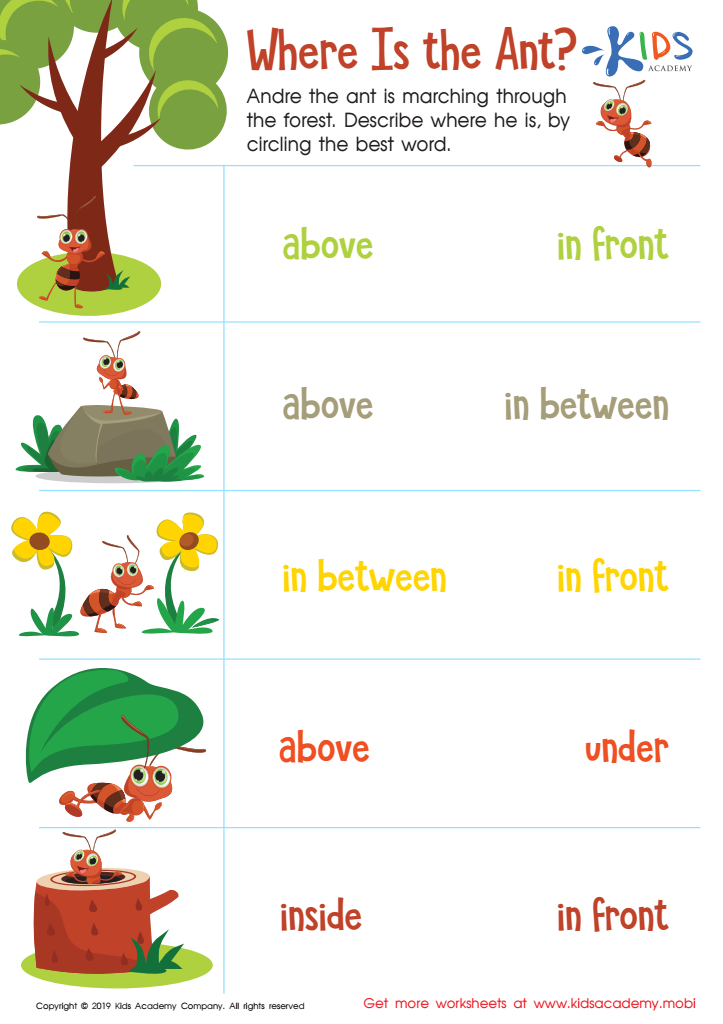
Where Is the Ant? Worksheet
 Assign to My Students
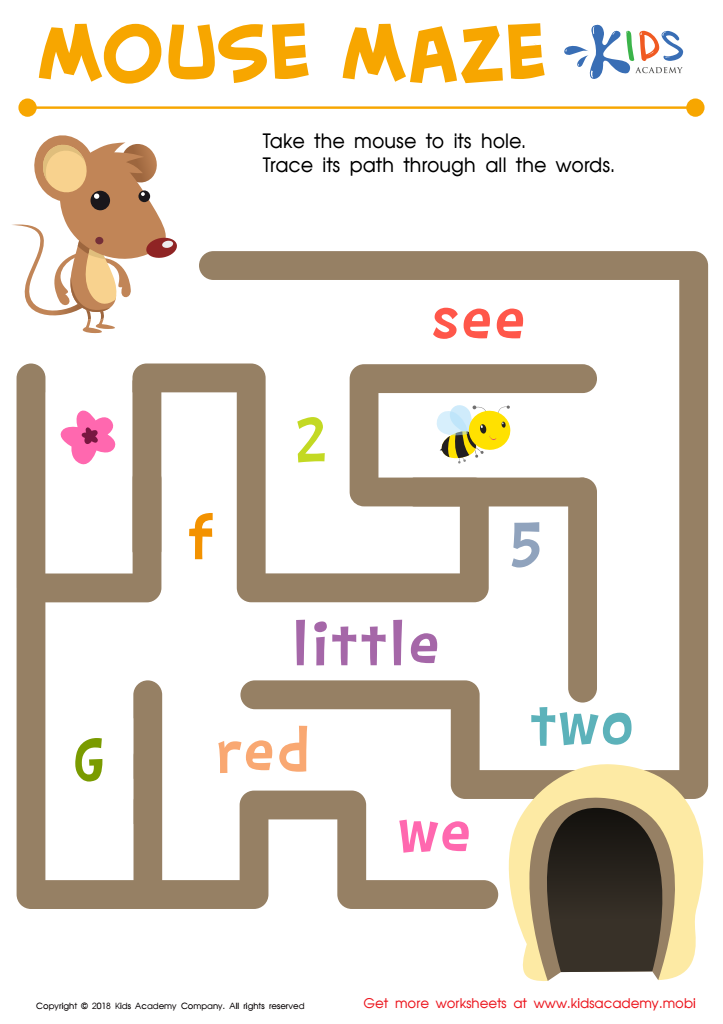
Find Words Mouse Maze Worksheet
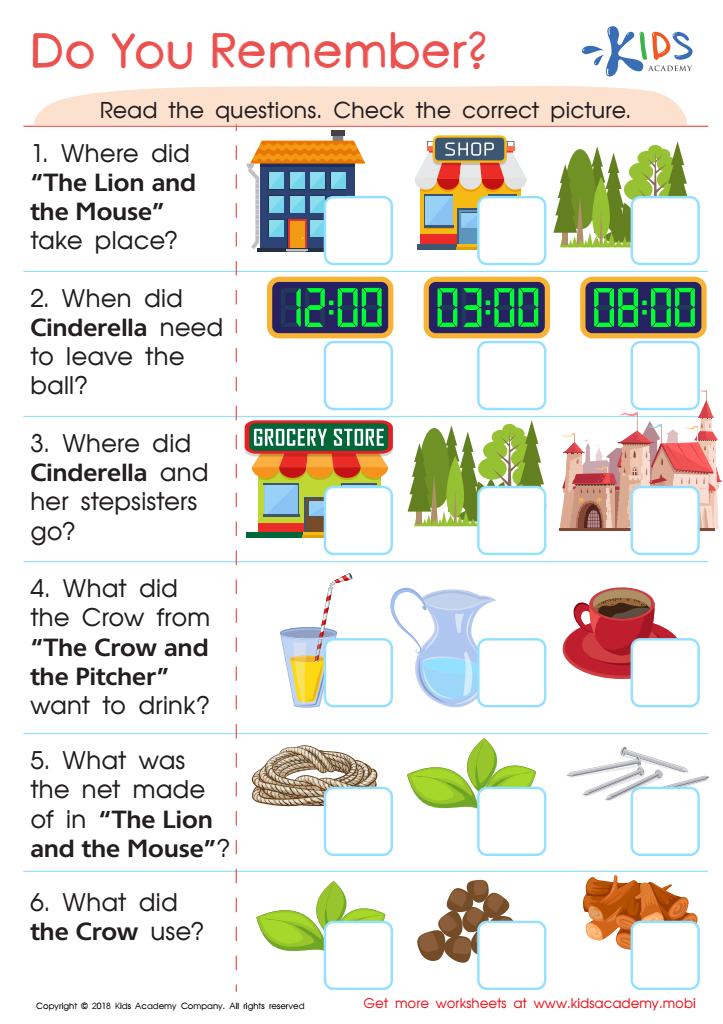
Do You Remember? Worksheet






.jpg)
Spatial awareness is a critical cognitive skill that helps children understand their position in space and how objects relate to each other. For parents and teachers of children aged 3-9, promoting this skill is essential for several reasons. Firstly, spatial awareness is foundational for various academic subjects, particularly math and science, where concepts like geometry and measurements are introduced. Children with strong spatial skills often find these subjects more accessible and engaging.
Additionally, spatial awareness enhances problem-solving abilities, allowing children to navigate and interact with their environment confidently. For young learners, activities that develop these skills—such as puzzles, building blocks, or navigating obstacle courses—can be both fun and educational. Moreover, good spatial awareness contributes to physical coordination, aiding in activities ranging from basic movement to sports, thus fostering a healthy, active lifestyle.
Furthermore, spatial reasoning is linked to critical thinking and creativity, allowing children to visualize and manipulate objects mentally. Encouraging environments that stimulate spatial thinking not only supports academic achievement but fosters essential life skills, enabling children to become more competent and confident in their real-world interactions. Thus, both parents and teachers play a pivotal role in nurturing spatial awareness, laying the groundwork for lifelong learning and growth.








