Letter recognition Elementary Phonics Worksheets for 3-Year-Olds
4 filtered results
-
From - To
Introduce your 3-year-old to the world of letters with our fun and engaging Elementary Phonics Worksheets. Designed specifically for young learners, these worksheets help children identify and recognize various letters of the alphabet through playful activities and colorful illustrations. Each worksheet combines educational content with creative exercises to ensure your child stays motivated and enjoys the learning process. With a focus on foundational letter recognition, these worksheets lay the groundwork for early reading skills, setting them on a path to academic success. Make learning exciting and effective for your little one with our expertly crafted phonics worksheets!

Long and Short U Worksheet
 Assign to My Students
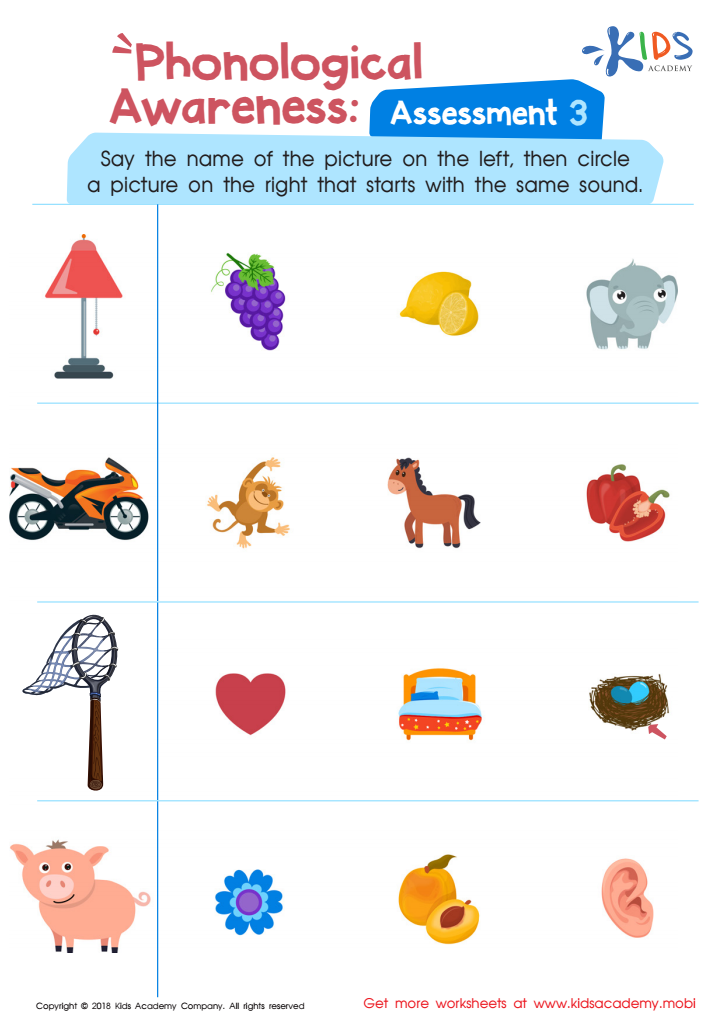
Phonological Awareness: Assessment 3 Worksheet

Long and Short E Worksheet
Assign to My Students
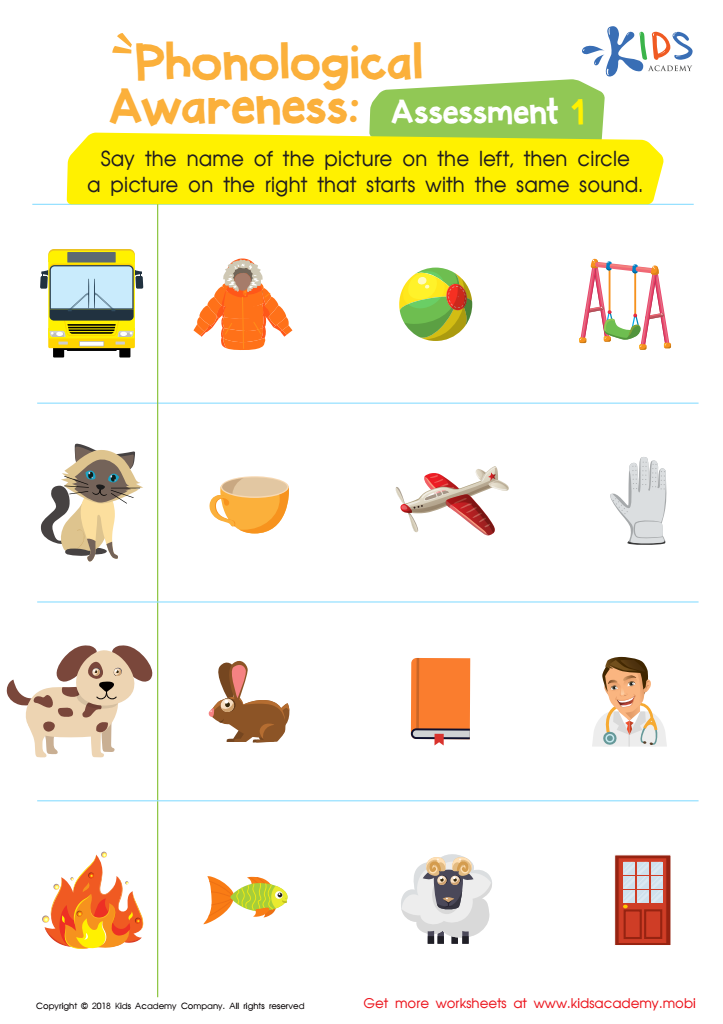
Phonological Awareness: Assessment 1 Worksheet




Parents and teachers should prioritize letter recognition and elementary phonics for 3-year-olds as a foundational step in early literacy development. At this tender age, children's brains are highly absorbent and primed for language acquisition. Introducing them to letters and basic phonics lays the groundwork for future reading and writing skills.
Letter recognition helps children understand that text is a form of communication, which fosters early interest in books and stories, encouraging a lifelong love for reading. Recognizing letters also enables children to decode words by associating letters with their corresponding sounds, an essential aspect of phonics. This skill is crucial as it aids in word formation and understanding, both fundamental for comprehending reading materials as they advance in their education.
Moreover, early mastery of these skills can boost a child's confidence and enthusiasm for learning, reducing potential future struggles in more formal academic settings. Integrating playful methods like games or songs in letter recognition and phonics practice can simultaneously enhance cognitive abilities, fine motor skills, and social interaction. By investing time and effort in these early stages, parents and educators provide children with the necessary tools to become proficient readers, setting them on a path to academic success and opening up a world of knowledge and imagination.







