
Listening skills Phonics Worksheets for 3-Year-Olds
5 filtered results
Difficulty Level
Grade
Age
-
From - To
Subject
Activity
Standards
Develop essential listening skills in your 3-year-old with our engaging phonics worksheets! Tailored specifically for young learners, these worksheets from Kids Academy emphasize auditory discrimination and phonemic awareness, key building blocks for reading readiness. Each activity combines fun characters and interactive exercises designed to capture and sustain your child’s attention. Perfect for early childhood educators and parents alike, these printables support early academic achievement by refining your child’s ability to recognize and differentiate sounds. Start your child’s literacy journey today by downloading our free, educational listening skills phonics worksheets!
Favorites
With answer key
Interactive
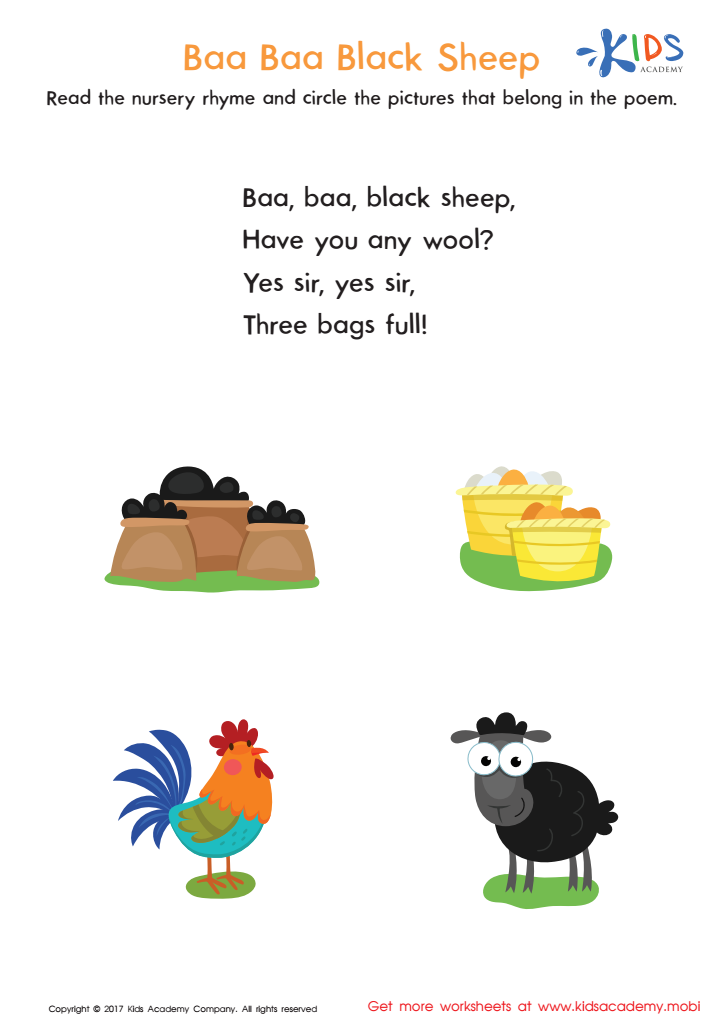
Baa Baa Black Sheep Printable
Jumpstart your child's reading skills with this printable Baa Baa Black Sheep worksheet! Recite the lines with them, then have them select the pictures associated with the poem to test comprehension. Fun and educational!
 Assign to My Students
Baa Baa Black Sheep Printable
Worksheet
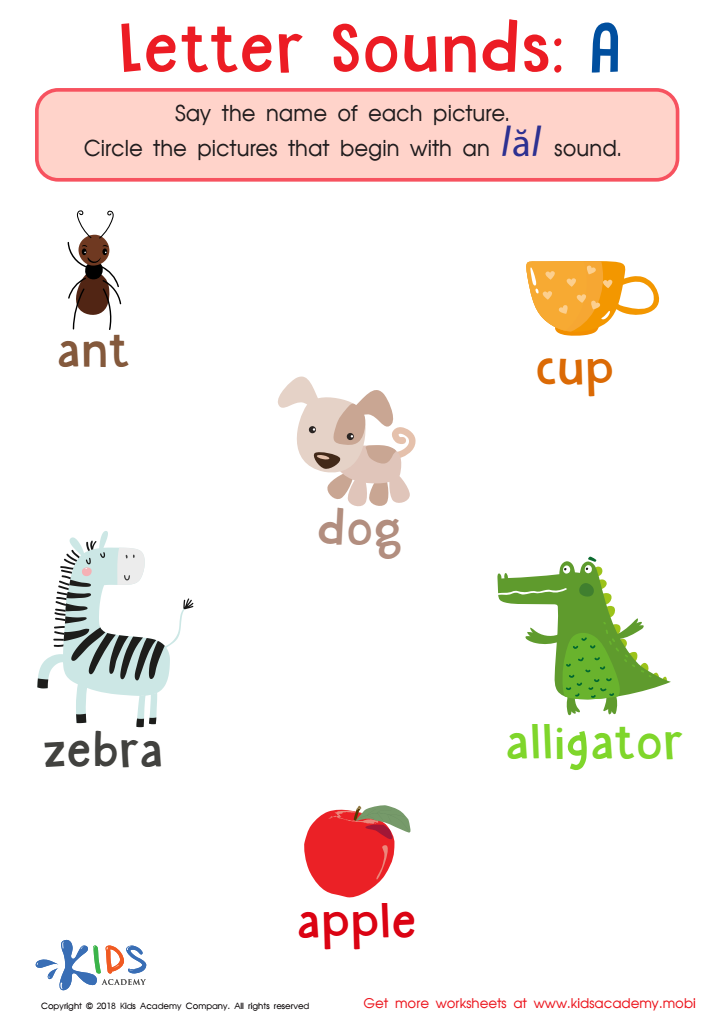
Letter A Sounds Worksheet
Encourage your new reader to practice the «ă» sound with this fun, free PDF worksheet. With the help of picture clues, they'll say the name of each word and trace circles around the items that start with «ă». This worksheet is an effective way to boost beginning sound skills while having fun!
Letter A Sounds Worksheet
Worksheet
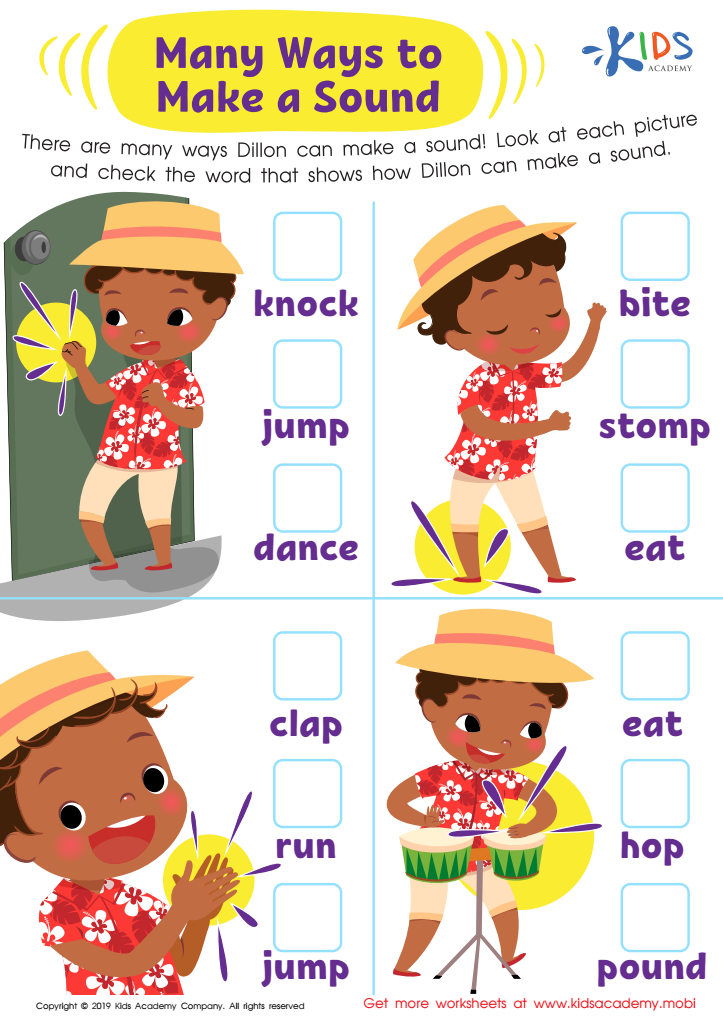
Many Ways to Make a Sound Worksheet
This interactive worksheet encourages creativity and imagination as kids use picture clues to match sound words. It helps them identify the sound methodology and build fine motor skills. Plus, with learning through play, they'll develop stronger vocabularies without even knowing it!
Many Ways to Make a Sound Worksheet
Worksheet
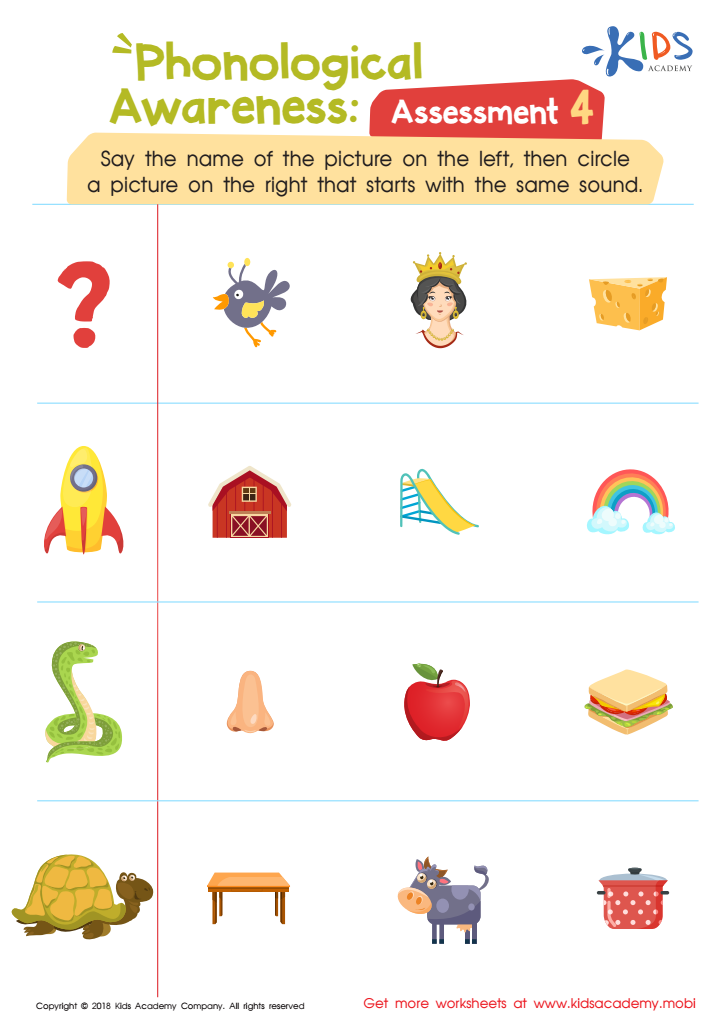
Phonological Awareness: Assessment 4 Worksheet
It can be tricky for young readers to differentiate between sounds in words. Make it fun with this downloadable worksheet! Ask your child to name each picture on the left and match the starting sound with an image on the right. This helps assess their phonics skills and make learning enjoyable.
Phonological Awareness: Assessment 4 Worksheet
Worksheet
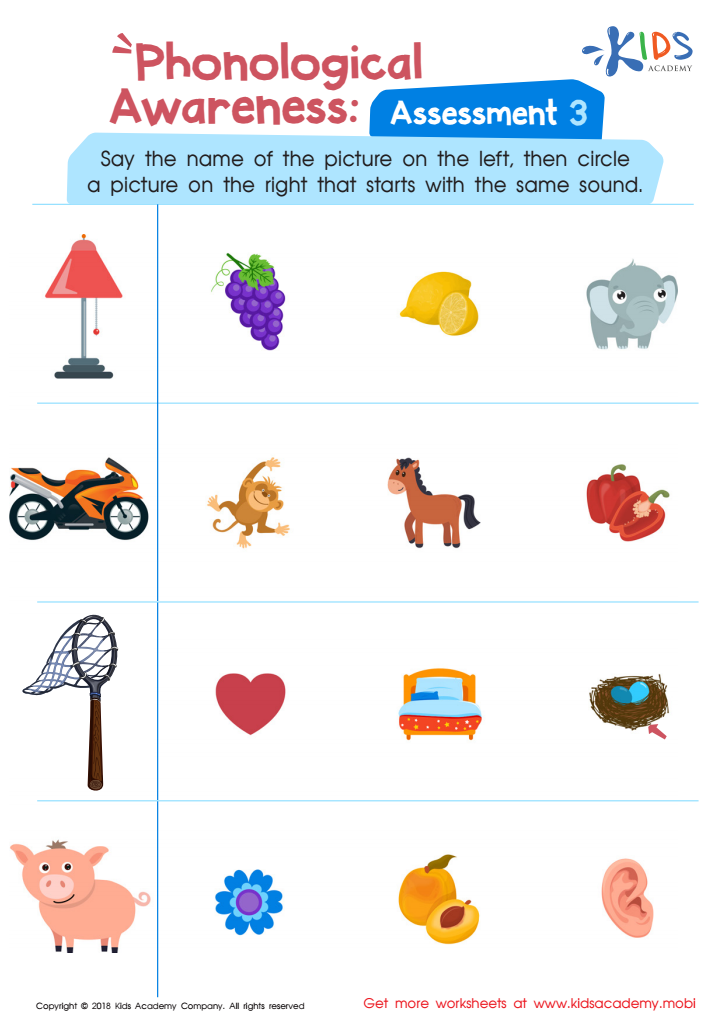
Phonological Awareness: Assessment 3 Worksheet
Test kids' reading readiness with a phonological awareness worksheet! With this PDF exercise, encourage children to name each picture aloud and match left to right. Help them learn to recognize word sounds at the start, middle and end of words. They'll be sure to remember that lamp doesn't sound like elephant!
Phonological Awareness: Assessment 3 Worksheet
Worksheet
Join Kids Academy for Free
Who is primarily going to use this learning content?








Parents and teachers should care about listening skills and phonics for 3-year-olds because these foundational abilities are crucial for language development and literacy. At this age, children's brains are exceptionally receptive to auditory information, making it the optimal period to develop their ability to discern and understand sounds. Listening skills enable children to follow instructions, engage in conversations, and build social skills, which are essential for success in school and life.
Phonics, the relationship between sounds and their corresponding letters, forms the bedrock of reading. By familiarizing young children with phonics, parents and teachers can facilitate early reading skills which are predictive of later academic achievement. Understanding phonics helps children decode words, improving their reading fluency and comprehension.
Early exposure to phonics also enriches vocabulary by helping children associate sounds with meanings, thereby enhancing cognitive development. It fosters a love for reading and learning, which can have long-lasting benefits. Inadequate development of these skills could lead to struggles with reading and communication, potentially impacting academic performance and self-esteem.
In summary, focusing on listening skills and phonics for 3-year-olds prepares them for successful educational outcomes and nurturing lifelong learners, setting a strong foundation for future growth.







