Sound identification Phonics Worksheets for 3-Year-Olds
4 filtered results
-
From - To
Discover our engaging Sound Identification Phonics Worksheets designed specifically for 3-Year-Olds! Our resources provide interactive and fun activities to help young learners recognize letter sounds, laying a strong foundation for reading. These worksheets feature colorful illustrations and age-appropriate exercises that captivate children's attention while teaching them the vital skills needed for sound recognition. With a variety of activities, including matching sounds to images and tracing letters, your little ones will develop their phonetic awareness in an enjoyable way. Perfect for homeschooling, classrooms, or supplemental learning, these worksheets make mastering phonics an exciting adventure! Encourage early literacy skills today!
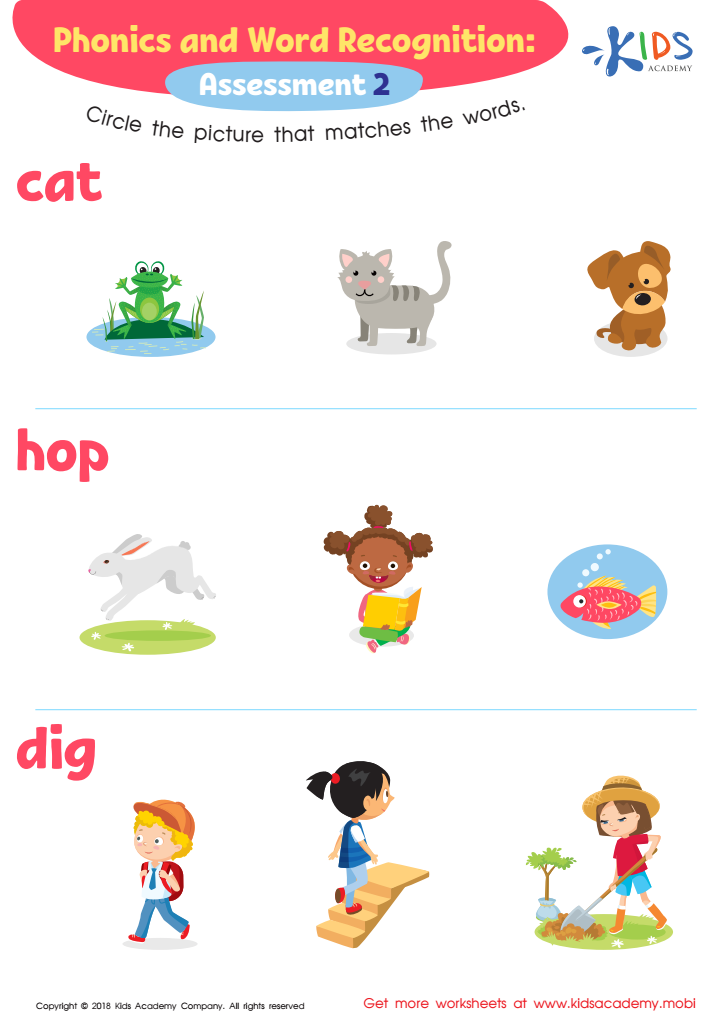
Phonological Awareness: Assessment 2 ELA Worksheet
 Assign to My Students
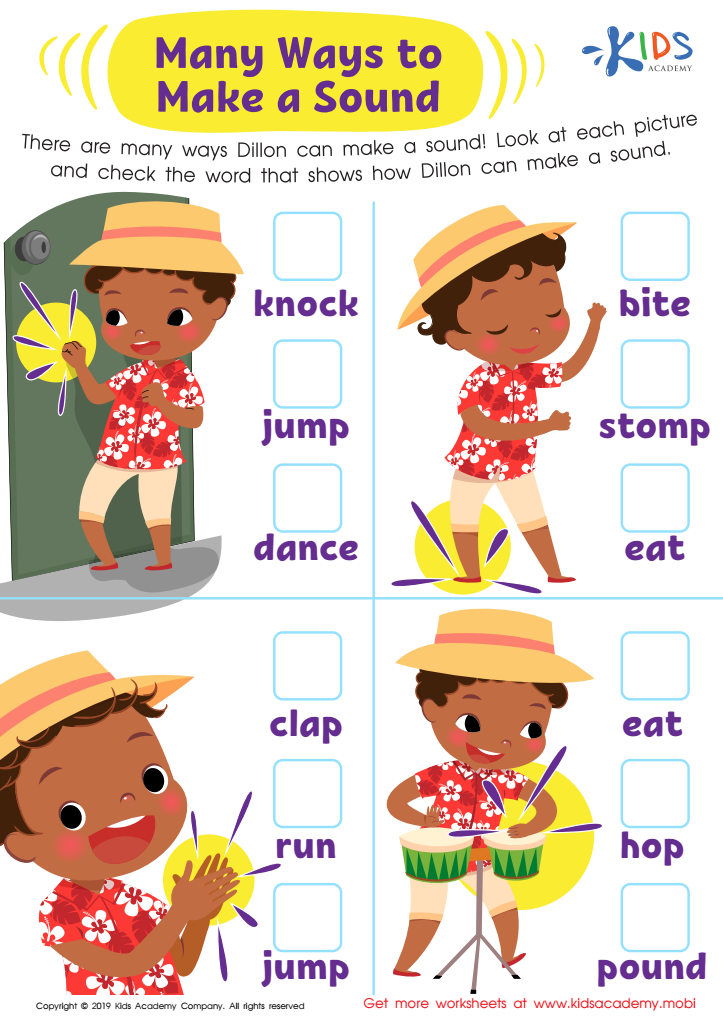
Many Ways to Make a Sound Worksheet
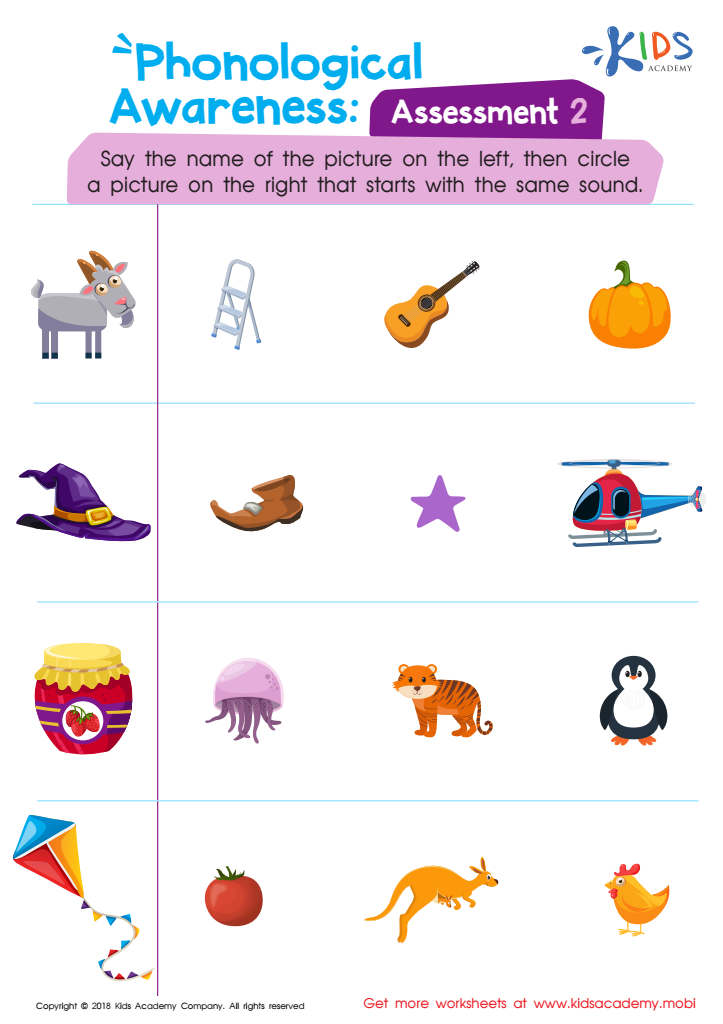
Phonological Awareness: Assessment 2 Worksheet
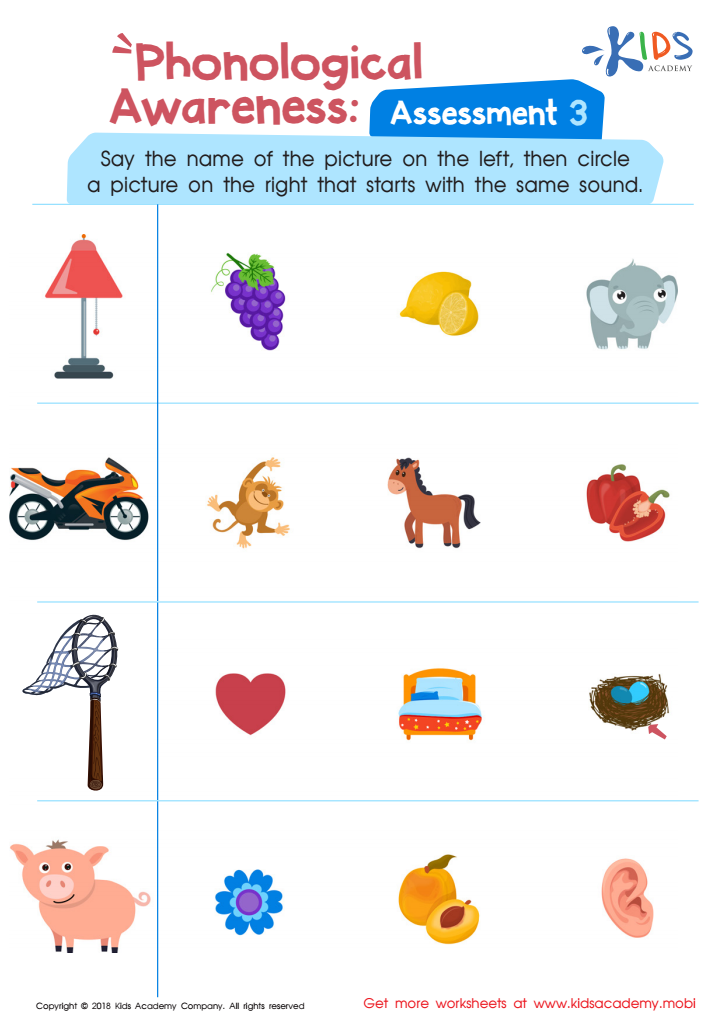
Phonological Awareness: Assessment 3 Worksheet








Sound identification phonics is a crucial foundational skill that helps 3-year-olds develop early literacy. Early exposure to phonics enables children to recognize and manipulate the sounds in words, laying the groundwork for reading and writing. When parents and teachers prioritize sound identification, they promote phonemic awareness—an essential ability that allows children to understand how sounds form the basis of language.
As children learn to identify sounds, they also enhance their listening skills and vocabulary, which are vital for effective communication. Engaging young learners through play-based activities, songs, and interactive games not only makes learning enjoyable but also fosters a positive attitude towards education. This can lead to a lifelong love of reading.
In addition, strong phonics skills provide children with the tools they need to decode unfamiliar words, making reading less daunting as they progress. By focusing on sound identification at this early age, parents and teachers create a solid literacy foundation that increases the likelihood of academic success.
Investing time in phonics understanding also empowers parents, enabling them to actively participate in their child’s learning journey. Overall, prioritizing sound identification phonics for 3-year-olds significantly enhances both cognitive development and overall school readiness.







