
Word Recognition Phonics Worksheets for 3-Year-Olds
7 filtered results
Difficulty Level
Grade
Age
-
From - To
Subject
Activity
Standards
Discover our engaging Word Recognition Phonics Worksheets designed specifically for 3-year-olds! These worksheets provide a fun and interactive way for young learners to develop essential reading skills. Through colorful illustrations and simple exercises, children will strengthen their ability to recognize words and associate them with sounds. Perfect for reinforcing phonics fundamentals, our activities cater to different learning styles, making literacy enjoyable. Whether used at home or in the classroom, these worksheets are a valuable resource for fostering a love for reading from an early age. Start your child's journey to literacy today with our thoughtfully designed phonics resources!
Favorites
With answer key
Interactive
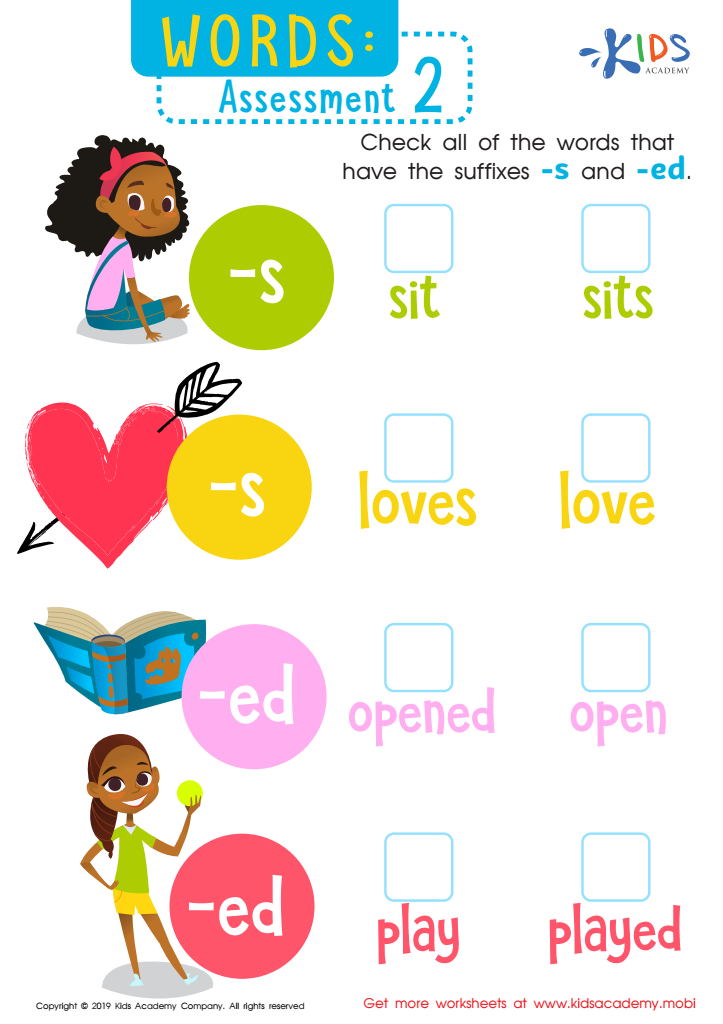
Words: Assessment 2 Worksheet
Test your child’s knowledge of -s and -ed word endings with this fun worksheet! They'll look at images and read the words, then choose the correct suffix to finish each one. Vivid illustrations make this an enjoyable learning experience!
 Assign to My Students
Words: Assessment 2 Worksheet
Worksheet
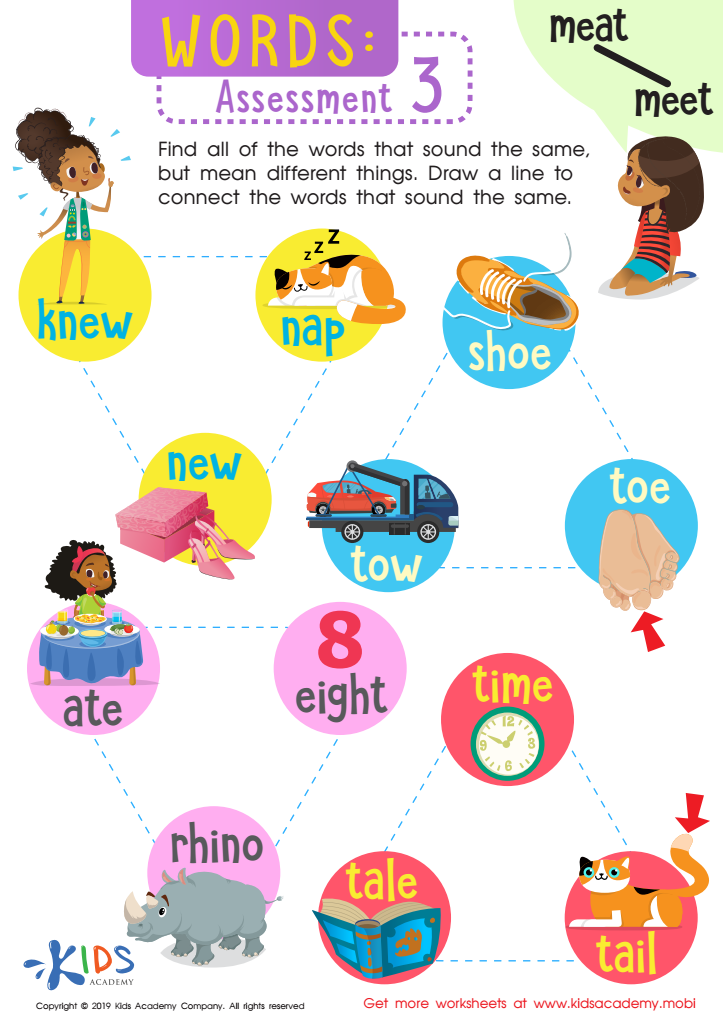
Words: Asessment 3 Worksheet
Assess your child's knowledge of homonyms with words like "toe" and "tow". This fun worksheet helps find words that sound the same but have different meanings and spellings. Use it to introduce homographs--words spelled the same with different meanings!
Words: Asessment 3 Worksheet
Worksheet
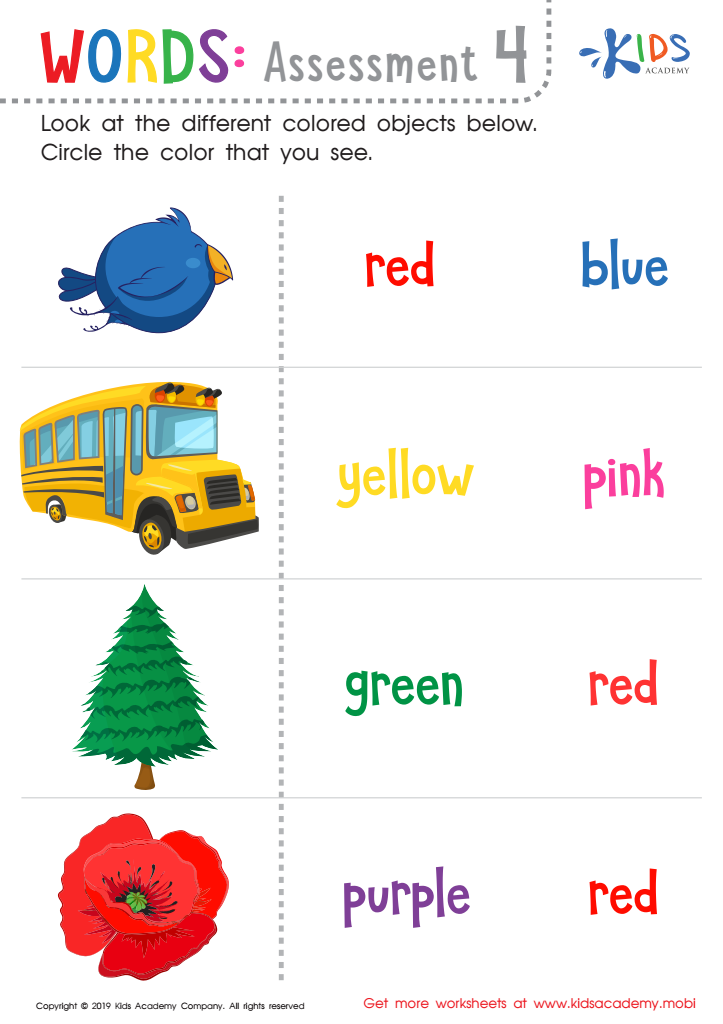
Words: Assessment 4 Worksheet
Look at the pictures and have your child circle the color they see. This free worksheet is great for assessing their knowledge of vocabulary words. It offers familiar images with words for kids to read and match with the colors. Help your child build their reading and understanding skills with this fun activity!
Words: Assessment 4 Worksheet
Worksheet
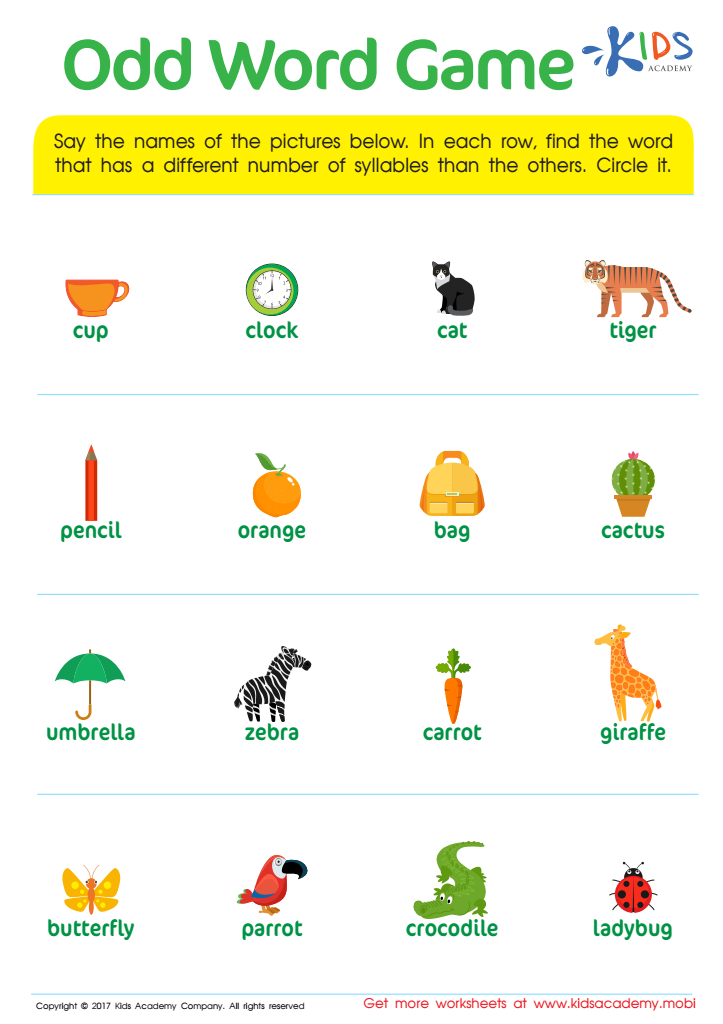
Count Syllables: Odd Word Game Worksheet
Counting syllables strengthens kids' decoding skills. This printable helps them say common item names and chunk words for fluency and accuracy. They don't even realize they're working on their reading! Bright colors make it fun, so it's a fast and easy way to practice.
Count Syllables: Odd Word Game Worksheet
Worksheet
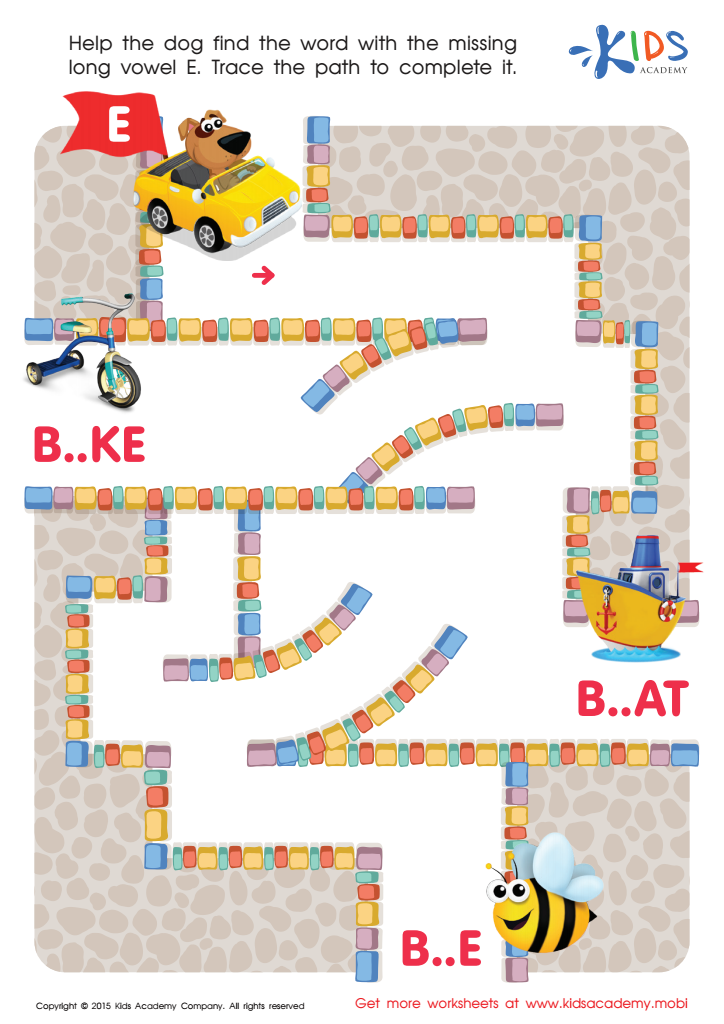
Long Vowel Sound E Worksheet
Practice distinguishing long and short vowel sound E with this free printable! Kids must complete the word “bee” by tracing the maze and adding the missing letter E. Remind them to say the word aloud to help sharpen their phonics ear. Get more phonics fun with the vowel sound E here.
Long Vowel Sound E Worksheet
Worksheet
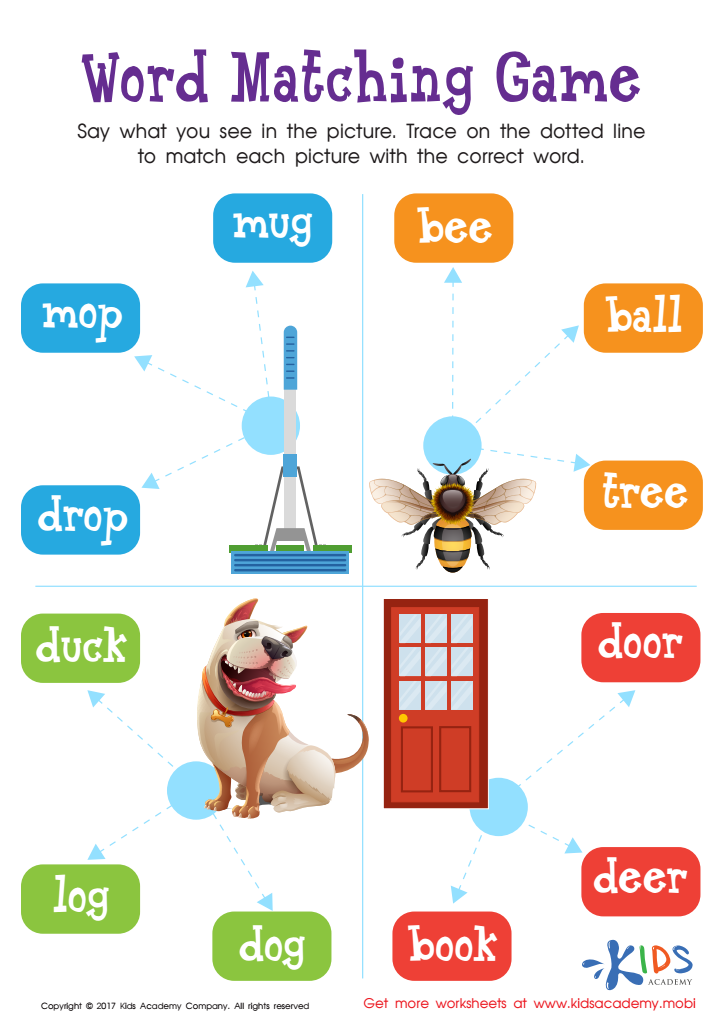
Word Matching Game Worksheet
Help your early reader develop prereading skills with this fun matching worksheet! Visual cues help them learn sight words, decode words in word families, and identify phonetic patterns. They'll practice discerning sounds past initial consonants while saying the name of the picture and finding the matching word - and reading at the same time!
Word Matching Game Worksheet
Worksheet
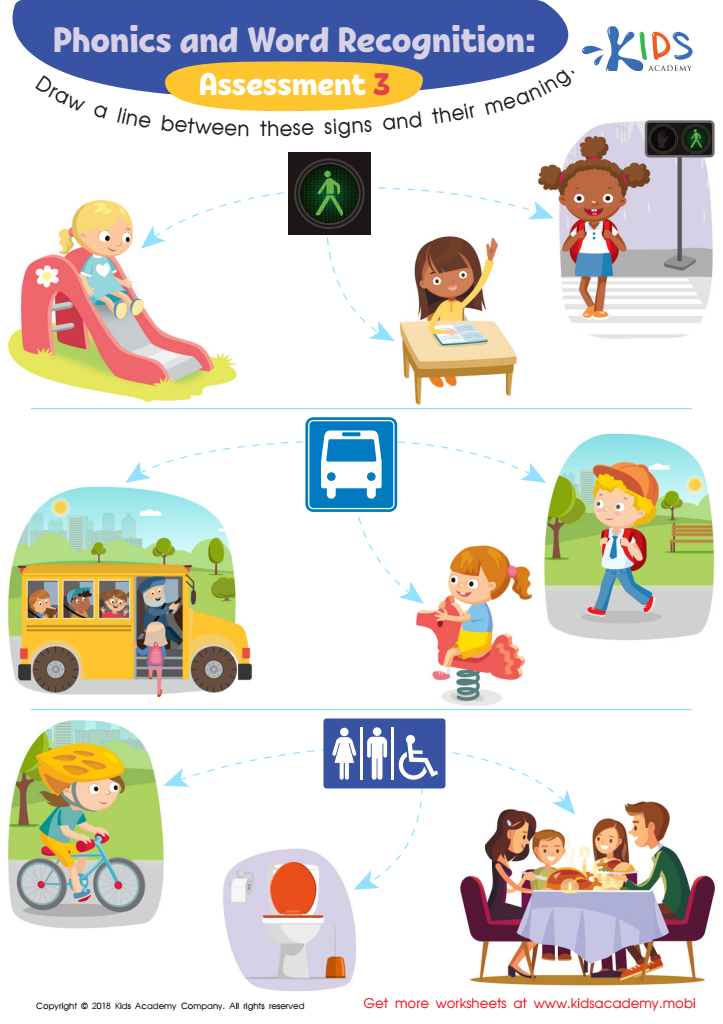
Phonological Awareness: Assessment 3 ELA Worksheet
Want to test your preschooler's language skills, phonetic decoding and word recognition? This worksheet uses their knowledge of community helpers to match signs with depictions. It also works on fine motor skills, a key pre-reading skill.
Phonological Awareness: Assessment 3 ELA Worksheet
Worksheet
Join Kids Academy for Free
Who is primarily going to use this learning content?








Word recognition and phonics are fundamental components of early literacy that significantly impact a child's reading development. For 3-year-olds, introducing these concepts helps lay a strong foundation for language skills. Parents and teachers should care about word recognition phonics for several reasons.
Firstly, early exposure to phonics teaches children the sounds of letters and how they combine to form words. This awareness not only enhances their ability to decode unfamiliar words but also boosts their confidence as budding readers. When children can recognize words, they begin to read more fluently, which fosters a love for books and storytelling.
Secondly, engaging in phonics activities enhances cognitive skills. It encourages critical thinking as children learn to associate letters with sounds, advancing their understanding of language structure. This skill is crucial for their overall academic success.
Lastly, incorporating word recognition phonics into daily activities promotes interactive learning experiences. Reading together, playing rhyming games, and sharing stories can strengthen the parent-child or teacher-student bond while making learning enjoyable.
In summary, by prioritizing word recognition phonics, parents and teachers equip 3-year-olds with essential skills that pave the way for lifelong literacy success. This proactive approach cultivates curious, confident learners ready to explore the world of reading.







