
Letter formation Tracing Letters Worksheets for 3-Year-Olds
3 filtered results
Difficulty Level
Grade
Age
-
From - To
Subject
Activity
Standards
Enhance your 3-year-old's early writing skills with our engaging Letter Formation Tracing Worksheets! Designed specifically for young learners, these worksheets simplify the process of letter recognition and writing. Each page offers fun tracing activities that promote fine motor skills and encourage proper letter formation. With colorful illustrations, children will enjoy practicing their ABCs while developing coordination and confidence in their writing abilities. Perfect for both classroom and home use, our worksheets make learning enjoyable and effective. Watch your little one's writing skills flourish as they explore each letter through exciting tracing exercises. Start their literacy journey today with our interactive resources!
Favorites
With answer key
Interactive

Letter A Tracing Page
Trace and write the letter "A"! Start with the big red dot, then do the capital and lowercase versions. Then write it again with two words - apple and alligator. Download more tracing worksheets at Kids Academy.
 Assign to My Students
Letter A Tracing Page
Worksheet

Letter P Tracing Page
Trace the lines from the red dot to learn to write "P"! Then practice this letter with the fun activities: complete the word "Pig" and "Pumpkin". Check out Kids Academy to get more free ABC worksheets.
Letter P Tracing Page
Worksheet
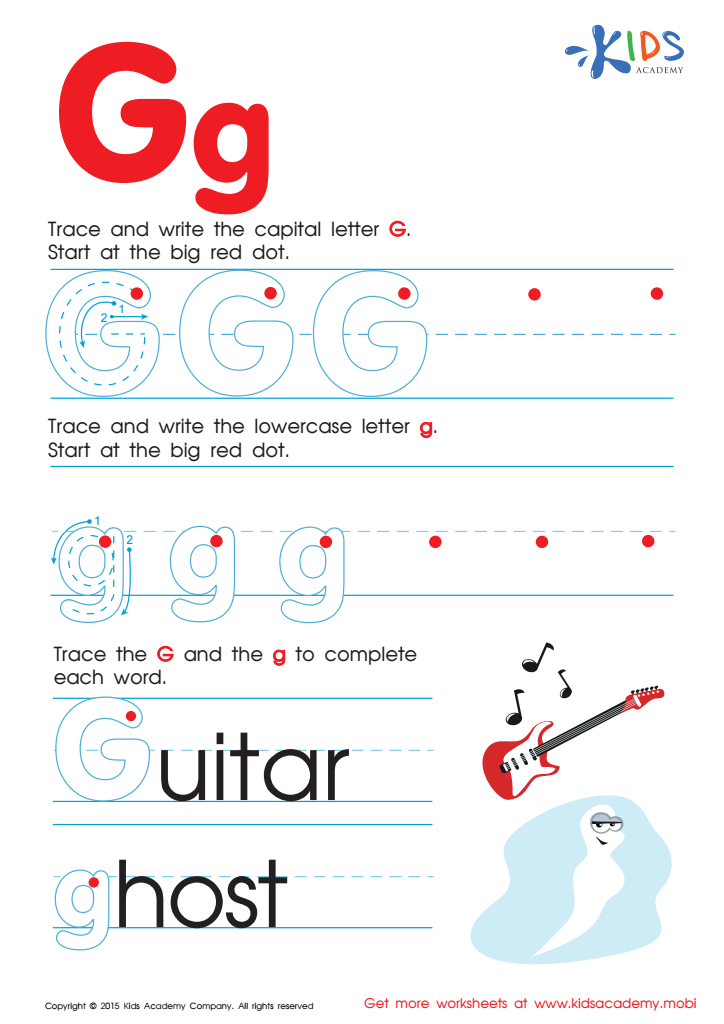
Letter G Tracing Page
Get ready to trace the letter "G" – with a big red spot as the starting point, trace the lines and watch the letter appear. Uppercase and lowercase letters are both easy and fun to write. Give it a go and finish the word "go". Play the guitar and say "hello" to a funny ghost!
Letter G Tracing Page
Worksheet
Join Kids Academy for Free
Who is primarily going to use this learning content?







Letter formation and tracing activities are critical for the development of 3-year-olds as they lay the foundation for future literacy skills. At this age, children are in a crucial phase of learning where fine motor skills, hand-eye coordination, and cognitive abilities are rapidly developing. Practicing letter formation helps them gain control over their fingers and hands, which is essential for various tasks, from writing to using tools in everyday life.
Engaging in tracing letter activities promotes recognition of alphabetic shapes and builds confidence as they successfully mimic these forms. This boost in self-esteem encourages further exploration of letters and sounds, paving the way for reading readiness. Furthermore, early exposure to writing prepares children for the transition into structured learning environments such as preschool or kindergarten.
Parents and teachers play a vital role in this developmental stage. By integrating fun, interactive tracing activities into their daily routines, they help instill a love for language and literacy. Encouraging positive associations with letters and writing at an early age nurtures a lasting interest in reading and learning. Thus, investing time in letter formation not only advances a child’s early education but also serves their overall growth, establishing essential skills they will need throughout life.








