Introducing our engaging Addition Skills Worksheets for 3-Year-Olds! Designed to make early math learning fun, these worksheets encourage little ones to explore basic addition concepts through vibrant illustrations and interactive activities. Each worksheet focuses on age-appropriate math skills, helping children understand the fundamentals of counting, adding objects, and recognizing numbers. With simple exercises that stimulate critical thinking and creativity, kids will build confidence in their math abilities while enjoying educational play. Perfect for parents and educators, our worksheets provide a helpful resource to foster a love for learning in young minds. Start your child’s math journey today!

Check out this FREE "Addition skills" Trial Lesson for age 3!

My Family

Favorites
With answer key
Interactive
  • 3
  • Addition skills
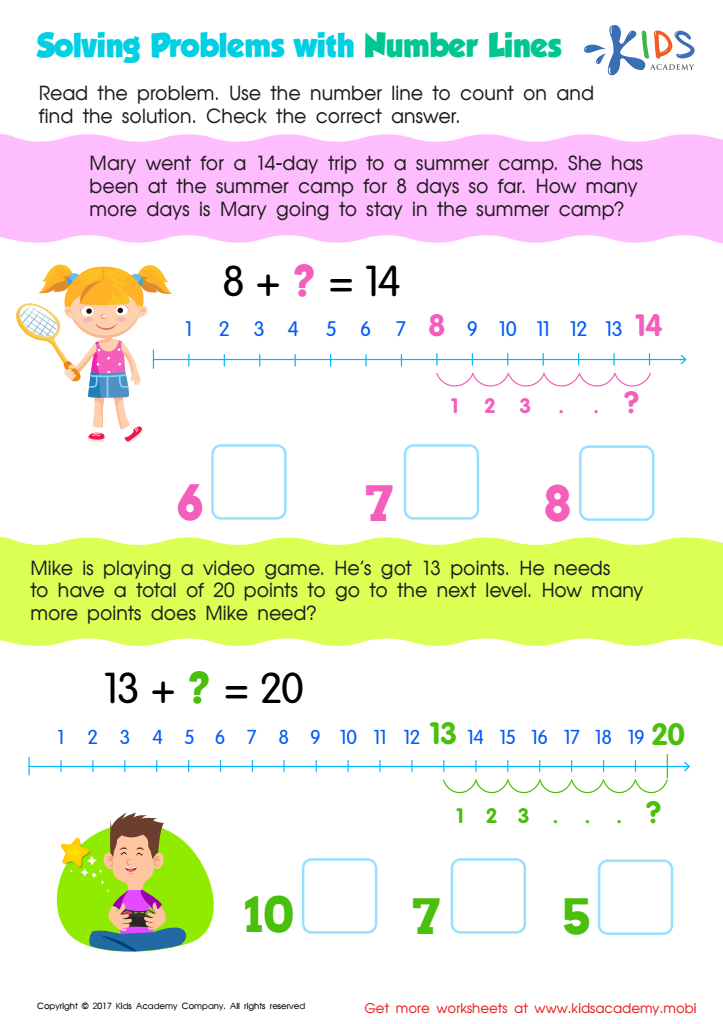
Solving Problems: Number Lines Worksheet

Solving Problems: Number Lines Worksheet

Number lines are fun and help build number sense and reasoning. This worksheet uses them to help students count on to find a solution to an equation. They'll have fun counting with familiar numbers and 10-bases, while also working on algebraic reasoning.
Solving Problems: Number Lines Worksheet
Worksheet
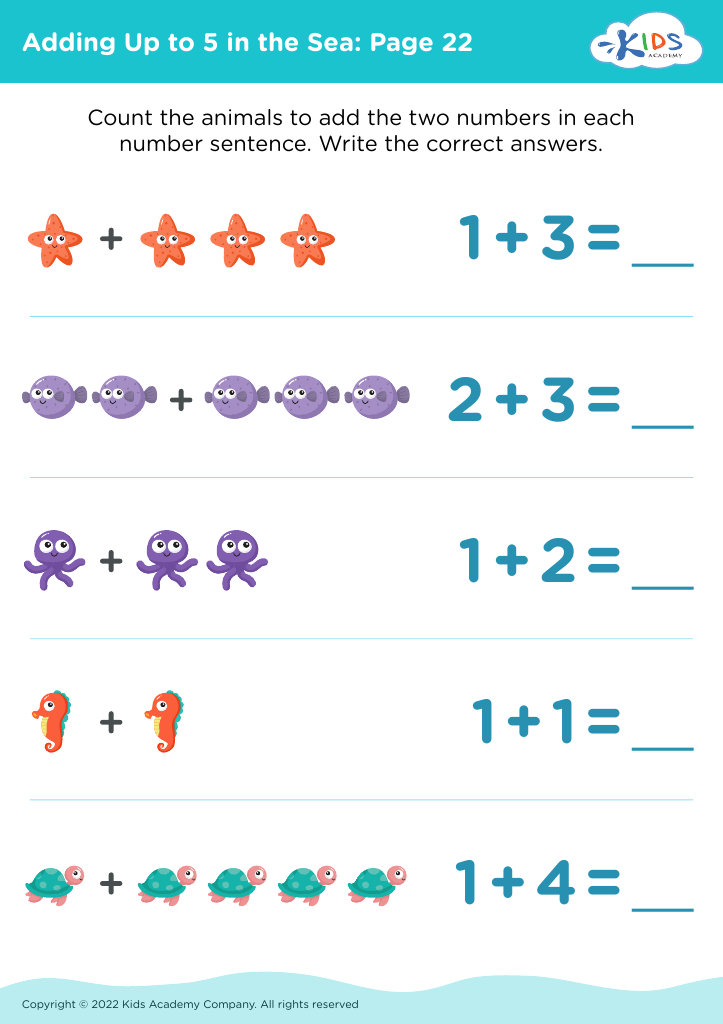
Adding Up to 5 in the Sea: Page 22
Worksheet
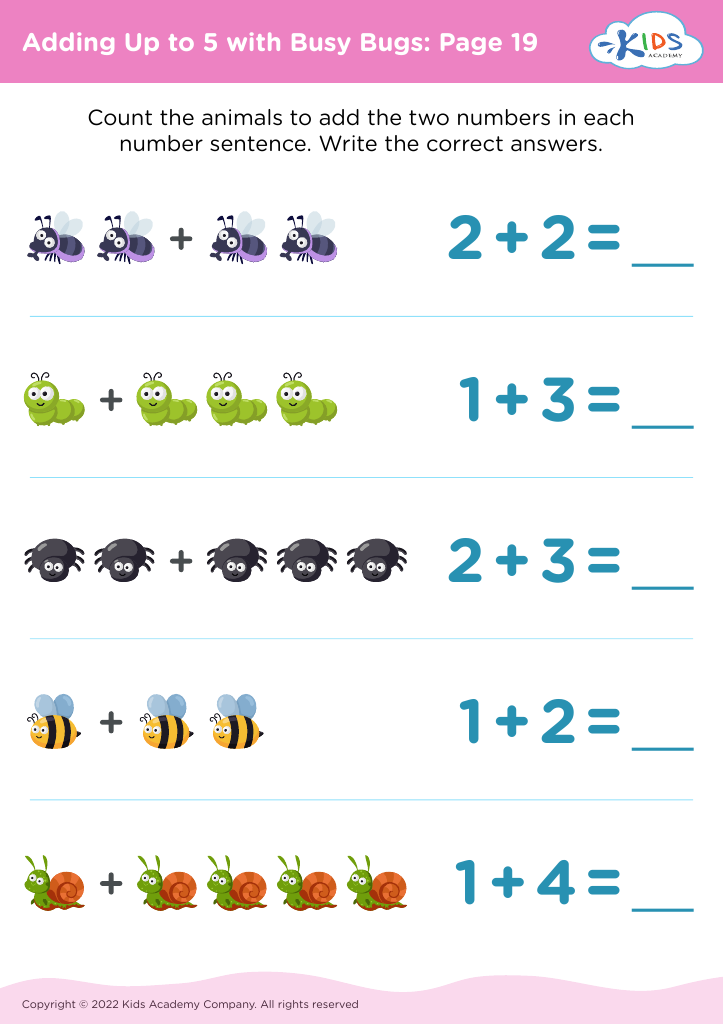
Adding Up to 5 with Busy Bugs: Page 19
Worksheet
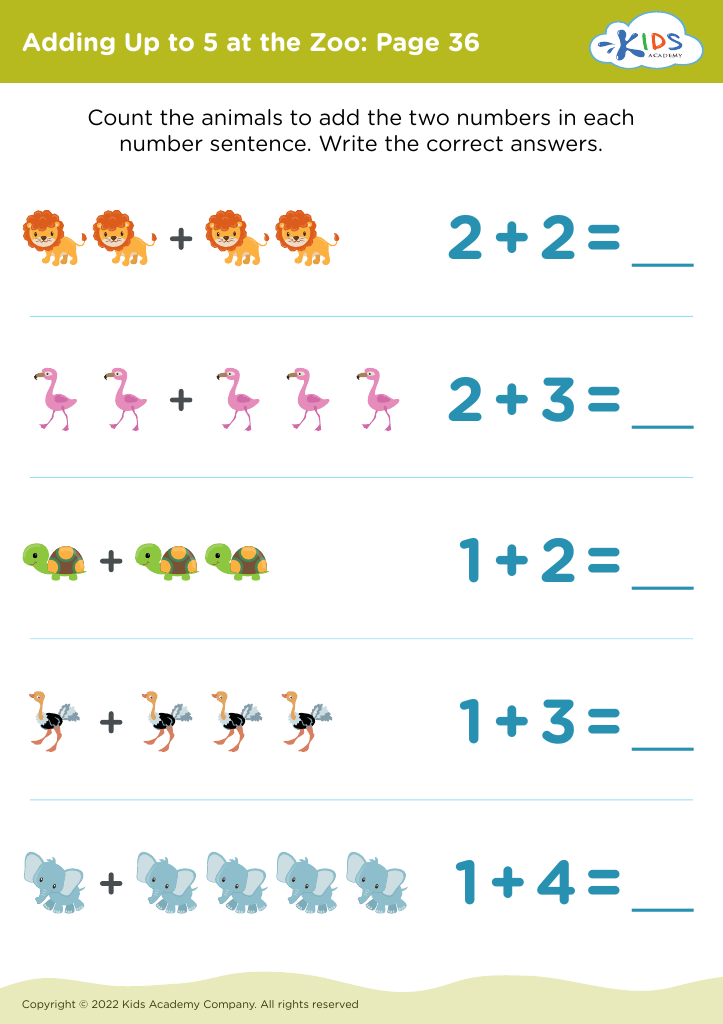
Adding Up to 5 at the Zoo: Page 36
Worksheet
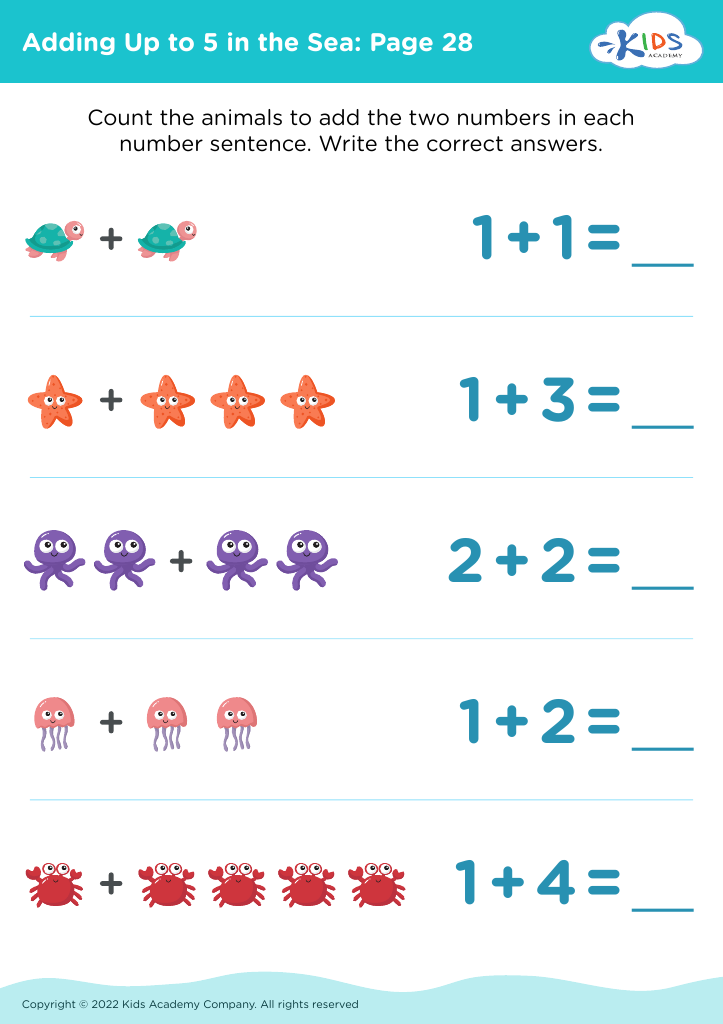
Adding Up to 5 in the Sea: Page 28
Worksheet
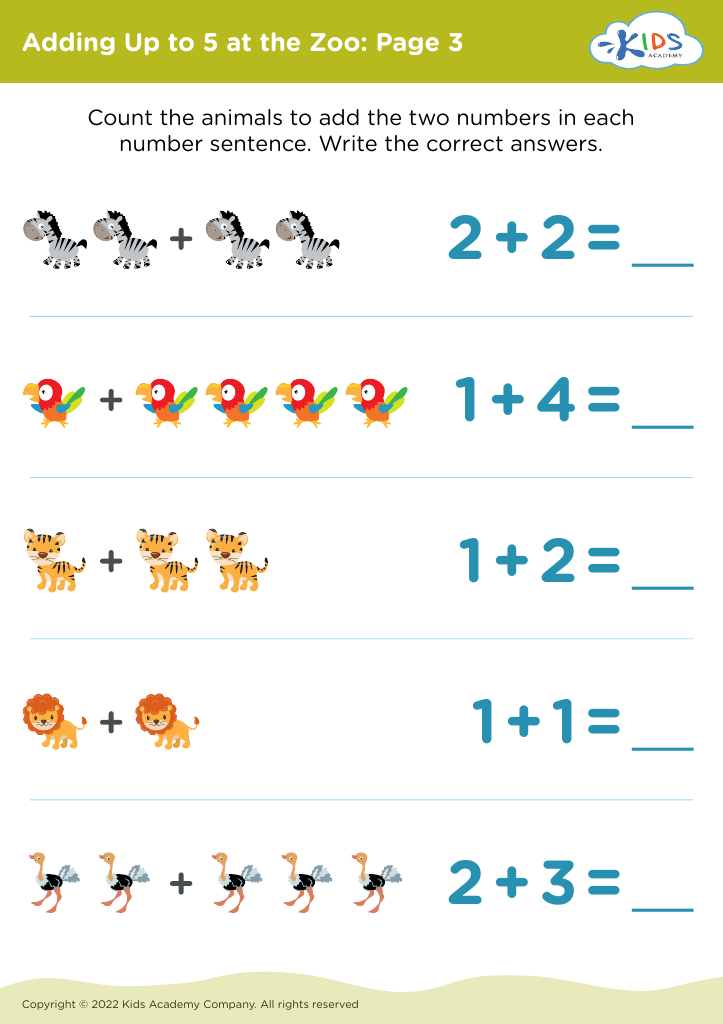
Adding Up to 5 at the Zoo: Page 3

Adding Up to 5 at the Zoo: Page 3

Adding Up to 5 at the Zoo: Page 3
Worksheet
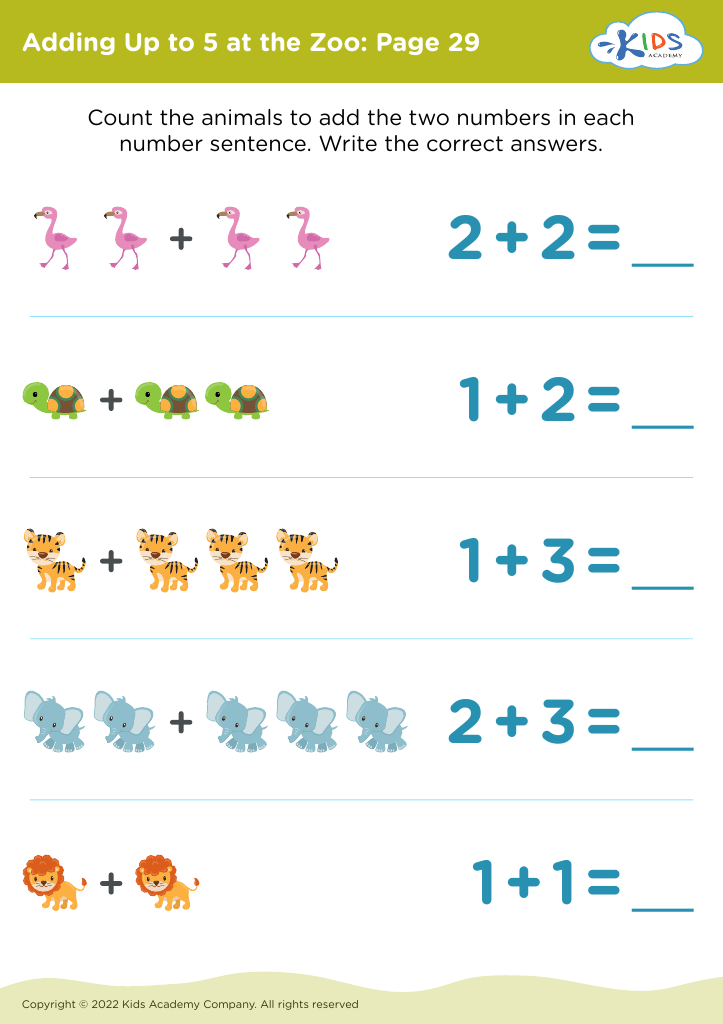
Adding Up to 5 at the Zoo: Page 29
Worksheet
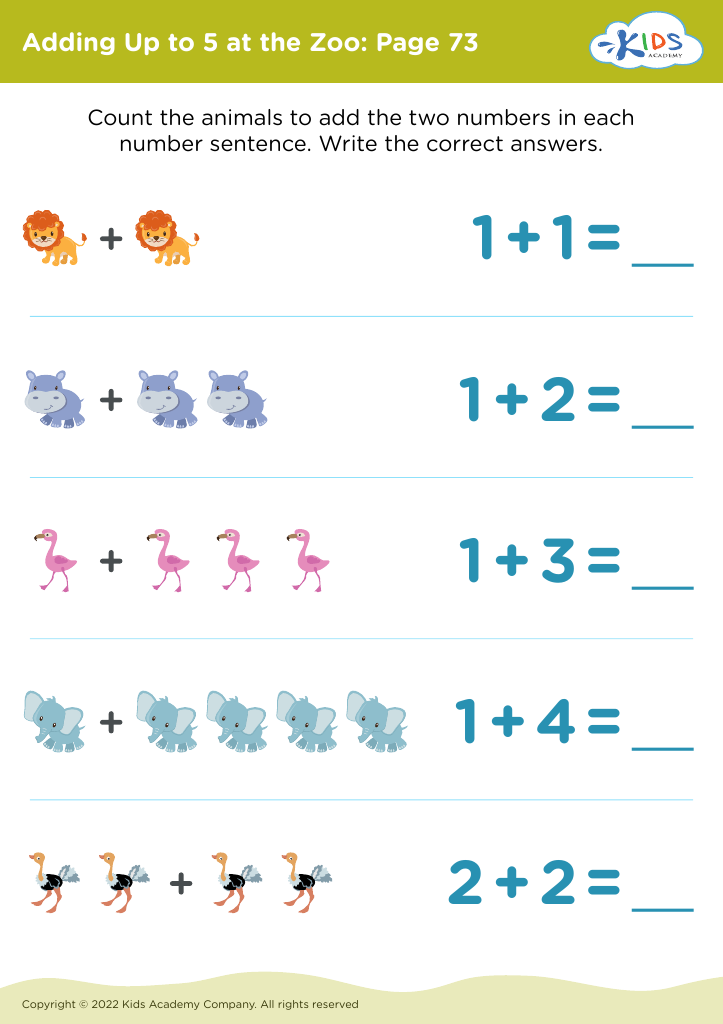
Adding Up to 5 at the Zoo: Page 73
Worksheet
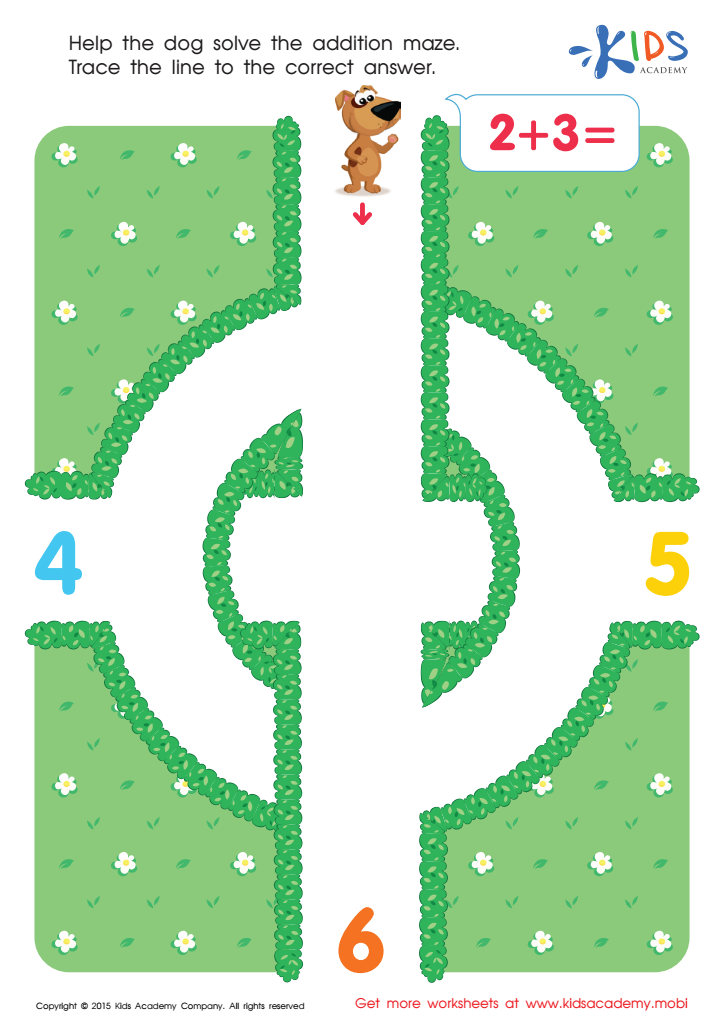
Math: Two And Three Addition PDF Worksheet

Two And Three Addition Worksheet
Give your children the task and let them find the path to the right answer while they make their way through the maze, and don't forget to let them trace the path.
Two And Three Addition Worksheet
Worksheet
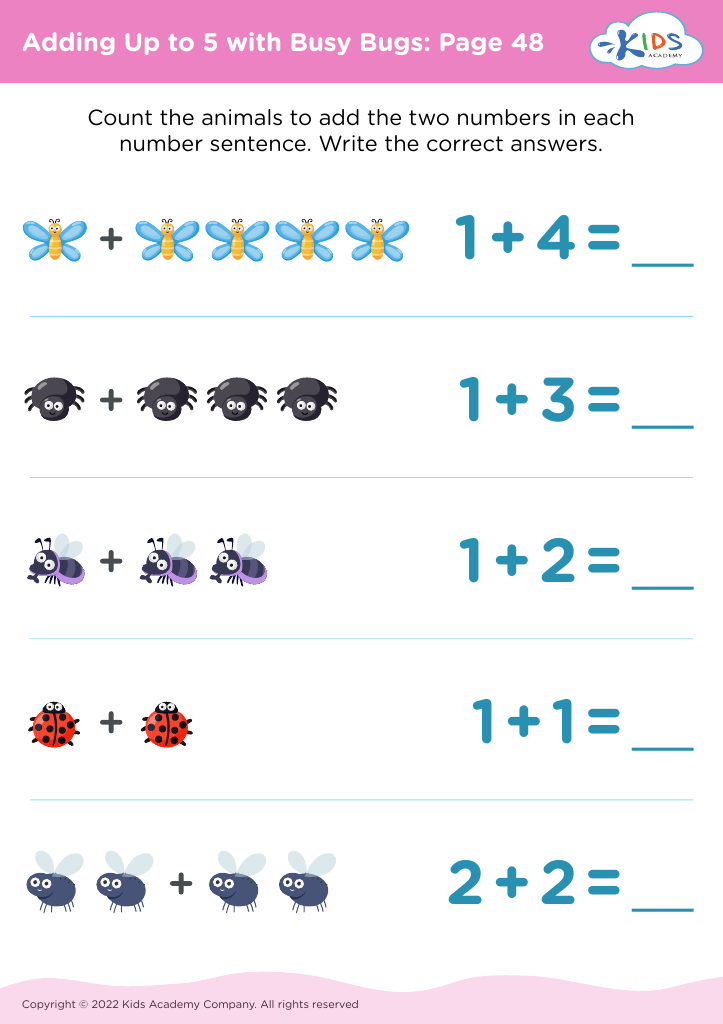
Adding Up to 5 with Busy Bugs: Page 48
Worksheet
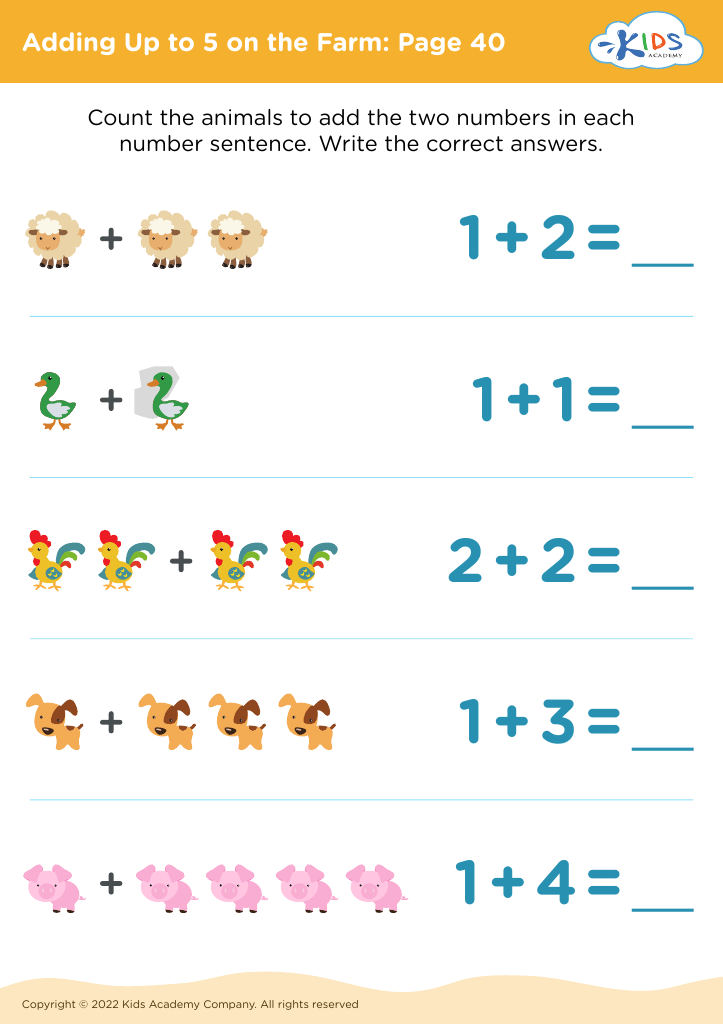
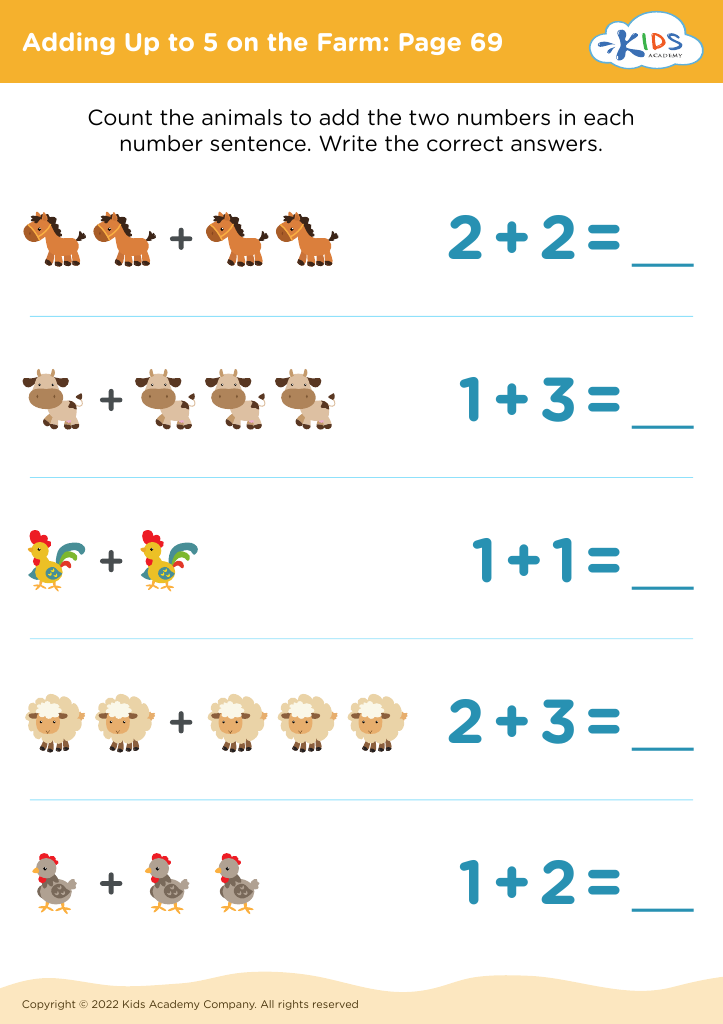
Adding Up to 5 on the Farm: Page 69
Worksheet
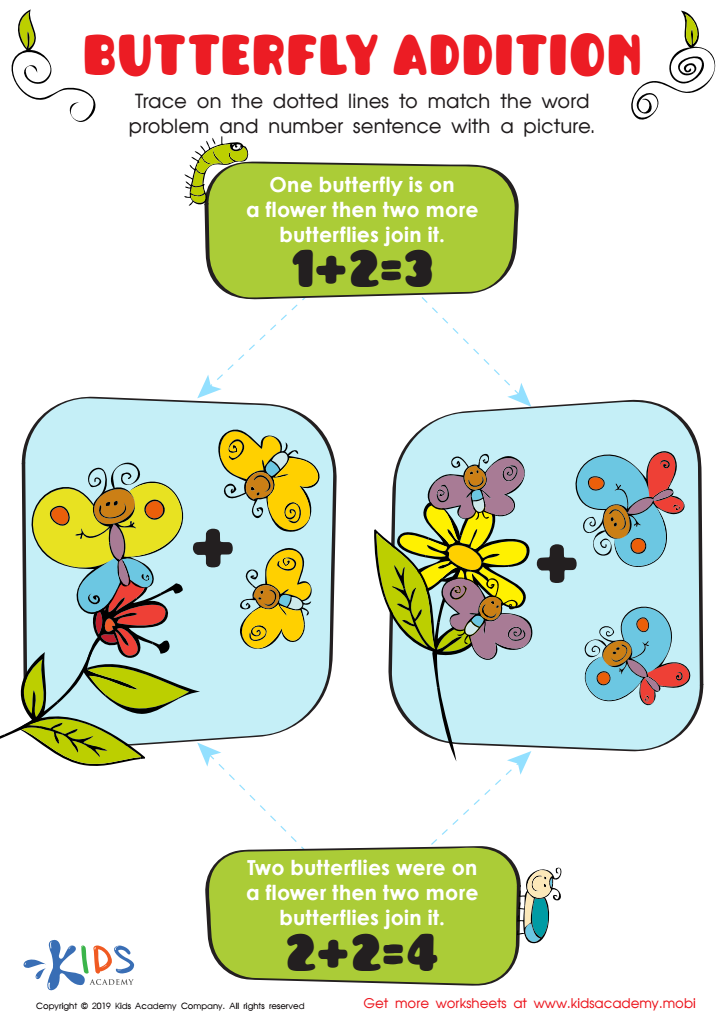
Butterfly Addition Worksheet
Butterfly Addition Worksheet
This tracing sheet is great for kids to work on math skills and have fun too. Read the word problems to them, then help them trace the dotted lines to match the problem and number sentence to a picture. Not only is it educational, it's beautiful too - your kids will love learning about butterflies!
Butterfly Addition Worksheet
Worksheet
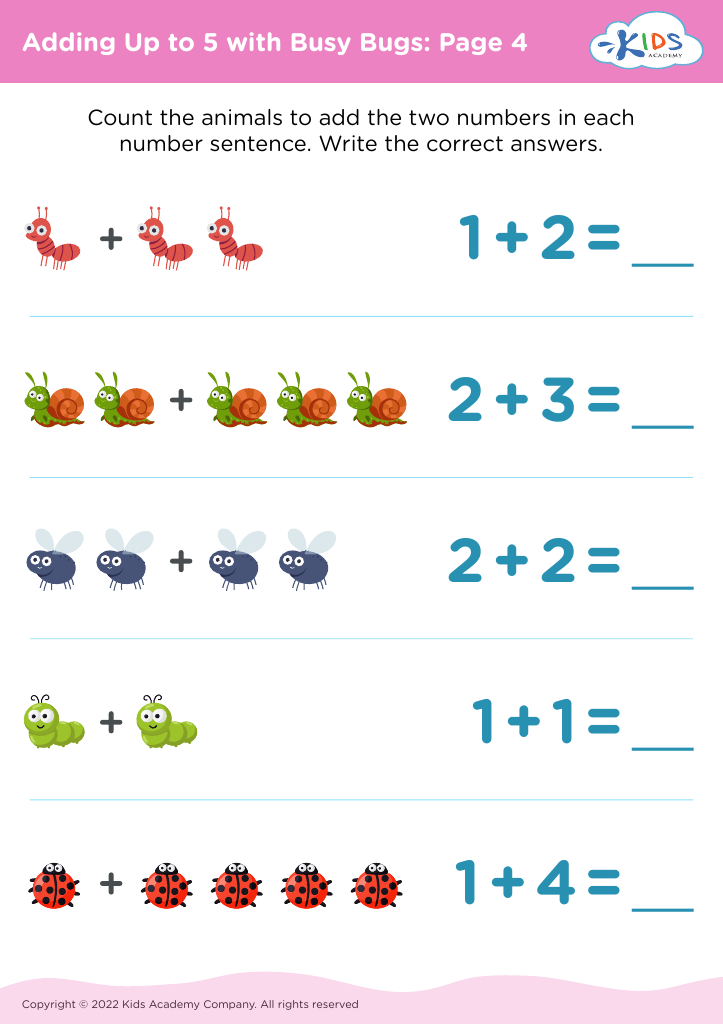
Adding Up to 5 with Busy Bugs: Page 4
Worksheet
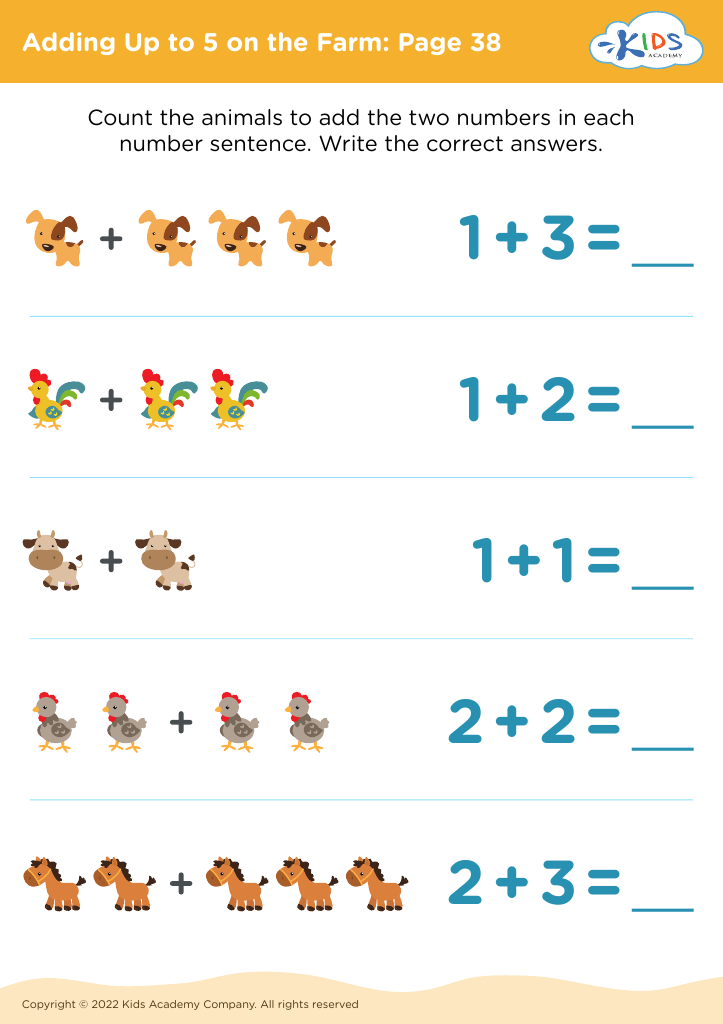
Adding Up to 5 on the Farm: Page 38
Worksheet
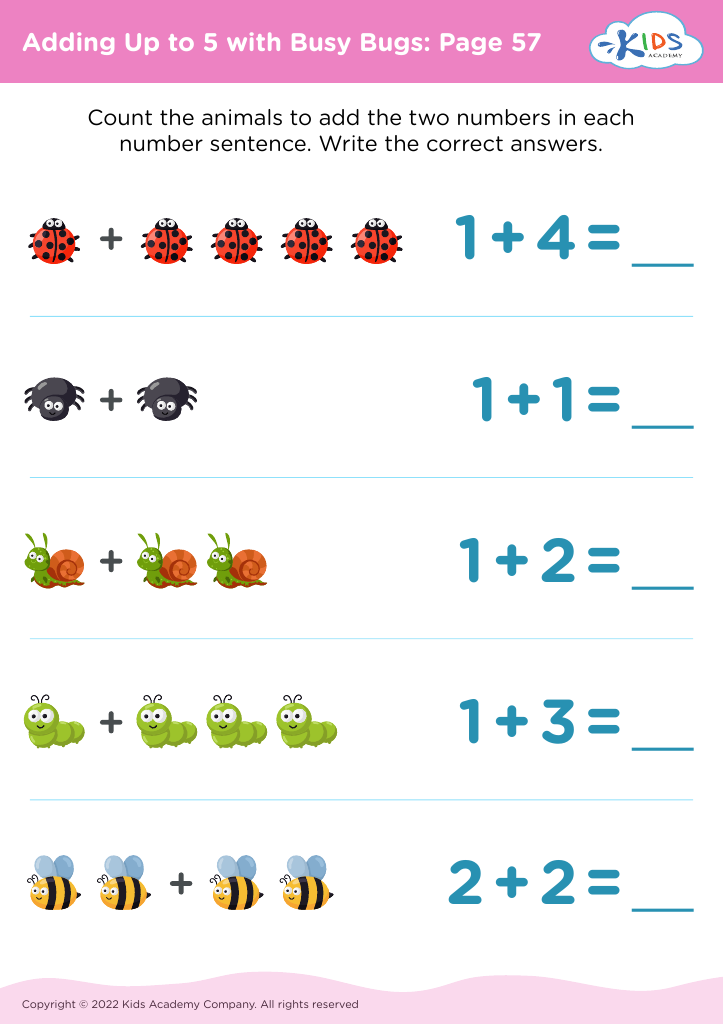
Adding Up to 5 with Busy Bugs: Page 57
Worksheet
Adding Up to 5 on the Farm: Page 40
Worksheet
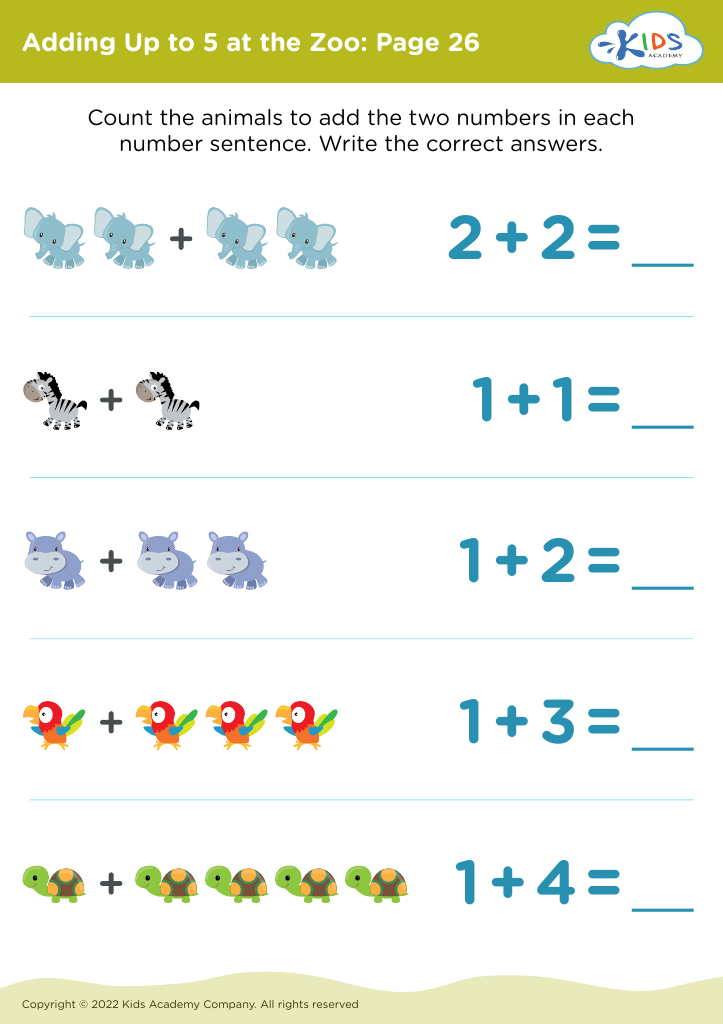
Adding Up to 5 at the Zoo: Page 26
Worksheet
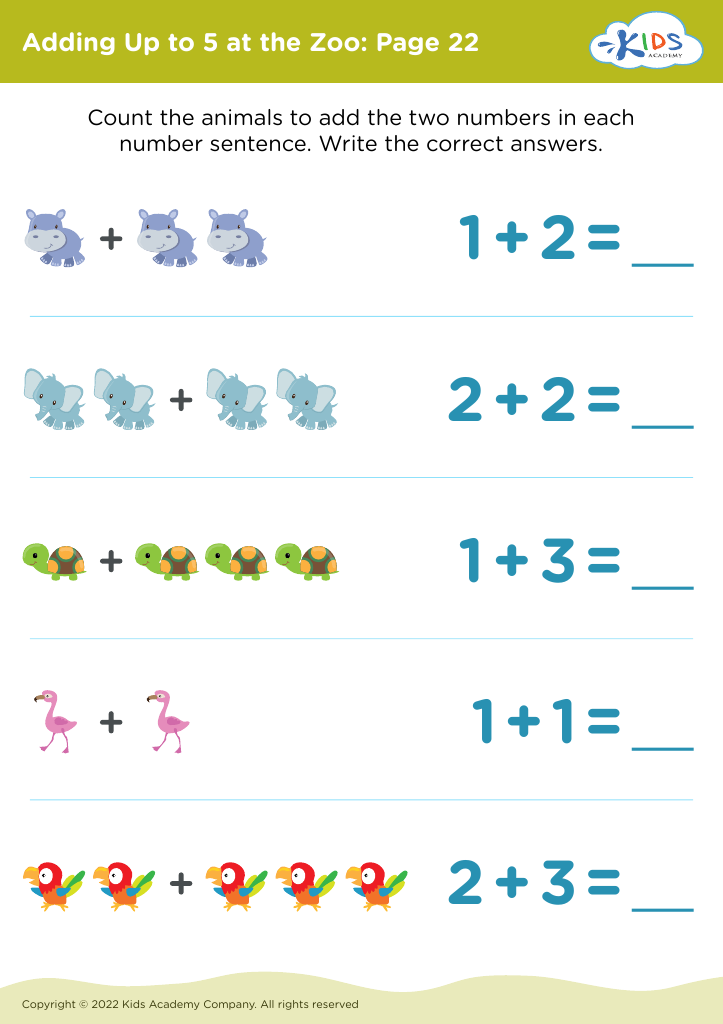
Adding Up to 5 at the Zoo: Page 22
Worksheet
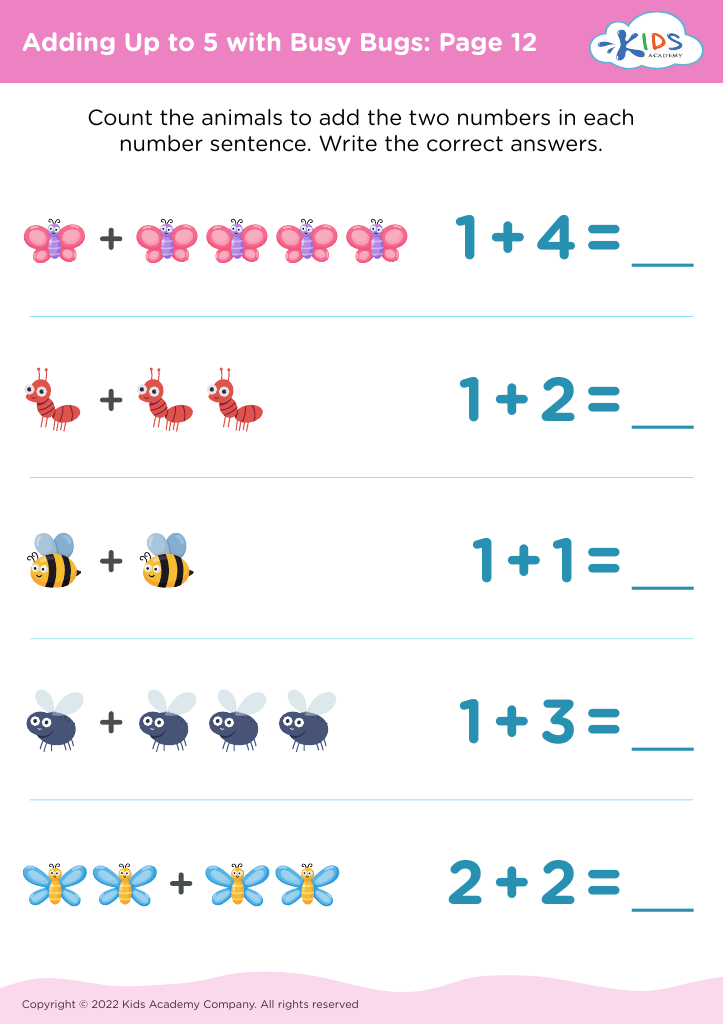
Adding Up to 5 with Busy Bugs: Page 12
Worksheet
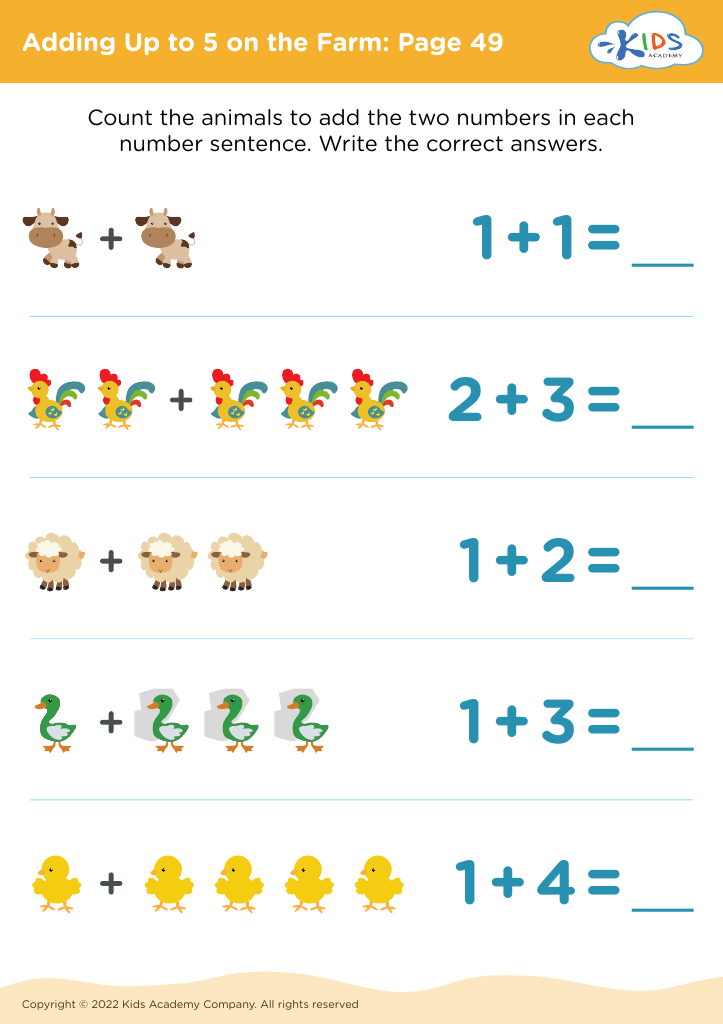
Adding Up to 5 on the Farm: Page 49
Worksheet
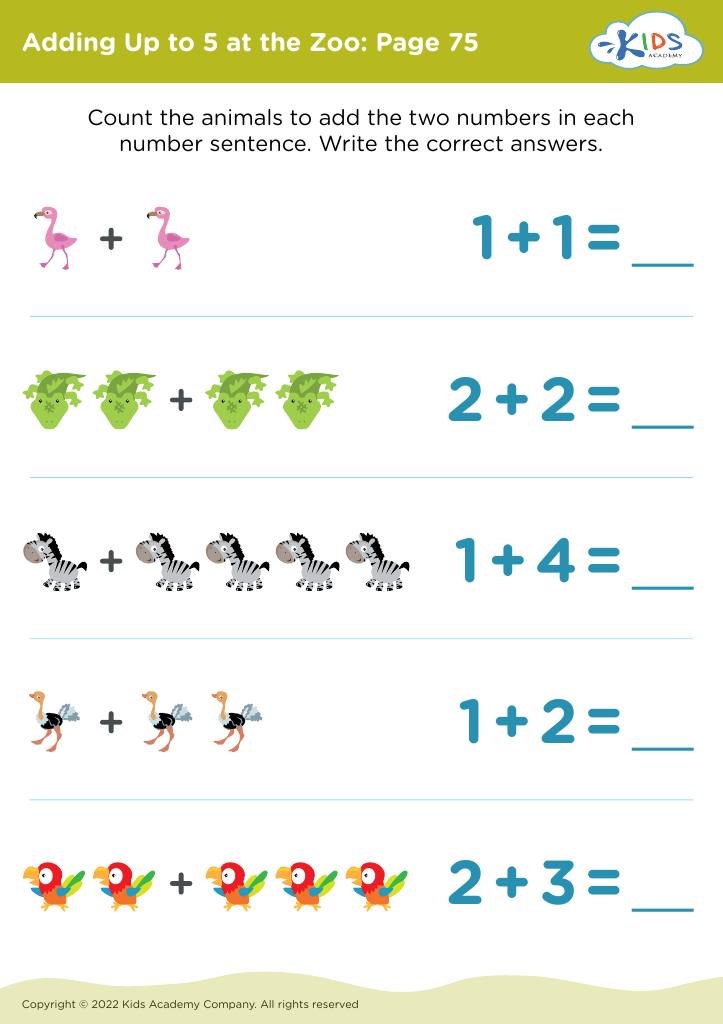
Adding Up to 5 at the Zoo: Page 75
Worksheet
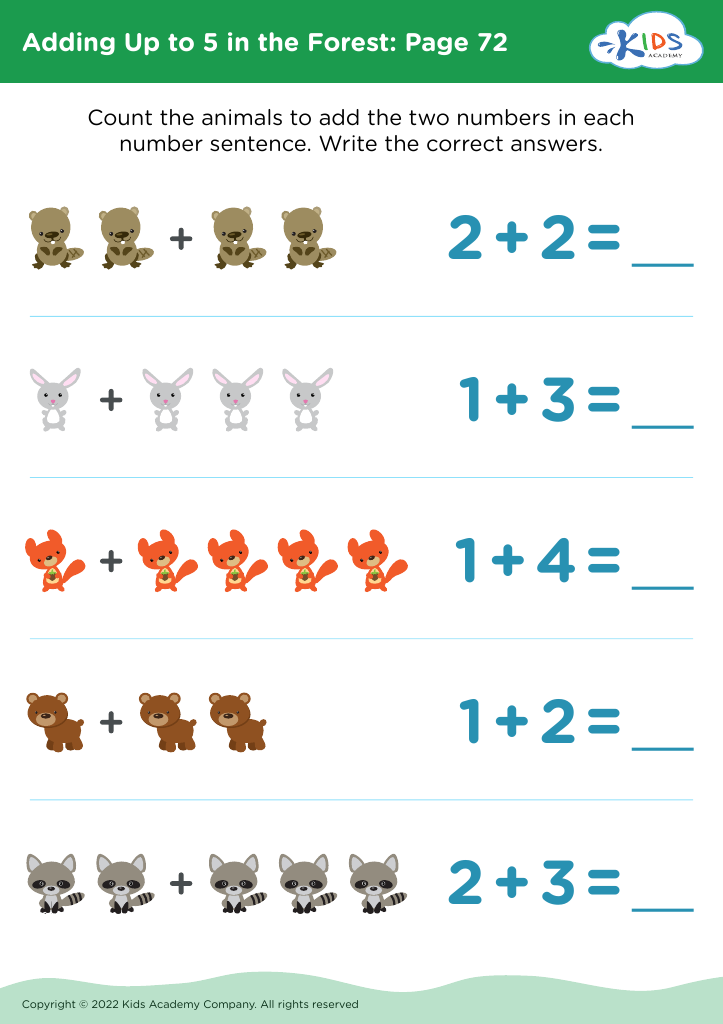
Adding Up to 5 in the Forest: Page 72
Worksheet
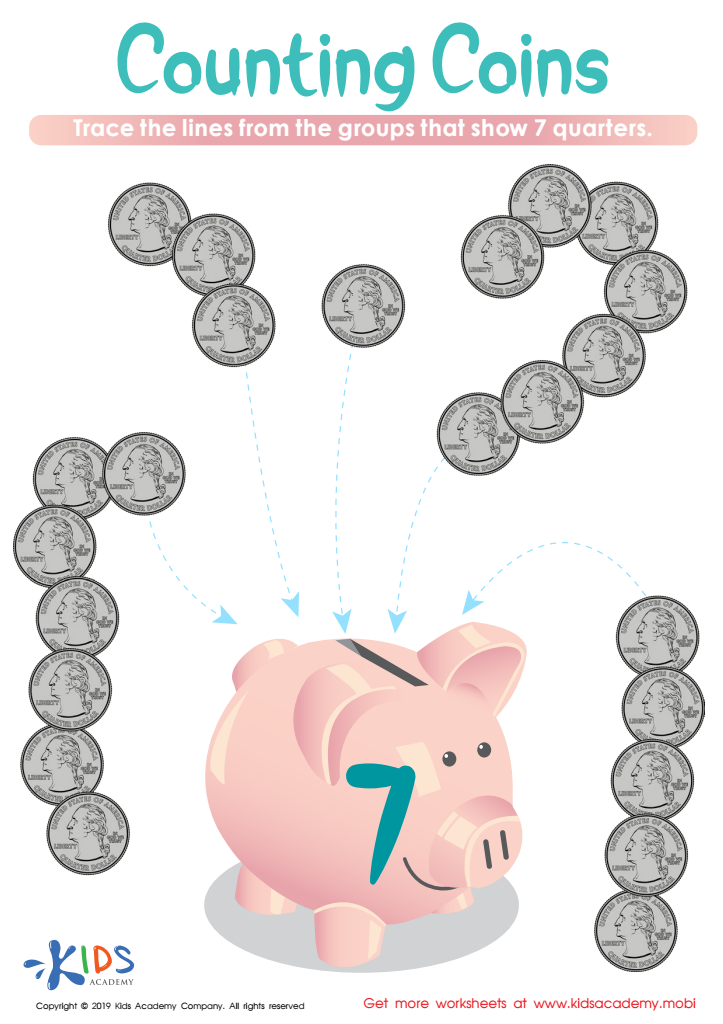
Counting Coins Worksheet

Counting Coins Worksheet

Help your students overcome their fear or aversion of counting and learning numbers with this fun worksheet! It features colorful pictures with four groups of coins. Ask the students to count each group, then trace the lines to the piggy bank. Show them it's easy to count and learn numbers!
Counting Coins Worksheet
Worksheet
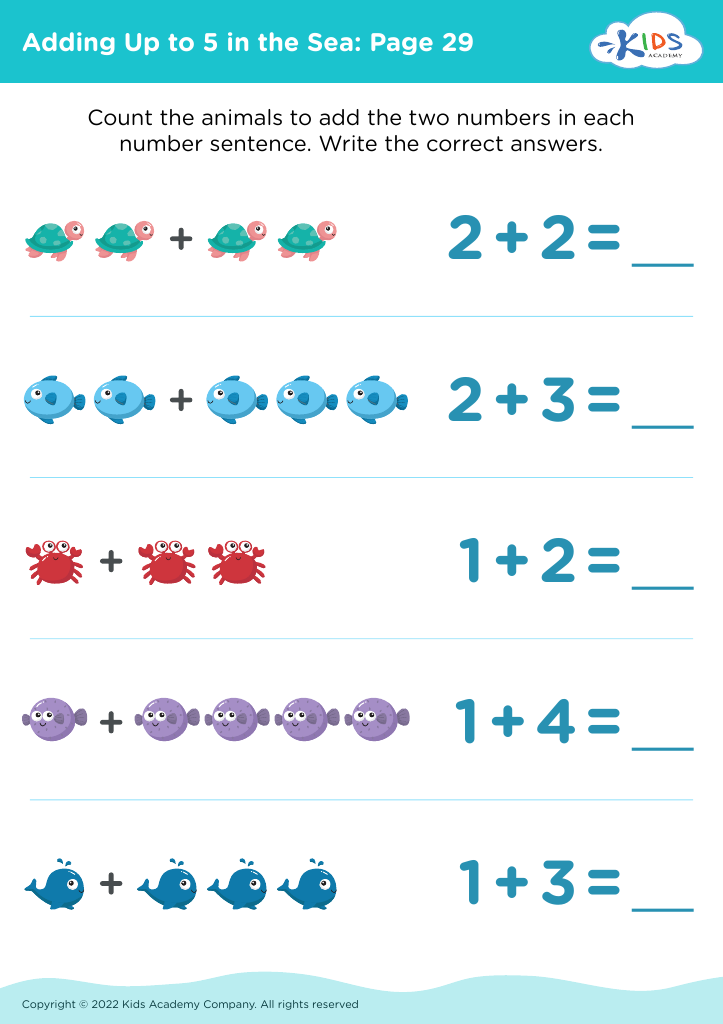
Adding Up to 5 in the Sea: Page 29
Worksheet


Parents and teachers should pay close attention to the development of addition skills in 3-year-olds for several reasons. First, foundational math skills are critical for cognitive development. Introducing basic addition through playful activities and engaging games fosters a child's ability to recognize patterns, compare quantities, and solve problems. This early exposure helps lay the groundwork for more complex mathematical concepts later in school.

Additionally, addition skills reinforce important social and emotional learning. Children often learn to share and cooperate during activities that involve numbers, promoting teamwork and communication. Furthermore, use of everyday situations, like counting toys or snacks, makes math relevant and relatable, enhancing their understanding through real-world contexts.

Developing addition skills also contributes to overall confidence. When children master simple concepts such as combining two sets of objects, they build self-esteem, encouraging a positive attitude toward learning and exploration.

Lastly, research shows that children who enter school with basic math skills tend to perform better academically, reinforcing the need for early math education. Thus, nurturing addition skills in young children is crucial for their emergent learning, social interaction, and long-term academic success.