Comparing Fractions Worksheets for 3-Year-Olds
7 filtered results
-
From - To
Explore our engaging "Comparing Fractions Worksheets for 3-Year-Olds"! Designed to introduce young learners to basic fraction concepts, these worksheets make learning fun and interactive. Children will enjoy playful activities that foster their understanding of halves, thirds, and fourths through colorful visuals and easy-to-follow instructions. Each worksheet encourages hands-on practice, promoting critical thinking and fine motor skills. Ideal for at-home or classroom learning, our resources ensure that toddlers grasp essential math skills while enjoying the journey. Start your child's mathematical adventure today with our educational and entertaining comparing fractions worksheets tailored for little learners!
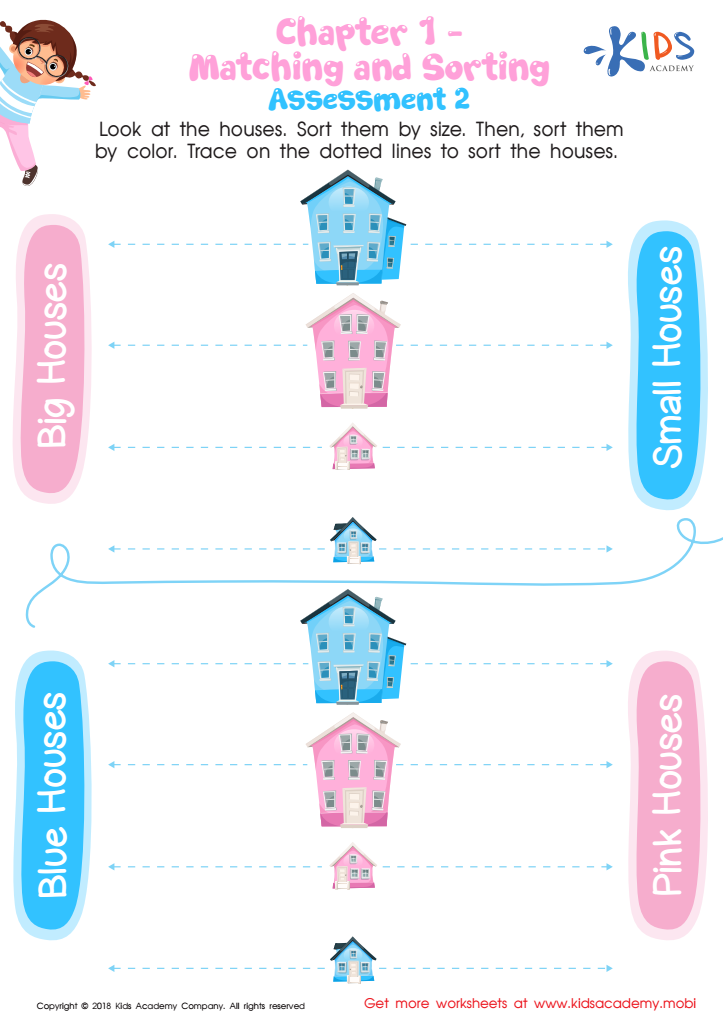
Matching and Sorting for Preschool: Assessment 2 Worksheet
 Assign to My Students
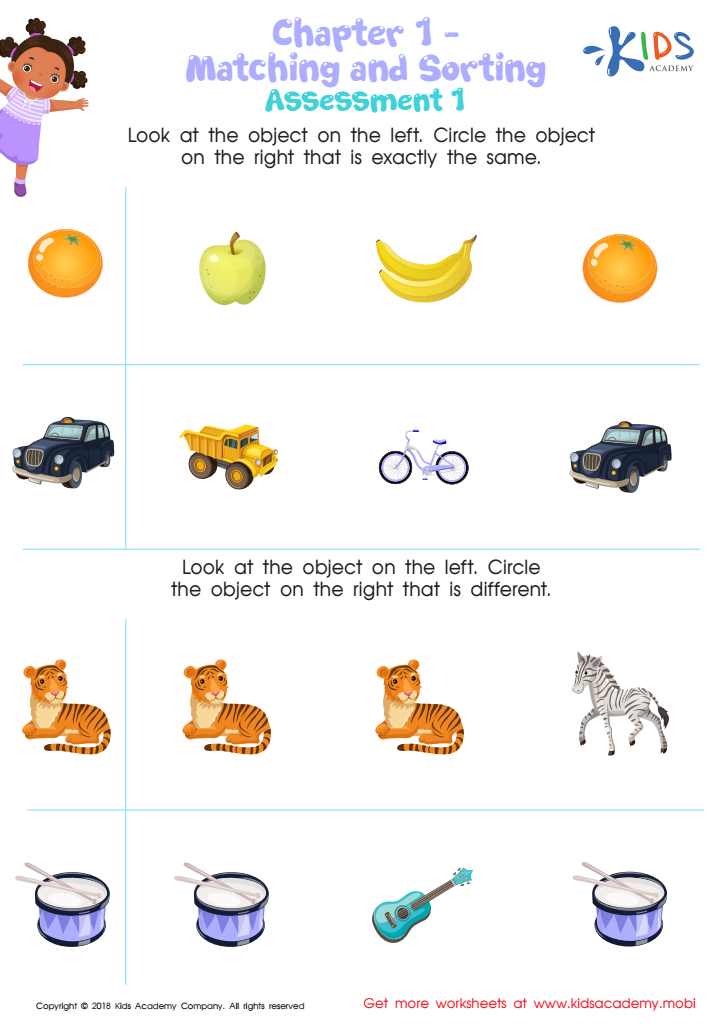
Matching and Sorting for Preschool: Assessment 1 Worksheet







Introducing the concept of comparing fractions to three-year-olds lays the foundation for future mathematical understanding. At this age, children are naturally curious and eager to learn, making it an ideal time to explore fundamental concepts. When parents or teachers introduce comparing fractions, they help young learners develop critical thinking and problem-solving skills.
Engaging in activities that involve fractions fosters an awareness of parts and wholes, essential for understanding more complex mathematical concepts later on. For example, using everyday items like pizza slices, fruit pieces, or toys allows children to visualize and compare fractions in a fun and relatable manner. This hands-on approach cultivates a positive attitude towards math, making it a subject they are more likely to embrace in their education.
Additionally, comparing fractions helps improve vocabulary as children learn terms like "more," "less," "equal," and "part." Moreover, it encourages social skills through collaborative play and discussion, as children learn to express their thoughts and reasoning.
Overall, focusing on comparing fractions in early childhood not only promotes mathematical skills but also nurtures a lifelong love for learning. Parents and teachers who value these concepts contribute to developing well-rounded individuals equipped for future academic challenges.








