
Comparison Skills Worksheets for 3-Year-Olds
4 filtered results
Difficulty Level
Grade
Age
-
From - To
Subject
Activity
Standards
Enhance your 3-year-olds' learning experience with our engaging Comparison Skills Worksheets! Designed specifically for young learners, these worksheets introduce children to the concepts of "more than," "less than," and "equal to." Our fun and interactive activities encourage critical thinking as kids compare objects, pictures, and numbers, fostering essential early math skills. With colorful visuals and simple instructions, these worksheets not only make learning enjoyable but also boost cognitive development. Perfect for both classroom settings and home practice, our resources lay a strong foundation for future math success. Download these printables today and watch your child's confidence and abilities grow!
Favorites
With answer key
Interactive
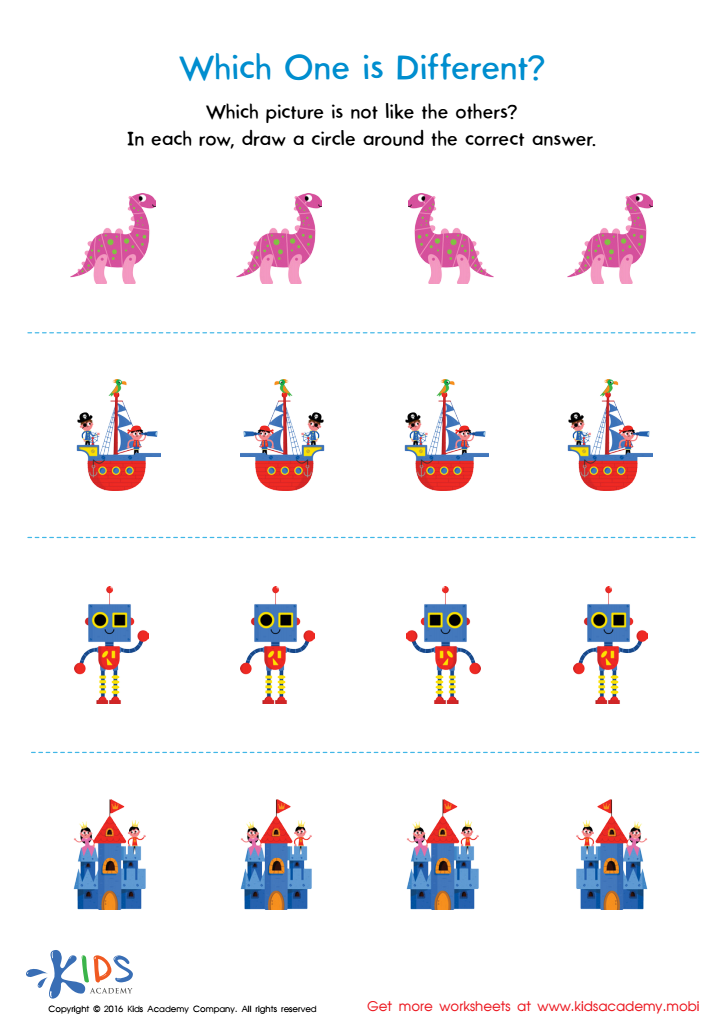
Which One Is Different Worksheet
Preschoolers can hone logical reasoning and critical analysis skills with this "Which one is Different?" worksheet. Kids must look closely and pick out unique attributes of objects and images. It's a skill that can serve them throughout their lifetime.
 Assign to My Students
Which One Is Different Worksheet
Worksheet
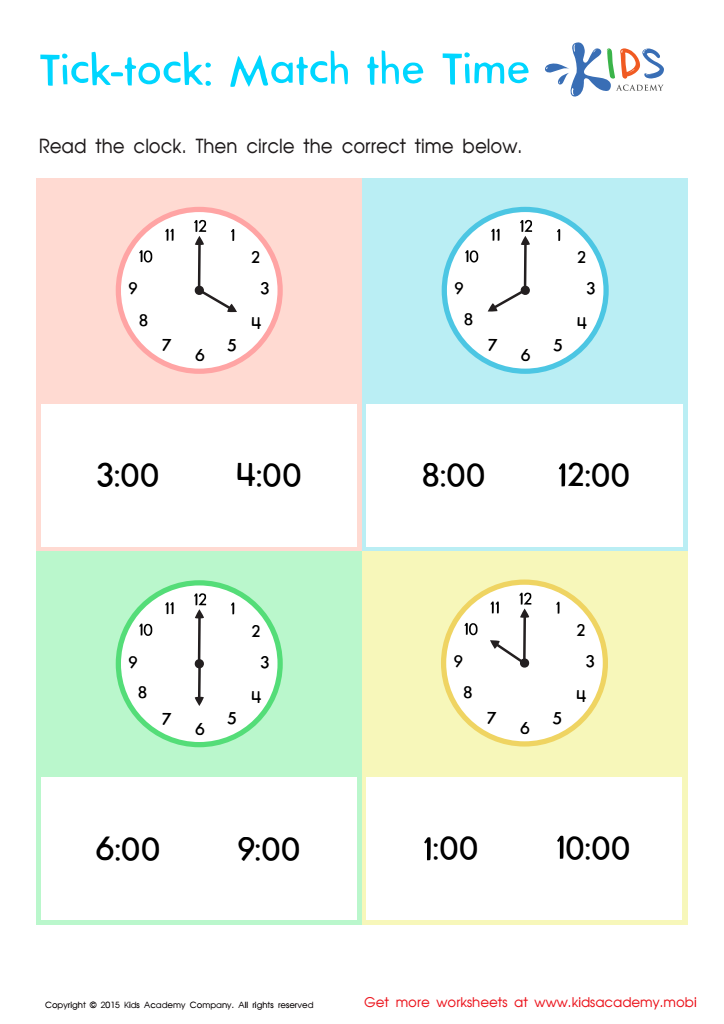
Telling The Time Worksheet: Part 4
Test your skills in telling the time! Circle the right time on 4 analog clock faces.
Telling The Time Worksheet: Part 4
Worksheet
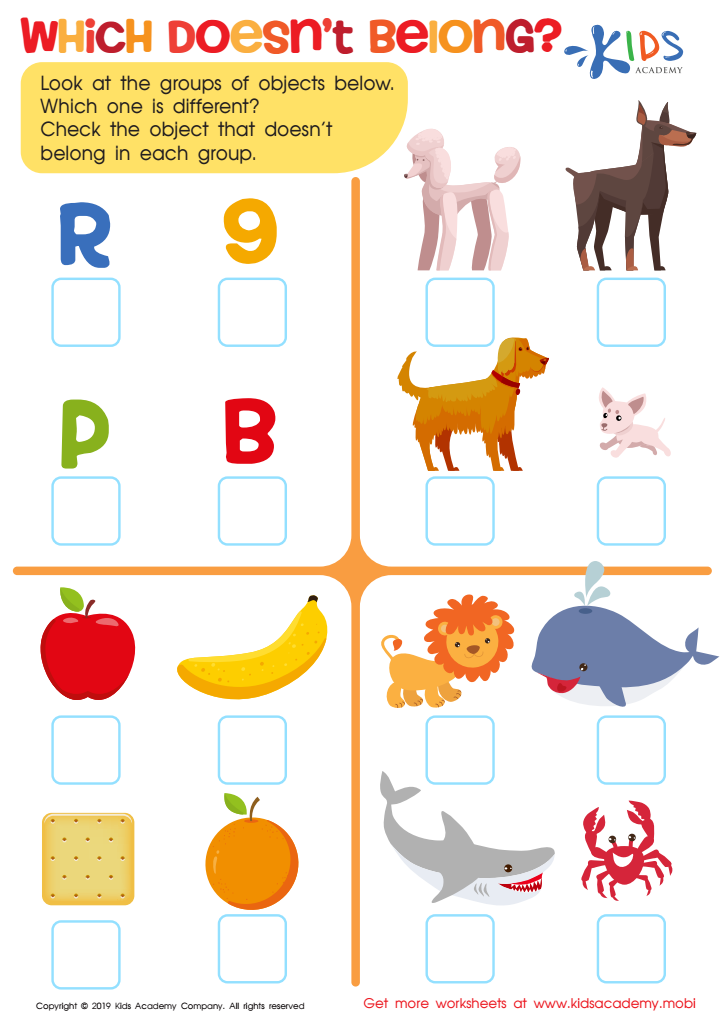
Which Doesn't Belong? Worksheet
This engaging worksheet helps preschoolers recognize similar and different attributes of common words, using brightly-colored pictures. They analyze the items in each category and check off what is different. For extra practice, have them explain their reasoning verbally! Sorting and classifying are important skills to learn.
Which Doesn't Belong? Worksheet
Worksheet
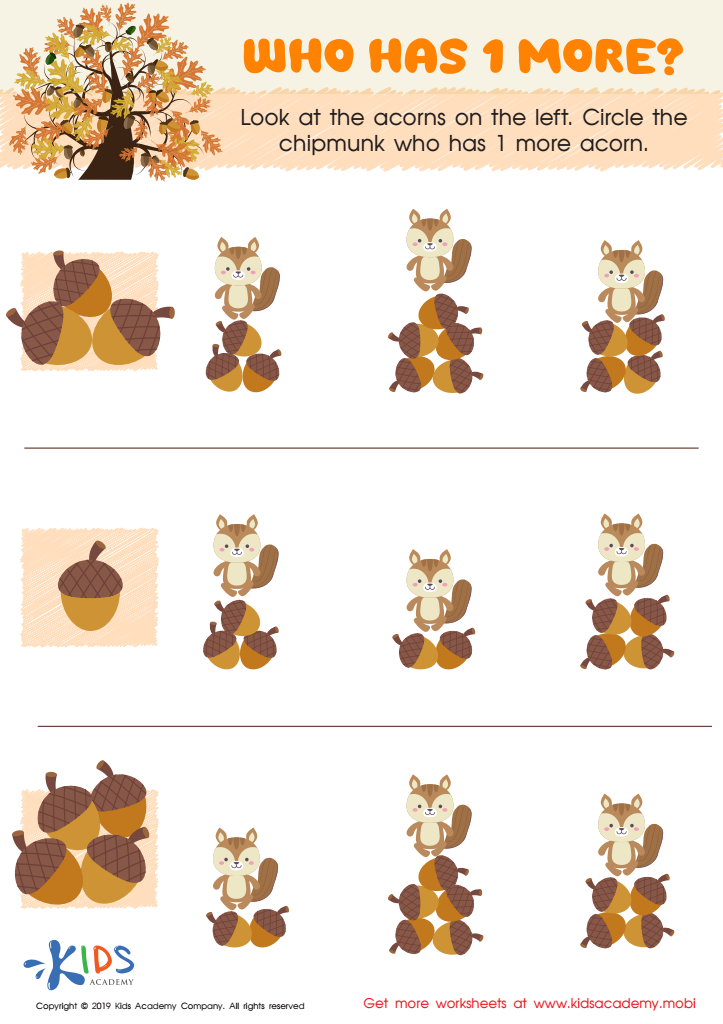
Who Has 1 More? Worksheet
Do your kids know what chipmunks are? They eat acorns, store them for bad weather, and live in trees or on the ground. Count and circle the chipmunk with one more acorn than the others on the printout.
Who Has 1 More? Worksheet
Worksheet
Join Kids Academy for Free
Who is primarily going to use this learning content?







Comparison skills are foundational for three-year-olds as they develop critical thinking and cognitive abilities. At this age, children begin to understand concepts such as big vs. small, heavy vs. light, and more vs. less. These skills are essential for problem-solving and decision-making in their everyday lives. Nurturing comparison skills helps children categorize and organize their experiences, fostering a better understanding of the world around them.
By engaging in comparison activities, like sorting toys or comparing sizes of books, parents and teachers can provide opportunities for young children to explore and articulate their observations. This promotes language development as they learn new vocabulary related to comparisons, facilitating communication skills.
Additionally, strong comparison skills enable children to make informed choices, enhancing their independence and confidence. For example, when choosing a snack or a game, children can weigh options based on size, quantity, or preference, empowering them to express their opinions and develop a sense of agency.
Ultimately, fostering comparison skills in early childhood sets a solid foundation for future academic learning in mathematics, science, and literacy, making it crucial for parents and teachers to prioritize these experiences in supportive and engaging ways.








