Directional understanding Worksheets for 3-Year-Olds
4 filtered results
-
From - To
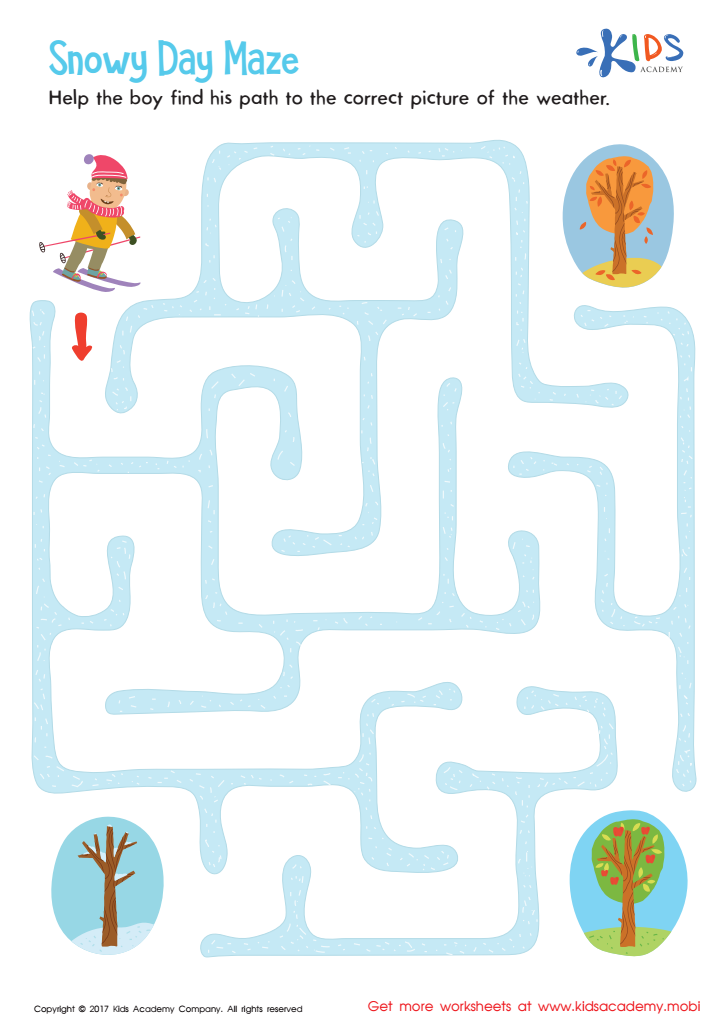
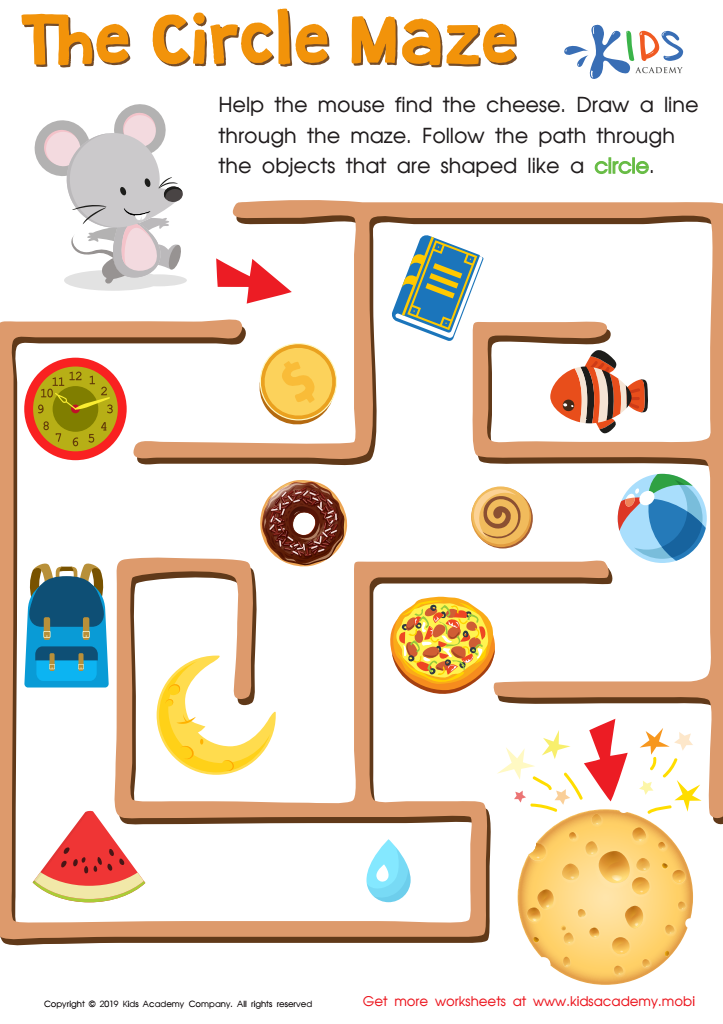
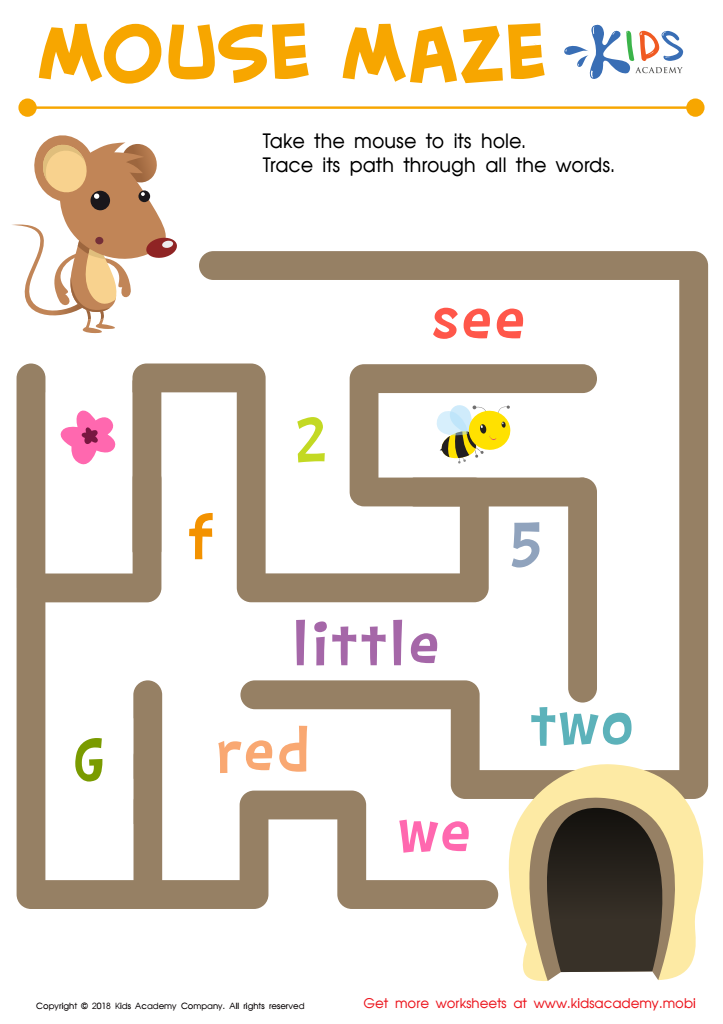
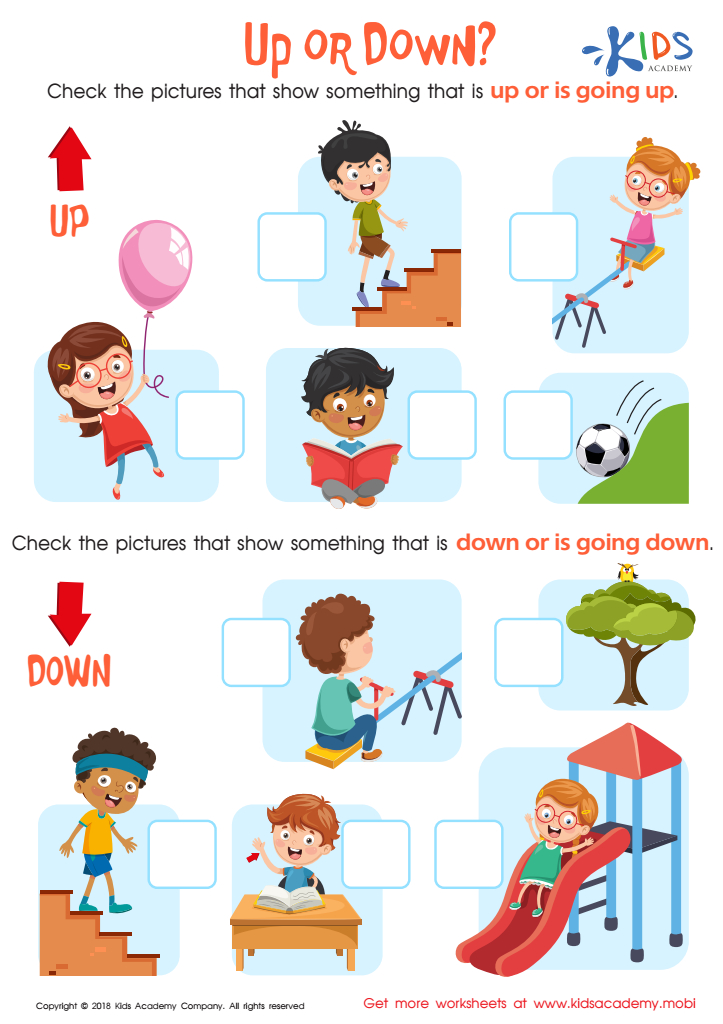
Introducing our "Directional Understanding Worksheets for 3-Year-Olds"! These engaging, educational printables are designed to help your little ones grasp fundamental concepts such as left, right, up, and down. Each worksheet incorporates playful and colorful activities to make learning directions fun and enjoyable. By following simple instructions, children develop their spatial awareness and early problem-solving skills. Perfect for home or classroom use, our age-appropriate worksheets cater to young learners and provide a foundational understanding that supports their cognitive development. Download today and watch your child navigate the world of directions with confidence!
 Assign to My Students
The Circle Maze Worksheet
Find Words Mouse Maze Worksheet
Up or Down Worksheet








Directional understanding is foundational for a child's cognitive and physical development, and parents or teachers should be invested in nurturing this skill in 3-year-olds for several key reasons. Firstly, grasping concepts like left, right, up, and down enhances spatial awareness, enabling children to navigate their environment more safely and efficiently. For instance, knowing which way to turn when exiting a classroom or playground can prevent accidents and boost confidence.
Moreover, directional skills are closely linked to early mathematical concepts. Understanding directionality helps children follow patterns, sequence objects, and even begin early problem-solving tasks. Additionally, literacy development benefits from these skills. Recognizing the direction in which English text flows (left to right, top to bottom) is a prerequisite for reading and writing.
Social interactions also improve with good directional understanding. Simple tasks like playing catch, following multi-step instructions, or participating in games often require a keen sense of direction, promoting cooperative play and communication skills.
Finally, fostering directional skills stimulates overall brain development. Activities that encourage this understanding engage multiple brain regions, aiding in the development of complex thinking skills. For these comprehensive reasons, prioritizing directional understanding in early childhood sets the stage for lifelong learning and development.








