Boost your little one's focus with our engaging Concentration Worksheets for 3-year-olds! Designed to captivate and challenge young minds, these printable resources enhance cognitive skills through fun activities like matching games, memory tasks, and visual puzzles. Perfect for early learners, our worksheets promote concentration, attention span, and critical thinking abilities. Tailored to spark curiosity and encourage exploration, they can easily be integrated into home or classroom settings. Watch as your child eagerly practices and improves their focus while building a strong foundation for future learning. Get started today and unlock the potential of your 3-year-old’s concentration skills!

Check out this FREE "Improving concentration" Trial Lesson for age 3!

Objects in the Environment- Circle, Square, Triangle & Rectangle

Favorites
With answer key
Interactive
  • 3
  • Improving concentration
Preschool geometry worksheet

Geometry Worksheet

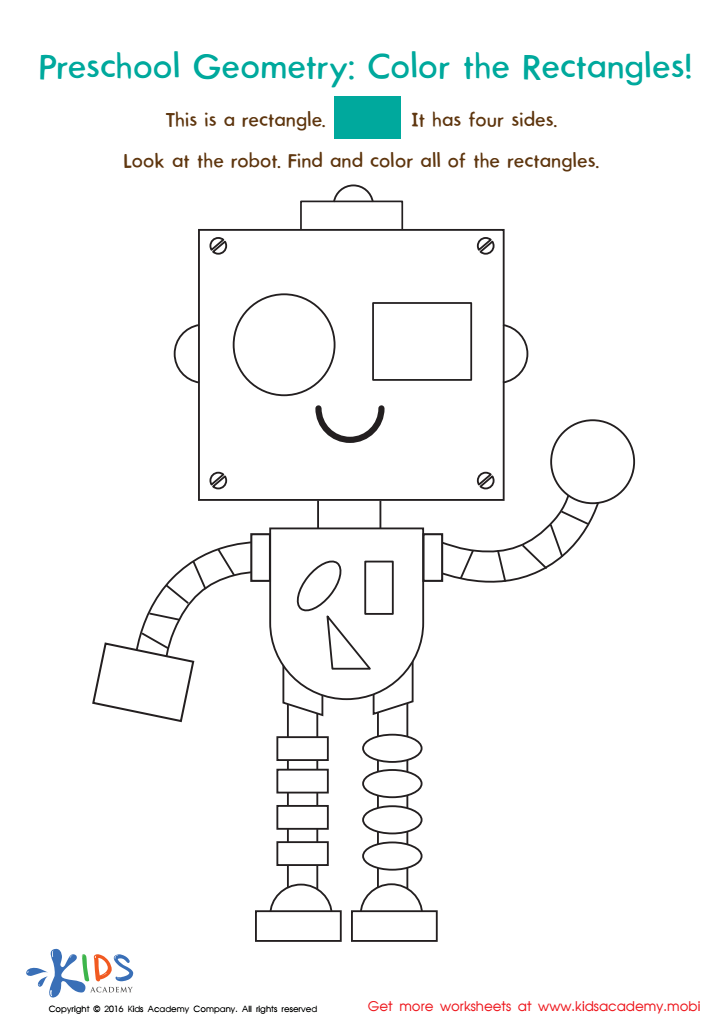
Geometry can be fun for kids! They explore shapes that create their favorite pics and objects. This preschool worksheet explains that rectangles have four sides, then kids color rectangles on a funny robot!
Geometry Worksheet
Worksheet
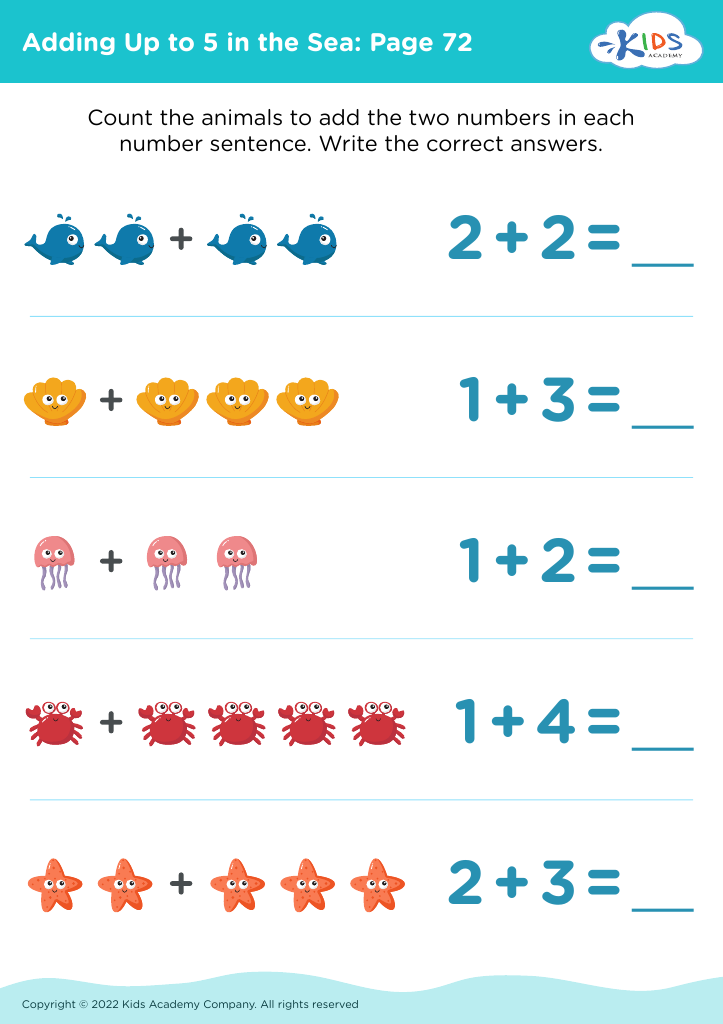
Adding Up to 5 in the Sea: Page 72
Worksheet
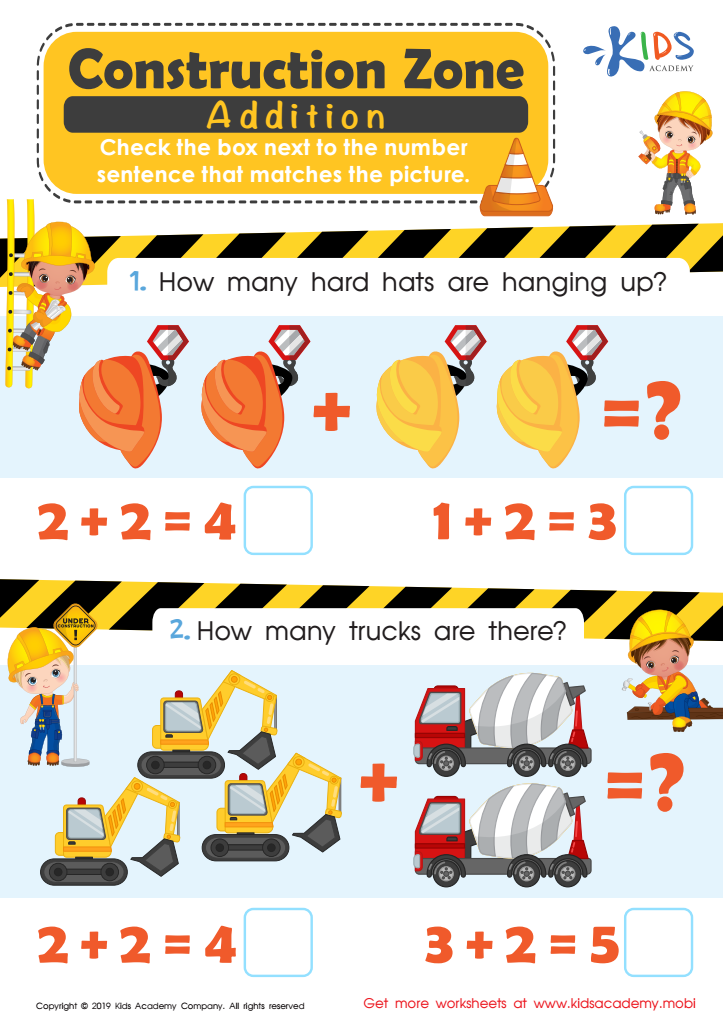
Construction Zone Addition Worksheet

Construction Zone Addition Worksheet

Construction sites are bustling with professionals called construction workers. They use equipment while working, so they must wear protective gear. With kids, look at the pictures and name each object. Then help them check the box next to the number sentence that matches the picture. (80 words)
Construction Zone Addition Worksheet
Worksheet
Beginning Sound: Find Pairs Worksheet
Beginning Sound: Find Pairs Worksheet
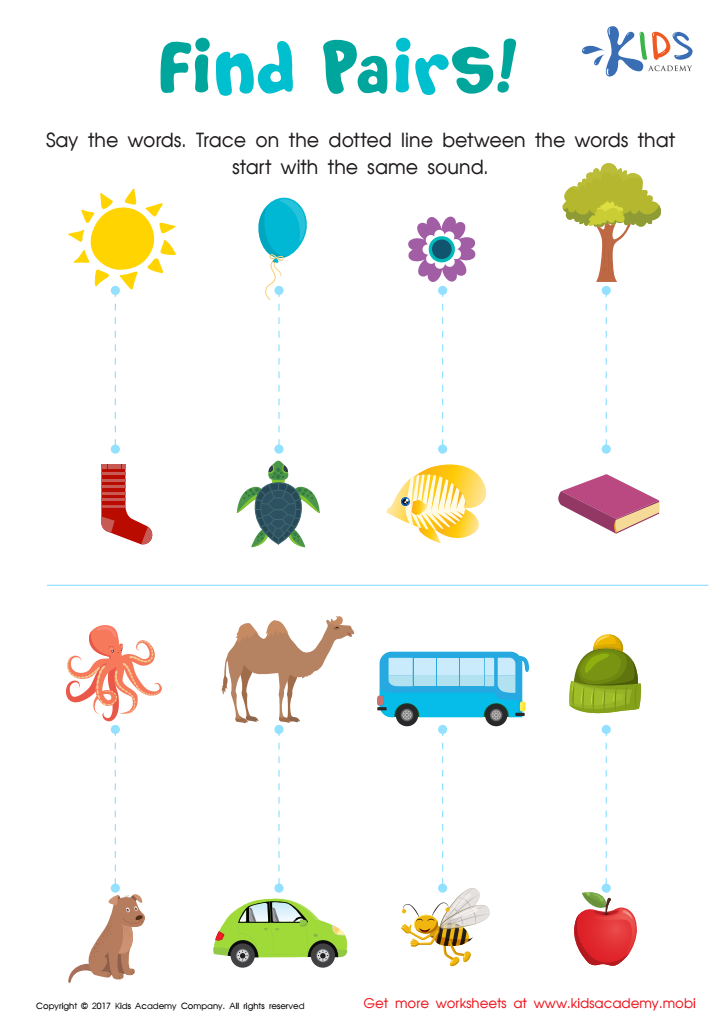
Phonemic awareness is essential for readers to distinguish hard and soft sounds at the start of words. Our printable worksheet helps your child make meaningful connections and provides visuals for recall - a valuable pre-reading strategy. Pictures are easy to identify and match, setting kids up for success with each pairing.
Beginning Sound: Find Pairs Worksheet
Worksheet
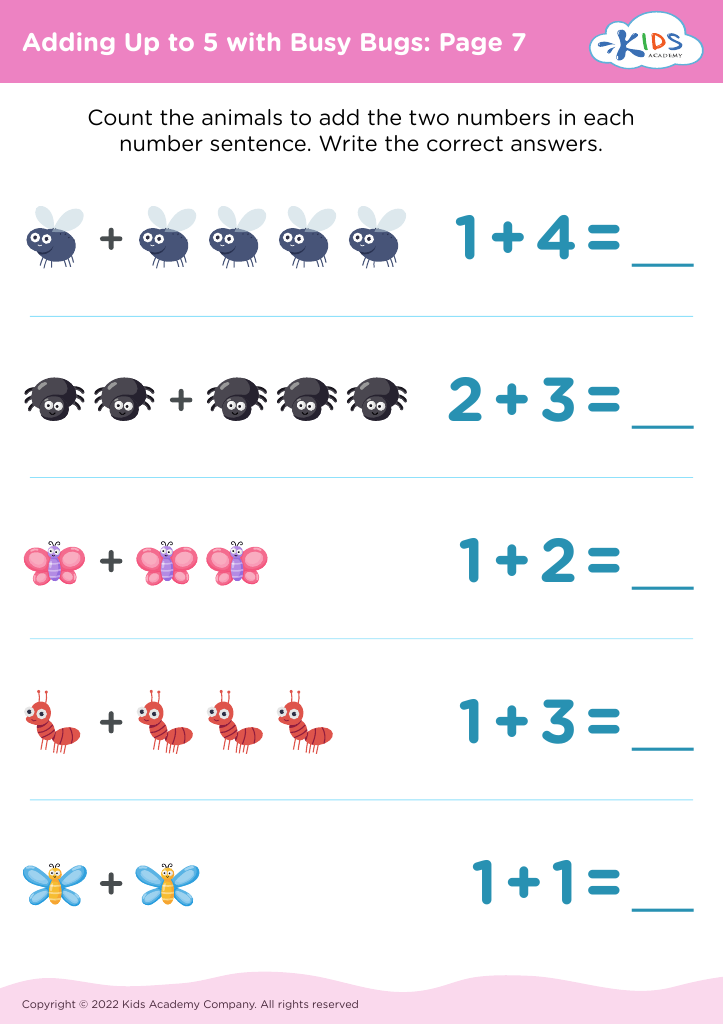
Adding Up to 5 with Busy Bugs: Page 7
Worksheet
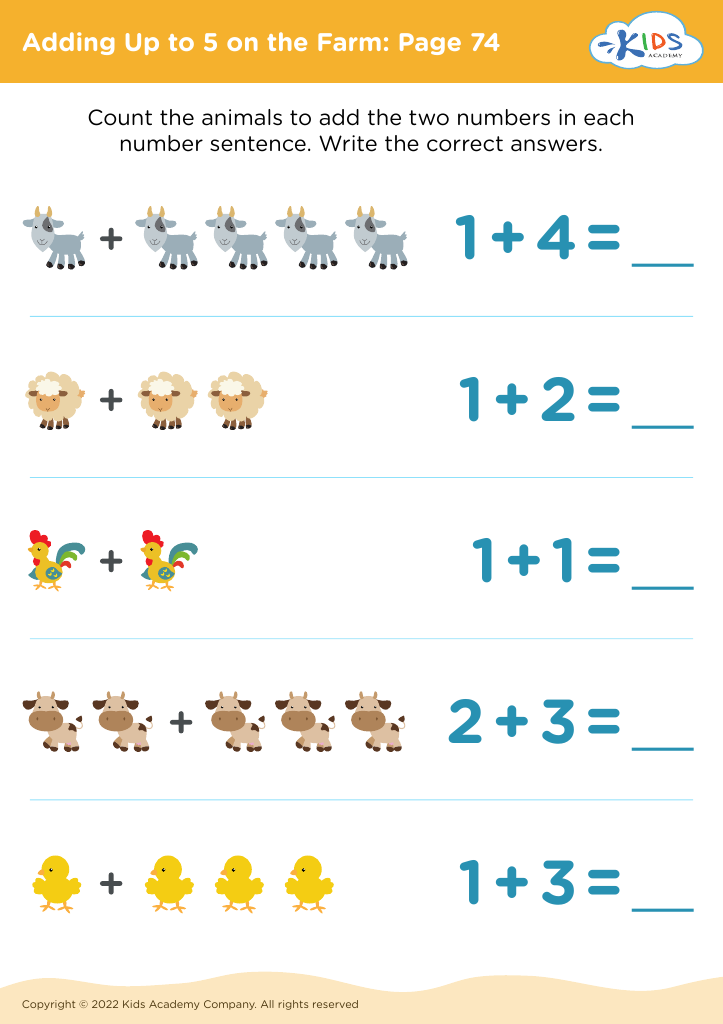
Adding Up to 5 on the Farm: Page 74
Worksheet
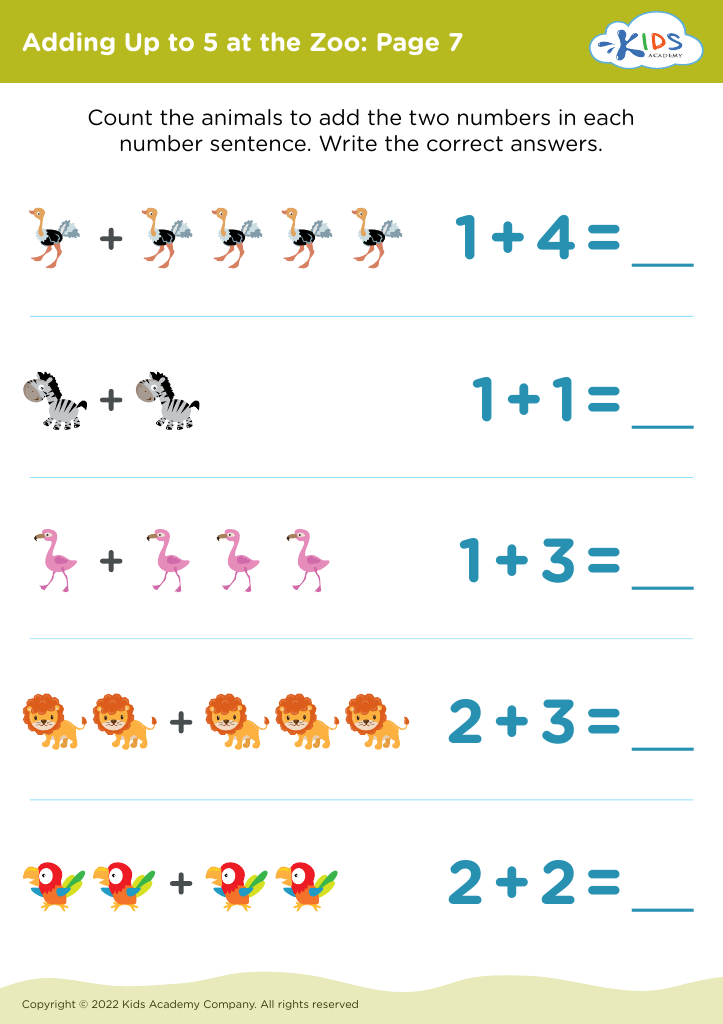
Adding Up to 5 at the Zoo: Page 7

Adding Up to 5 at the Zoo: Page 7

Adding Up to 5 at the Zoo: Page 7
Worksheet
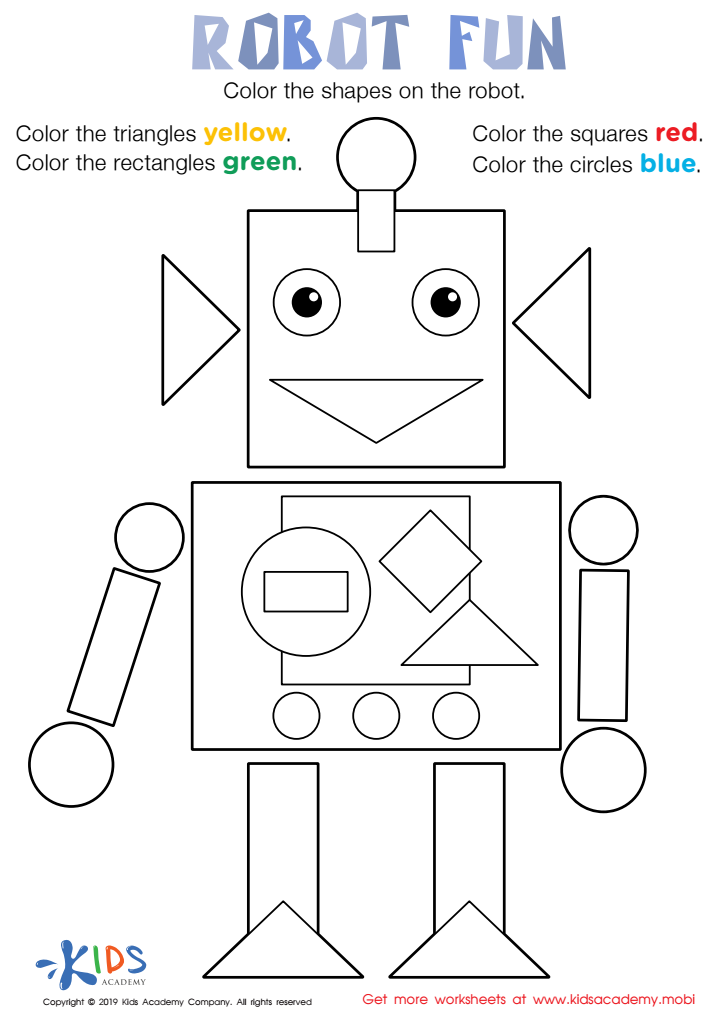
Robot Fun Worksheet
Robot Fun Worksheet

Robot Fun Worksheet

Help your child learn about basic shapes with this fun robot worksheet! Kids practice identifying circles, squares, rectangles and triangles, then color each shape according to directions. Make math practice enjoyable with this coloring page that teaches all four basic shapes - it's an important math skill!
Download (PDF)
Assign to My Students
Robot Fun Worksheet
Worksheet
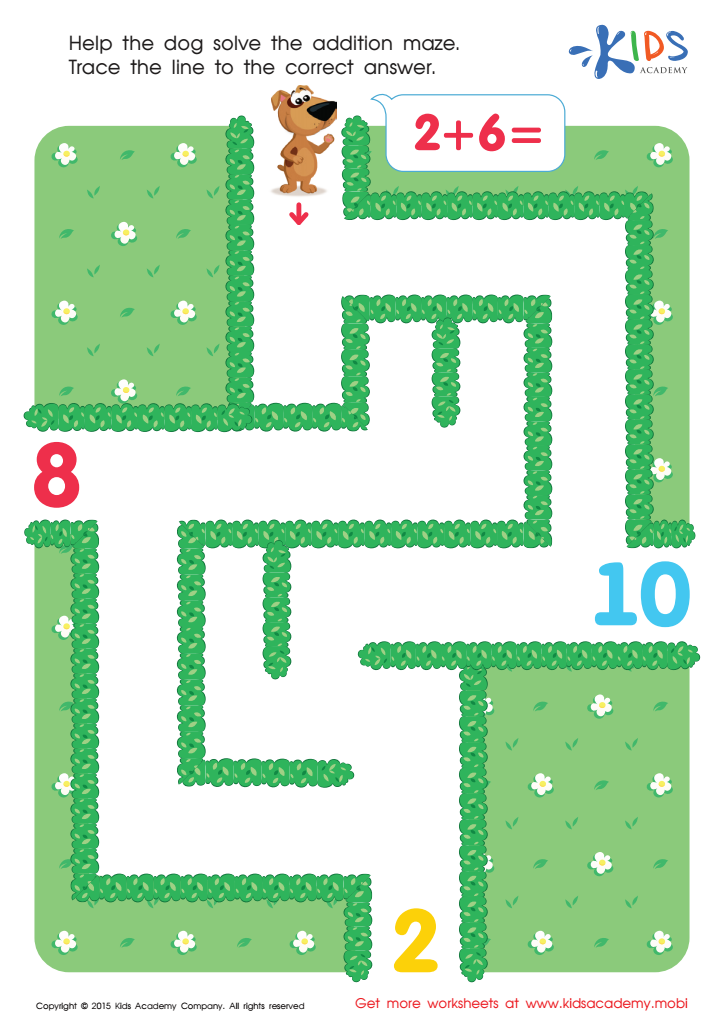
Math: Two Plus Six Addition PDF Worksheet

Two Plus Six Addition Worksheet

Make maths fun and interesting for your preschooler with our kindergarten addition worksheets. Help the dog to trace the right path to the correct answer and explore our free printable addition and subtraction worksheets. Visit our site for more study materials.
Two Plus Six Addition Worksheet
Worksheet
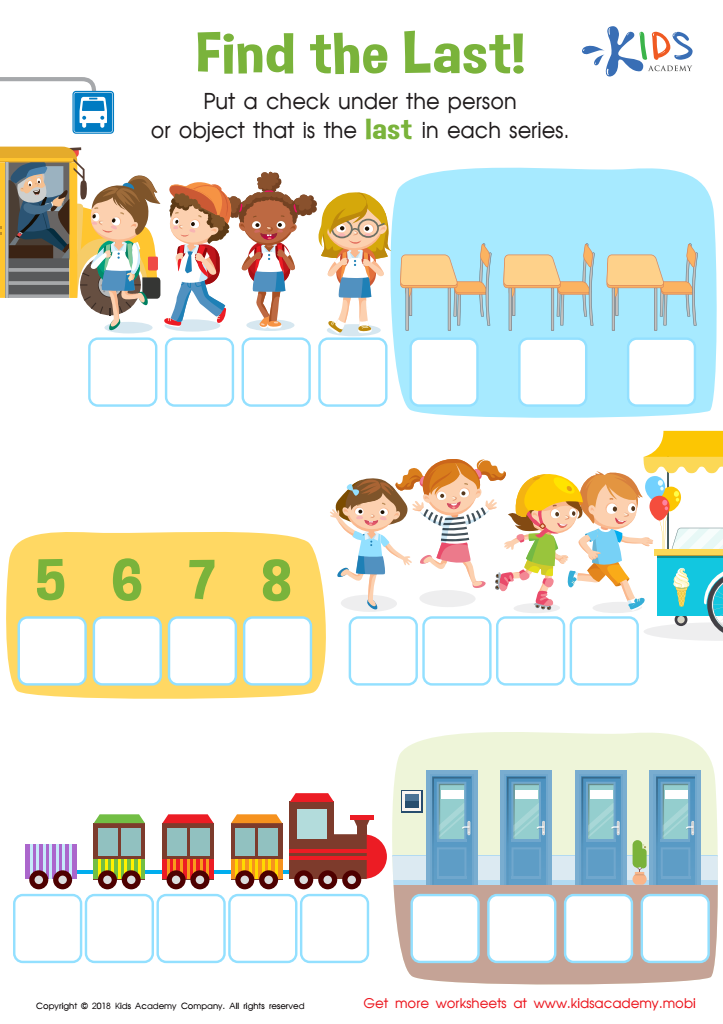
Find the Last! Worksheet
Find the Last! Worksheet
Teach young students about sequence words with this free worksheet. Have them look at sets of people or objects and choose the one that is last. Engage them further by having them describe or act out their day, and what happens last? Enjoy this printout and have fun!
Find the Last! Worksheet
Worksheet
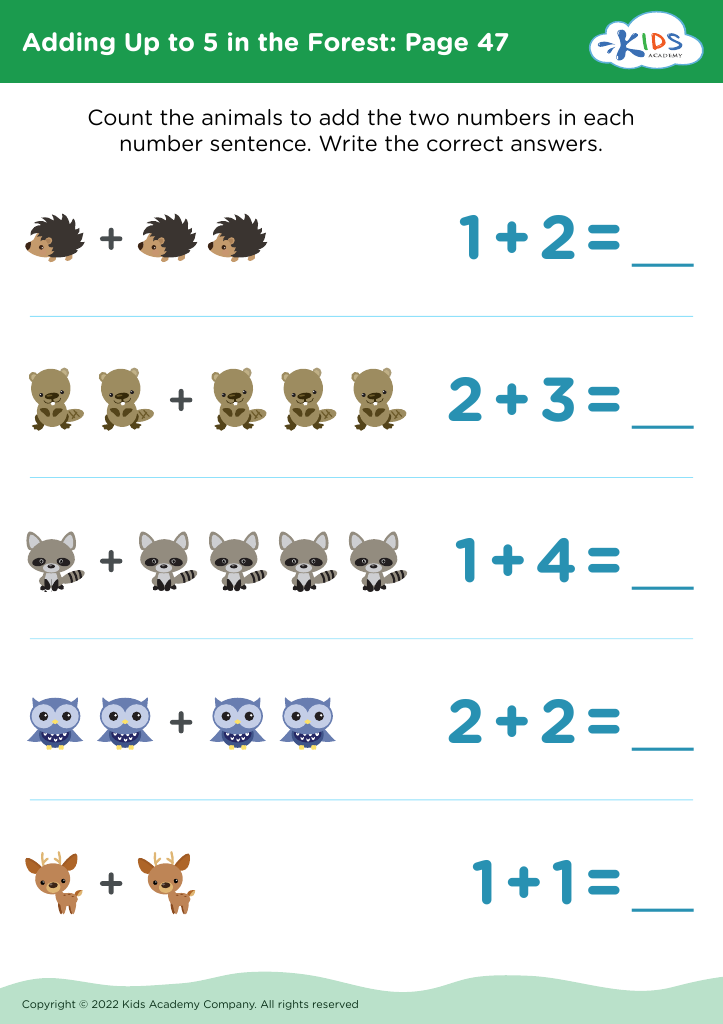
Adding Up to 5 in the Forest: Page 47
Worksheet
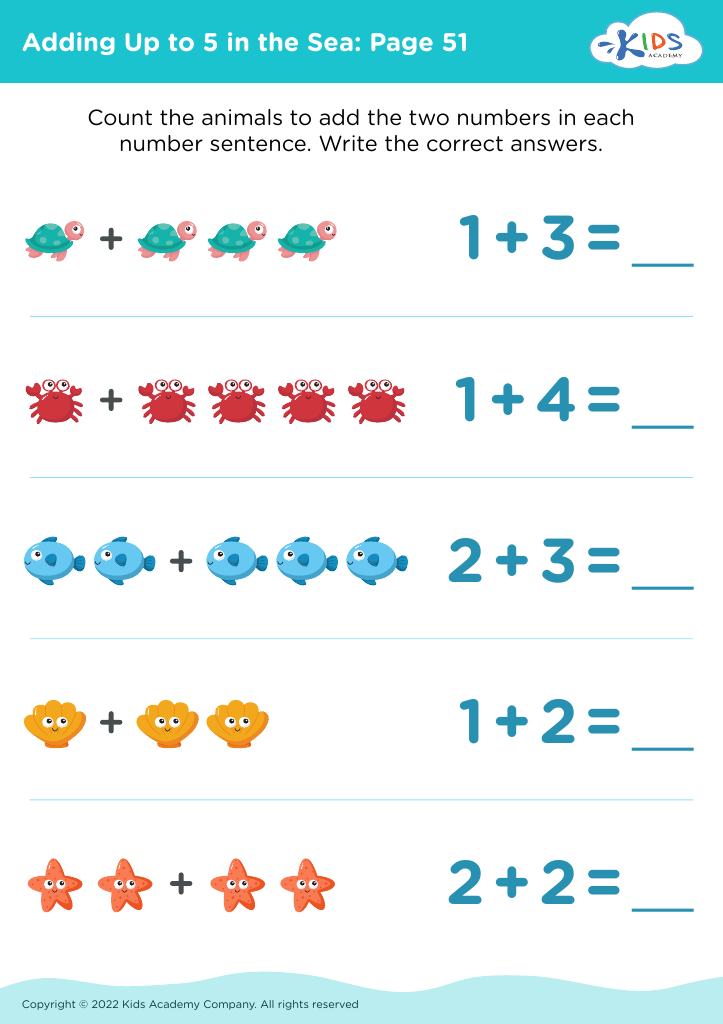
Adding Up to 5 in the Sea: Page 51
Worksheet
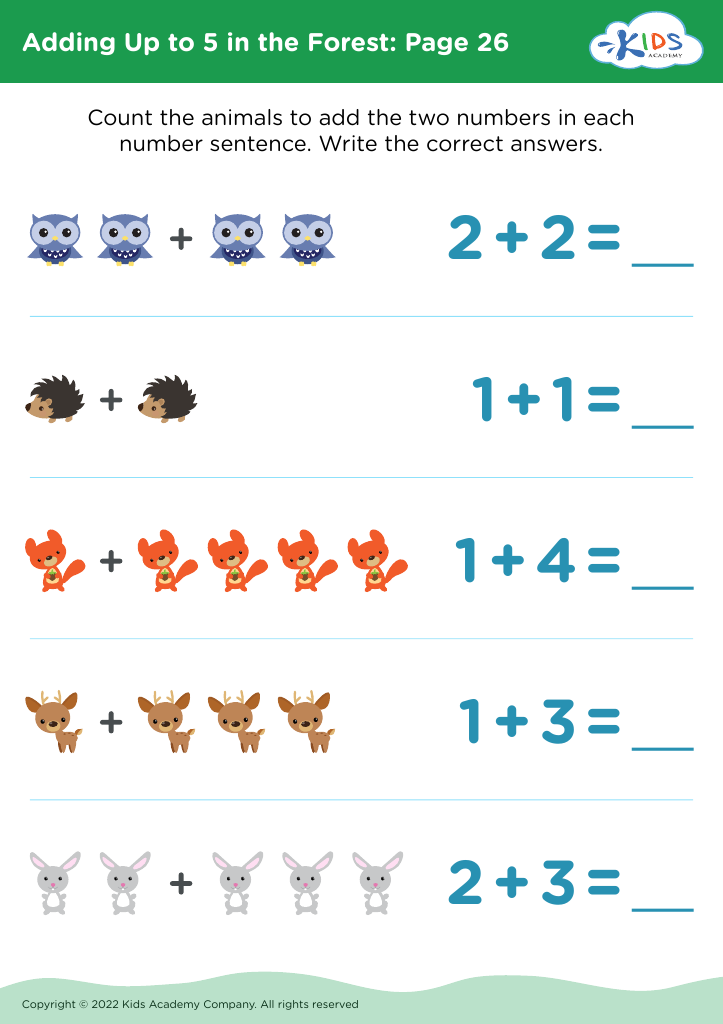
Adding Up to 5 in the Forest: Page 26
Worksheet
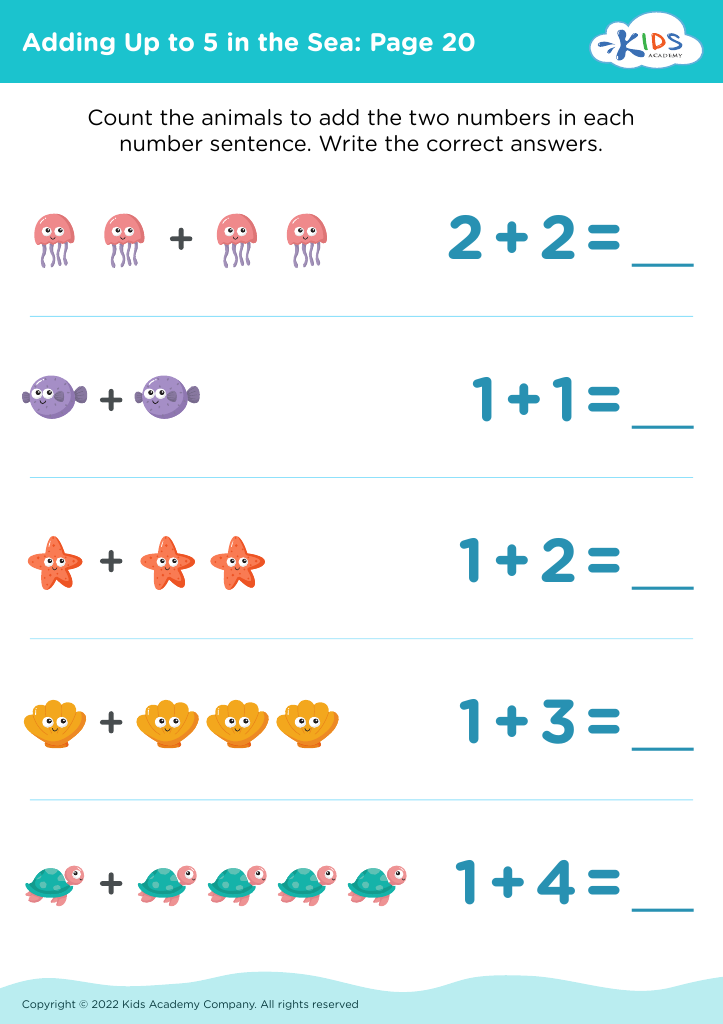
Adding Up to 5 in the Sea: Page 20
Worksheet
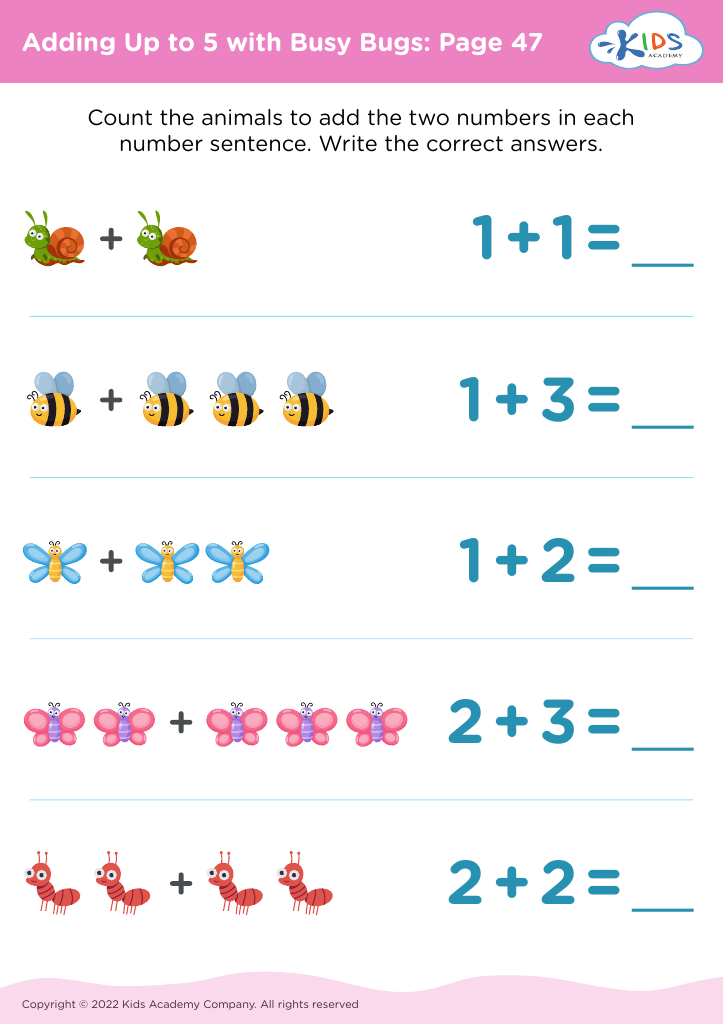
Adding Up to 5 with Busy Bugs: Page 47
Worksheet
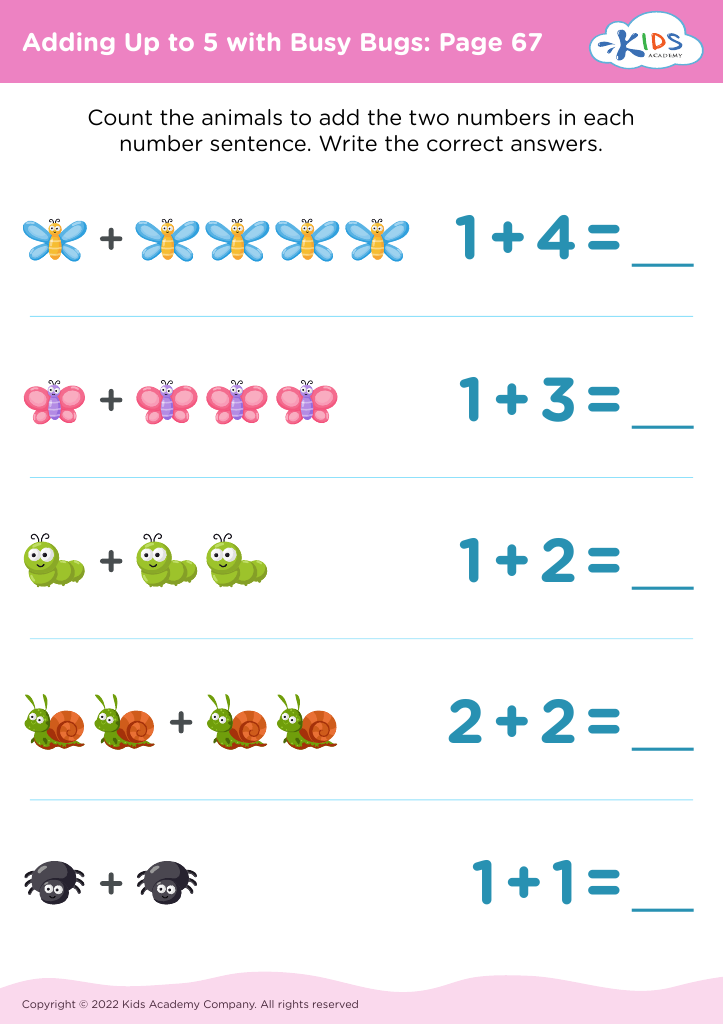
Adding Up to 5 with Busy Bugs: Page 67
Worksheet
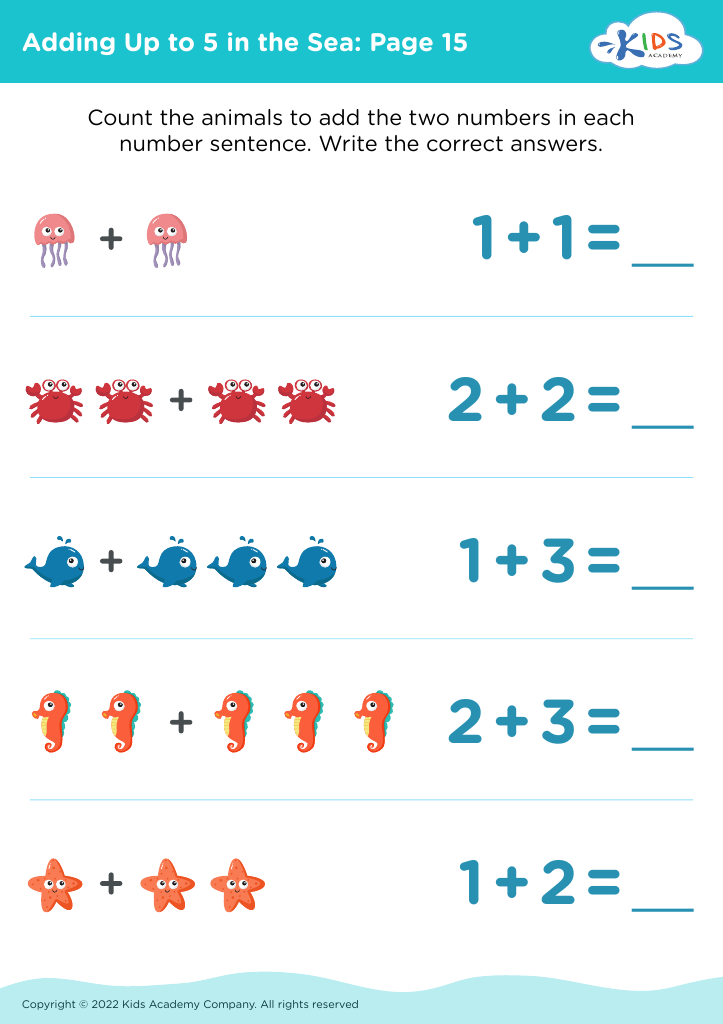
Adding Up to 5 in the Sea: Page 15
Worksheet
Ladybug Line Up Worksheet
Ladybug Line Up Worksheet
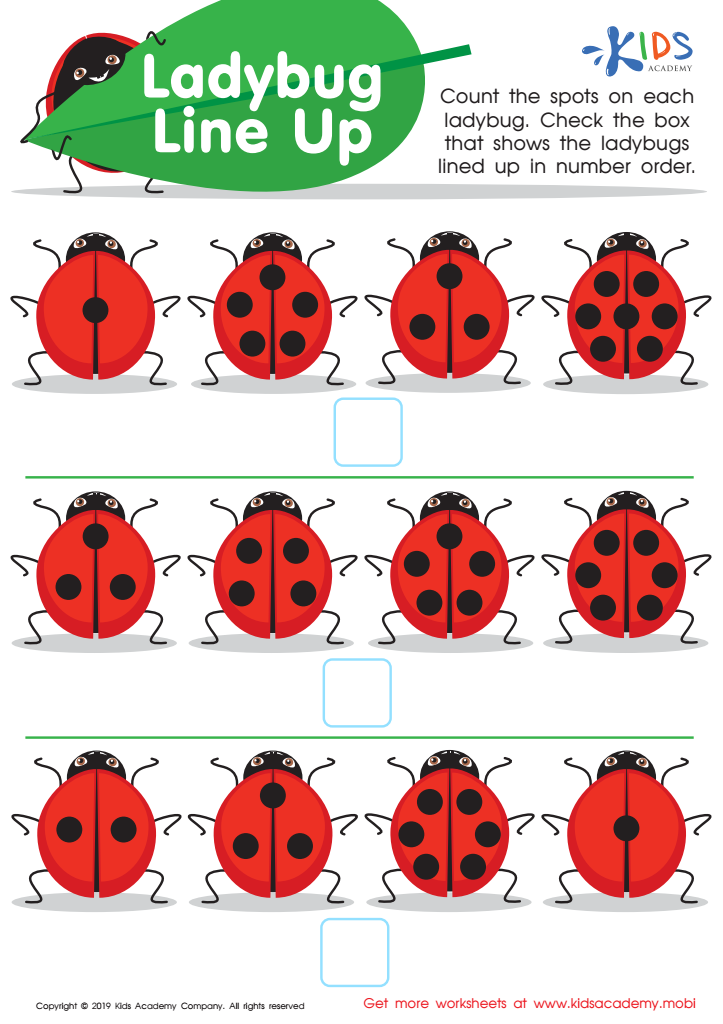
Count the spots on the back of each ladybug in the three groups. Help kids check the box under each group that shows the ladybugs in proper number order. Ladybugs are an adorable insect with unique spots. This worksheet encourages counting and ordering.
Ladybug Line Up Worksheet
Worksheet
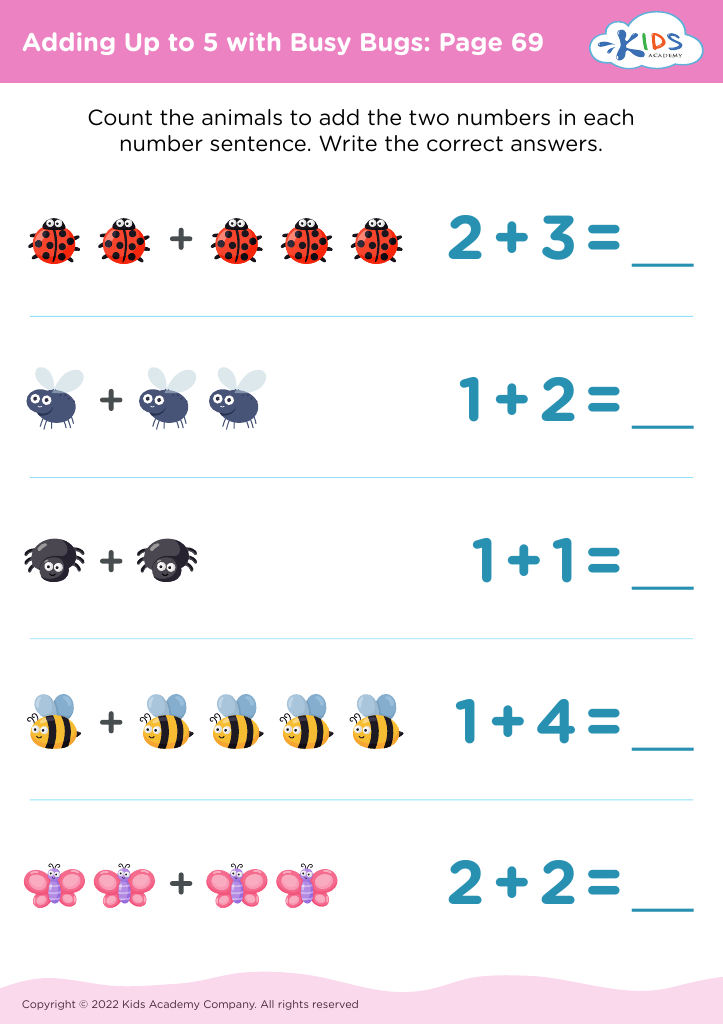
Adding Up to 5 with Busy Bugs: Page 69
Worksheet
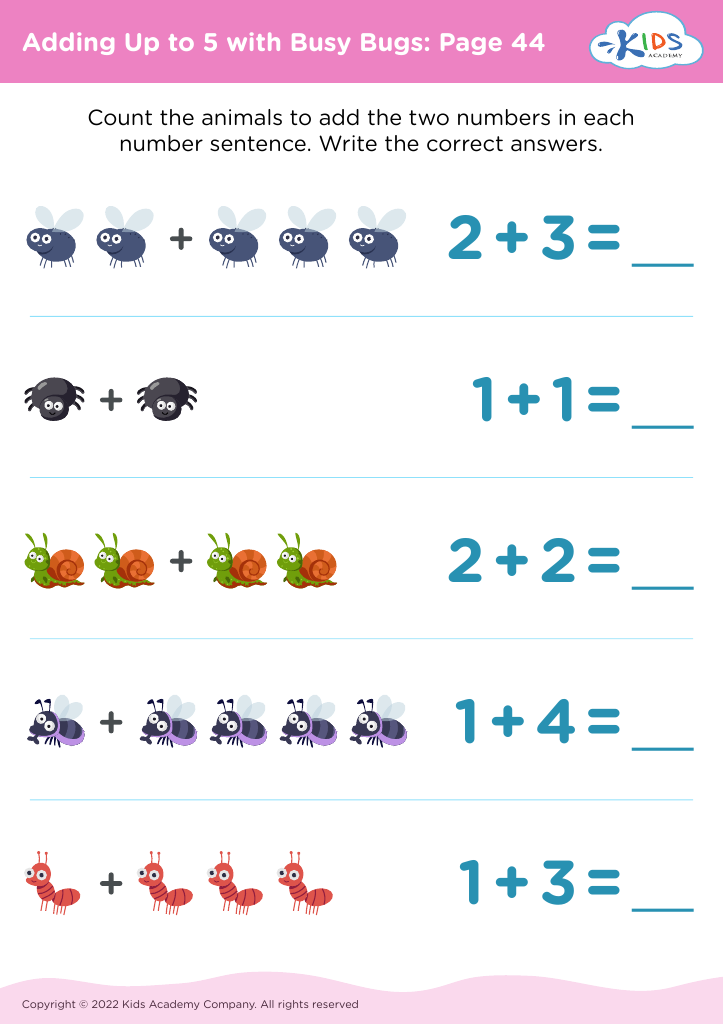
Adding Up to 5 with Busy Bugs: Page 44
Worksheet
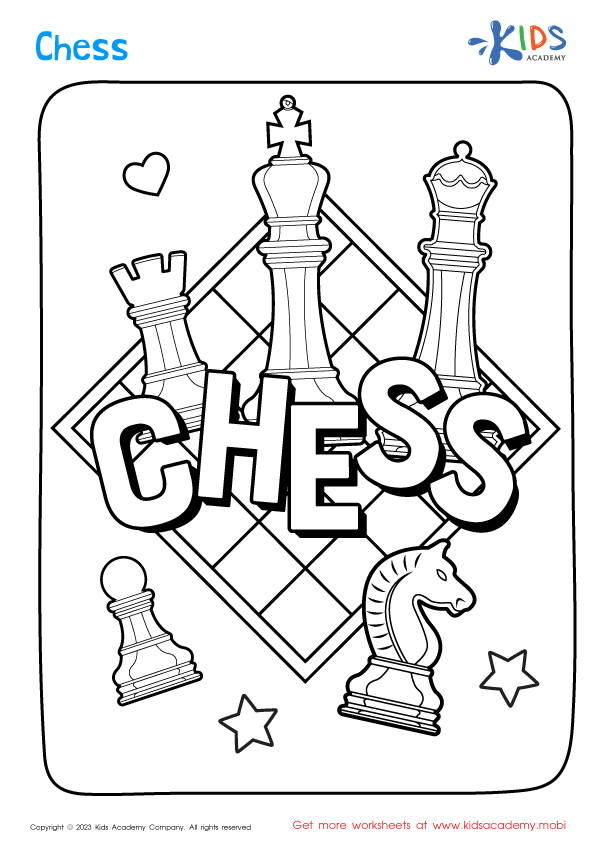
Chessboard Coloring Page

Chessboard Coloring Page

Chessboard Coloring Page
Worksheet


Improving concentration in 3-year-olds is crucial for several reasons. At this developmental stage, young children are naturally curious and eager to explore their surroundings. However, their ability to focus can be limited, making it essential for parents and teachers to foster concentration skills. Cultivating attention spans can help preschoolers absorb information, understand instructions, and engage in structured activities—laying the groundwork for future learning.

Enhancing concentration can also support social skills, as focused children are more likely to participate in group activities, share with peers, and develop emotional intelligence. By improving attention spans, caregivers can help minimize distractions, leading to more productive play and learning experiences. As preschoolers engage with educational tools and activities that hold their interest, they build cognitive and problem-solving skills critical for their development.

Additionally, children who learn to concentrate at an early age tend to experience less frustration in learning environments, contributing to positive behavioral outcomes. Learning concentration can also pave the way for lifelong habits that promote academic success, as solid focus abilities are essential when they transition to formal education. Therefore, investing time in enhancing concentration not only benefits immediate learning experiences but also strategically supports a child’s journey into more complex learning challenges in the future.