Filters

531 filtered results

Clear all filters
Favorites
With answer key
Interactive

531 filtered results

Difficulty Level

Grade


Check out this FREE "Number Recognition" Trial Lesson for age 3!

A

Favorites
With answer key
Interactive
  • 3
  • Number Recognition
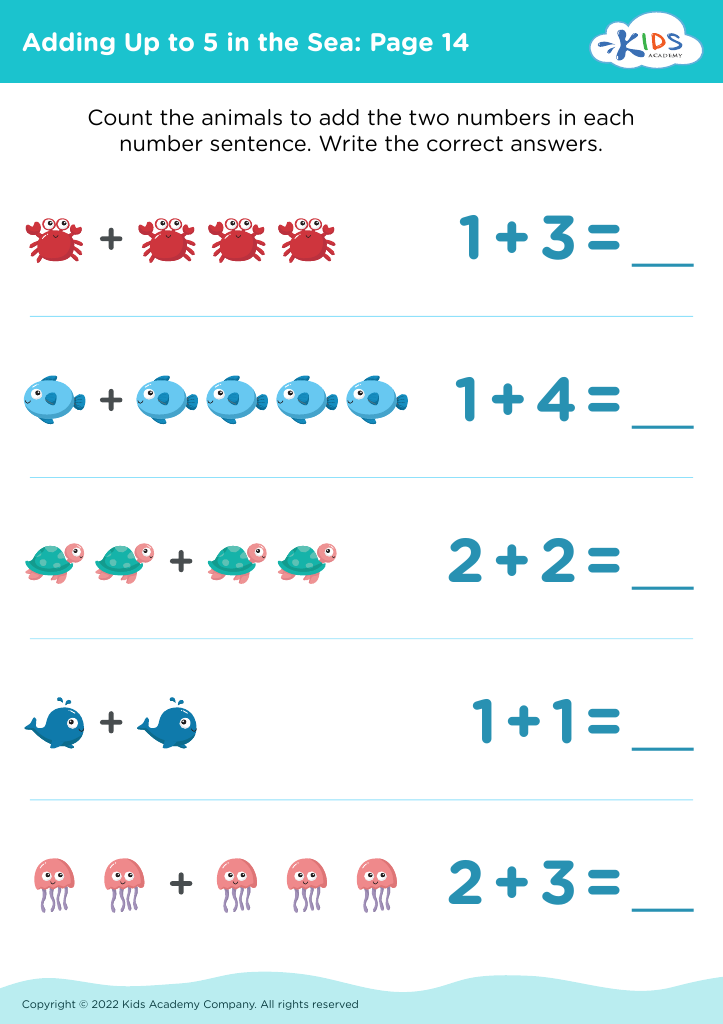
Adding Up to 5 in the Sea: Page 14
Worksheet
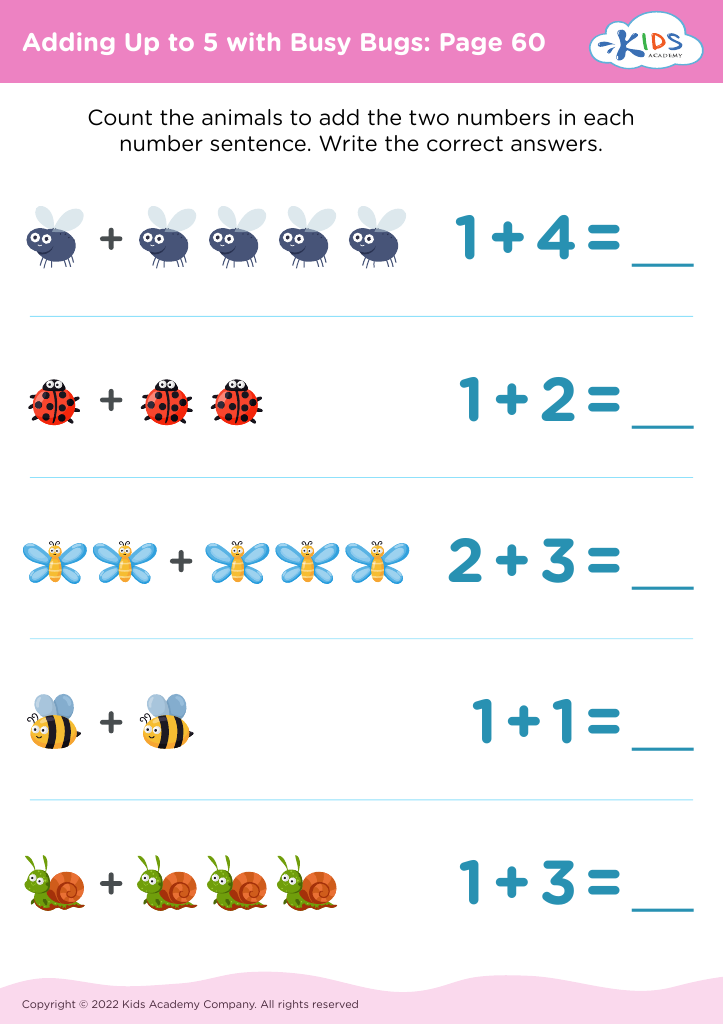
Adding Up to 5 with Busy Bugs: Page 60
Worksheet
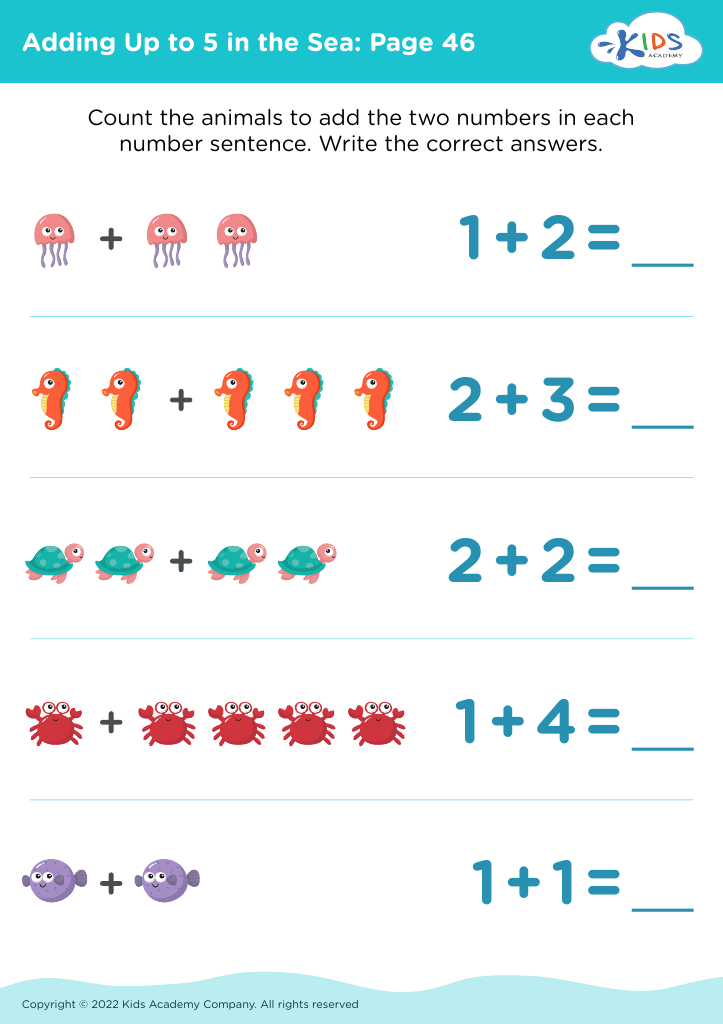
Adding Up to 5 in the Sea: Page 46
Worksheet
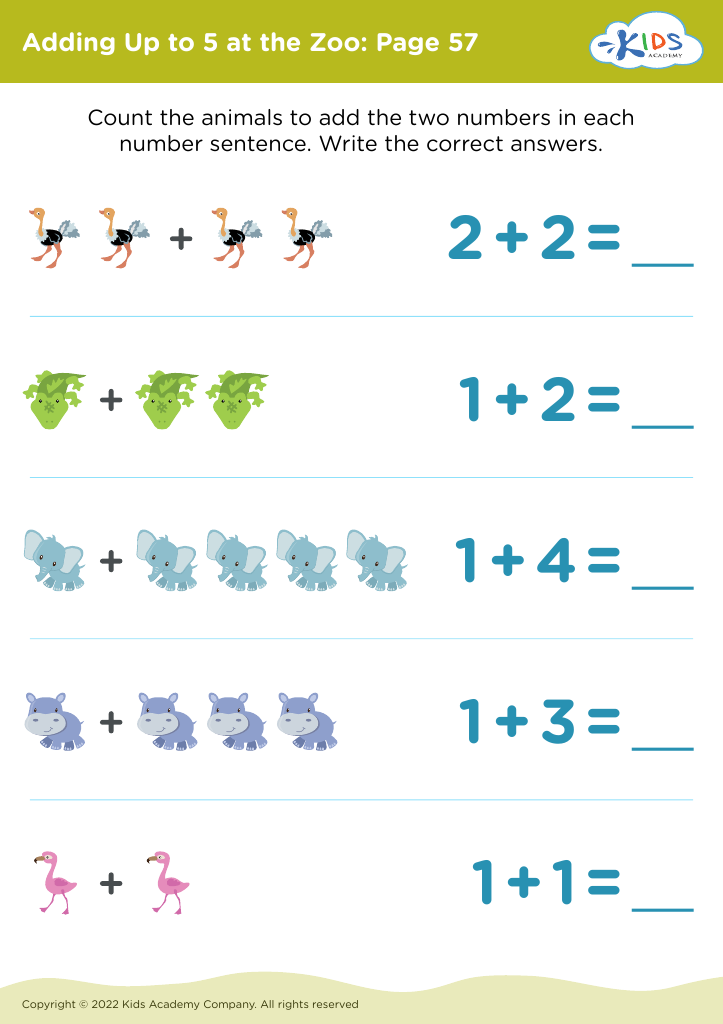
Adding Up to 5 at the Zoo: Page 57
Worksheet
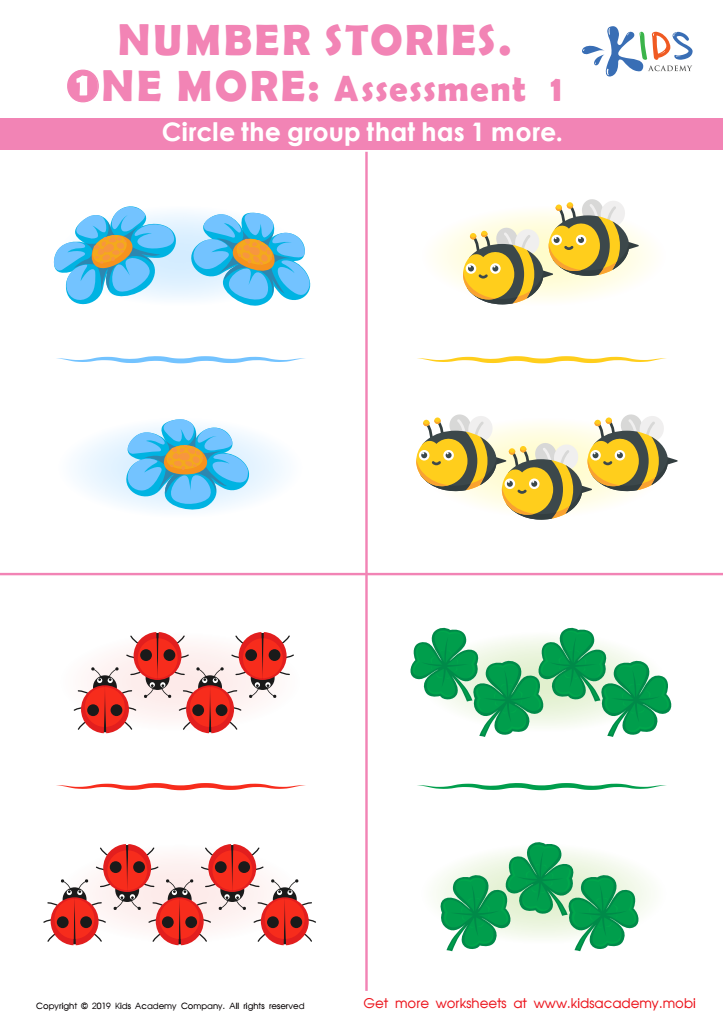
Number Stories One More - Assessment 1 Worksheet Preview

Number Stories One More – Assessment 1 Worksheet

Does your child need a fun way to practice distinguishing between different groups of numbers? This free PDF worksheet will have them circle the group that has one more. With its colorful nature drawings, it's an attractive activity that visual learners will enjoy!
Number Stories One More – Assessment 1 Worksheet
Worksheet
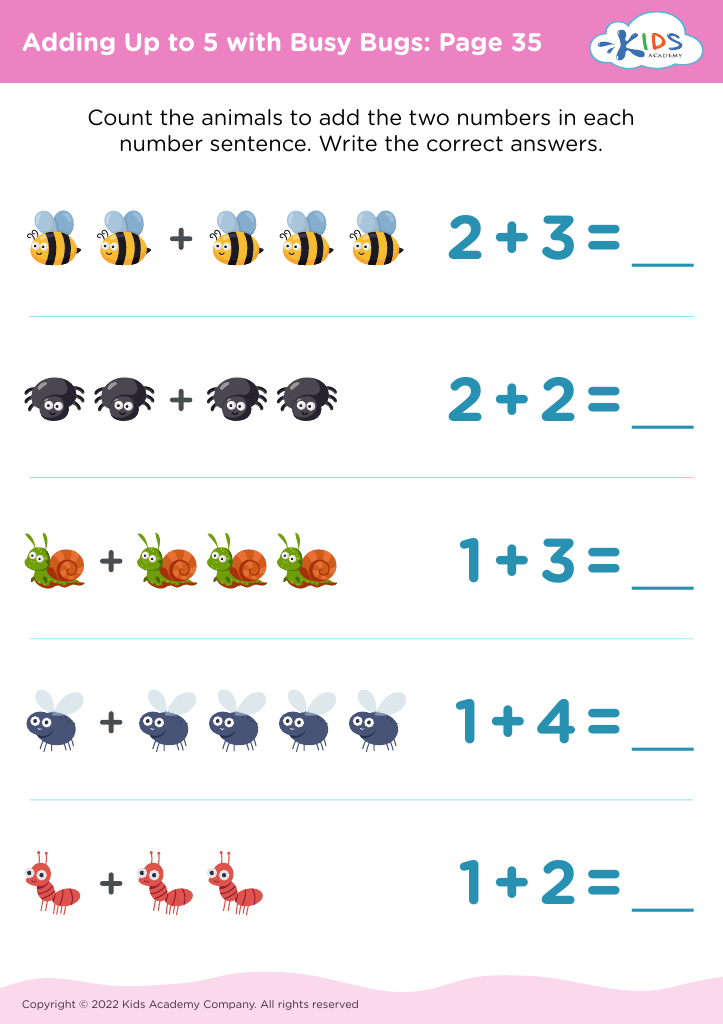
Adding Up to 5 with Busy Bugs: Page 35
Worksheet
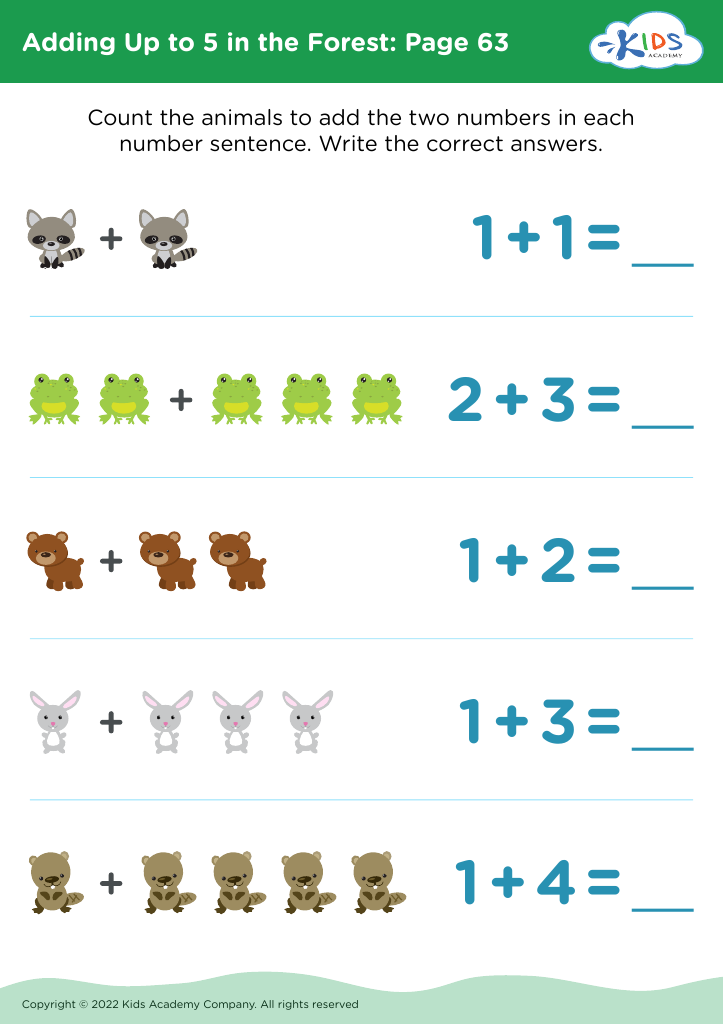
Adding Up to 5 in the Forest: Page 63
Worksheet
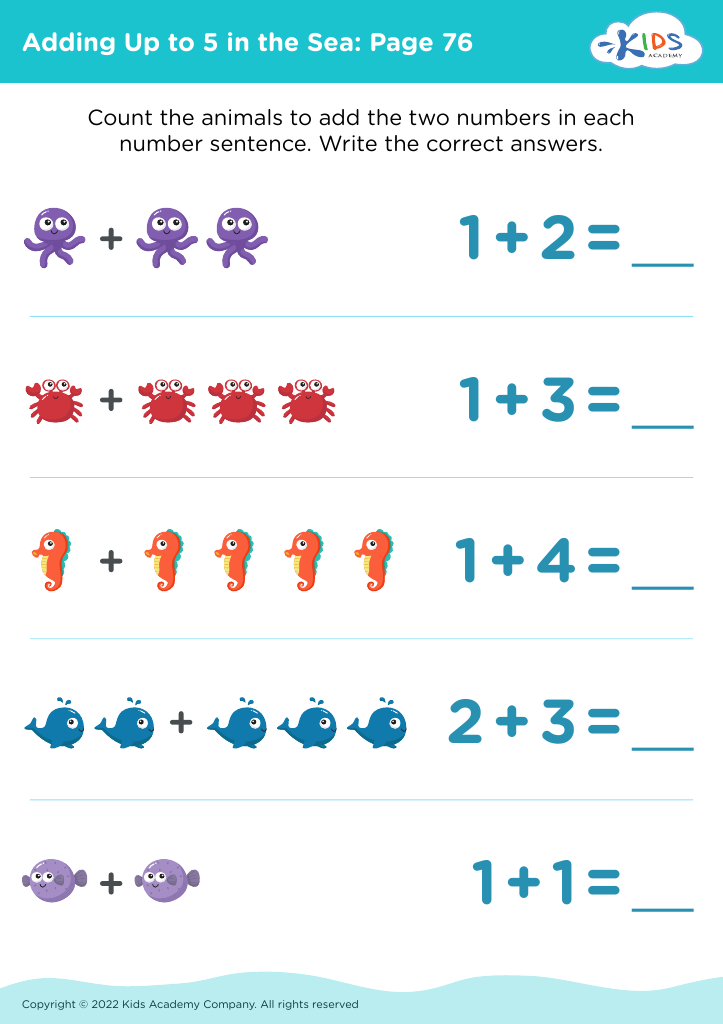
Adding Up to 5 in the Sea: Page 76
Worksheet
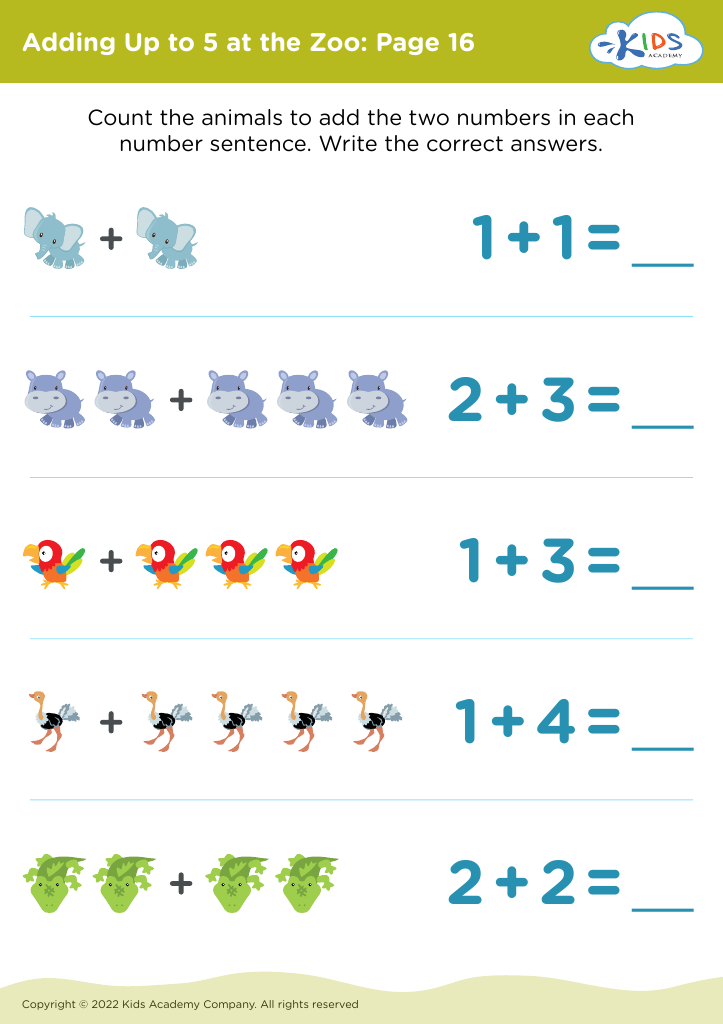
Adding Up to 5 at the Zoo: Page 16
Worksheet
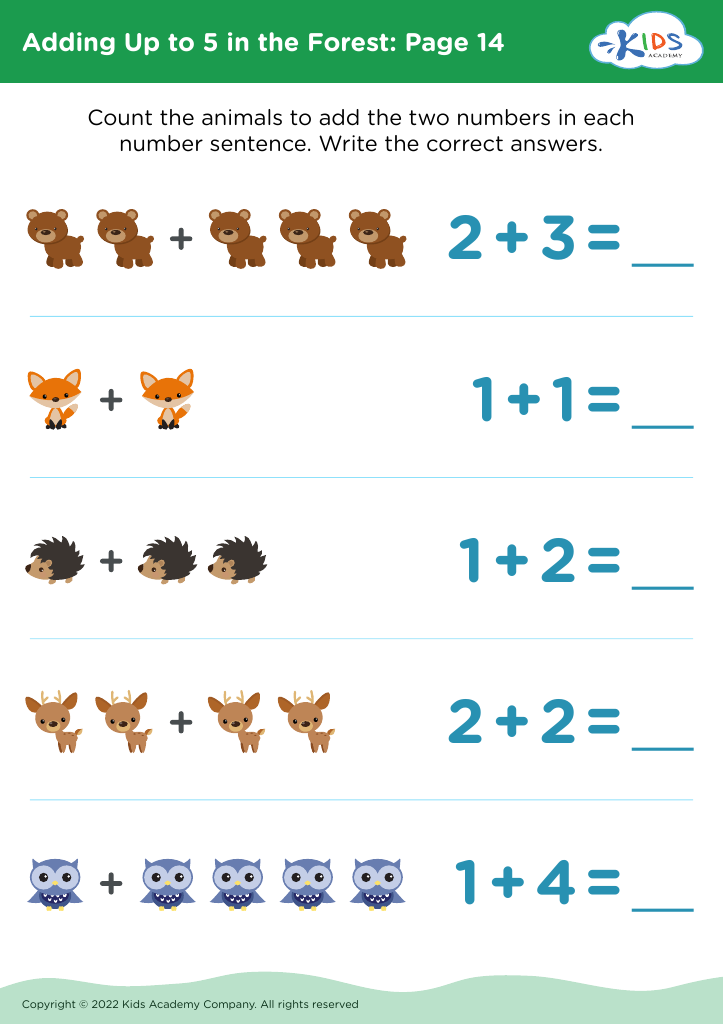
Adding Up to 5 in the Forest: Page 14
Worksheet
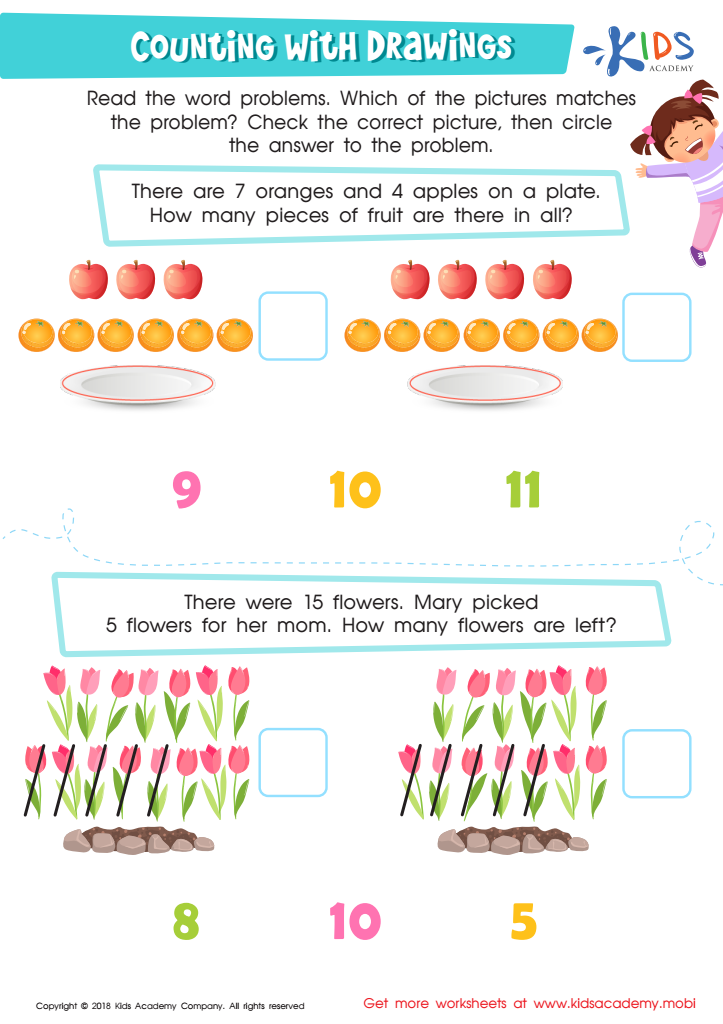
Counting with Drawings: Fruits & Chocolates Worksheet

Counting with Drawings: Fruits & Chocolates Worksheet

Learning basic addition and subtraction has never been easier with this free worksheet! Young mathematicians can sort & count to get the right sum or difference for each problem. Plus, they'll practice fine motor skills by circling the correct answer. An ideal way to help kids build important visual recognition and discernment skills.
Counting with Drawings: Fruits & Chocolates Worksheet
Worksheet
Turtle Counting Worksheet
Turtle Counting Worksheet

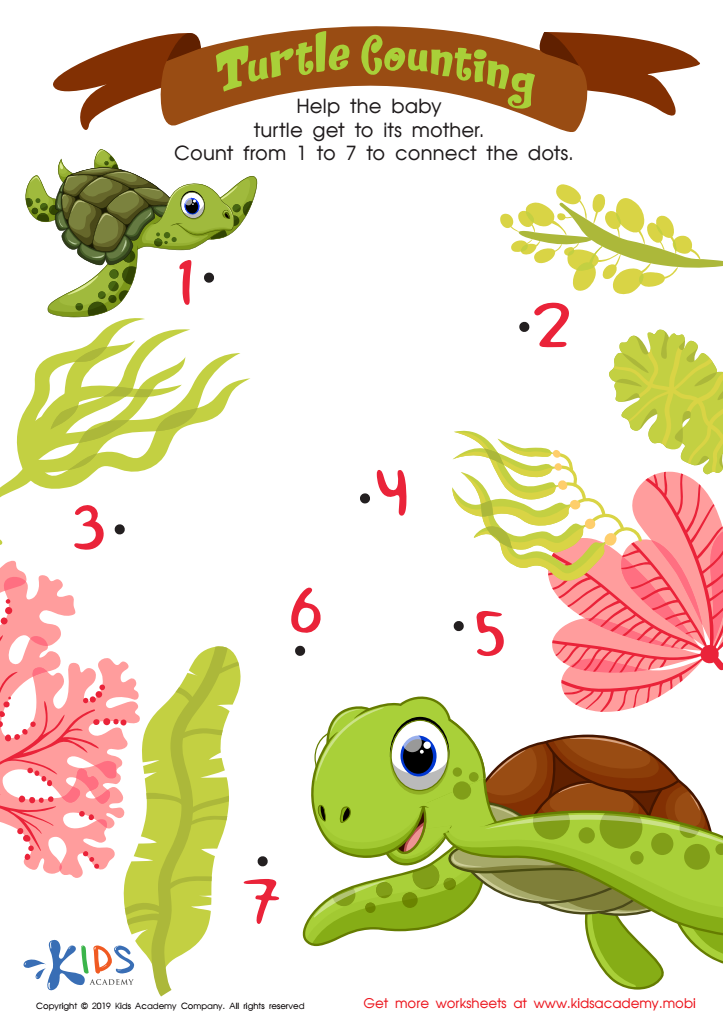
Help your child identify the turtle in the picture and teach them about turtles. From their diet to the life cycle, they'll learn a lot. Now, help the baby turtle return to its mother. Count from 1 to 7, then connect the dots on the printout.
Turtle Counting Worksheet
Worksheet
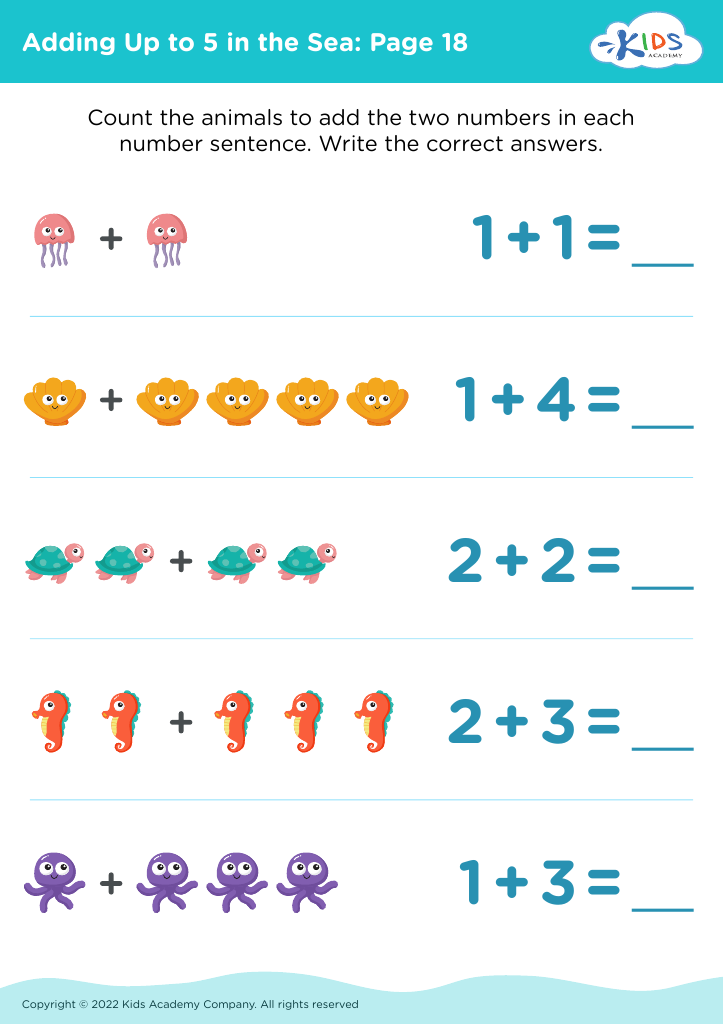
Adding Up to 5 in the Sea: Page 18
Worksheet
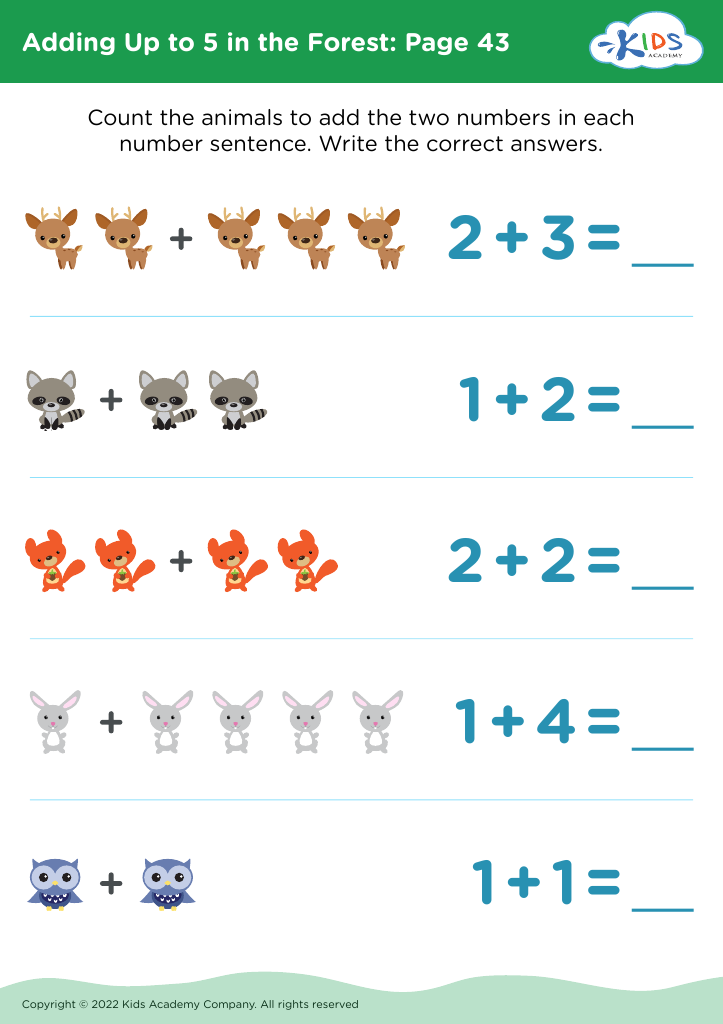
Adding Up to 5 in the Forest: Page 43
Worksheet
Adding Up to 5 with Busy Bugs: Page 33
Worksheet
Count and Write 7 Worksheet
Count and Write 7 Worksheet
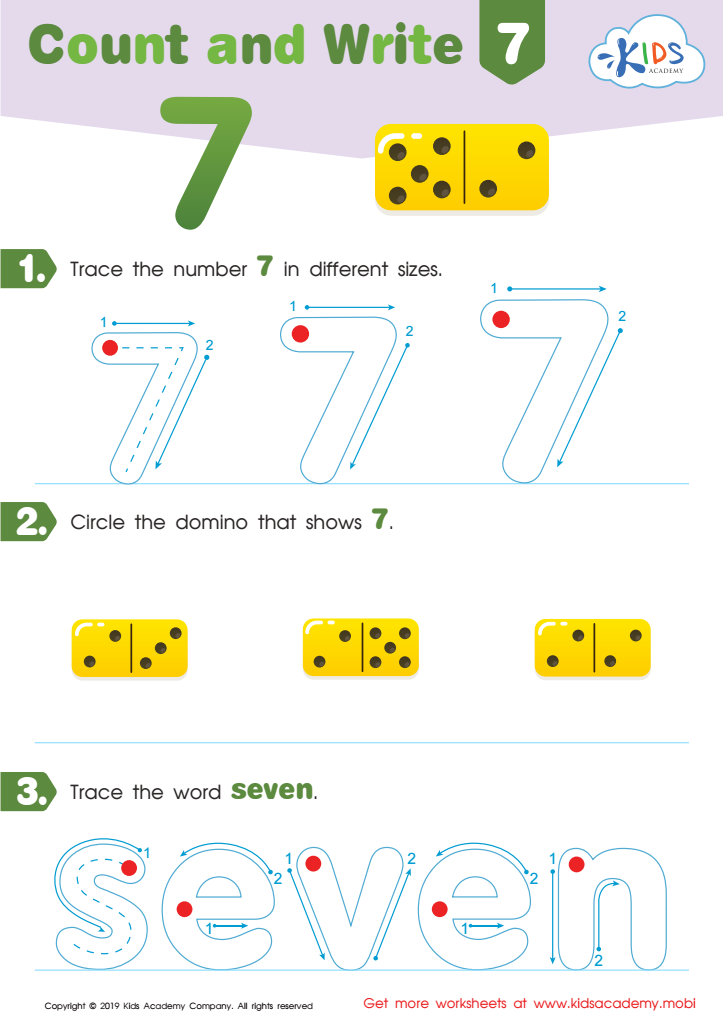
It's key to recognize and represent numbers in different formats. This free PDF shows children how '7' looks as a numeral, word, and with dice. Strengthening math skills is crucial, and the traceable lines and bright guide dots can help them practice writing '7' in two forms. Additionally, they'll hone their fine motor skills as they circle the dice that depicts '7'.
Count and Write 7 Worksheet
Worksheet
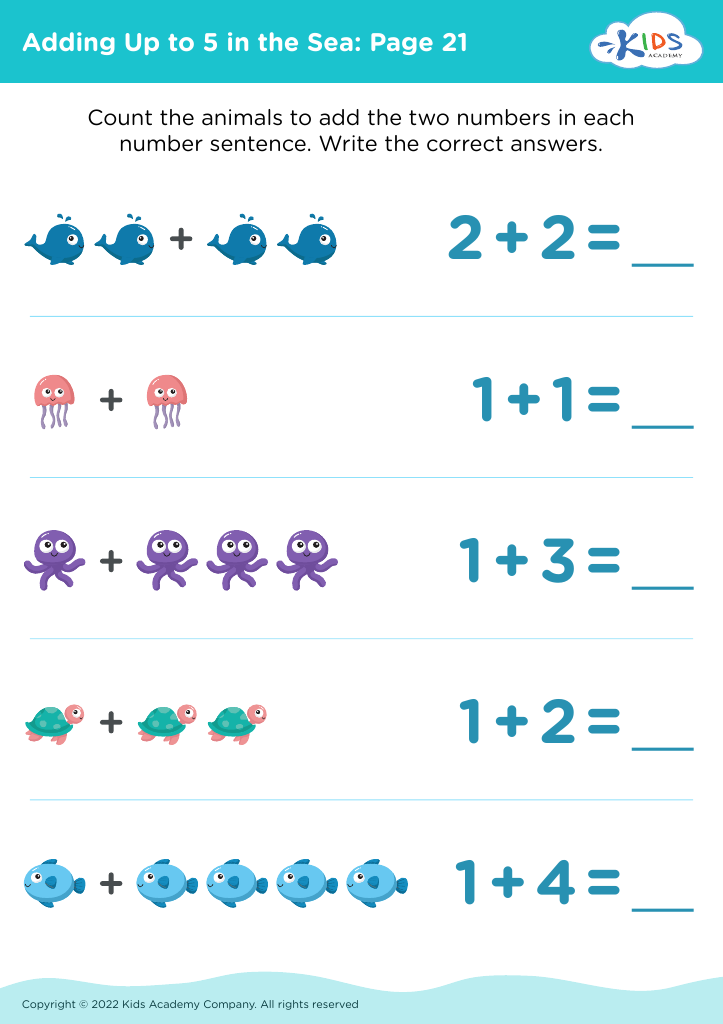
Adding Up to 5 in the Sea: Page 21
Worksheet
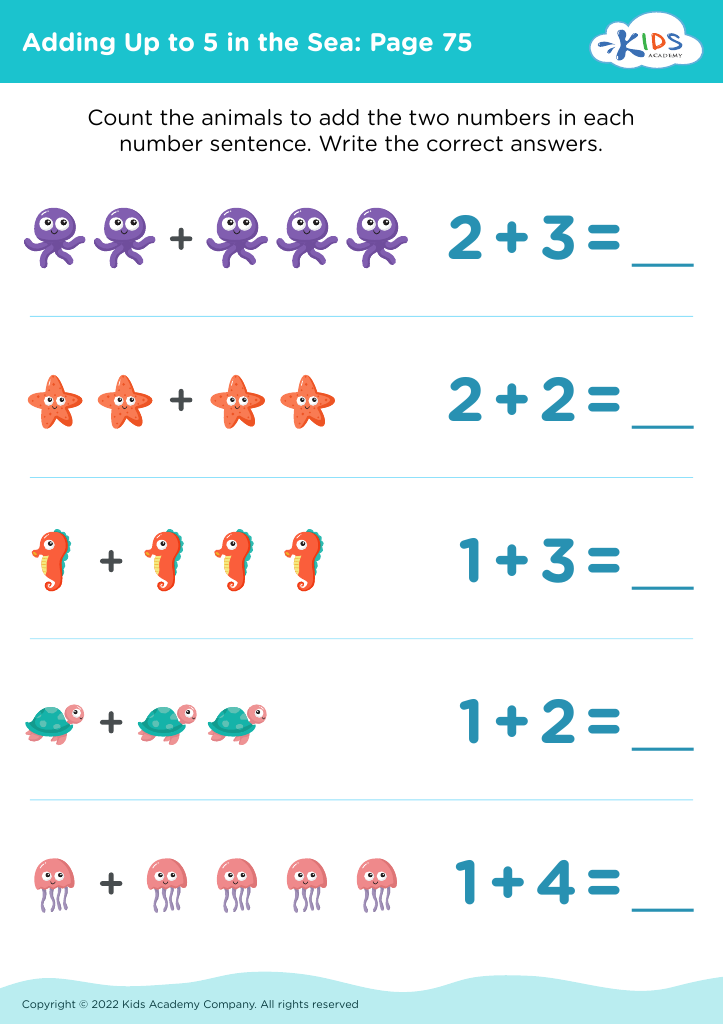
Adding Up to 5 in the Sea: Page 75
Worksheet
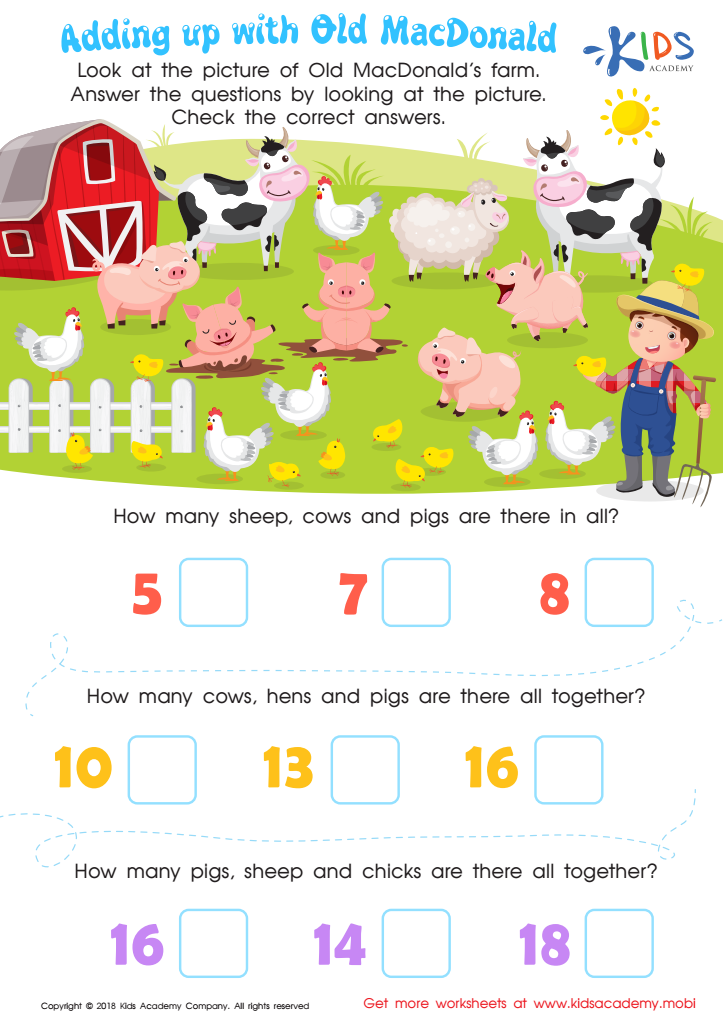
Adding Up with Old MacDonald Worksheet
Adding Up with Old MacDonald Worksheet

Old MacDonald needs help counting his animals! Give your little math whiz a fun challenge with a free PDF worksheet. They'll love counting the animals and doing basic addition with two or three addends. Who knew math could be so much fun on the farm?
Adding Up with Old MacDonald Worksheet
Worksheet
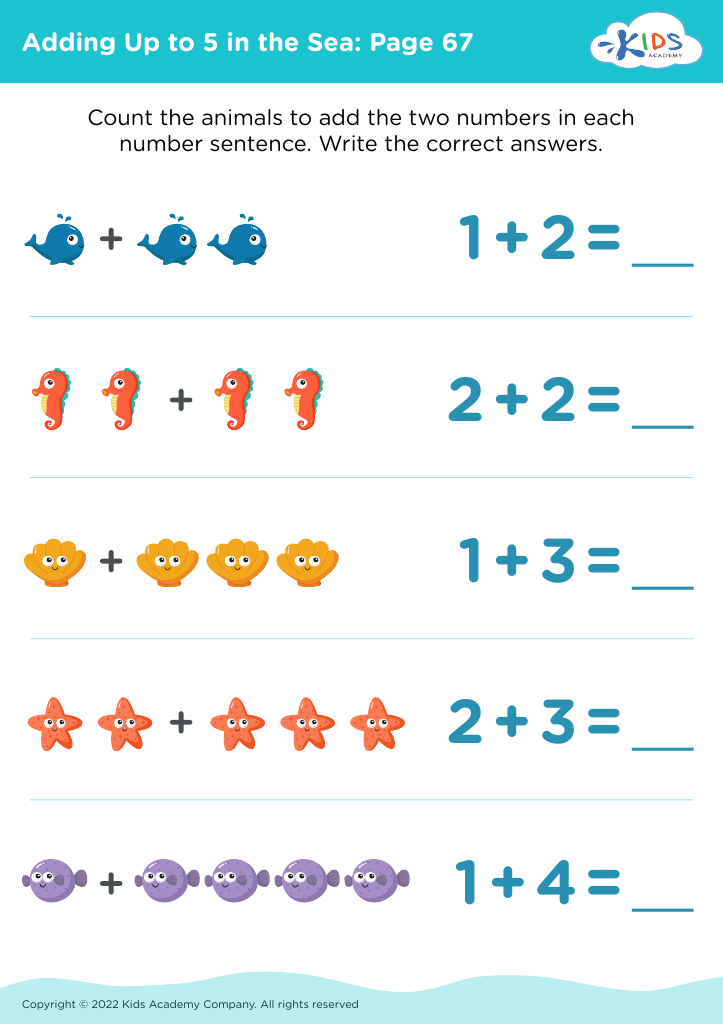
Adding Up to 5 in the Sea: Page 67
Worksheet
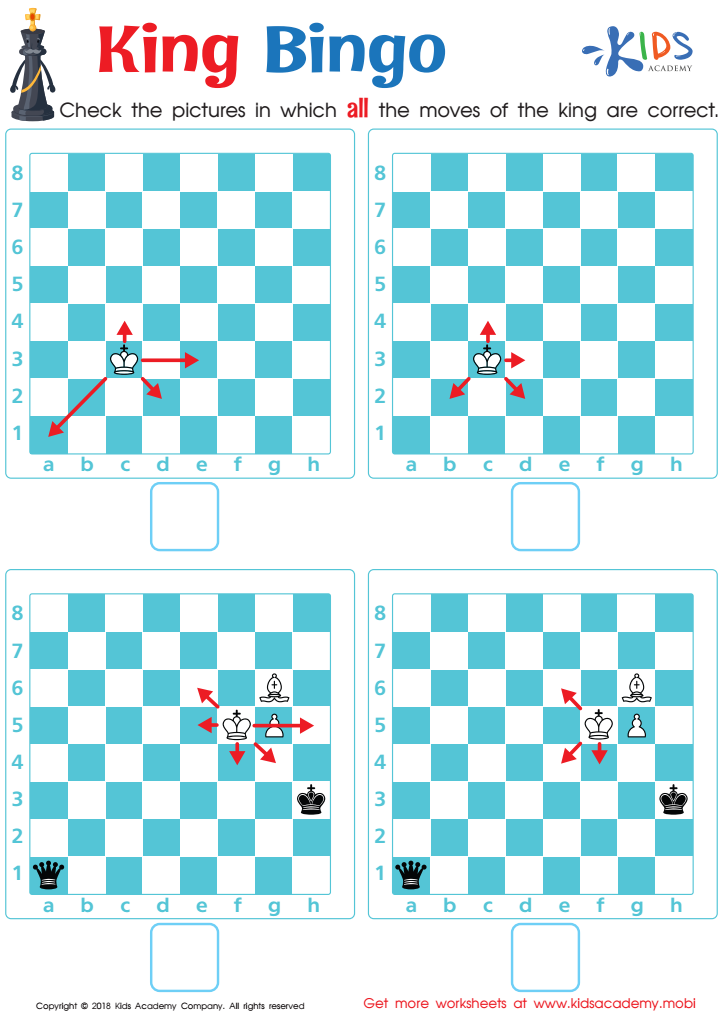
King Bingo Worksheet


King Bingo Worksheet
Test your child's knowledge of King chess piece movements with King Bingo! Look through the worksheet with them, ask if the moves in the pictures are correct, then check those with all correct moves.
King Bingo Worksheet
Worksheet
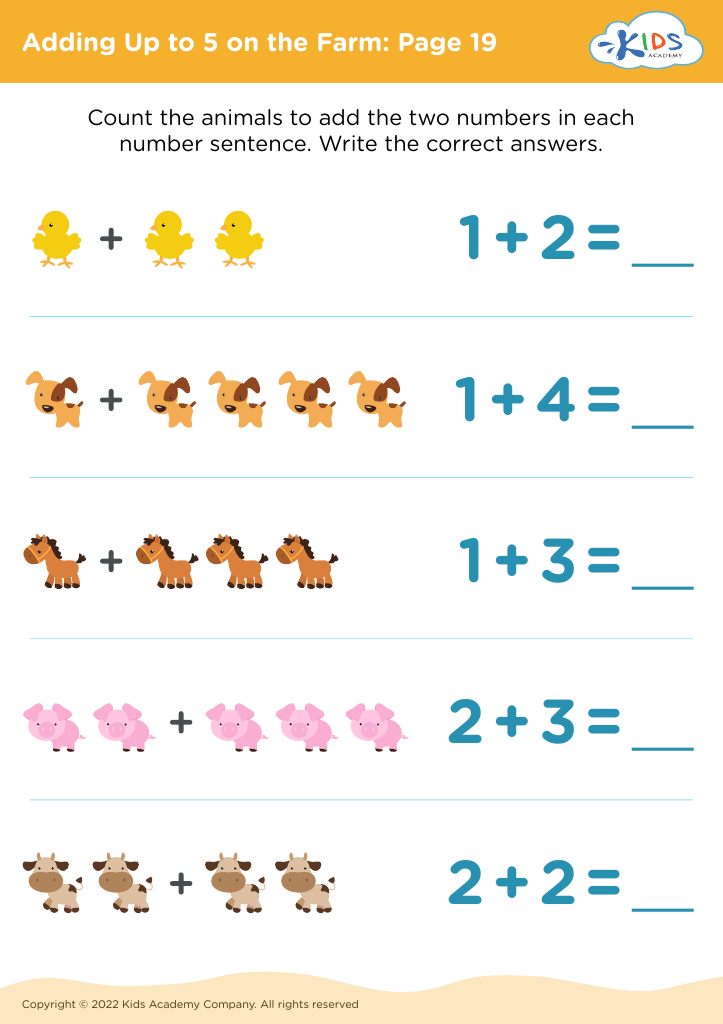
Adding Up to 5 on the Farm: Page 19
Worksheet
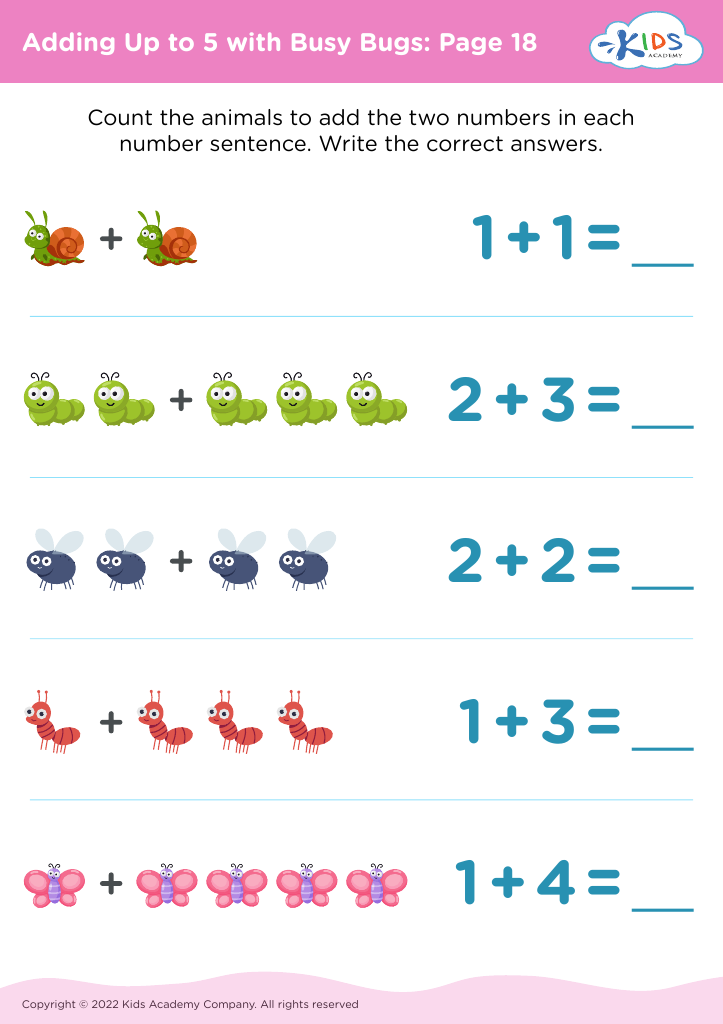
Adding Up to 5 with Busy Bugs: Page 18
Worksheet
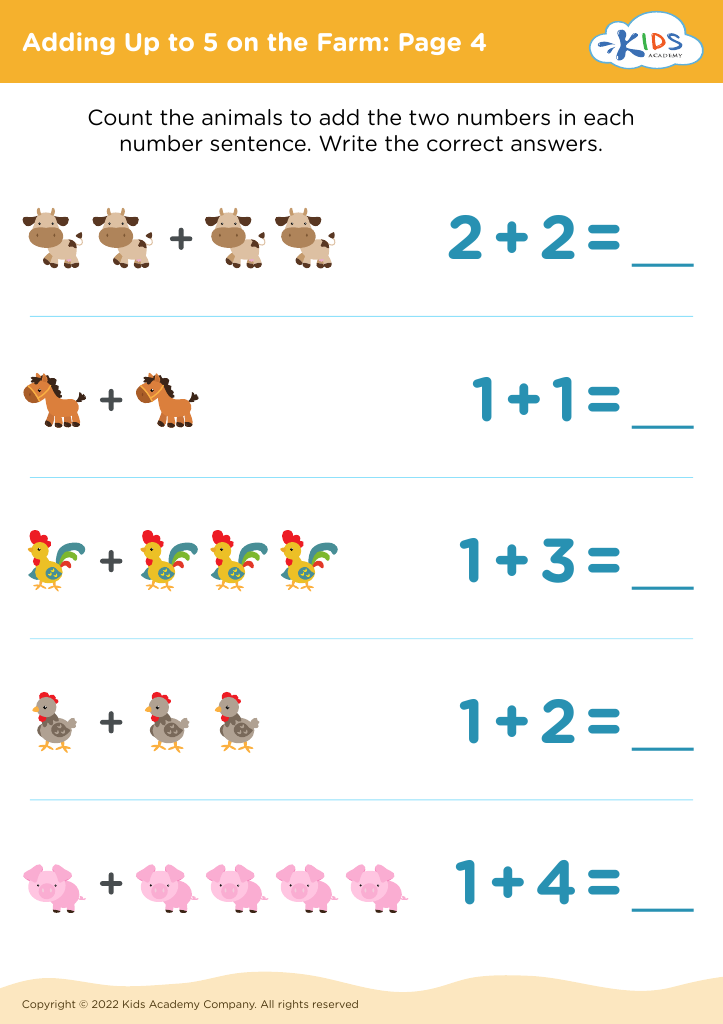
Adding Up to 5 on the Farm: Page 4
Worksheet


Number recognition is a fundamental skill that lays the groundwork for a child's mathematical development. For parents and teachers, fostering this skill in 3-year-olds is crucial for several reasons. First and foremost, early exposure to numbers helps children develop a strong foundation in math, which is essential not only for academic success but also for everyday problem-solving. Recognizing numbers allows children to understand quantities, patterns, and relationships, setting the stage for more complex mathematical concepts later on.

Moreover, number recognition promotes cognitive development. It enhances a child's ability to identify and label objects, reinforcing language skills while boosting memory. Engaging with numbers also encourages critical thinking, as children learn to compare and sequence. This engagement often leads to increased confidence in their abilities, fostering a positive attitude toward learning.

Socially, understanding numbers helps children navigate daily routines, such as recognizing how many snack items are in front of them or understanding wait times. Lastly, parents and teachers play a crucial role in this developmental phase through playful and interactive teaching methods, making learning both effective and enjoyable. By prioritizing number recognition, caregivers can support overall growth, from academic readiness to life skills.