Problem-solving practice Worksheets for 3-Year-Olds
6 filtered results
-
From - To
Introduce your little one to the world of problem-solving with our engaging and educational worksheets designed specifically for 3-year-olds. At Kids Academy, our printable worksheets help develop critical thinking, creativity, and basic troubleshooting skills through fun, age-appropriate activities. Featuring colorful illustrations and simple instructions, these worksheets are perfect for young learners eager to explore logical thinking and build foundational skills. Support your child's early learning journey with our easy-to-use resources, tailored to foster curiosity and confidence in problem-solving. Let’s make learning an exciting adventure for your preschooler! Explore our problem-solving practice worksheets today.
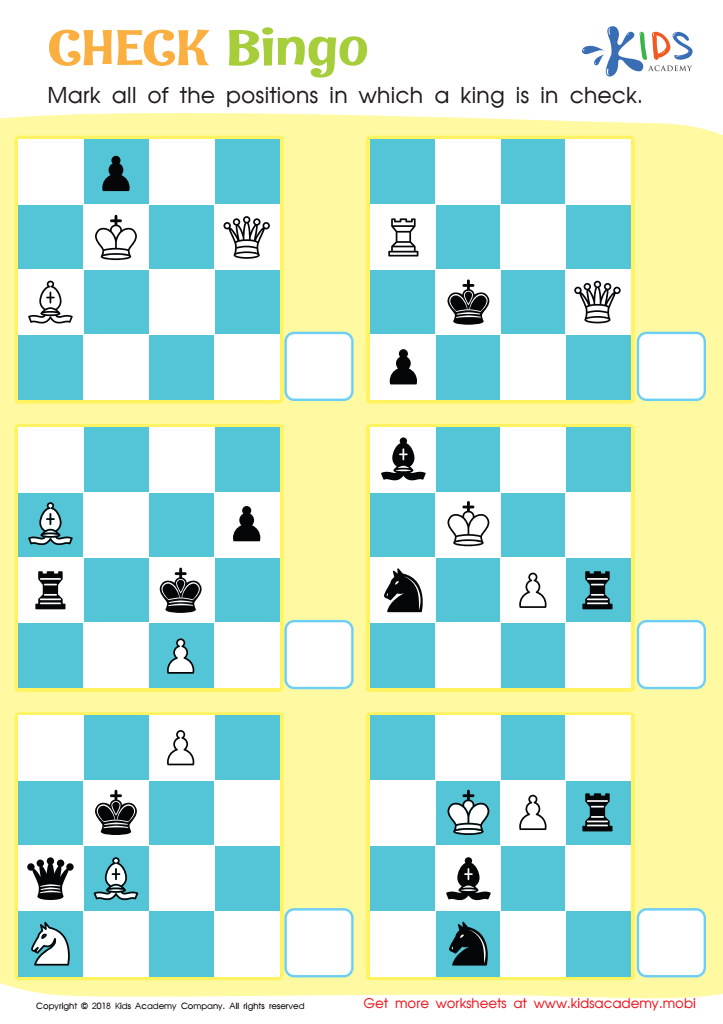
Check Bingo Worksheet
 Assign to My Students
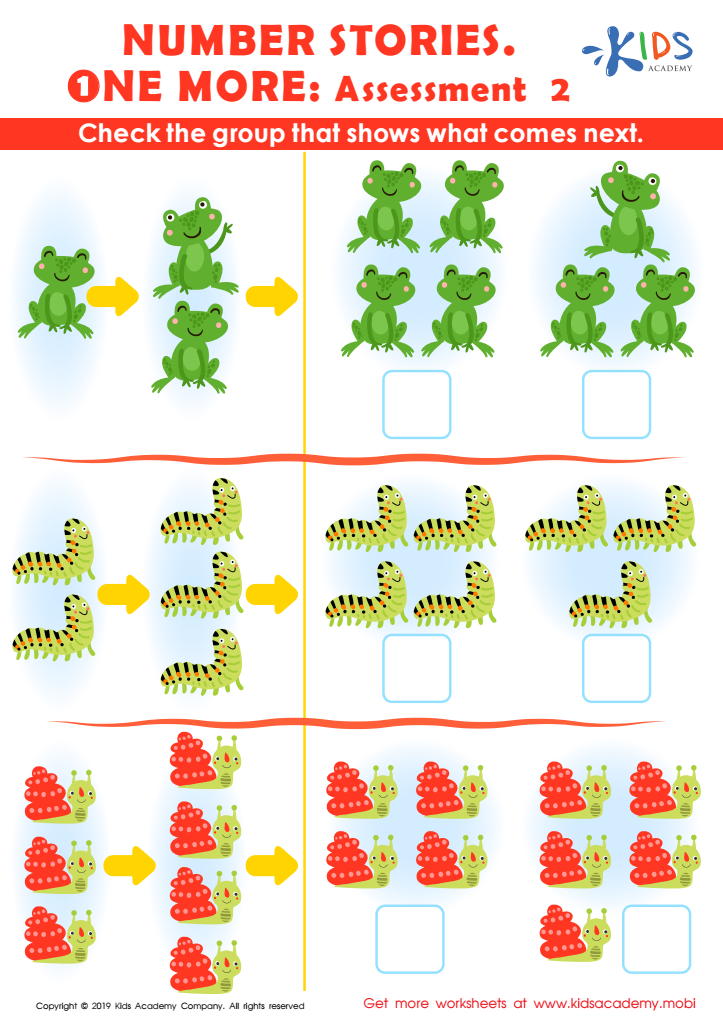
Number Stories One More – Assessment 2 Worksheet
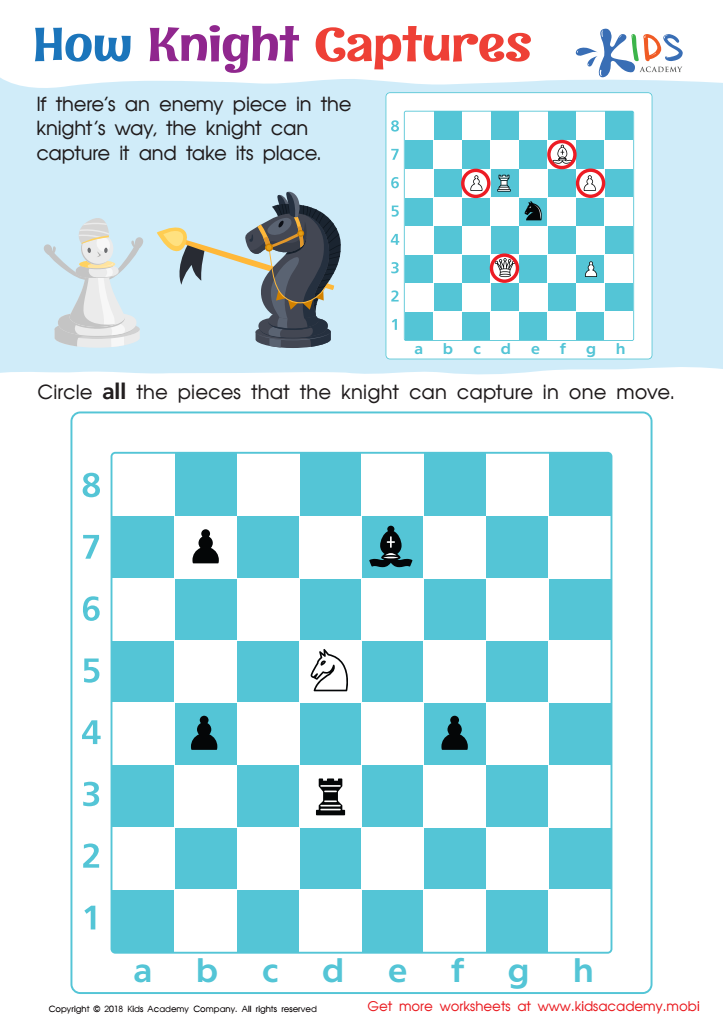
How Knight Captures Worksheet
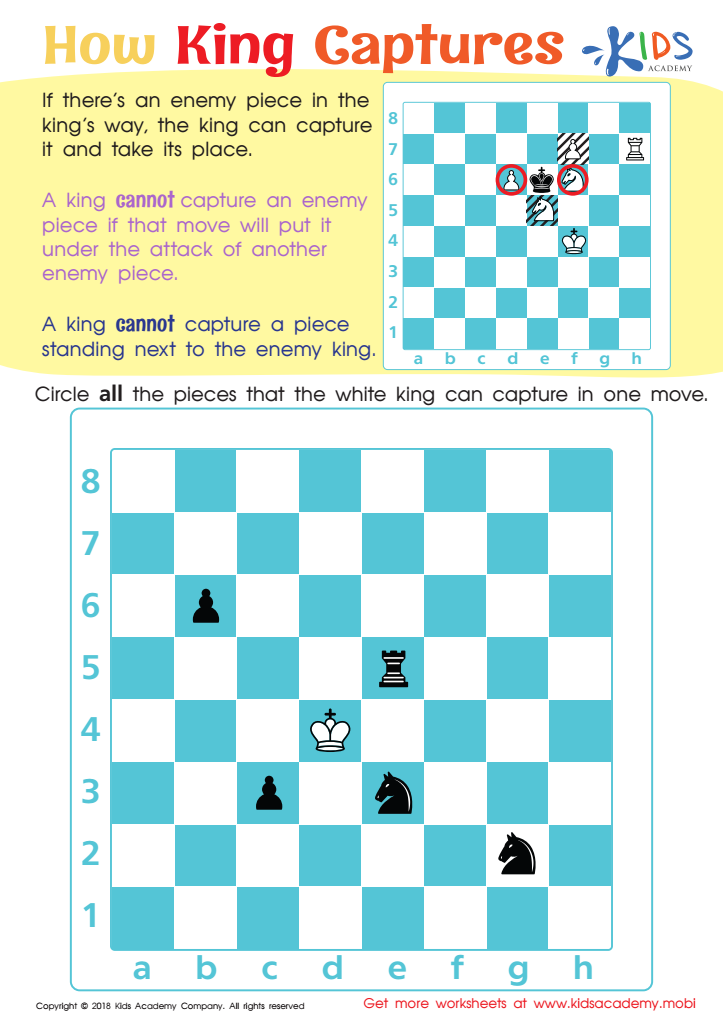
How King Captures Worksheet





.jpg)


Problem-solving practice for 3-year-olds is crucial for fostering cognitive and emotional development, which lays the foundation for their future success. At this tender age, children's brains are highly plastic, meaning they can richly develop neural connections through stimulating activities. Engaging in problem-solving tasks helps enhance critical thinking skills, encouraging children to explore and understand their environment.
When young children are encouraged to solve problems, they learn persistence and patience, developing resilience and a positive attitude toward facing challenges. These tasks also bolster their creativity, as toddlers often need to think outside the box to find solutions. Additionally, problem-solving activities are typically integrated with social learning, teaching kids vital interpersonal skills such as cooperation, communication, and empathy.
Parents and teachers should care because establishing these skills early can lead to better academic performance and social skills later on. Well-rounded, confident children who are accustomed to overcoming obstacles tend to exhibit higher self-esteem and are generally more prepared for the structured learning environment of school.
In summary, problem-solving practice promotes comprehensive developmental advantages for 3-year-olds, including cognitive growth, emotional resilience, and social competence, shaping more capable and well-adjusted individuals.








