
Visual perception Worksheets for 3-Year-Olds
36 filtered results
Difficulty Level
Grade
Age
-
From - To
Subject
Activity
Standards
Discover a collection of engaging visual perception worksheets tailored for 3-year-olds at Kids Academy! These fun and interactive activities are designed to sharpen your child's observation skills, enhancing their ability to identify shapes, colors, and patterns. Engaging worksheets will help young learners improve their visual discrimination, a crucial skill for future learning. With bright illustrations and simple instructions, these worksheets make learning enjoyable, promoting both cognitive development and fine motor skills. Ideal for parents and educators, our resources foster creativity and ensure little ones are ready for the next step in their educational journey. Explore our worksheets today!
Favorites
With answer key
Interactive
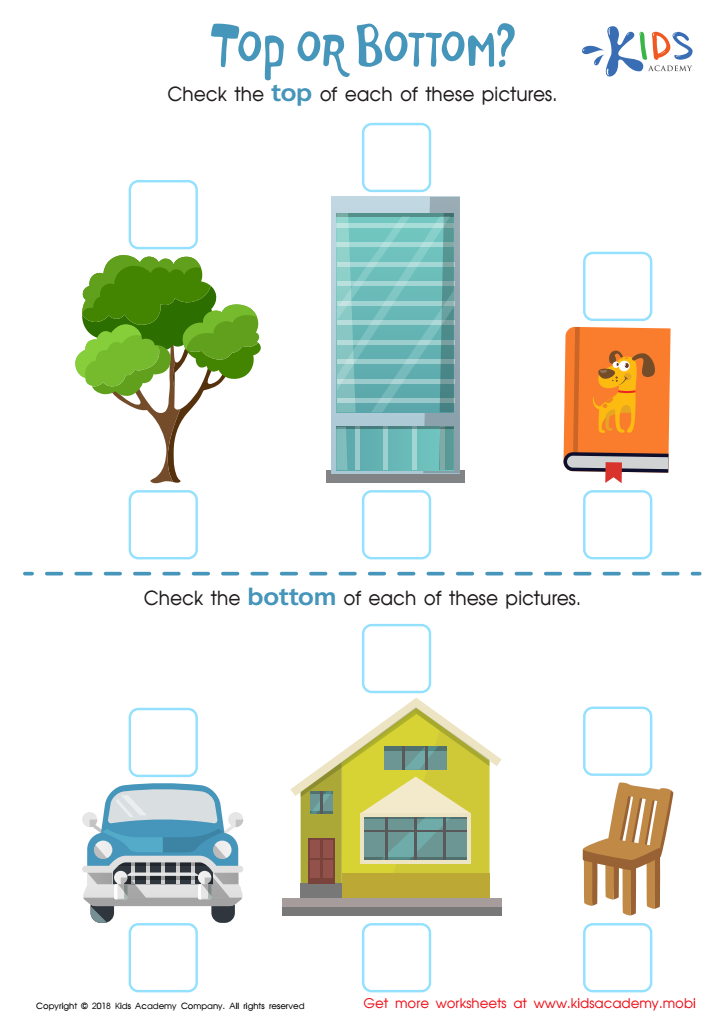
Top or Bottom Worksheet
Help your toddler master orientation and early geometry skills with this free printable worksheet. It tasks children with identifying the top and bottom of familiar images, like cars, to help build their mental map of objects. It may be simple for adults and older kids, but toddlers must learn the words to describe objects and their physical orientation.
Top or Bottom Worksheet
Worksheet
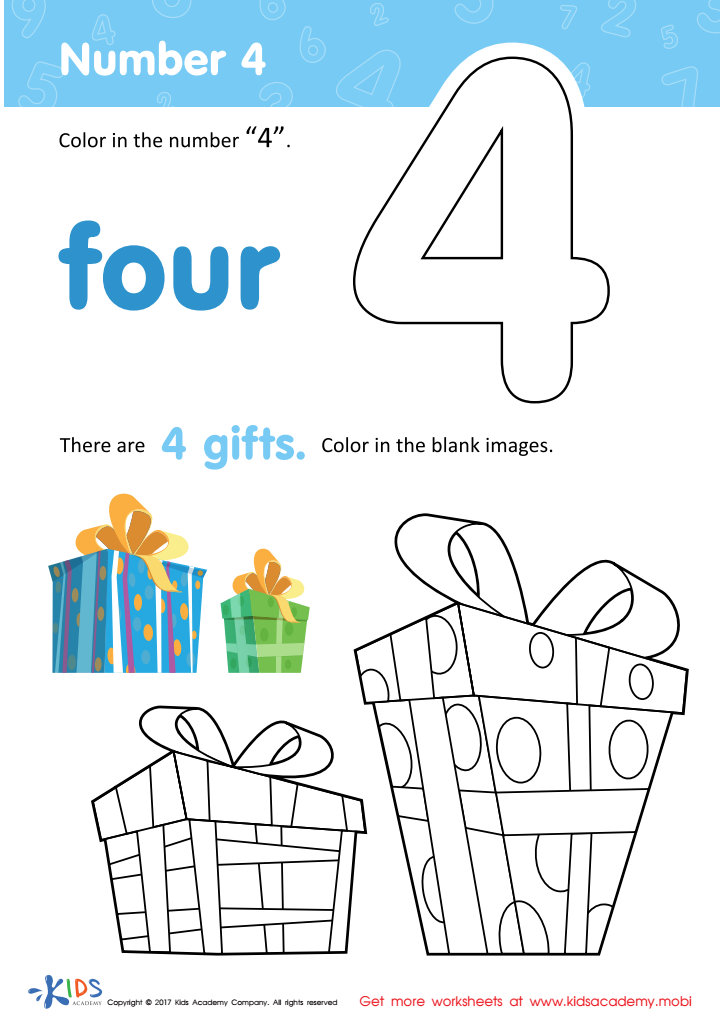
Number 4 Printable
Kids love gifts! Give your child a learning opportunity with this number 4 coloring page. As they design their own wrapping paper, they'll learn to read and recognize the number four. An exciting way to have fun and learn at the same time!
Download (PDF)
 Assign to My Students
Assign to My Students
Number 4 Printable
Worksheet
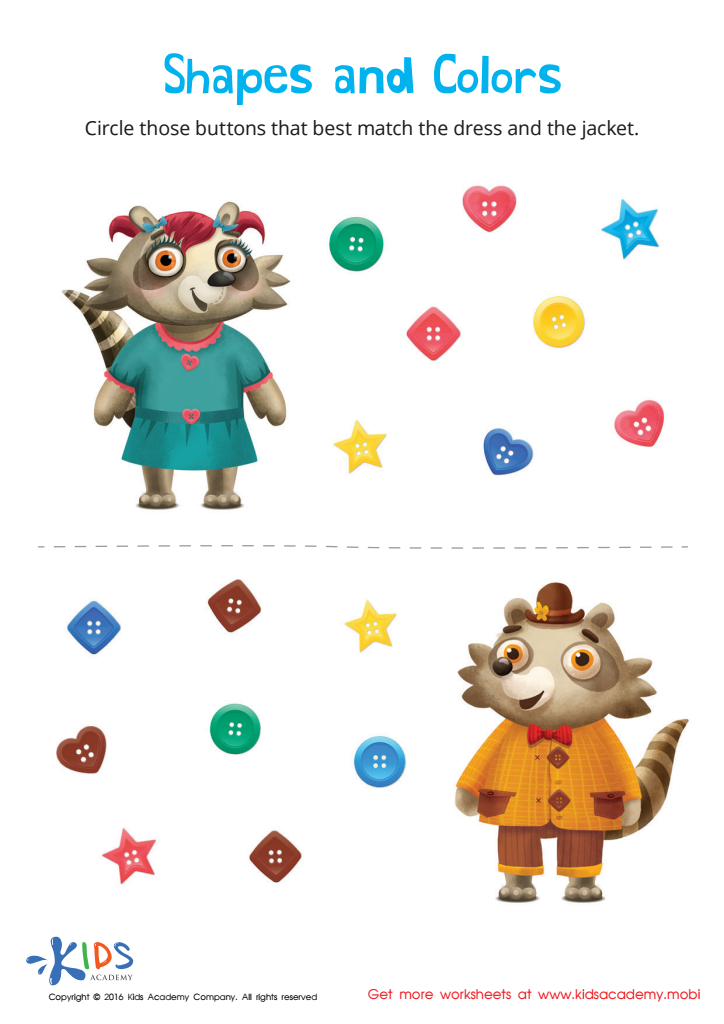
Matching: Shapes and Colors Worksheet
Help Mr. and Mrs. Raccoon find the right buttons to match their shirts! Kids will identify shapes and colors and learn to match them correctly.
Matching: Shapes and Colors Worksheet
Worksheet
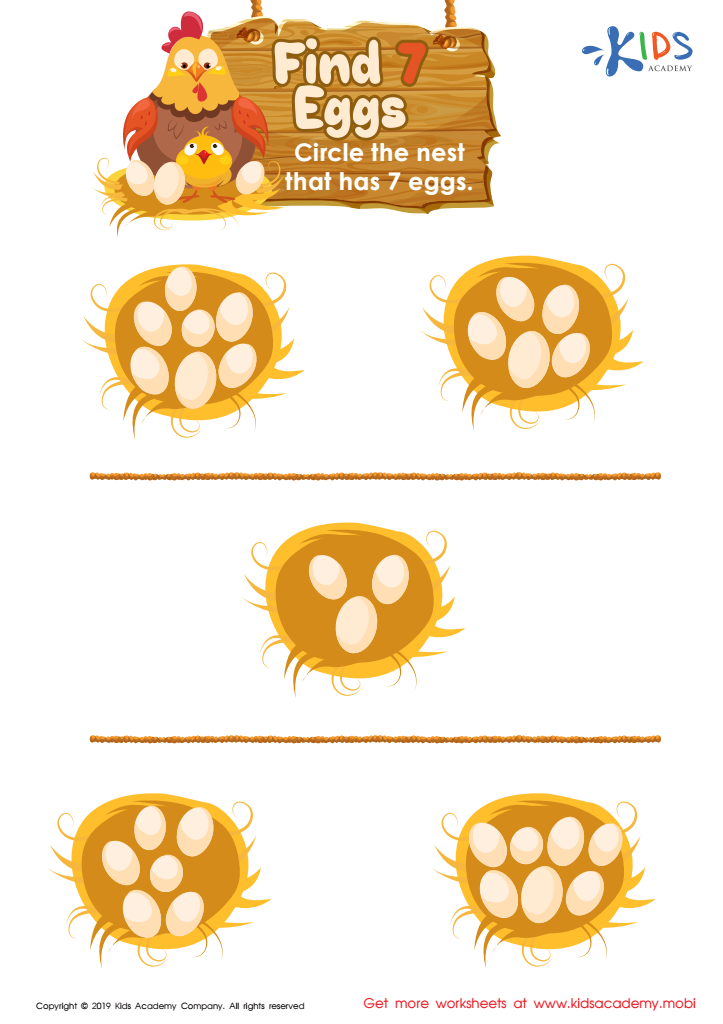
Find 7 Eggs Worksheet
Mama chicken needs help counting her eggs! Have your child use one-to-one number representation to count and circle the nests that have seven eggs with this free and fun worksheet. Picture representation is a great way to start building math skills. Download this PDF and make math time fast and enjoyable!
Find 7 Eggs Worksheet
Worksheet
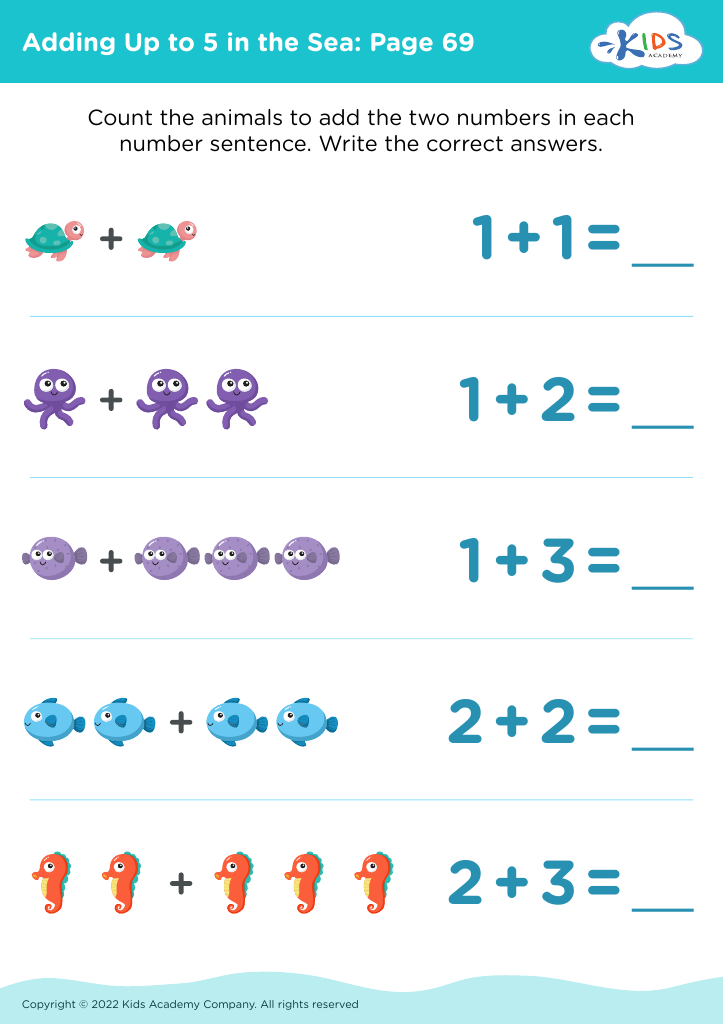
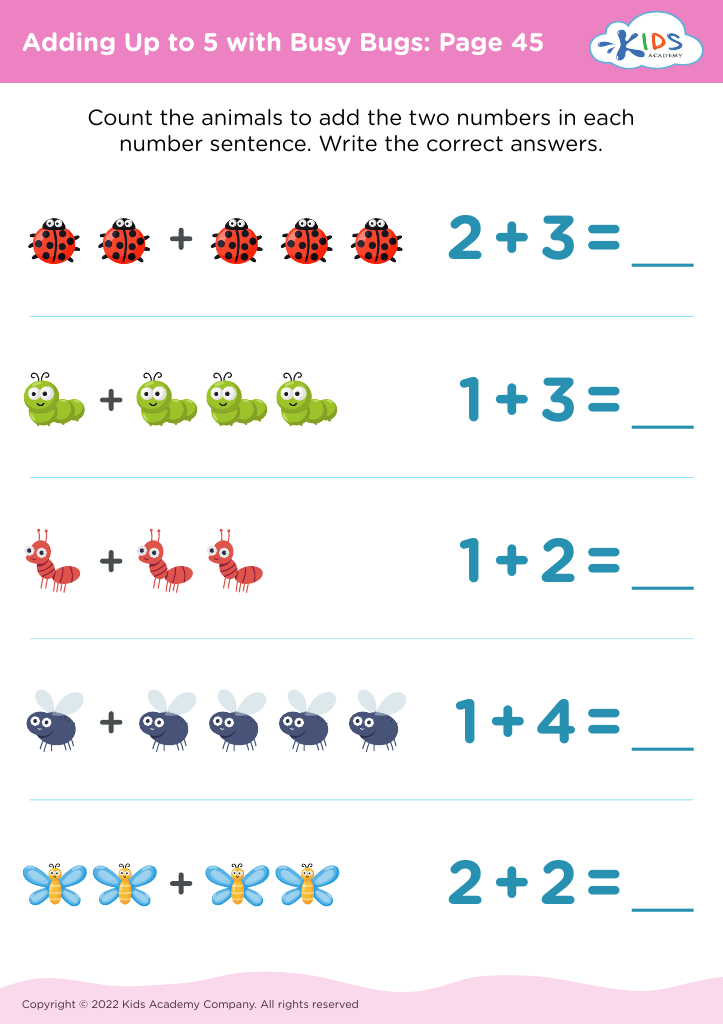
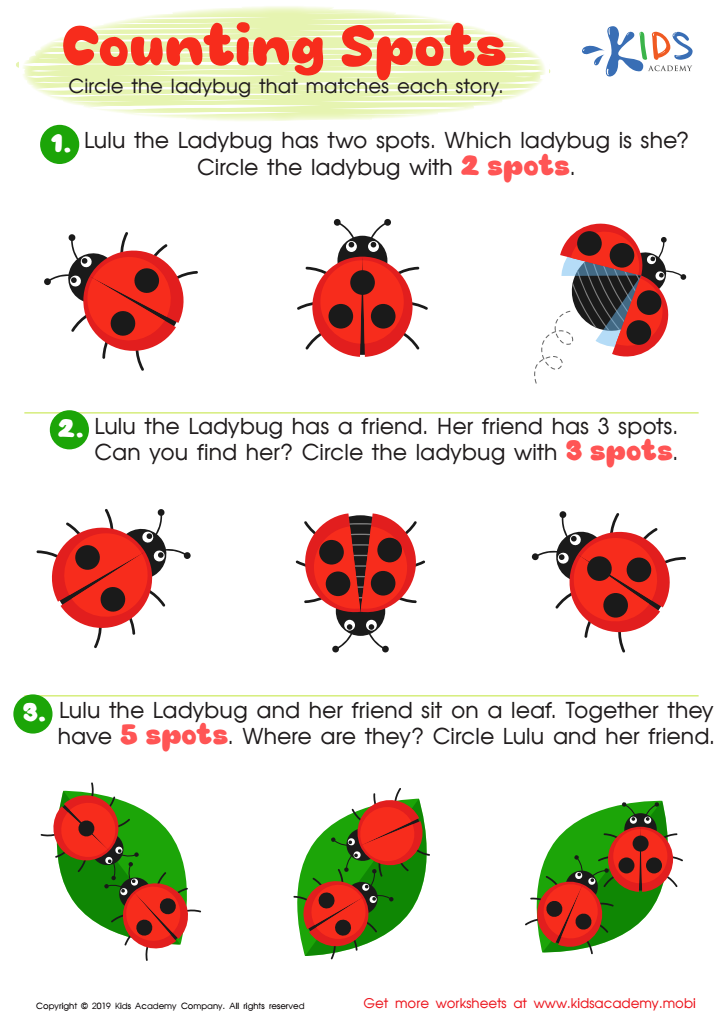
Counting Spots Worksheet
This worksheet is full of cute, colorful ladybugs. Help your kids identify Lulu, who has two spots on her body. Count the spots on each ladybug and circle the one with two spots. Then read the instructions on the other sections and help them find the ladybugs there, too!
Counting Spots Worksheet
Worksheet
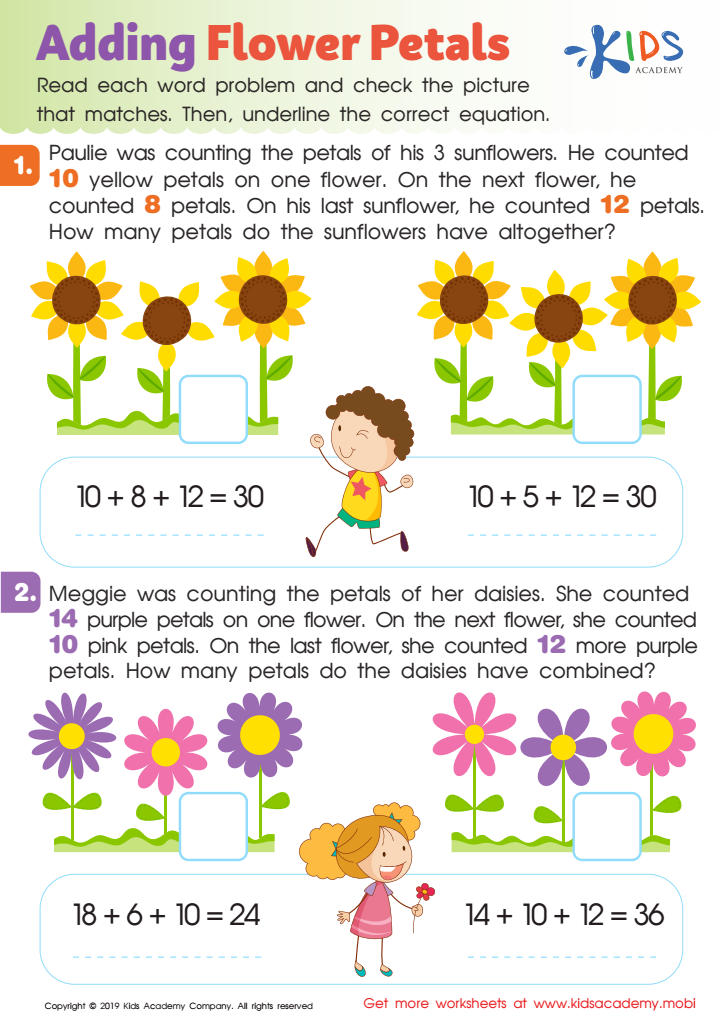
Adding Flower Petals Worksheet
This free worksheet helps little mathematicians learn to understand word problems. They'll read each one and match it to the corresponding picture. Important info is highlighted, teaching kids to look for key info when solving problems. Then they'll underline the correct number equation that matches the picture. A great way to practice problem-solving skills!
Adding Flower Petals Worksheet
Worksheet
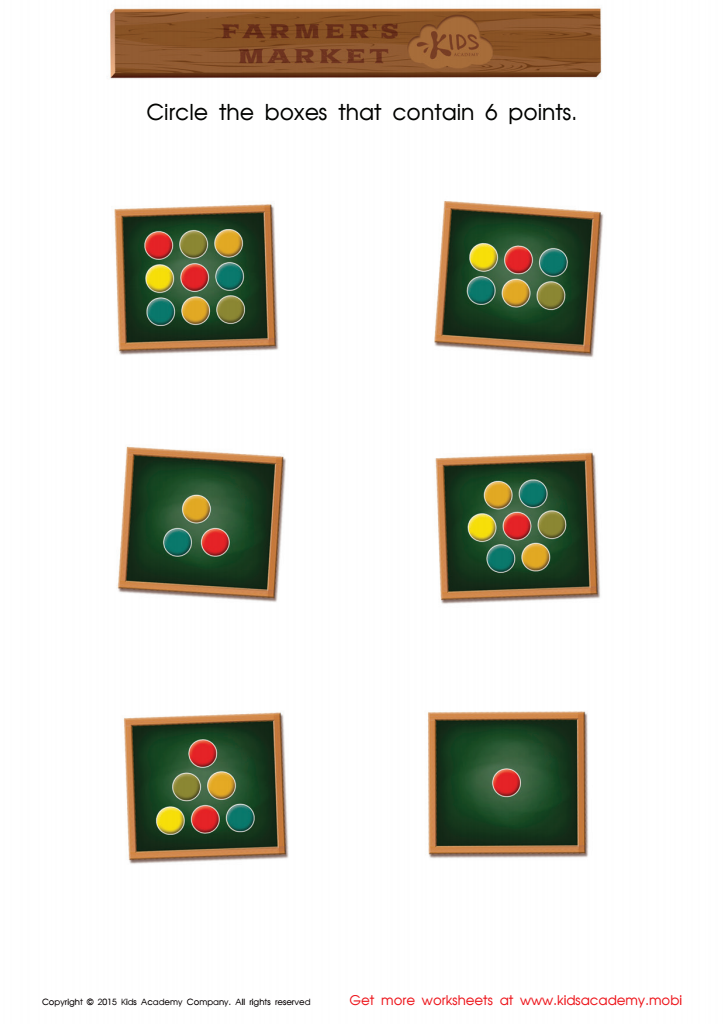
Count and Match Points 6 Math Worksheet
Help your child with mathematics by guiding them with this fun printable worksheet. They will practice counting numbers by looking at all the boxes and circling the ones containing 6 dots. Together you will gain a better understanding of mathematics.
Count and Match Points 6 Math Worksheet
Worksheet
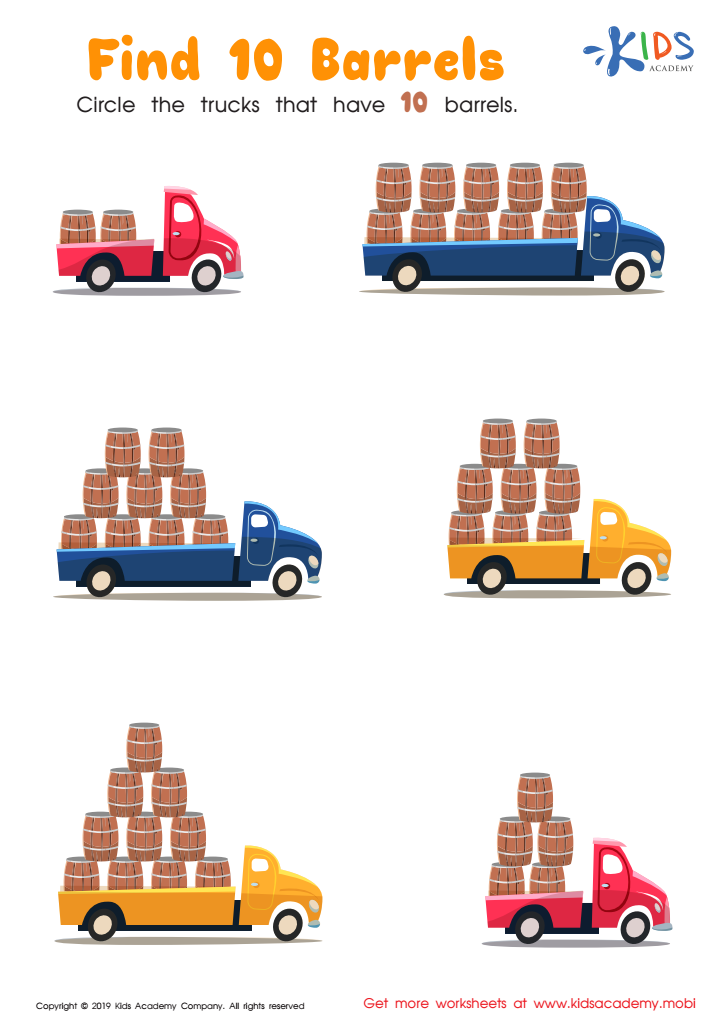
Find 10 Barrels Worksheet
Help your kids learn to count with 1, 2 and 3, then progress to tens and hundreds. Supplied with educational materials and colorful worksheets, they'll be counting as high as they can. Together, count the barrels on the trucks in the printout and encourage them to circle the ones with 10 barrels.
Find 10 Barrels Worksheet
Worksheet
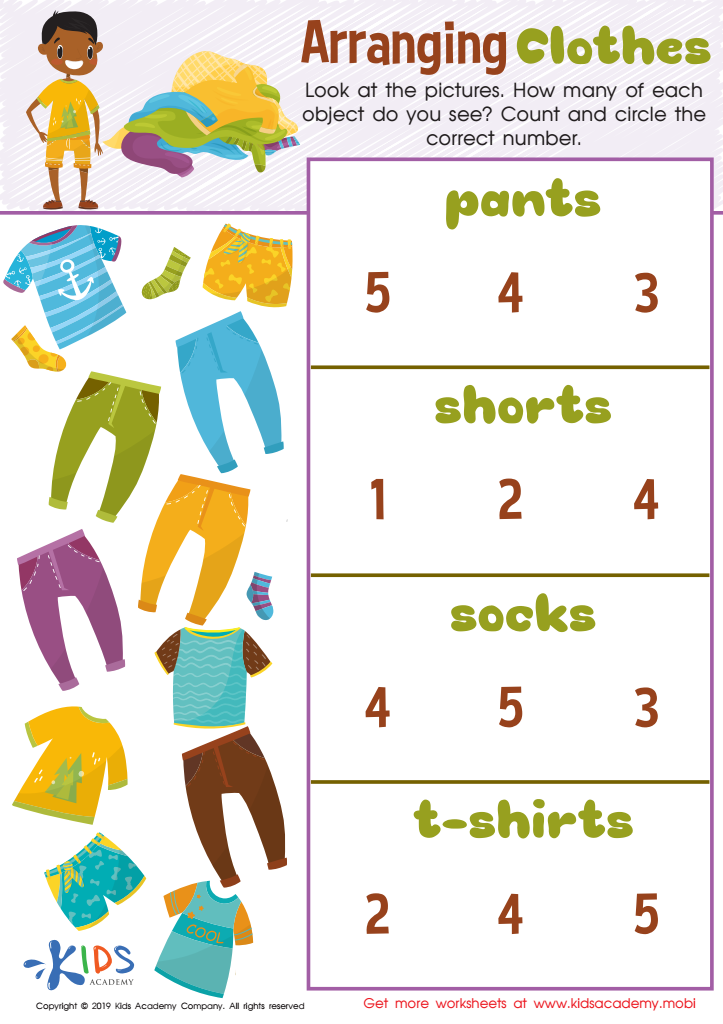
Arranging Clothes Worksheet
This worksheet uses familiar items, brightly colored to attract your kids. Ask them to name each item, then count them and circle the right number.
Arranging Clothes Worksheet
Worksheet
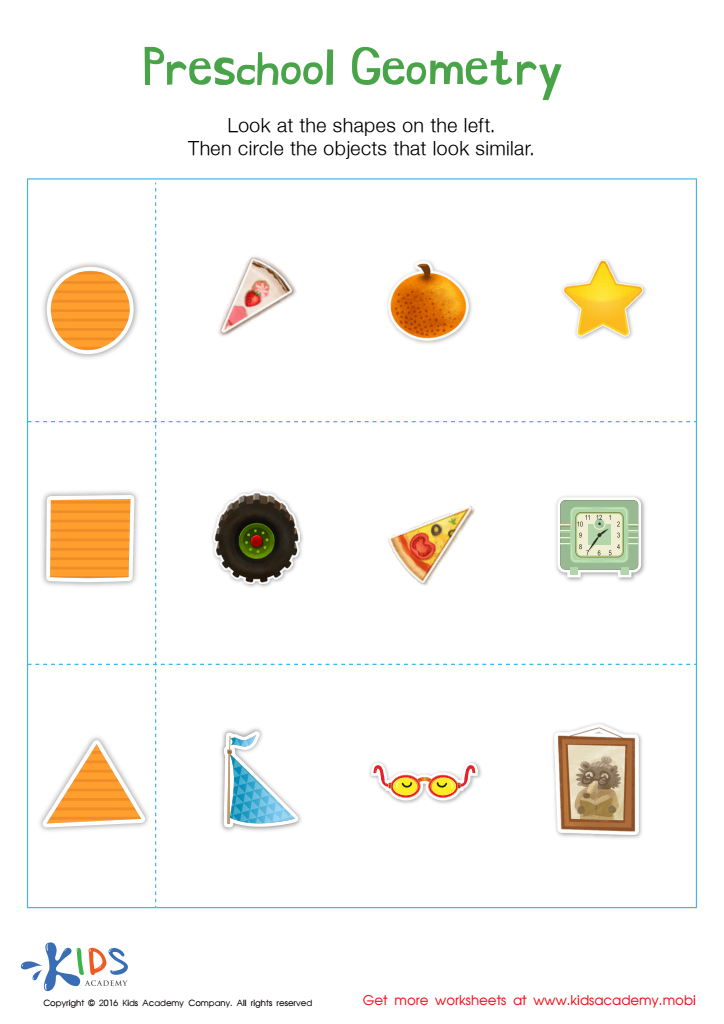
Preschool Geometry Match Up Worksheet
Teach your preschooler geometry using everyday objects. This printable worksheet helps them recognize, match, and follow directions like left and right. Start a conversation to extend their learning and they'll see how shapes appear in the world around them.
Preschool Geometry Match Up Worksheet
Worksheet
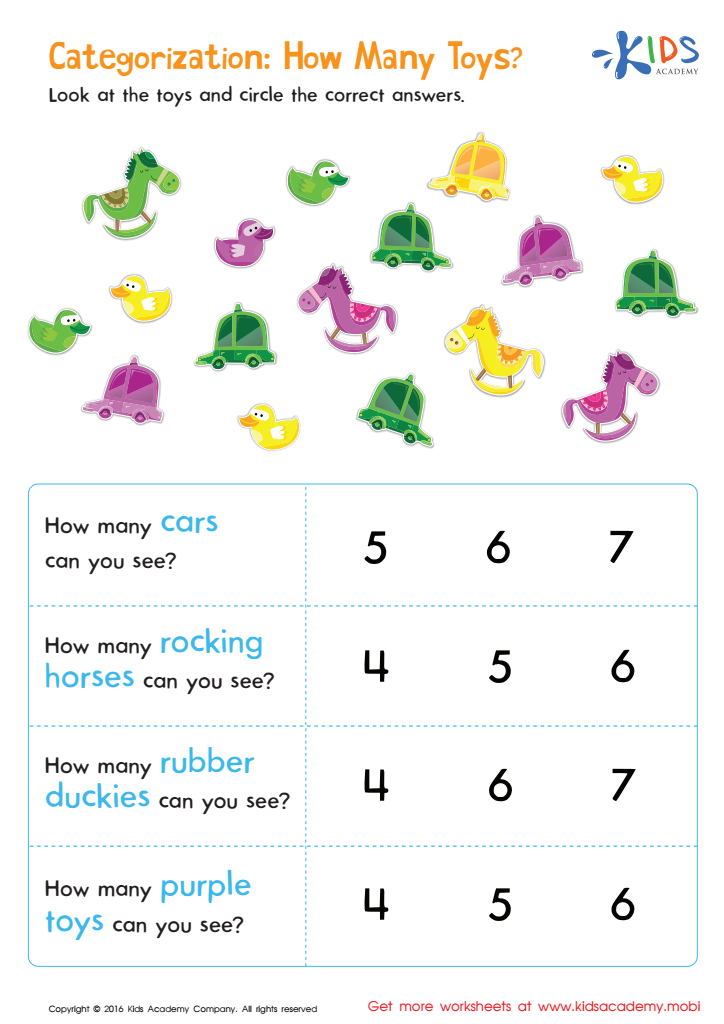
Classifying Toys by Type and Color Sorting Worksheet
Kids Academy offers free math worksheets to help practice counting, categorization & recognition skills. Kids will enjoy counting by color & type while strengthening problem-solving & literacy skills.
Classifying Toys by Type and Color Sorting Worksheet
Worksheet
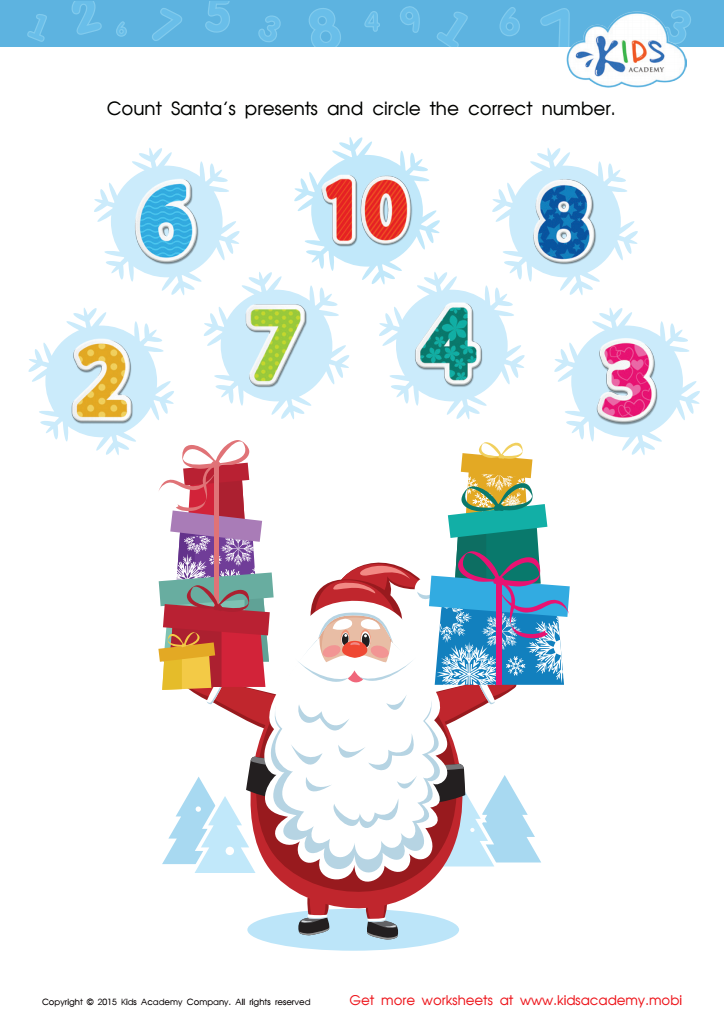
Count Santa's Presents Worksheet
With Kids Academy's free Christmas math worksheet, your kindergartener can help Santa count presents. The worksheet encourages recognizing and counting numbers, fostering the Christmas spirit. Print it out, have fun, and get ready to circle the right number! Get more math printables to learn numbers in a fun way.
Count Santa's Presents Worksheet
Worksheet
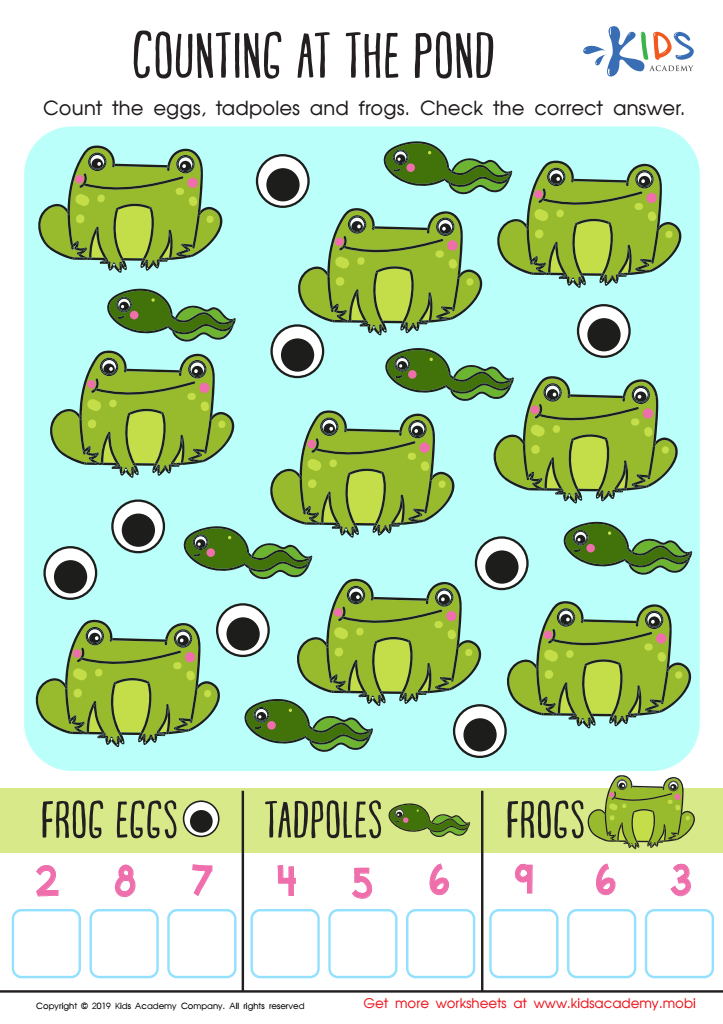
Counting at the Pond Worksheet
Ask your kids what they see in the picture. Can they identify the animal? Where does it live, what does it eat and what sound does it make? These questions will help get them in the math mood. Help them count the eggs, tadpoles and frogs, then check the answer.
Counting at the Pond Worksheet
Worksheet
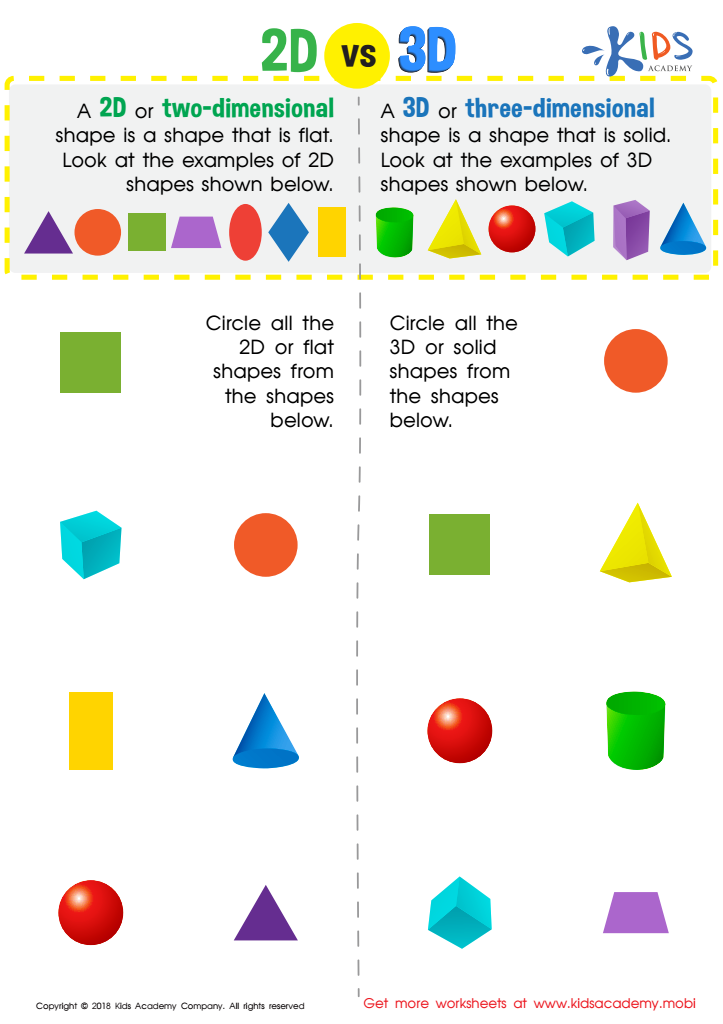
2D vs 3D Shapes Worksheet
Help your child understand 3D shapes using this engaging worksheet! Read the descriptions at the top and search for 2D and 3D shapes. An ideal activity for toddlers learning shapes. A fun way to understand the tricky concept of 3D shapes!
2D vs 3D Shapes Worksheet
Worksheet
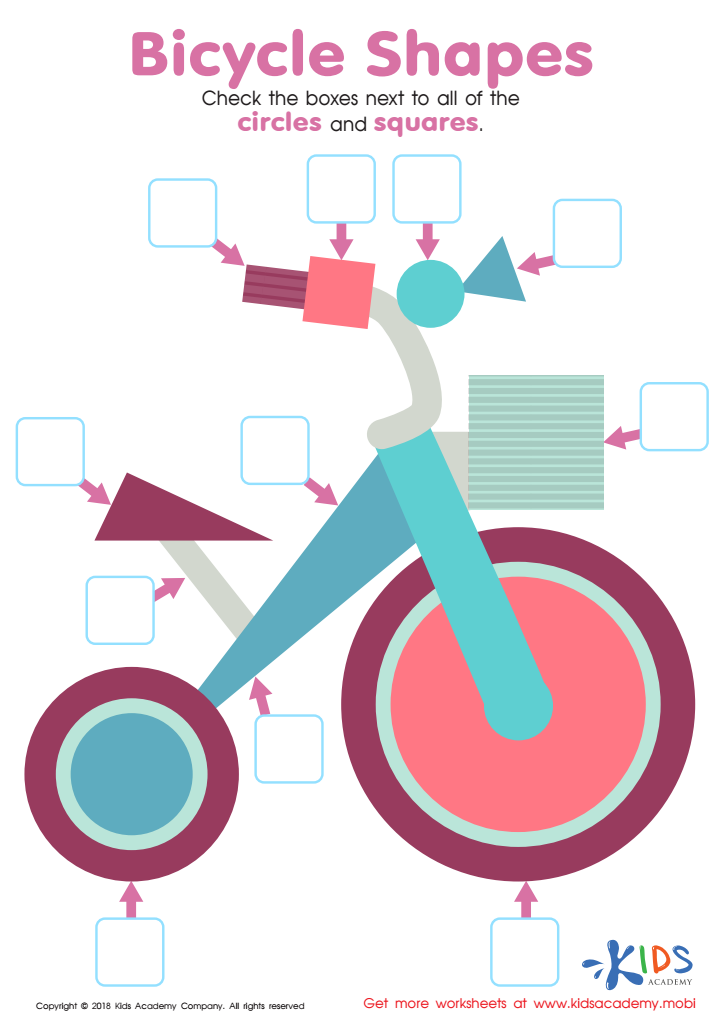
Bicycle Shapes Worksheet
This fun geometry worksheet for preschoolers asks the child to spot hidden shapes (circles, squares) in a colorful bicycle. Each shape varies in size and the child checks the box when it's found. It's a visual way to teach shapes.
Bicycle Shapes Worksheet
Worksheet
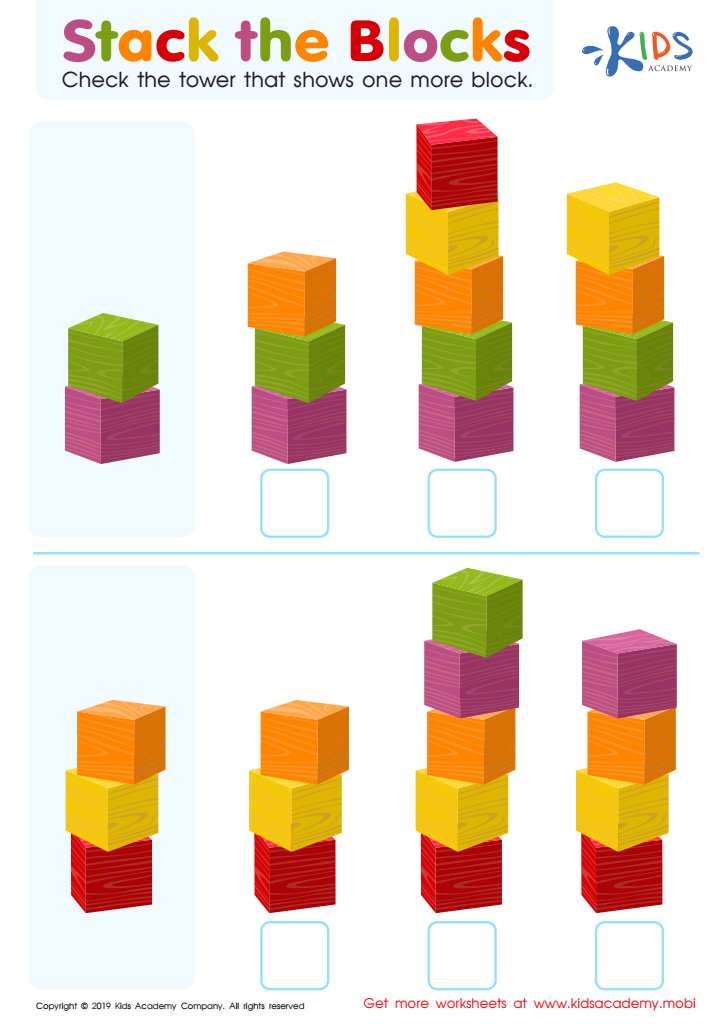
Stack the Blocks Worksheet
Playing with blocks is a great way for kids to learn! They can create patterns, shapes, and even count. In this worksheet, ask them to identify the colors and count each stack of blocks. If they can spot one extra block in the tower, even better! Encourage learning through play with these fun blocks.
Stack the Blocks Worksheet
Worksheet
Join Kids Academy for Free
Who is primarily going to use this learning content?








Visual perception is essential for a child's developmental framework, particularly for 3-year-olds as they embark on their educational journey. At this age, children are developing crucial cognitive and motor skills, and strong visual perception supports these processes. It involves the ability to interpret visual stimuli, including shapes, colors, and spatial relationships, which are foundational for learning to read, write, and engage with the world around them.
For parents and teachers, nurturing visual perception can lead to enhanced academic performance and a greater understanding of complex concepts later on. Activities that promote visual discrimination, such as matching games or puzzles, can support a child’s ability to differentiate letters and numbers, laying the groundwork for literacy and numeracy skills.
Additionally, strong visual perception helps improve coordination and fine motor skills, aiding in everyday tasks like drawing and cutting. As social skills develop through play and collaboration, understanding visual cues becomes vital for effective communication and emotional intelligence.
Ultimately, prioritizing visual perception in early education helps children build confidence, foster creativity, and lay the groundwork for a lifelong love of learning. By recognizing its importance, parents and teachers can ensure that children have the abilities necessary to thrive in their educational and social environments.








