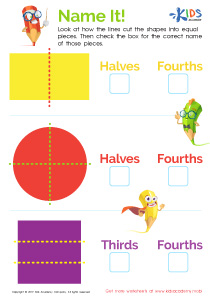
Cognitive Development 2D Shapes Worksheets for 3-Year-Olds
6 filtered results
-
From - To
Unlock your child's potential with our Cognitive Development 2D Shapes Worksheets designed for 3-year-olds. These engaging and colorful activities promote cognitive growth by introducing young learners to basic geometric shapes. The worksheets are tailored to develop their shape recognition, improve fine motor skills, and enhance problem-solving abilities through fun tracing, matching, and sorting games. Crafted by early education experts, our printable materials provide an excellent foundation for preschool math skills in an enjoyable and interactive way. Foster a love for learning and build essential cognitive skills with our expertly curated 2D shapes worksheets.
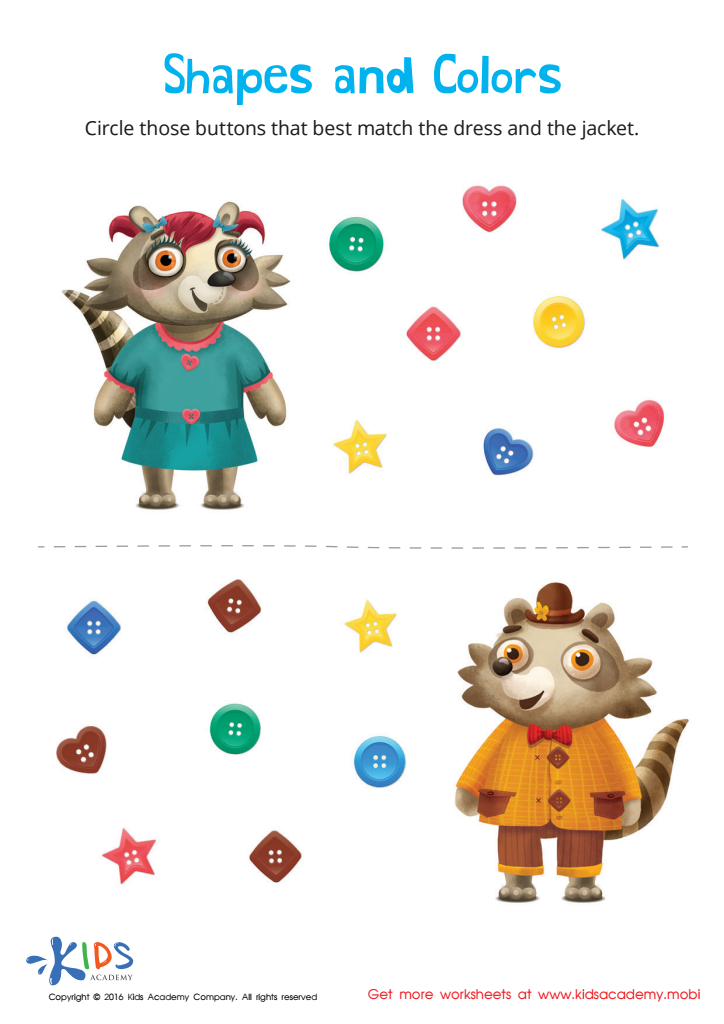
Matching: Shapes and Colors Worksheet
 Assign to My Students


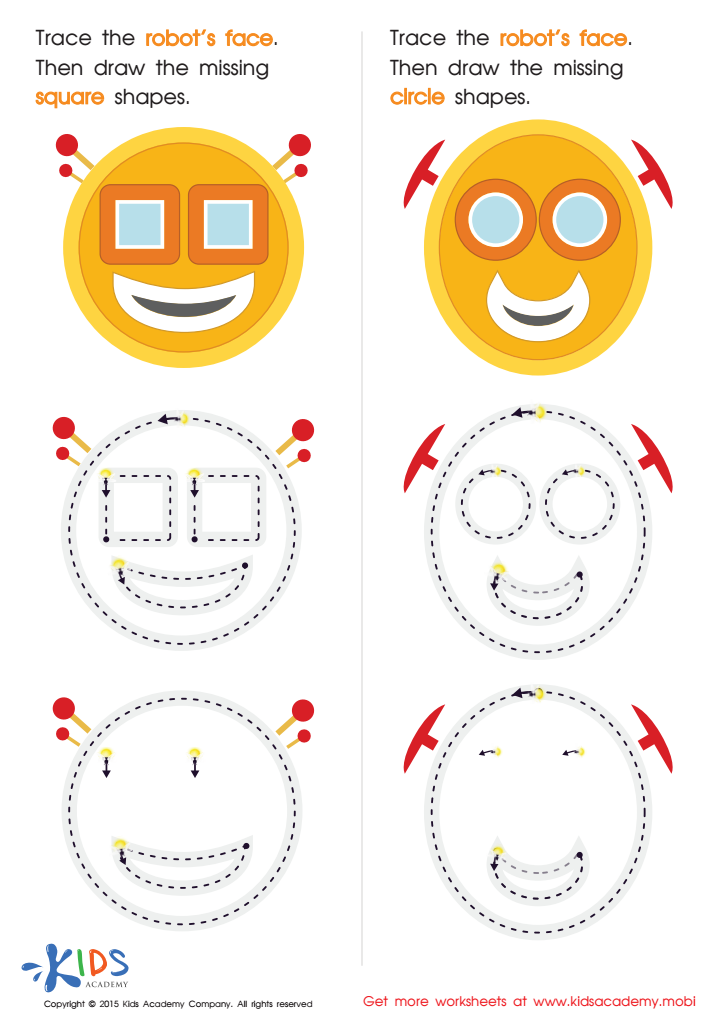
Practicing to Draw Circles And Squares Printable
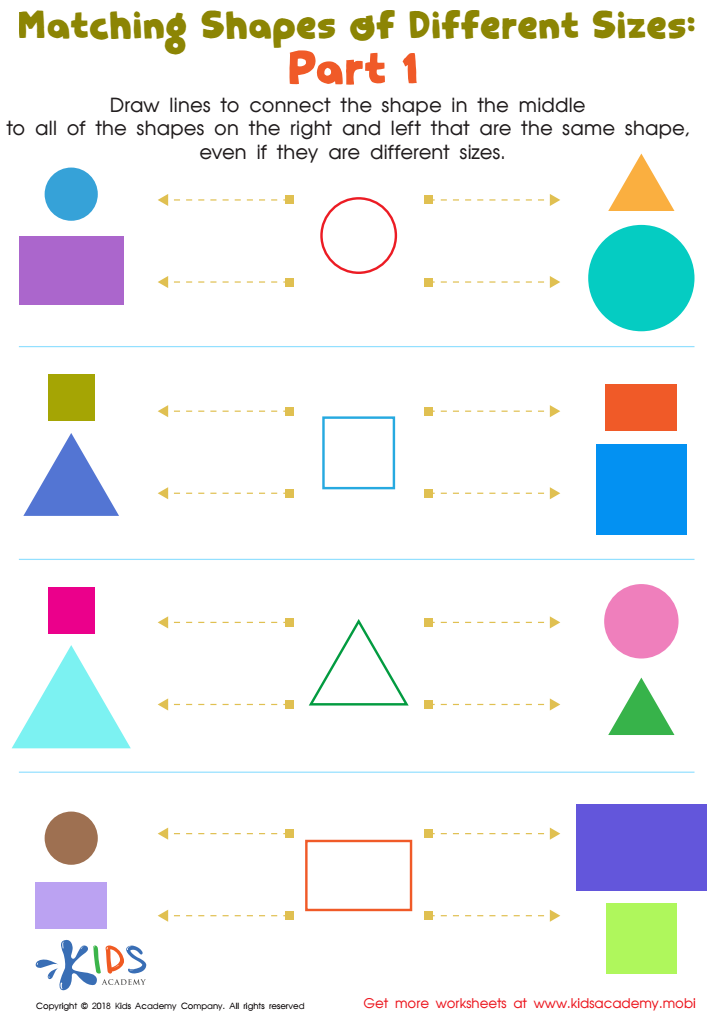
Geometry: part 1 Worksheet
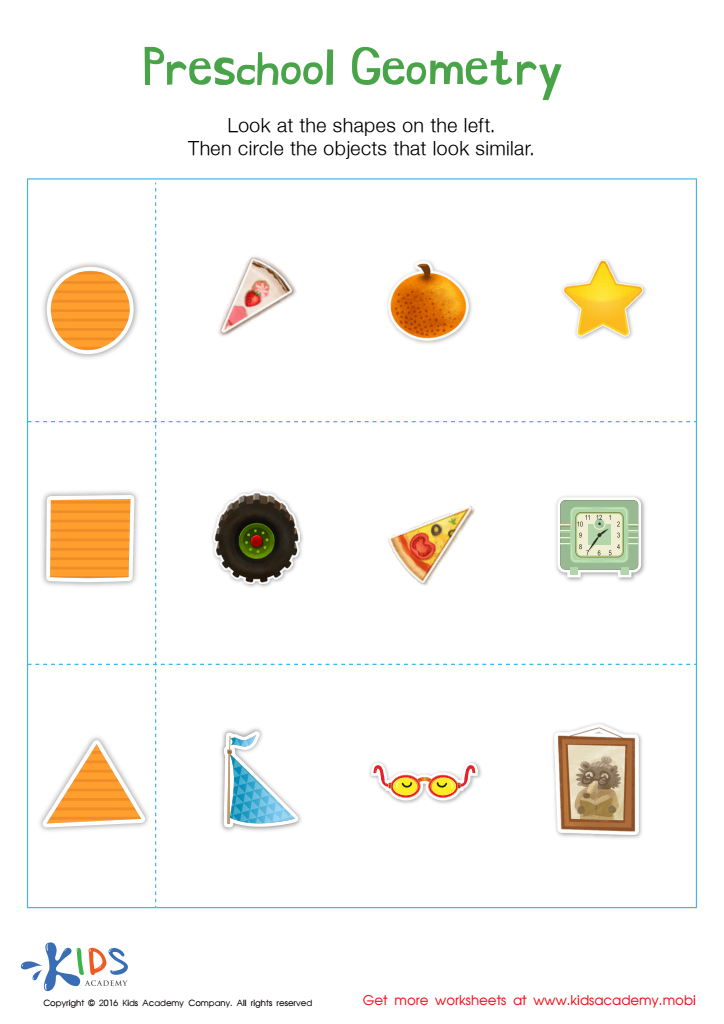
Preschool Geometry Match Up Worksheet
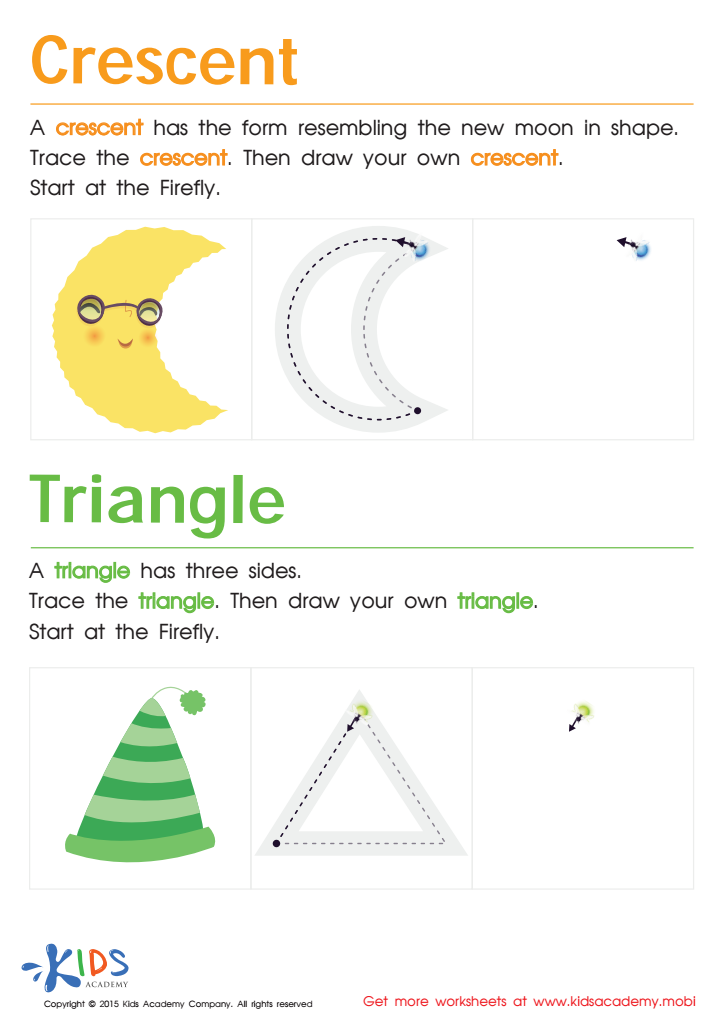
Learning to Draw Crescents And Triangles Worksheet
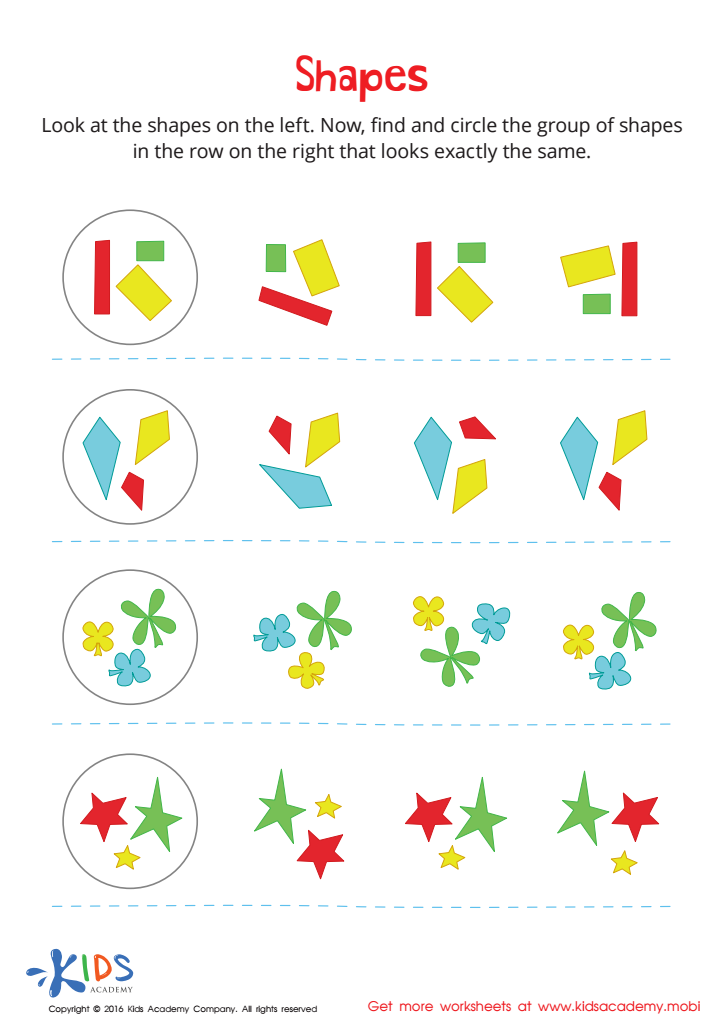
Shapes Worksheet








Cognitive development in 3-year-olds is crucial as it lays the foundation for learning and problem-solving skills. Understanding 2D shapes plays a significant role in this process. Firstly, learning to recognize and differentiate between shapes like circles, squares, and triangles enhances a child's visual-spatial awareness, a vital skill for reading and writing. This early exposure helps children understand that shapes compose objects in their environment, fostering observational and analytical thinking.
Secondly, identifying 2D shapes aids in developing mathematical vocabulary and concepts. Terms like "sides," "corners," and "round" introduce children to basic geometry, setting the stage for more advanced math skills. This knowledge not only aids in academics but nurtures logical reasoning and categorization skills essential for everyday problem-solving.
Moreover, shape recognition enhances motor skills and coordination. As children trace, draw, or match shapes, they improve their hand-eye coordination and fine motor skills, which are critical for tasks such as writing. Engaging with shapes through play and exploration also fosters creativity and imagination.
For parents and teachers, focusing on cognitive development through 2D shapes means supporting a child's holistic growth, ensuring they're well-equipped with the skills necessary for future learning and practical life. Investing in this aspect of early education promises long-term benefits across academic and developmental domains.