Filters

50 filtered results

Clear all filters
Favorites
With answer key
Interactive

50 filtered results

Difficulty Level

Grade


Check out this FREE Trial Lesson on Adding Up to 5 for age 3!

Sorting Objects into 3 Categories

Favorites
With answer key
Interactive
  • 3
  • Addition Practice
  • Adding Up to 5
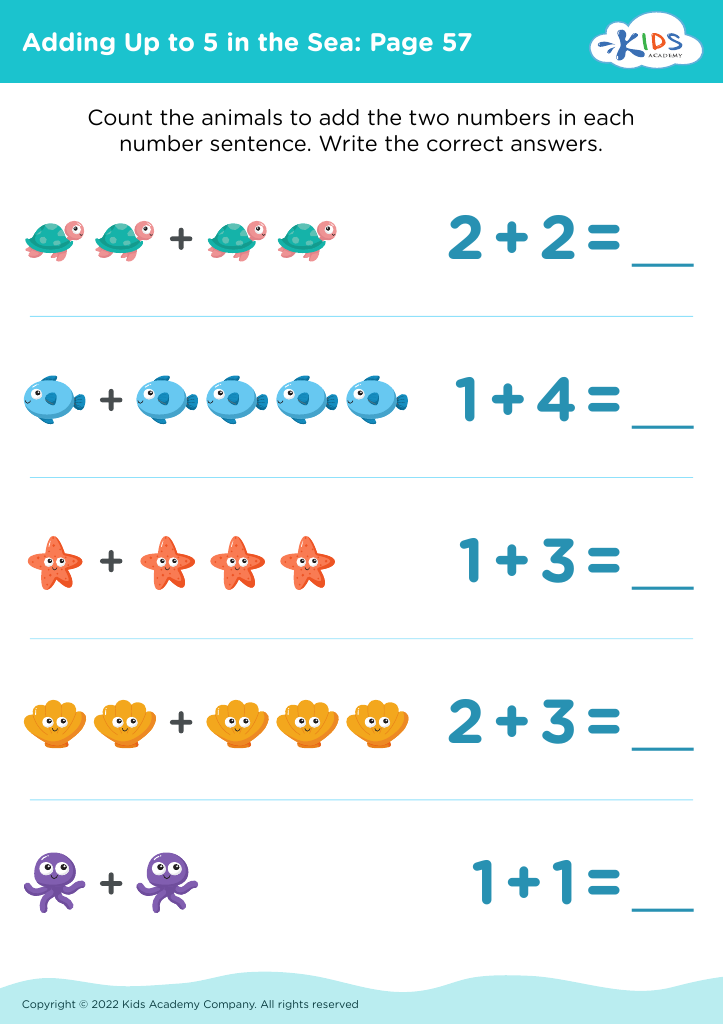
Adding Up to 5 in the Sea: Page 57
Worksheet
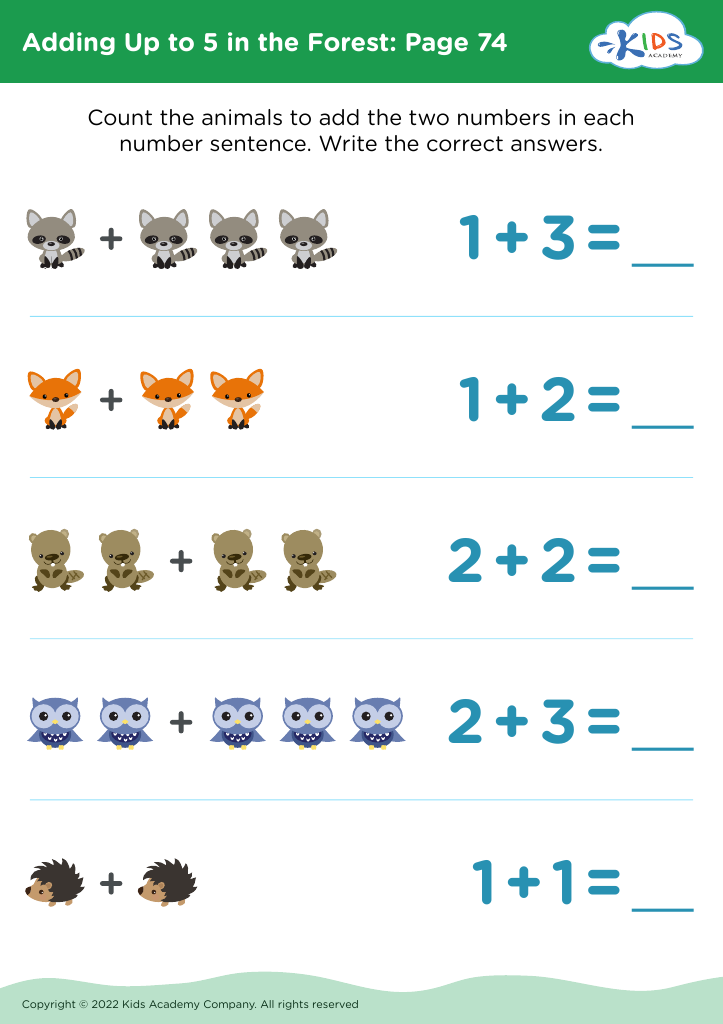
Adding Up to 5 in the Forest: Page 74
Worksheet
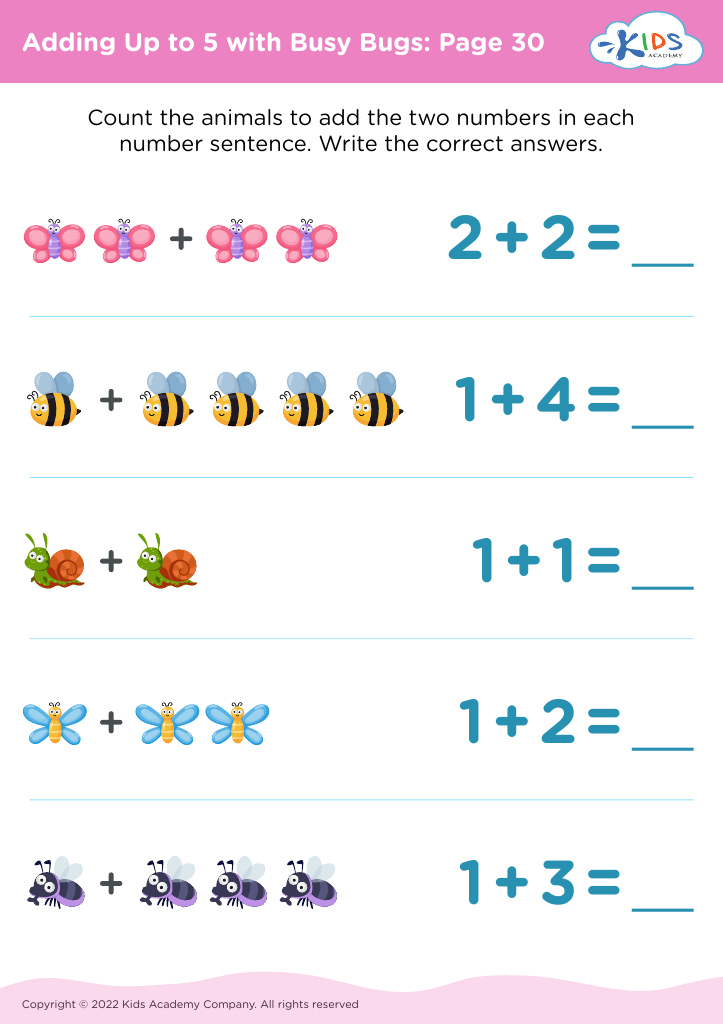
Adding Up to 5 with Busy Bugs: Page 30
Worksheet
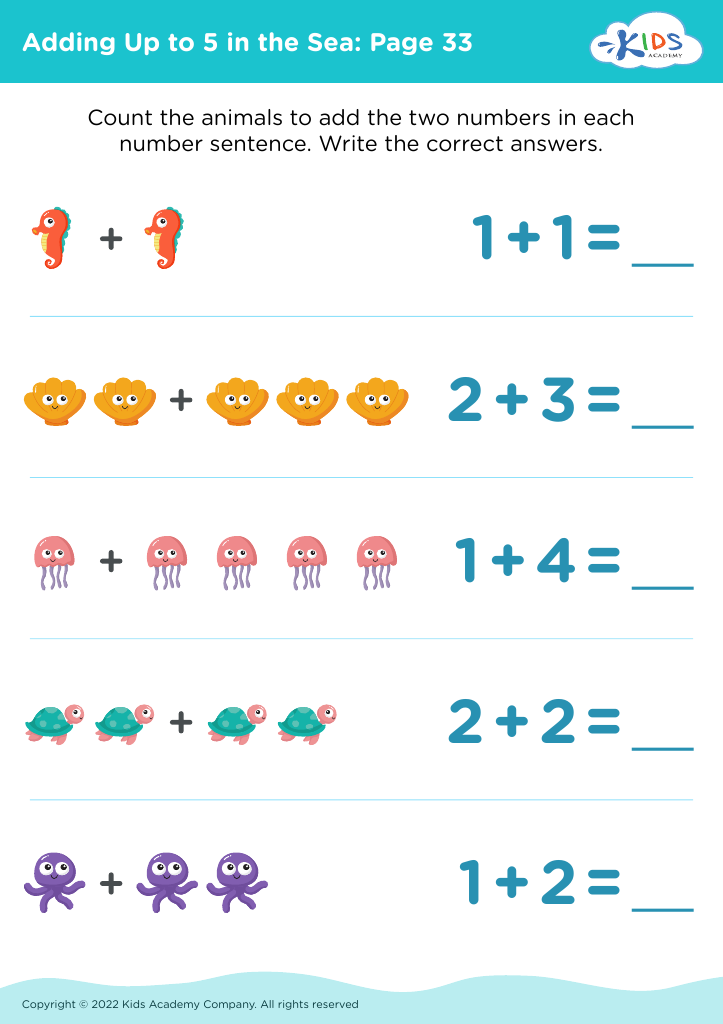
Adding Up to 5 in the Sea: Page 33
Worksheet
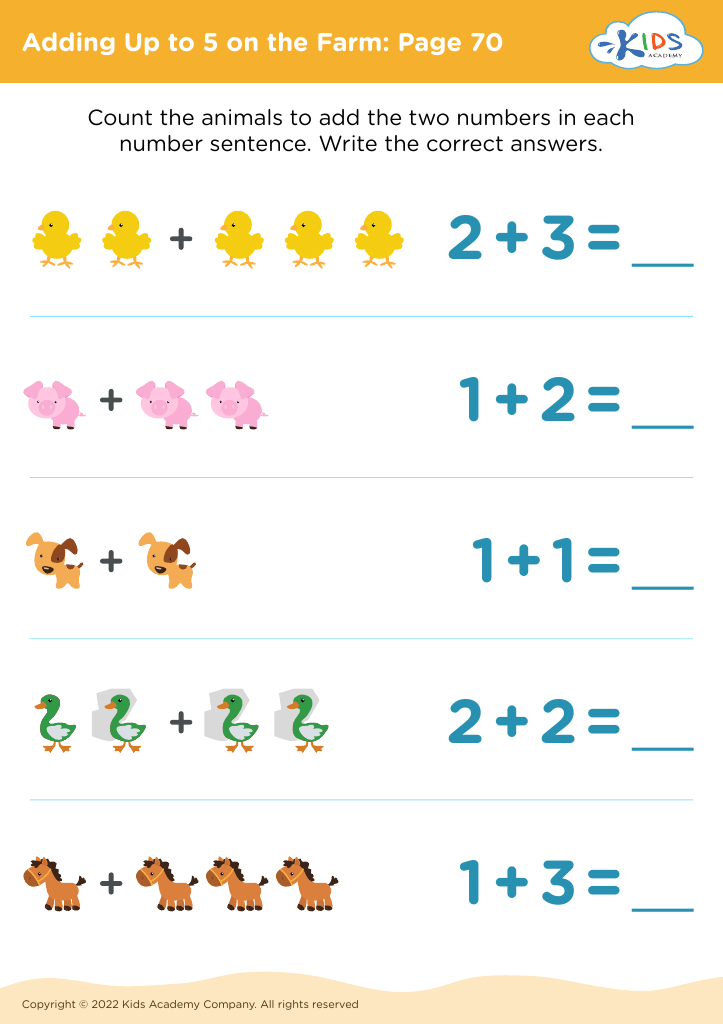
Adding Up to 5 on the Farm: Page 70
Worksheet
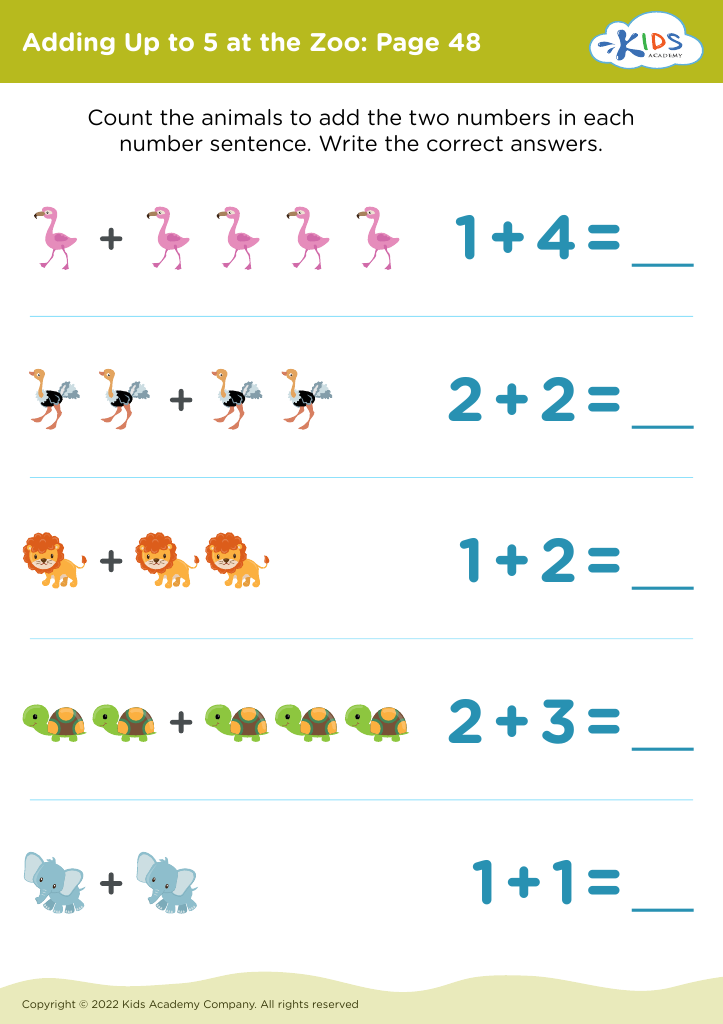
Adding Up to 5 at the Zoo: Page 48
Worksheet
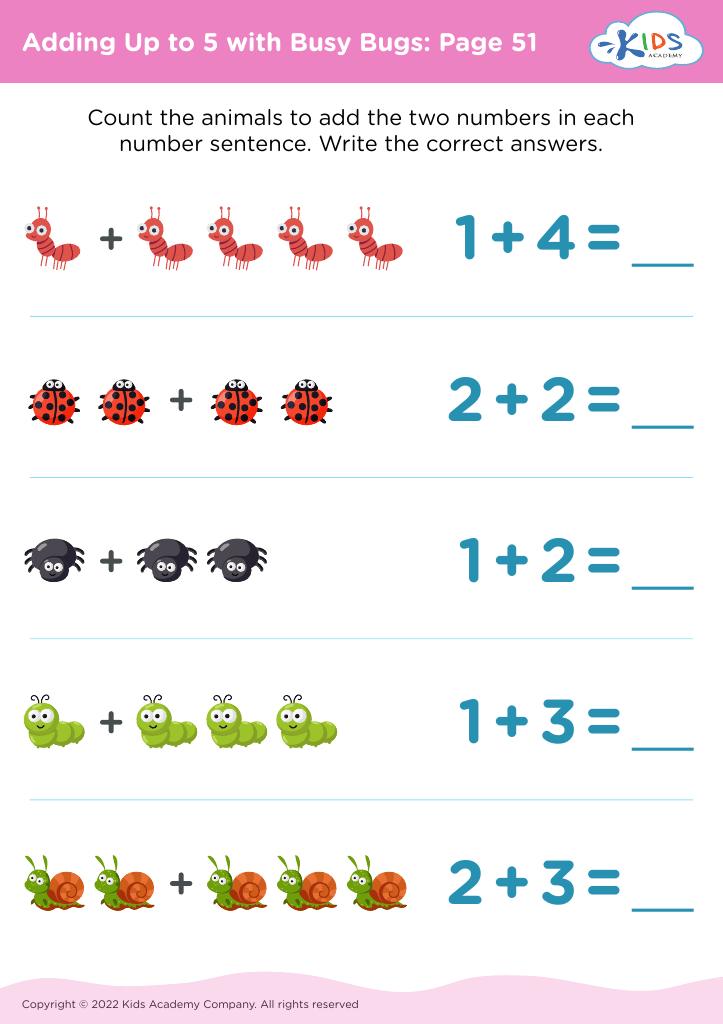
Adding Up to 5 with Busy Bugs: Page 51
Worksheet
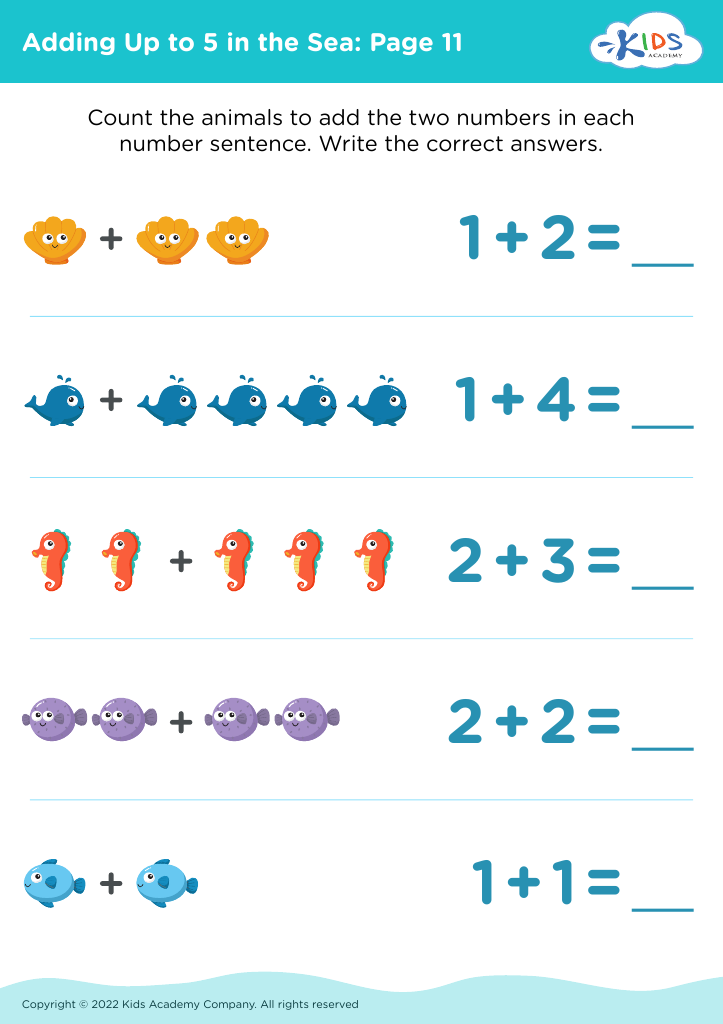
Adding Up to 5 in the Sea: Page 11
Worksheet
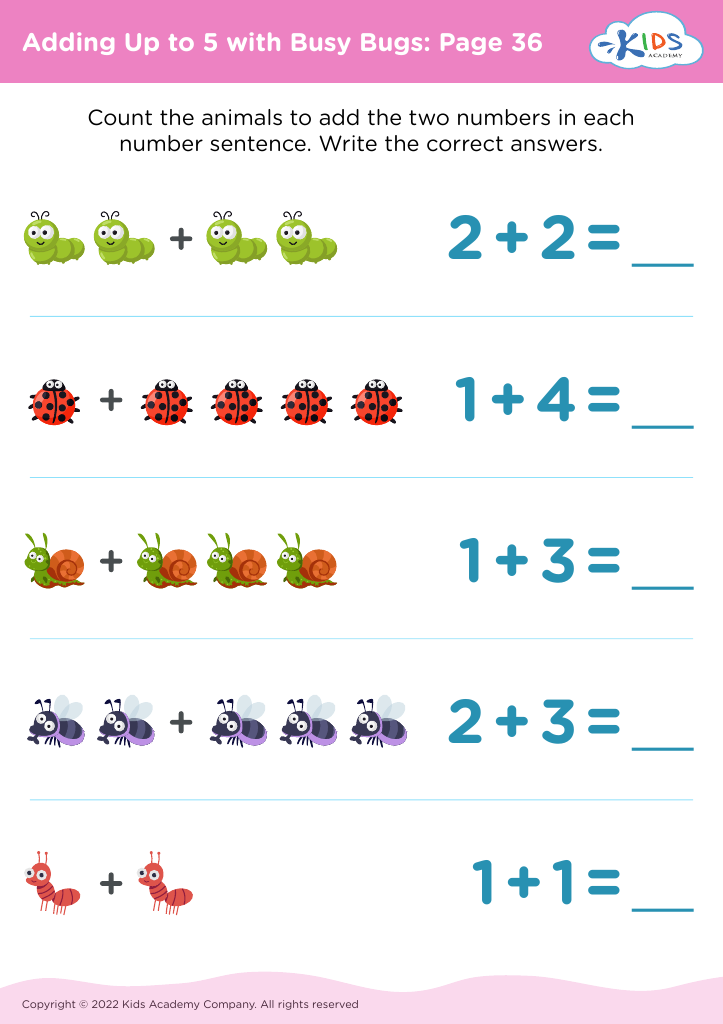
Adding Up to 5 with Busy Bugs: Page 36
Worksheet
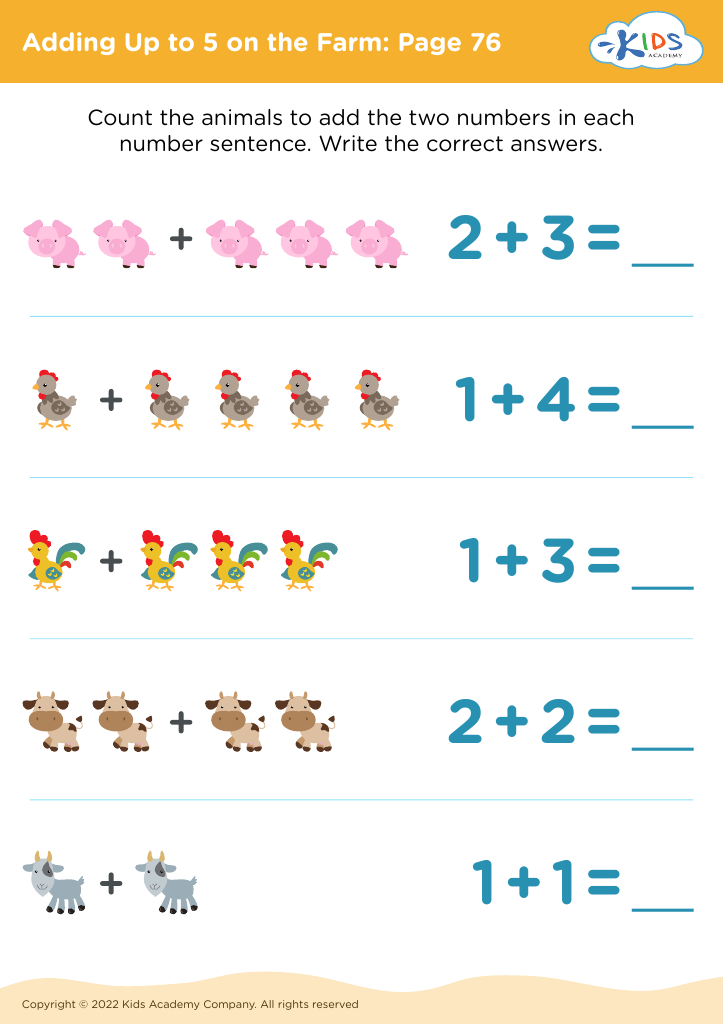
Adding Up to 5 on the Farm: Page 76
Worksheet
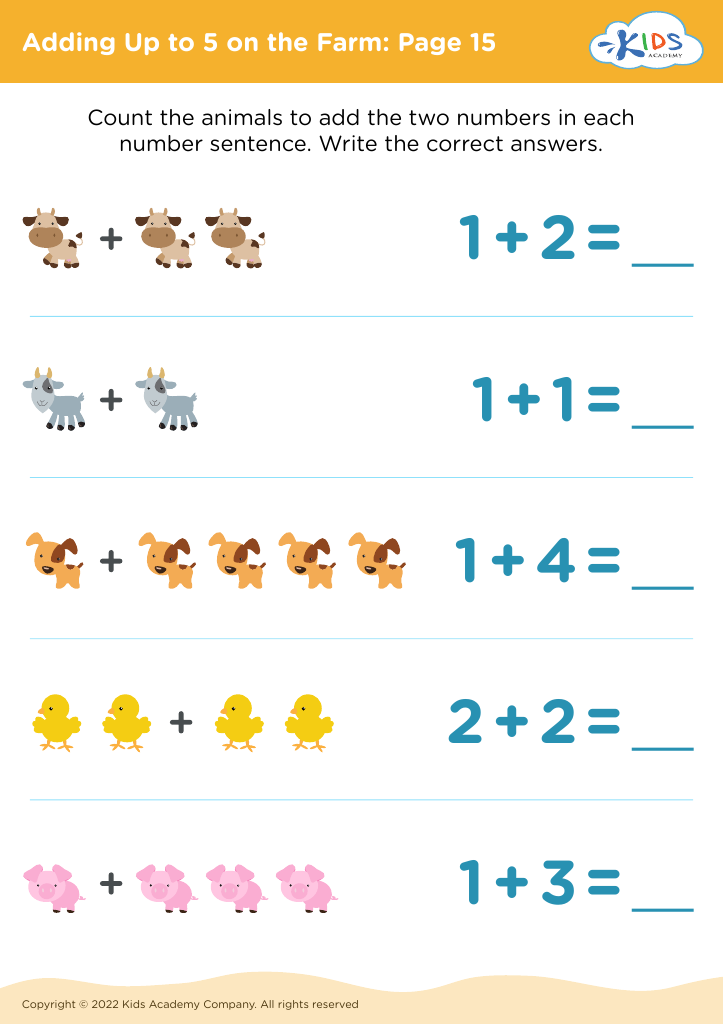
Adding Up to 5 on the Farm: Page 15
Worksheet
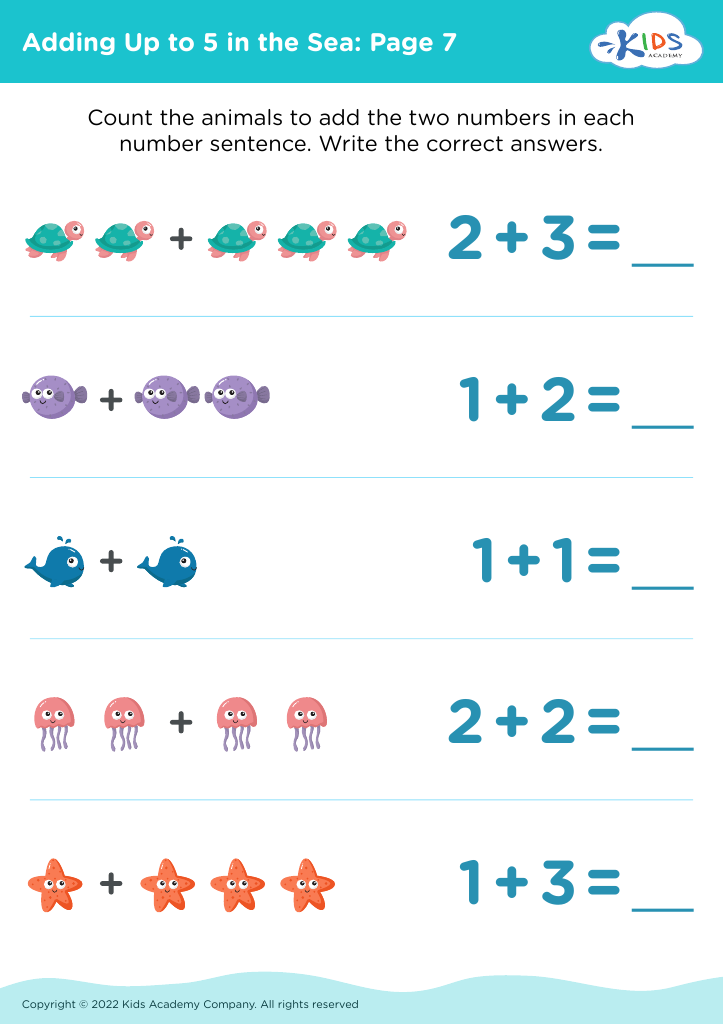
Adding Up to 5 in the Sea: Page 7

Adding Up to 5 in the Sea: Page 7

Adding Up to 5 in the Sea: Page 7
Worksheet
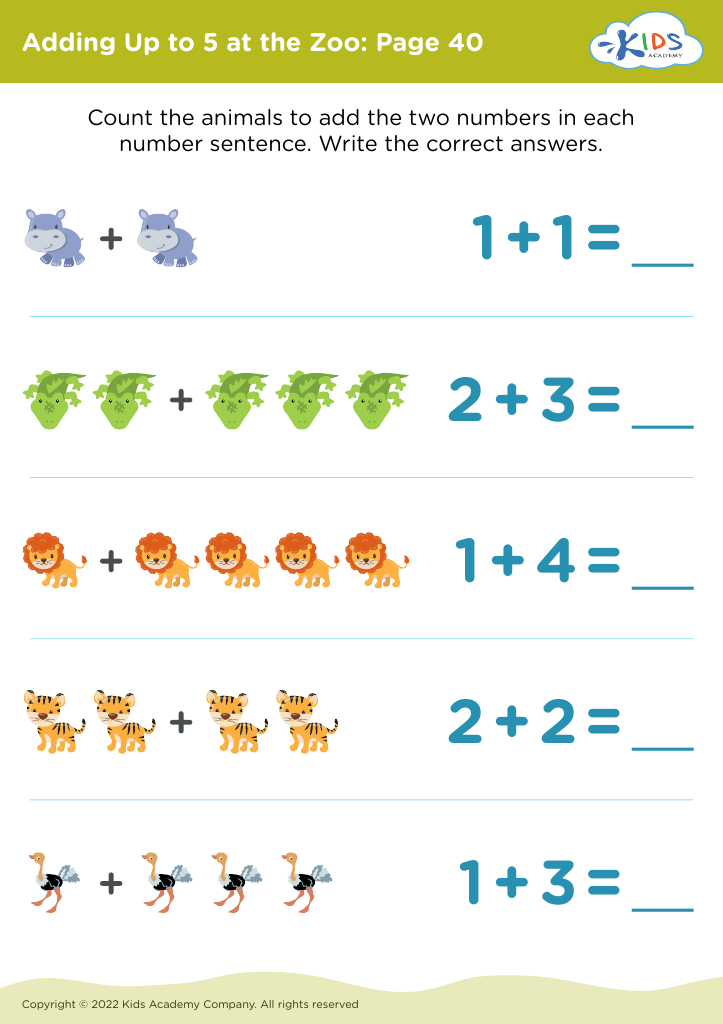
Adding Up to 5 at the Zoo: Page 40
Worksheet
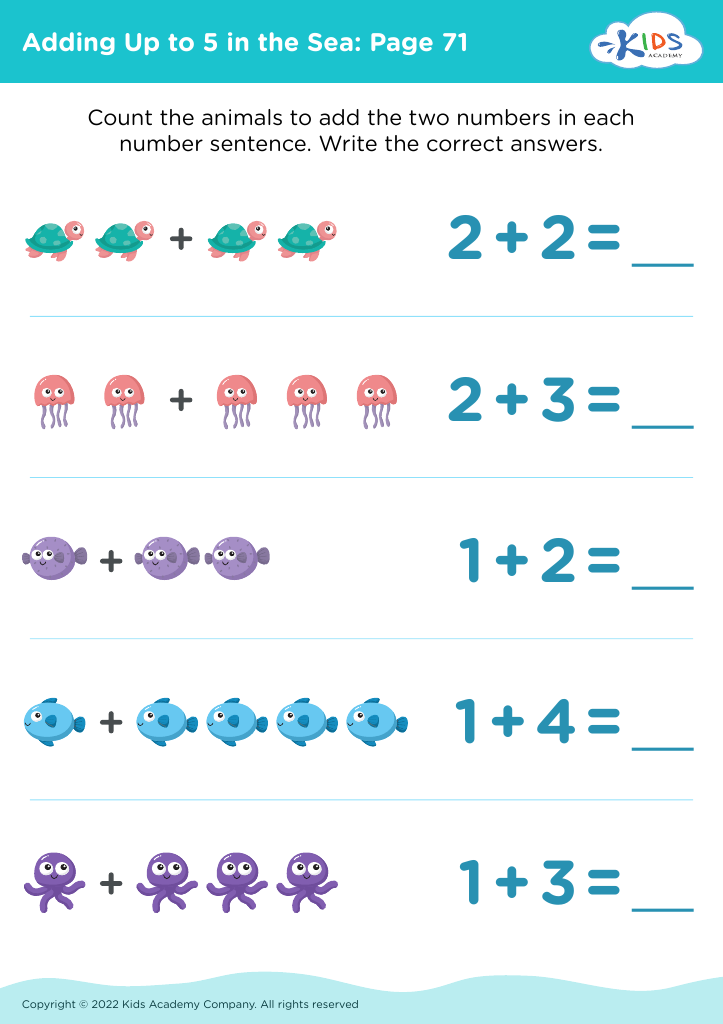
Adding Up to 5 in the Sea: Page 71
Worksheet
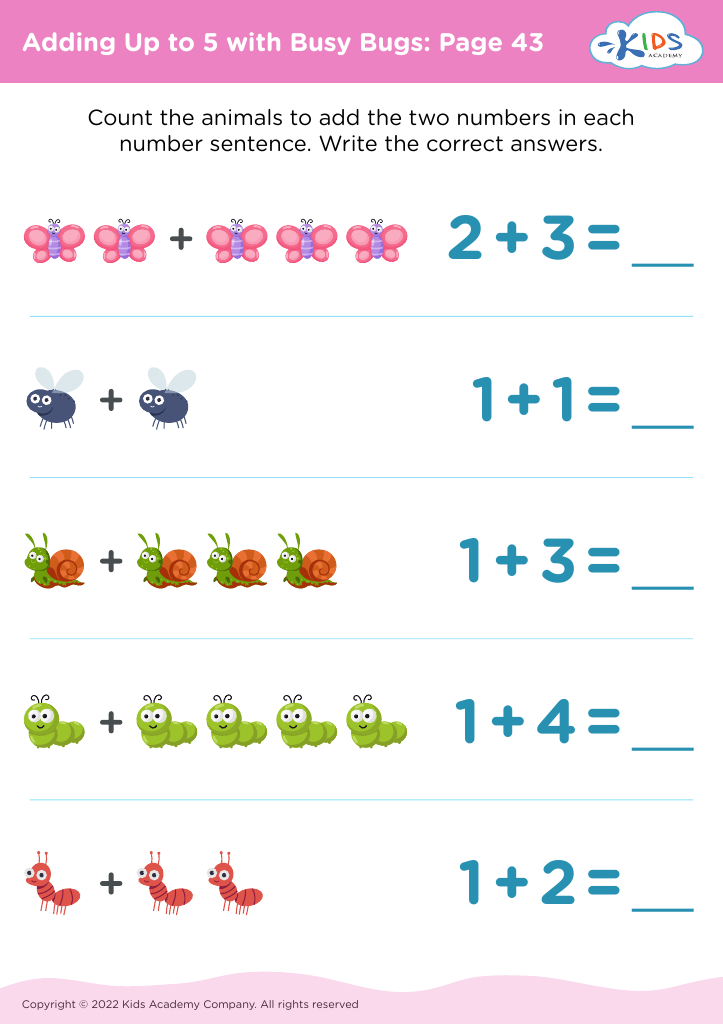
Adding Up to 5 with Busy Bugs: Page 43
Worksheet
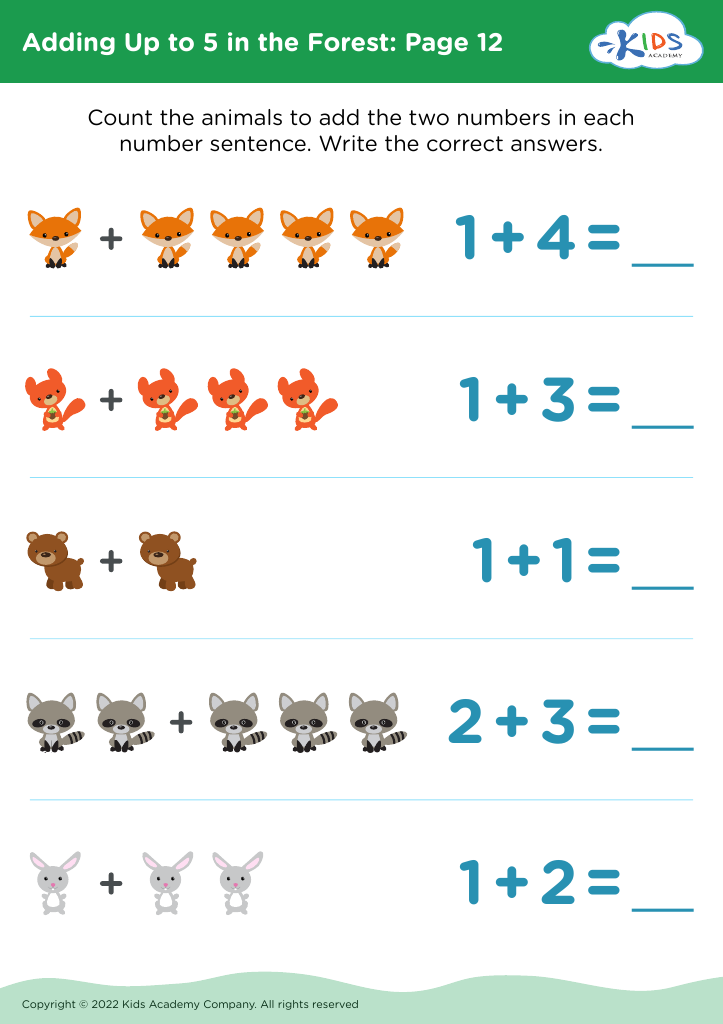
Adding Up to 5 in the Forest: Page 12
Worksheet
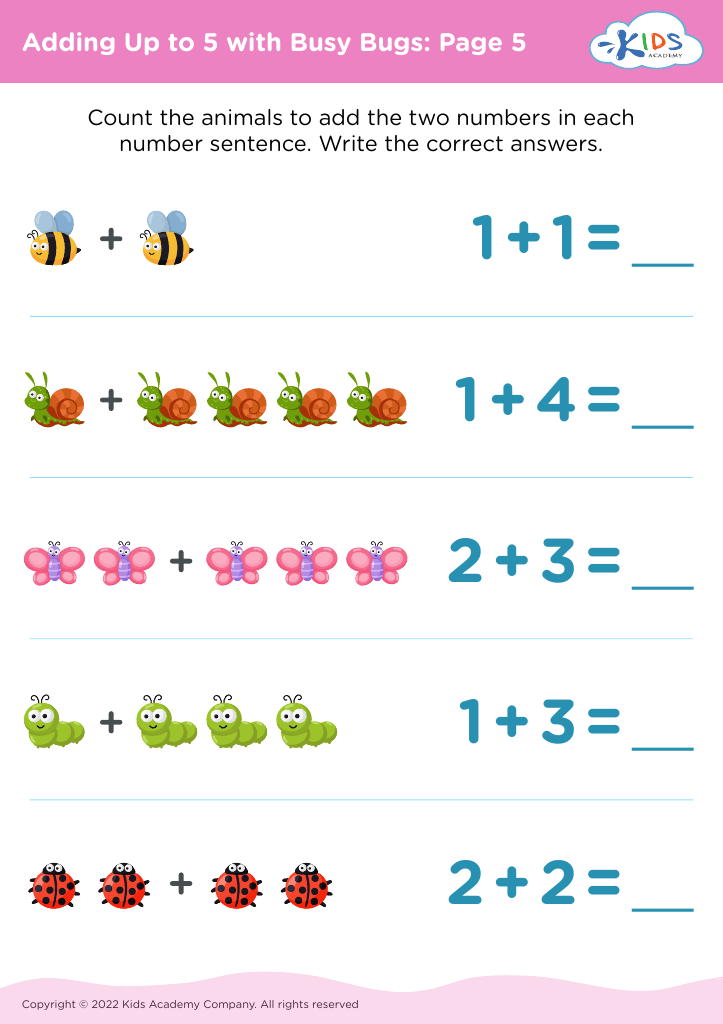
Adding Up to 5 with Busy Bugs: Page 5
Worksheet
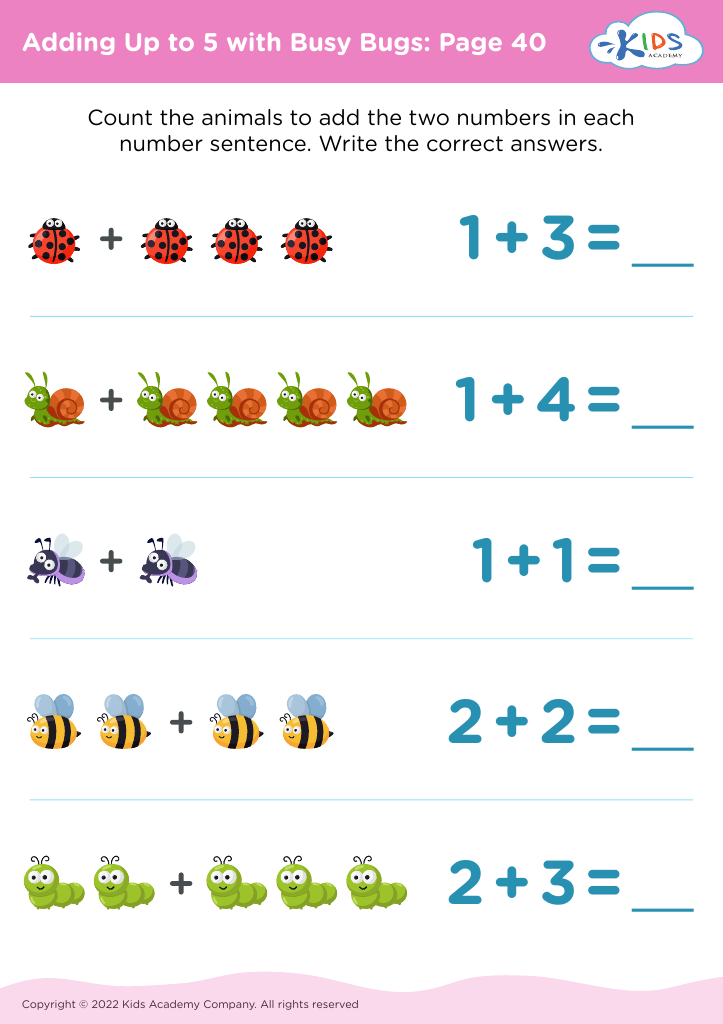
Adding Up to 5 with Busy Bugs: Page 40
Worksheet
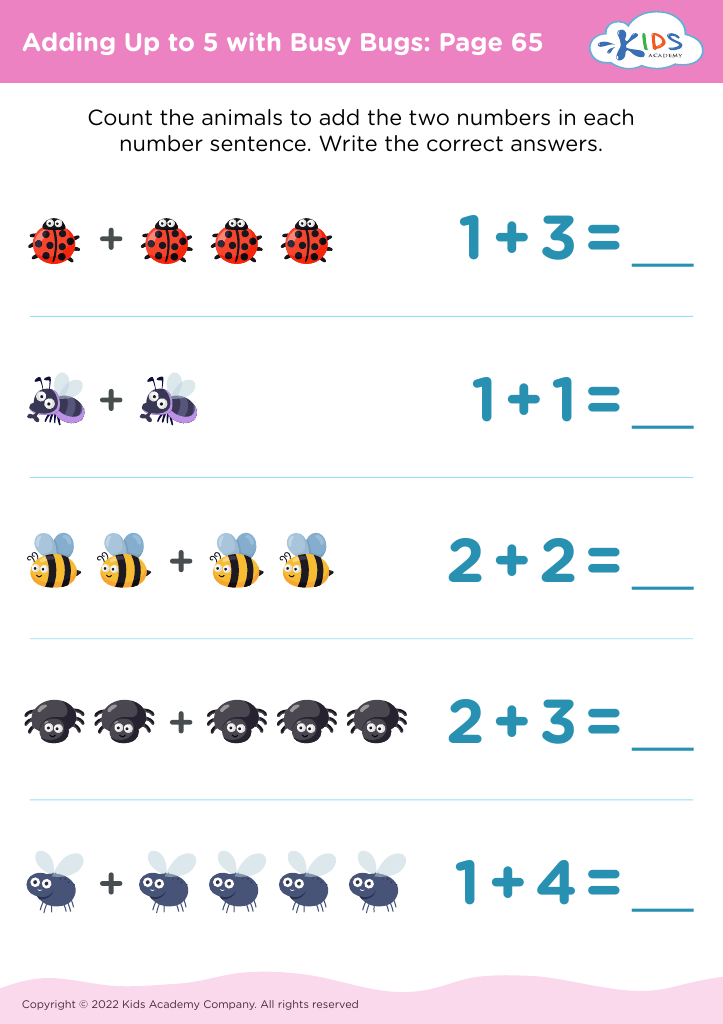
Adding Up to 5 with Busy Bugs: Page 65
Worksheet
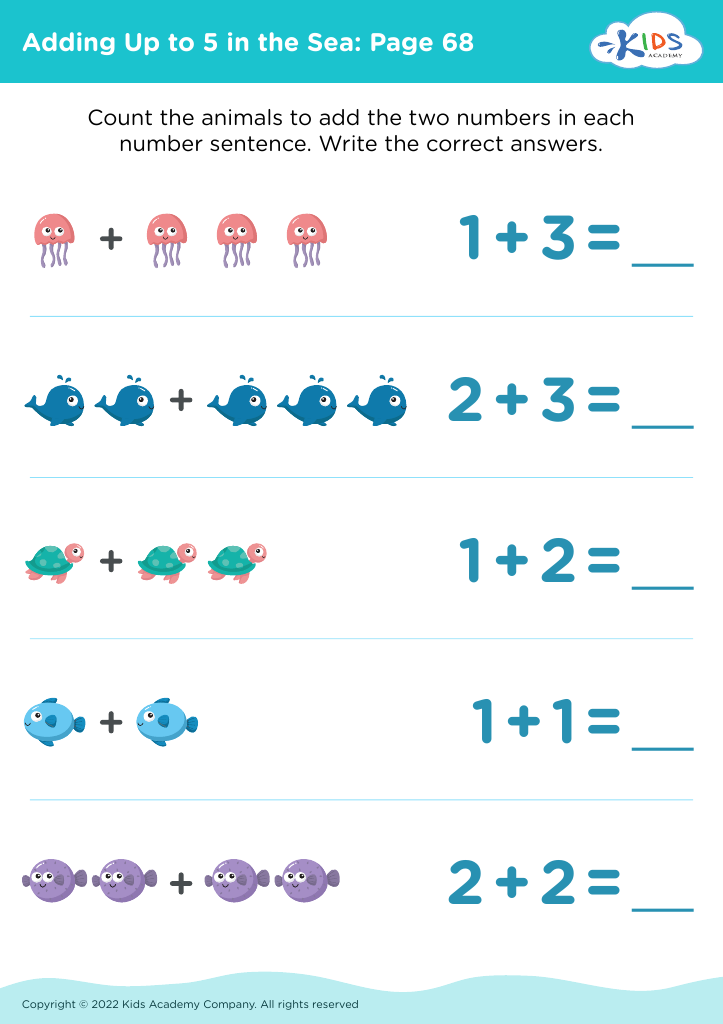
Adding Up to 5 in the Sea: Page 68
Worksheet
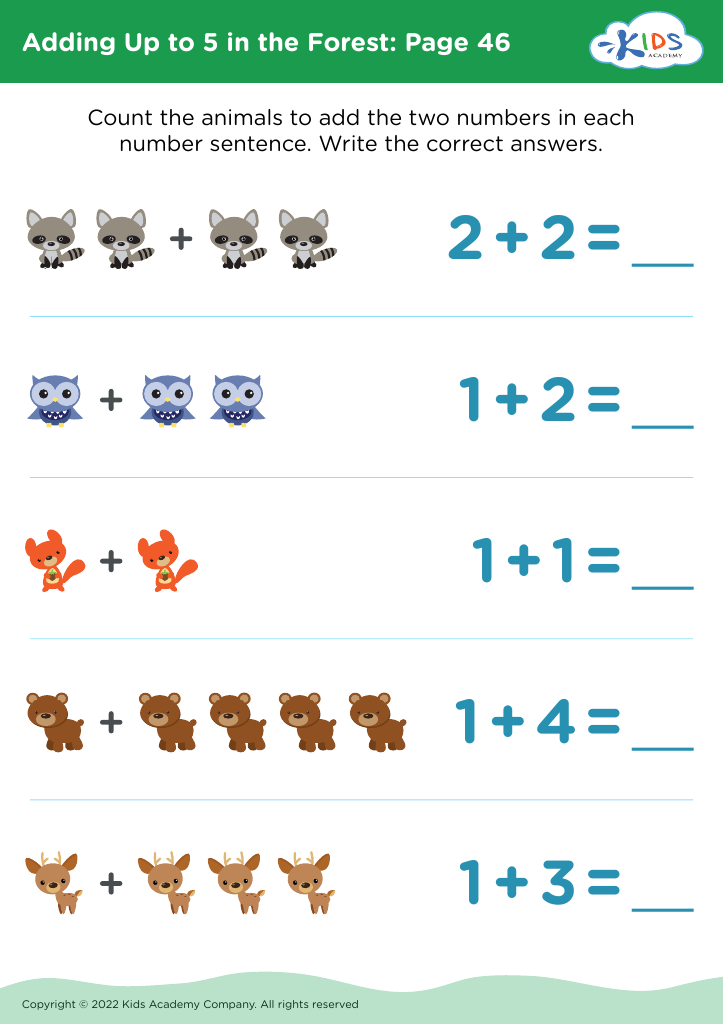
Adding Up to 5 in the Forest: Page 46
Worksheet
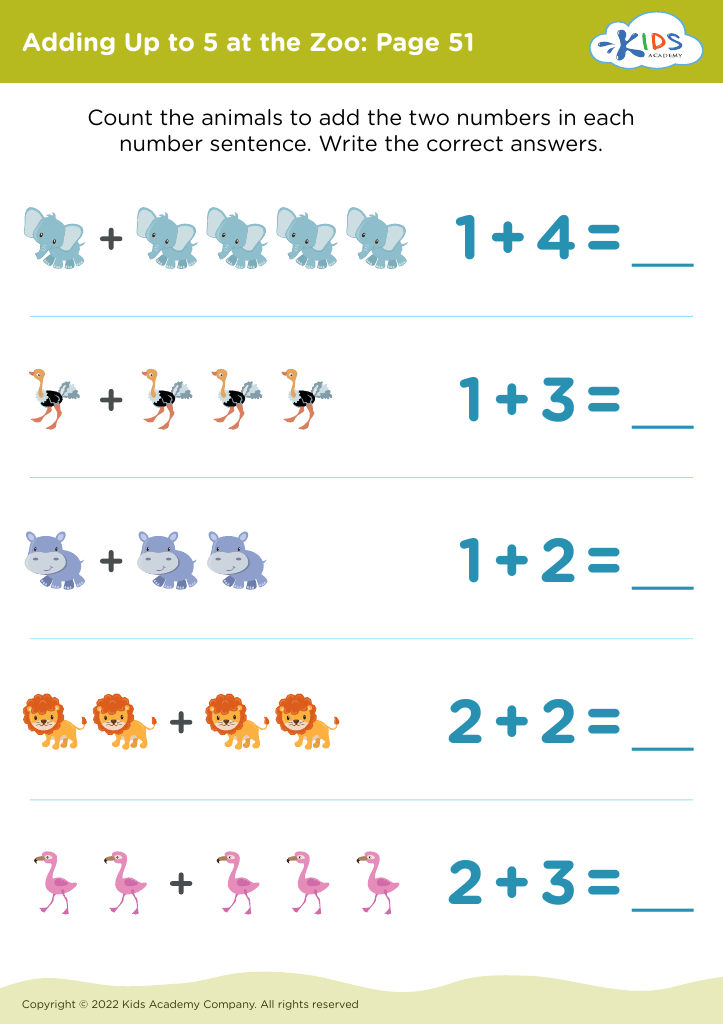
Adding Up to 5 at the Zoo: Page 51
Worksheet
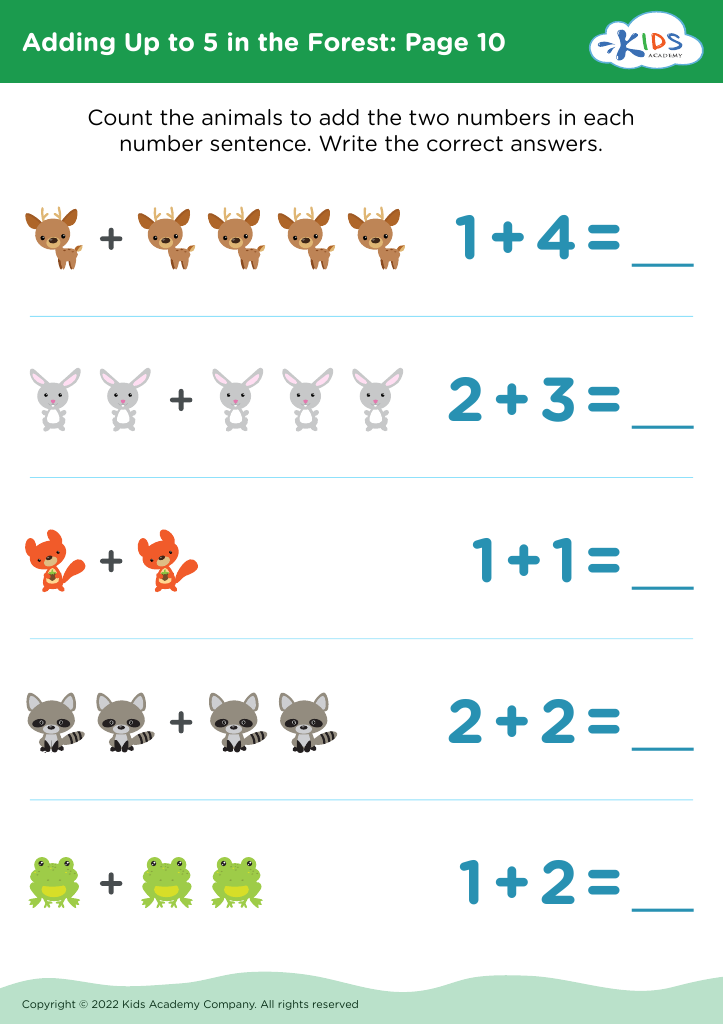
Adding Up to 5 in the Forest: Page 10
Worksheet
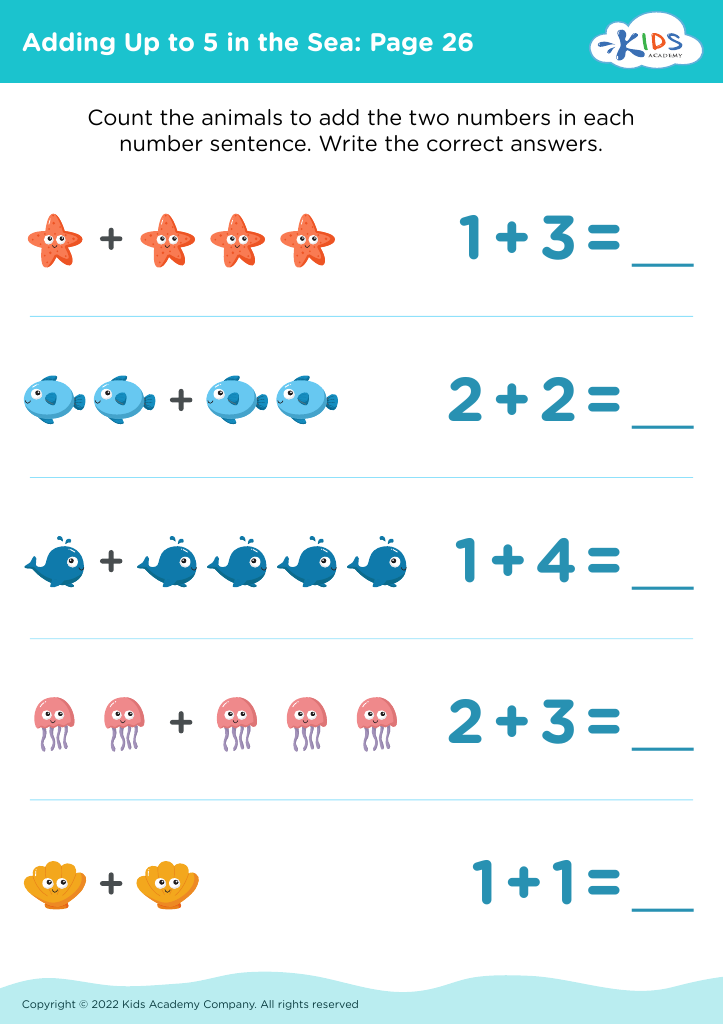
Adding Up to 5 in the Sea: Page 26
Worksheet


Introduction to addition practice, such as adding up to 5, plays a crucial role in the early development of mathematical skills for 3-year-olds. At this tender age, children are highly receptive to acquiring new knowledge, and early math experiences lay the foundation for future academic success.

  1. Cognitive Development: Engaging in simple addition helps enhance a child's cognitive abilities, including memory, attention, and problem-solving skills. Such activities stimulate mental processes and encourage logical thinking.

  2. Numeracy Foundation: Basic addition offers young children an opportunity to grasp the concept of numbers and quantity, which is critical for understanding more complex math topics later on. Familiarity with numbers up to 5 sets a solid groundwork for future arithmetic learning.

  3. Confidence Building: Achieving success in simple addition operations boosts a child's confidence. This positive reinforcement increases their motivation to engage in more learning activities, creating a positive association with math.

  4. Language and Communication: Discussing math concepts, numbers, and addition problems with parents or teachers improves a child's vocabulary and language skills. Articulating thoughts on how they arrived at their answer enhances their communicative abilities.

  5. Social and Emotional Skills: Participating in addition games or interactive activities with peers fosters cooperative learning and develops social skills.