Filters

232 filtered results

Clear all filters
Favorites
With answer key
Interactive

232 filtered results

Difficulty Level

Grade


Check out this FREE Trial Lesson on Adding Up to 5 for age 3!

Match Objects that Fit Together

Favorites
With answer key
Interactive
  • 3
  • Counting practice
  • Adding Up to 5
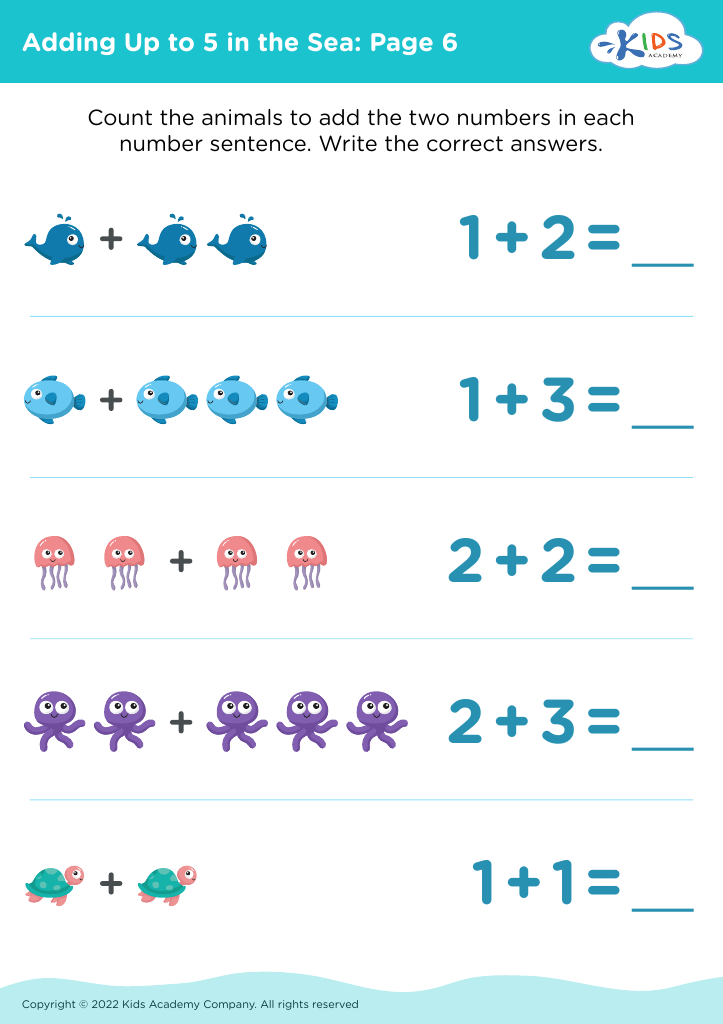
Adding Up to 5 in the Sea: Page 6

Adding Up to 5 in the Sea: Page 6

Adding Up to 5 in the Sea: Page 6
Worksheet
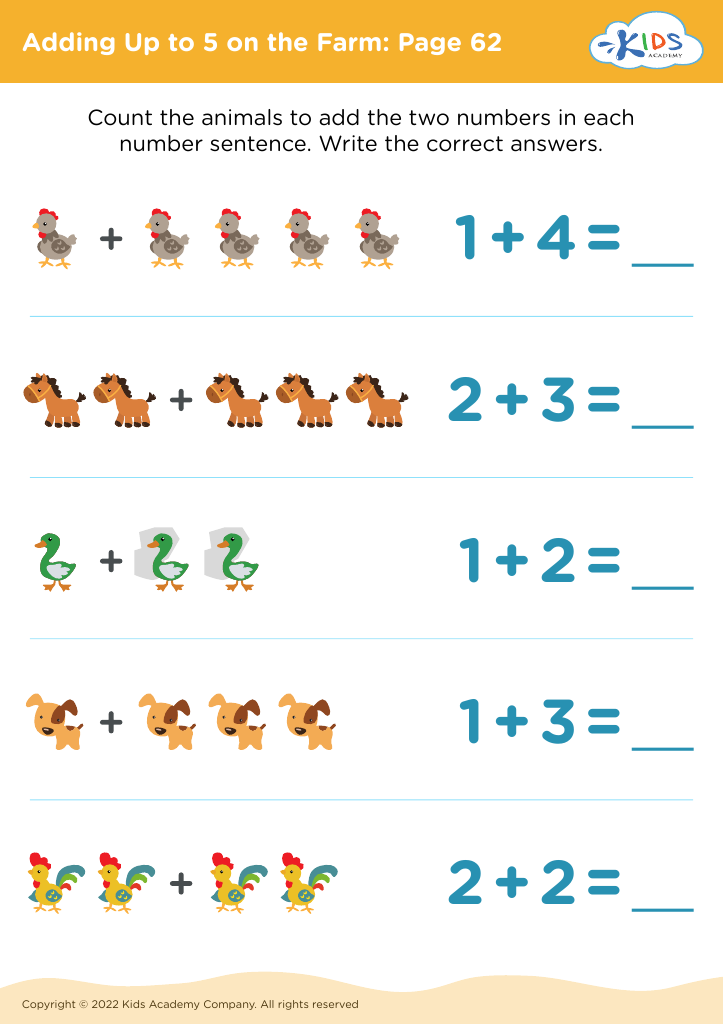
Adding Up to 5 on the Farm: Page 62
Worksheet
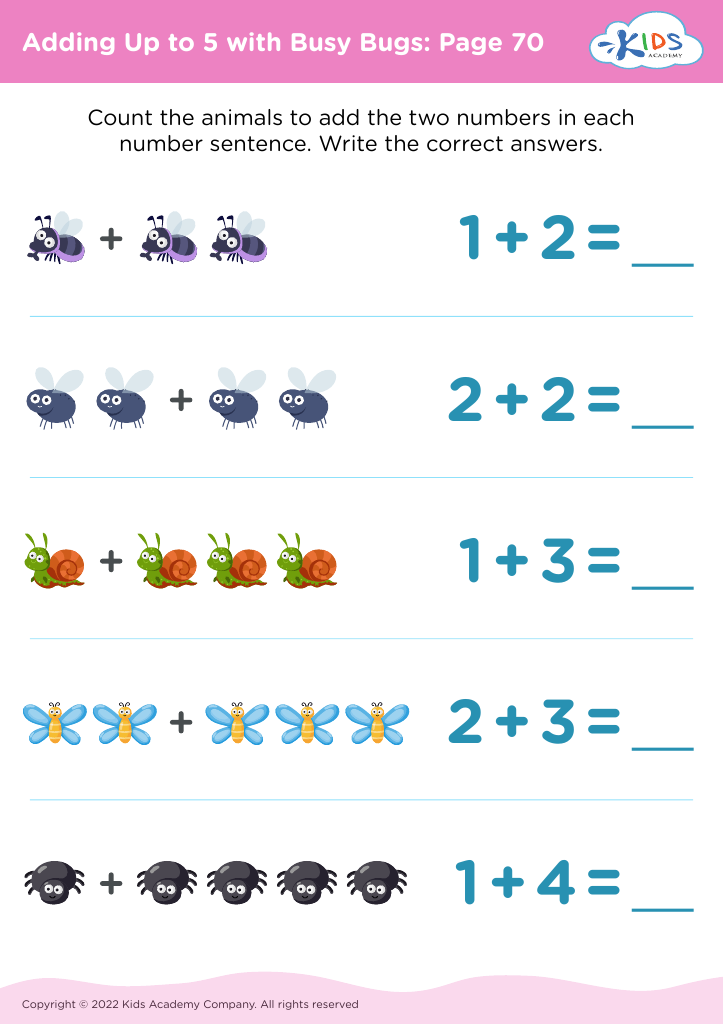
Adding Up to 5 with Busy Bugs: Page 70
Worksheet
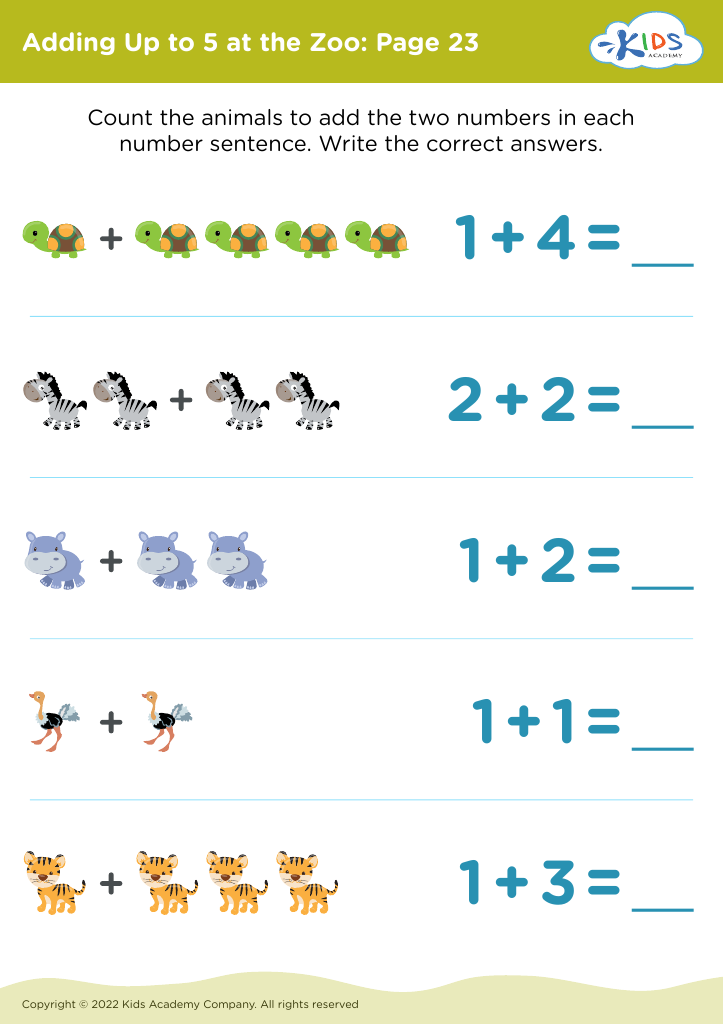
Adding Up to 5 at the Zoo: Page 23
Worksheet
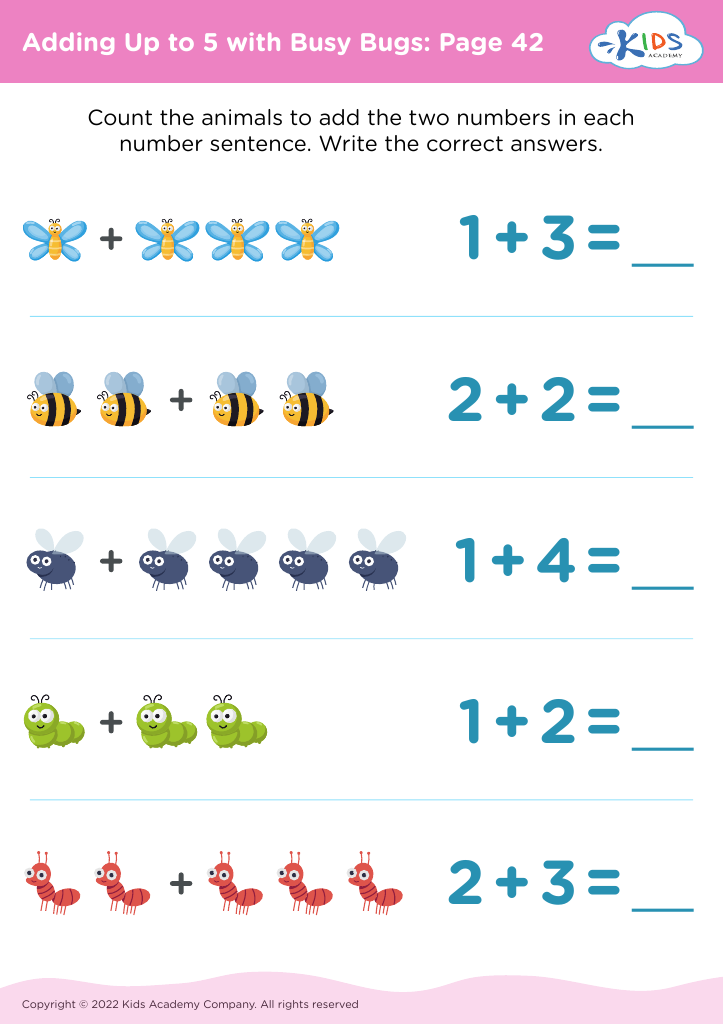
Adding Up to 5 with Busy Bugs: Page 42
Worksheet
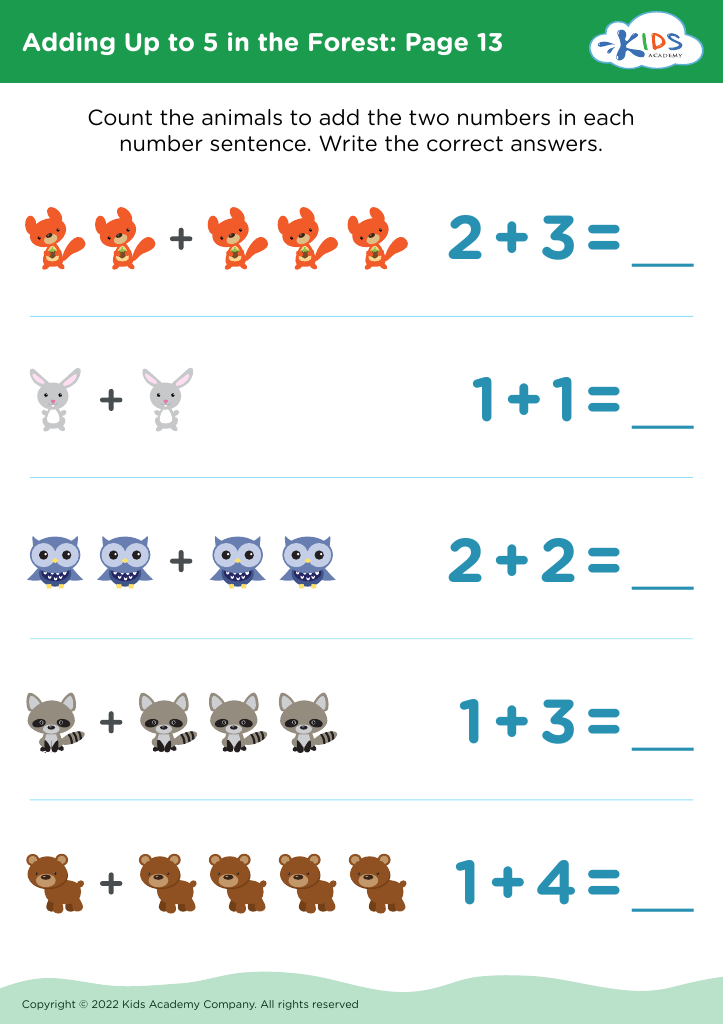
Adding Up to 5 in the Forest: Page 13
Worksheet
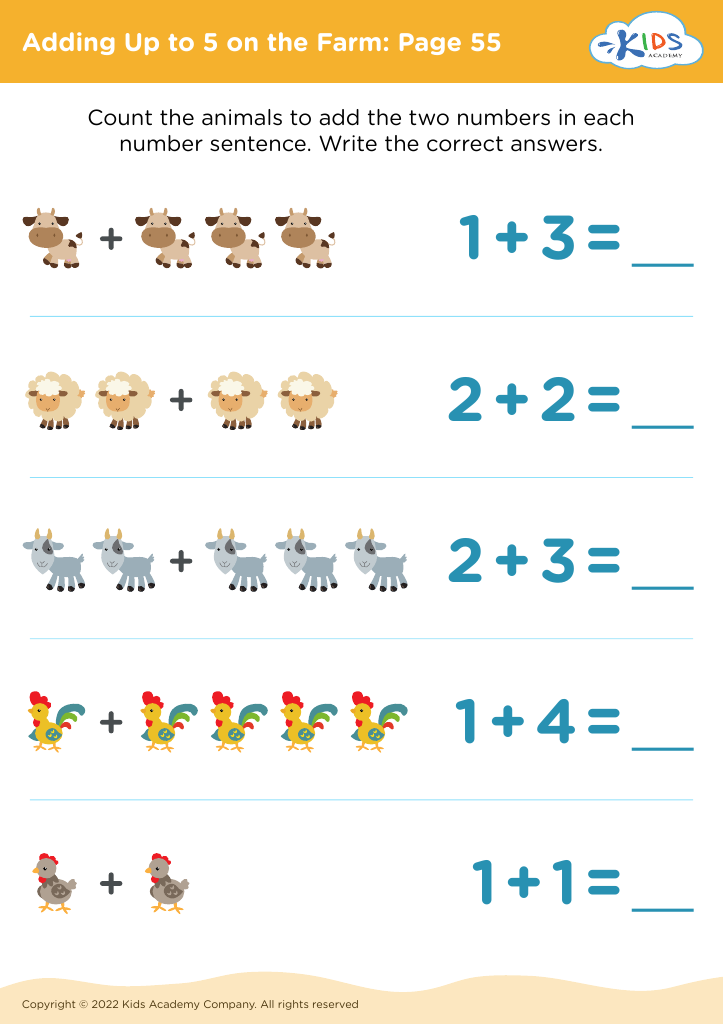
Adding Up to 5 on the Farm: Page 55
Worksheet
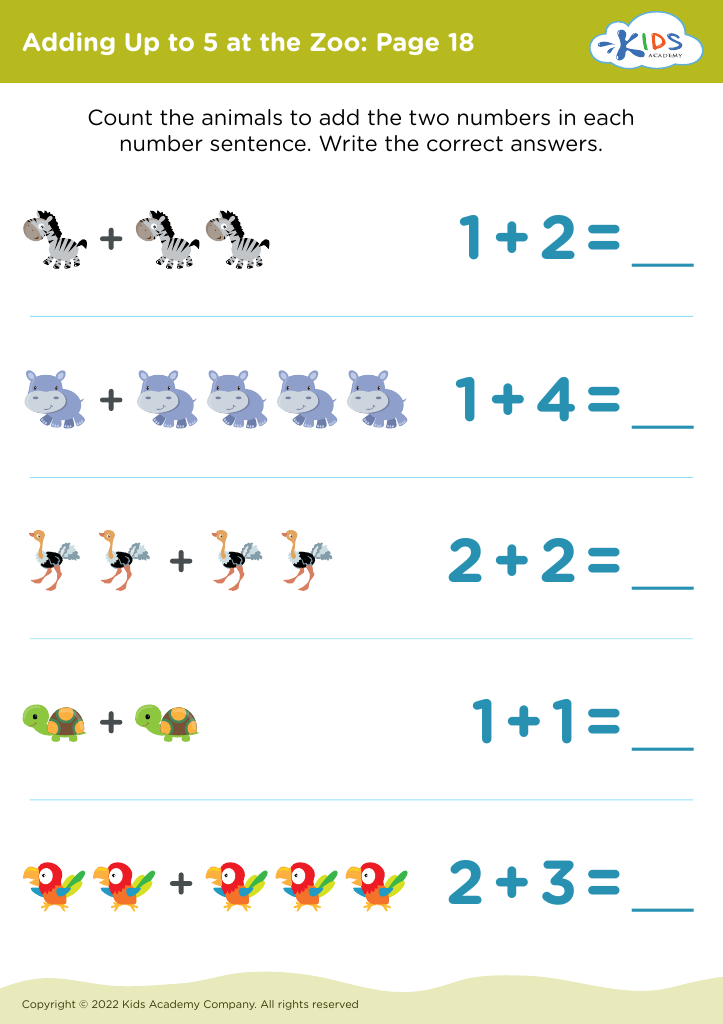
Adding Up to 5 at the Zoo: Page 18
Worksheet
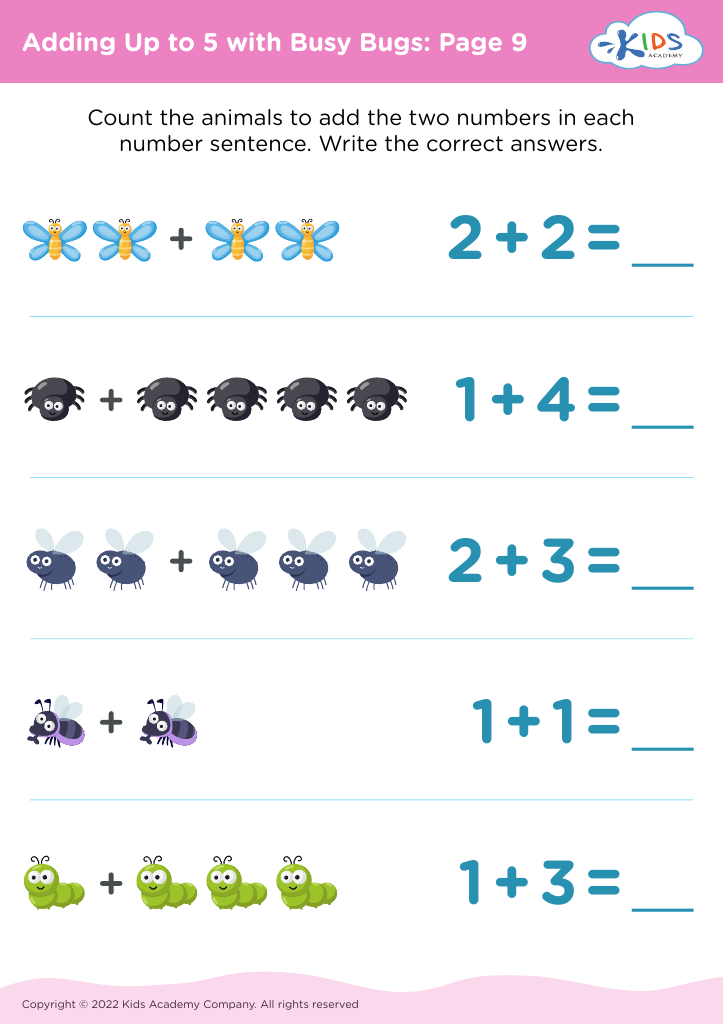
Adding Up to 5 with Busy Bugs: Page 9
Worksheet
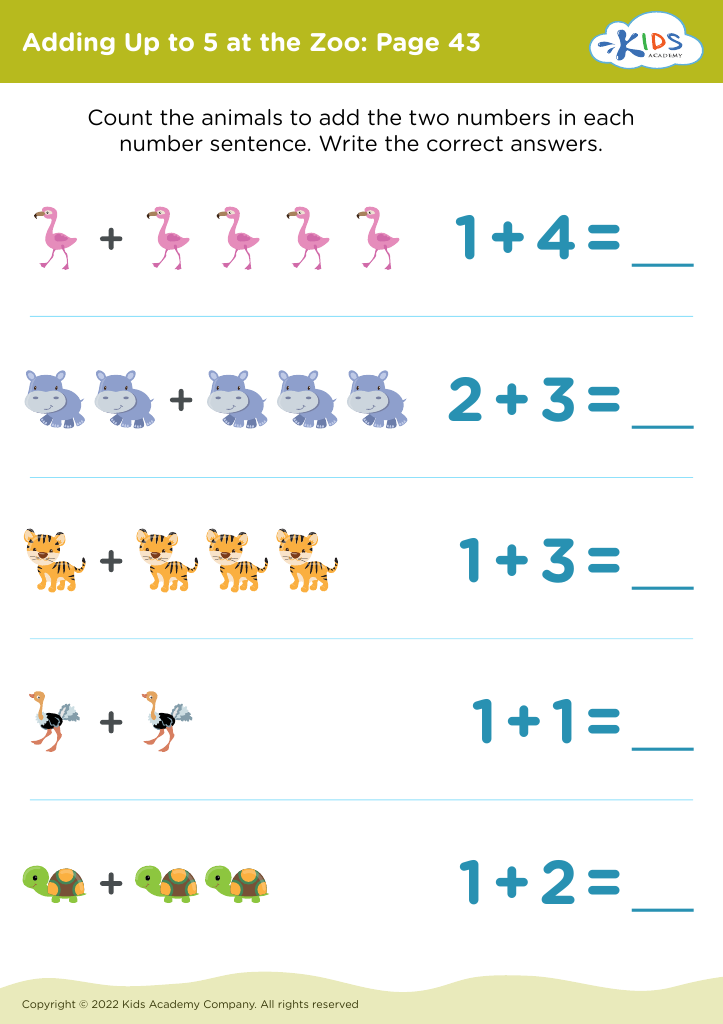
Adding Up to 5 at the Zoo: Page 43
Worksheet
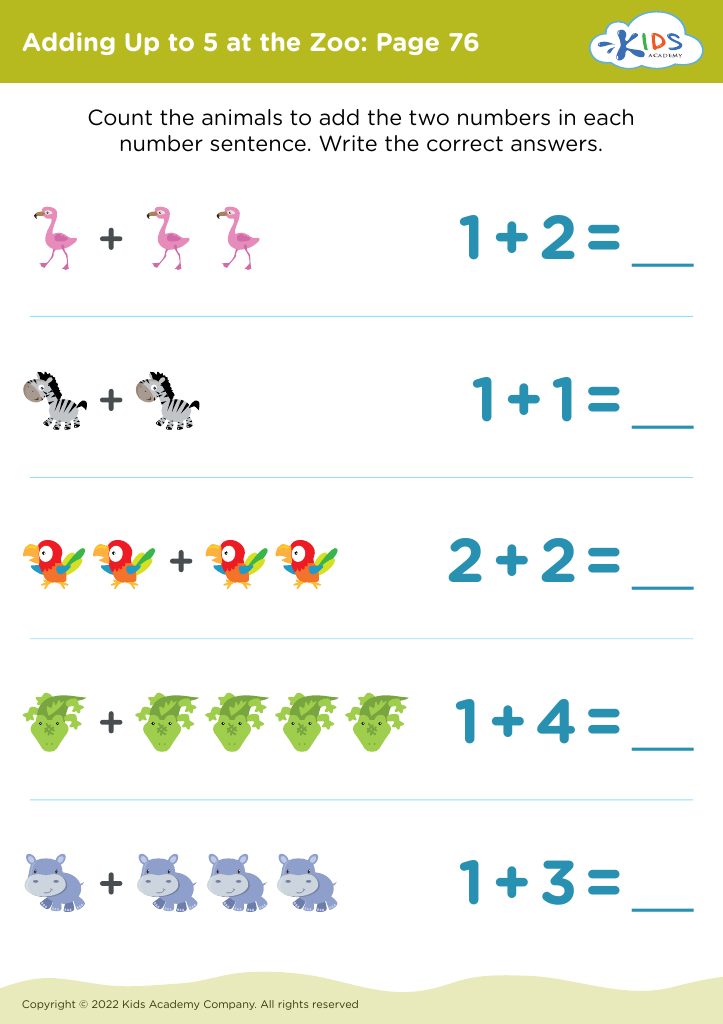
Adding Up to 5 at the Zoo: Page 76
Worksheet
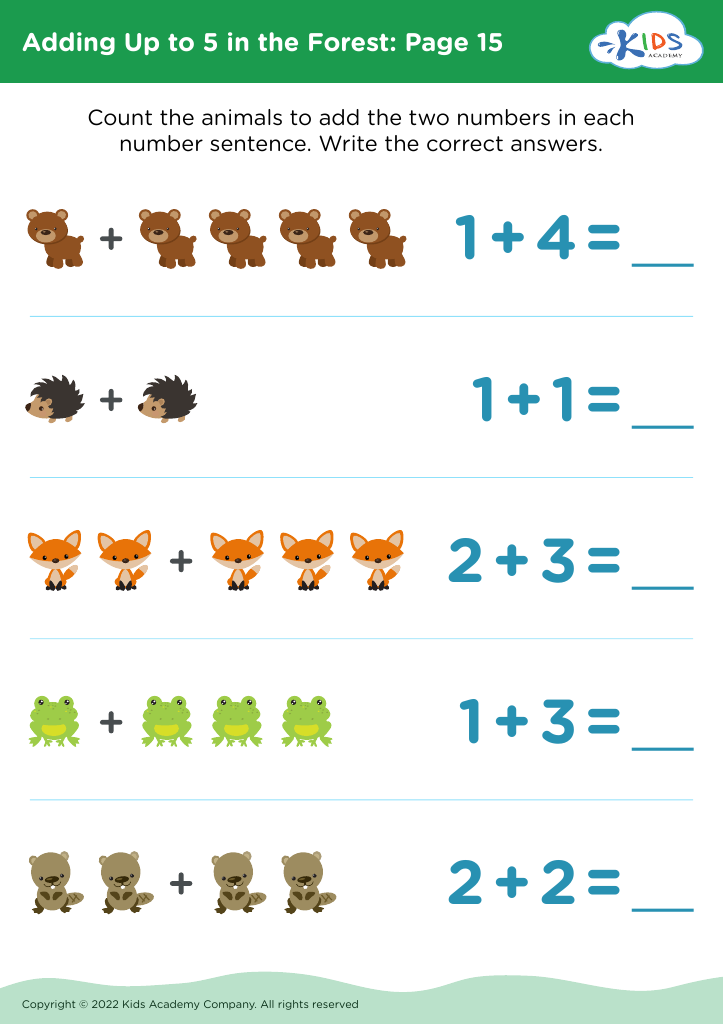
Adding Up to 5 in the Forest: Page 15
Worksheet
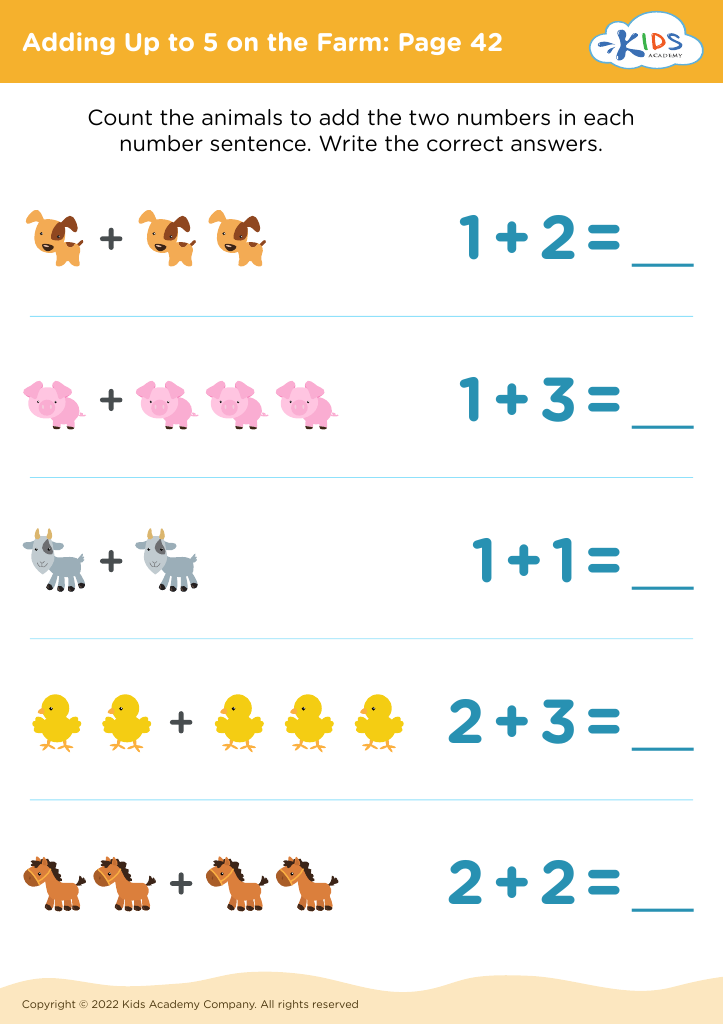
Adding Up to 5 on the Farm: Page 42
Worksheet
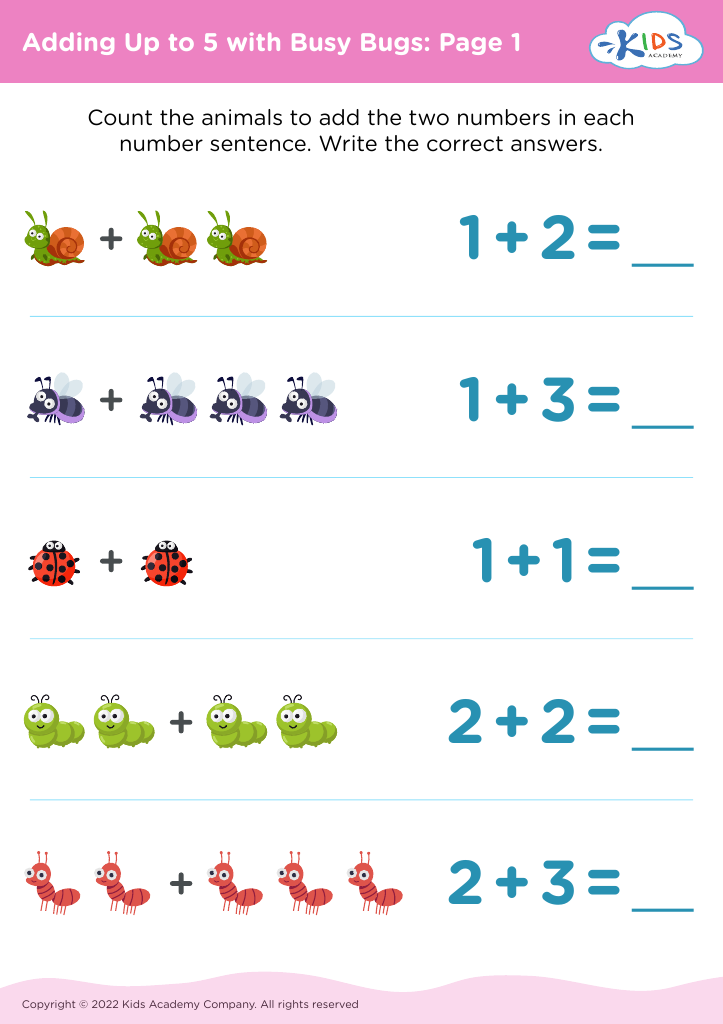
Adding Up to 5 with Busy Bugs: Page 1
Worksheet
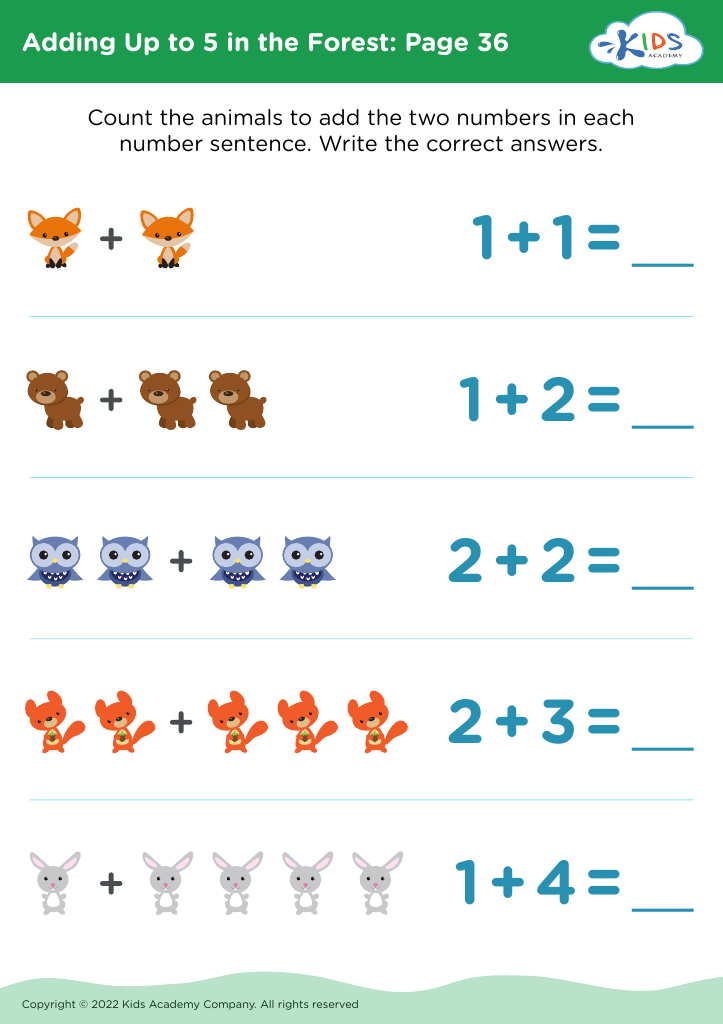
Adding Up to 5 in the Forest: Page 36
Worksheet
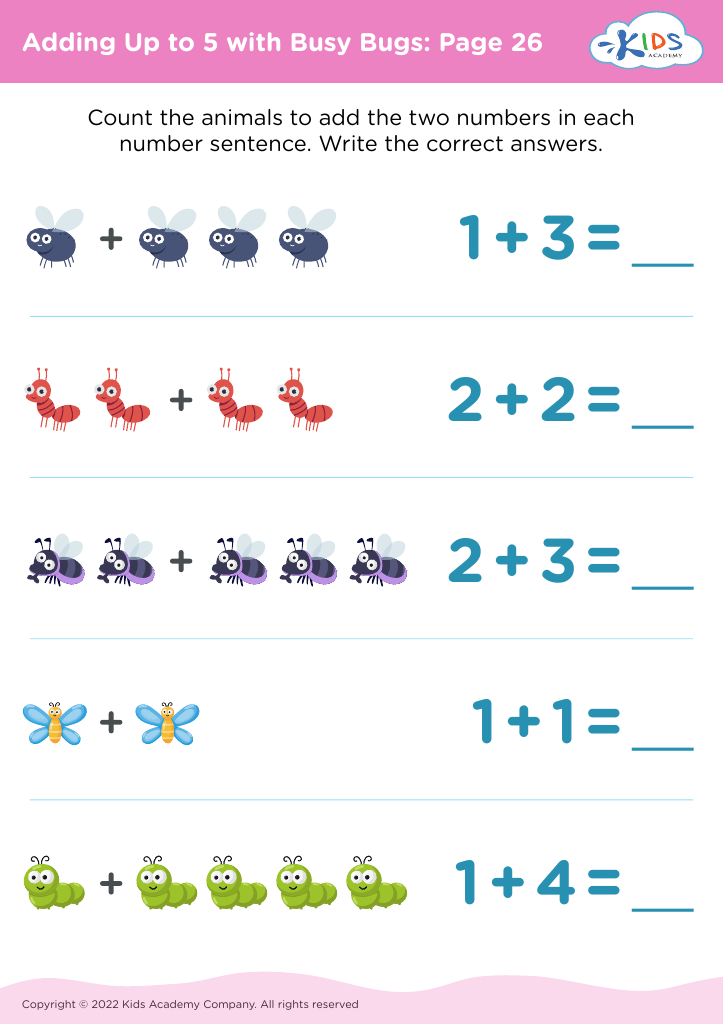
Adding Up to 5 with Busy Bugs: Page 26
Worksheet
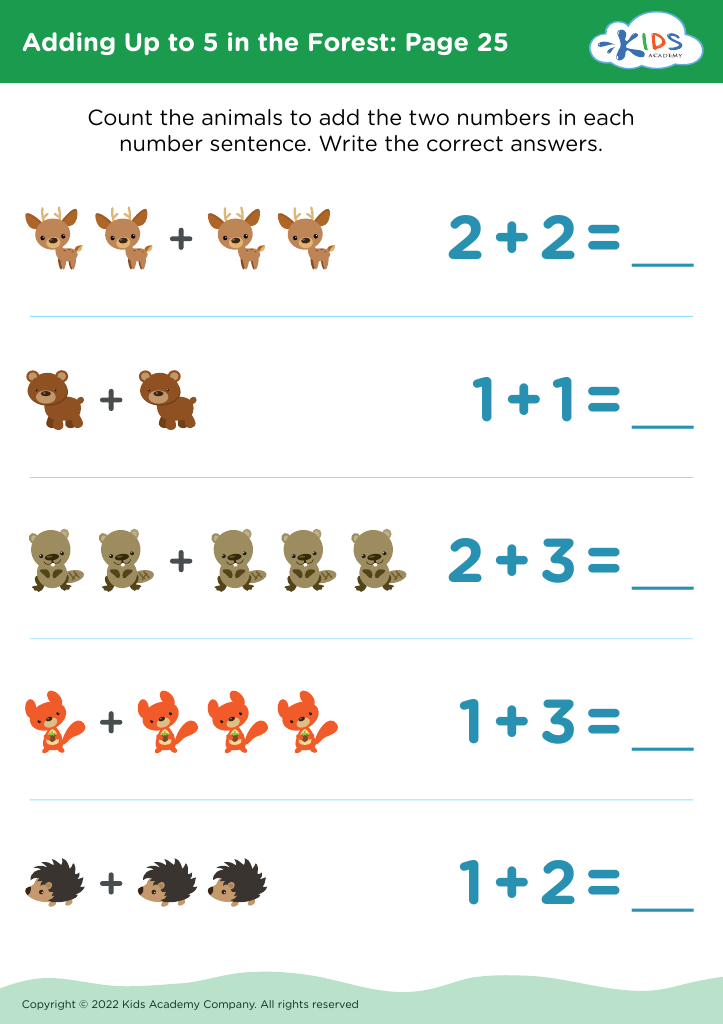
Adding Up to 5 in the Forest: Page 25
Worksheet
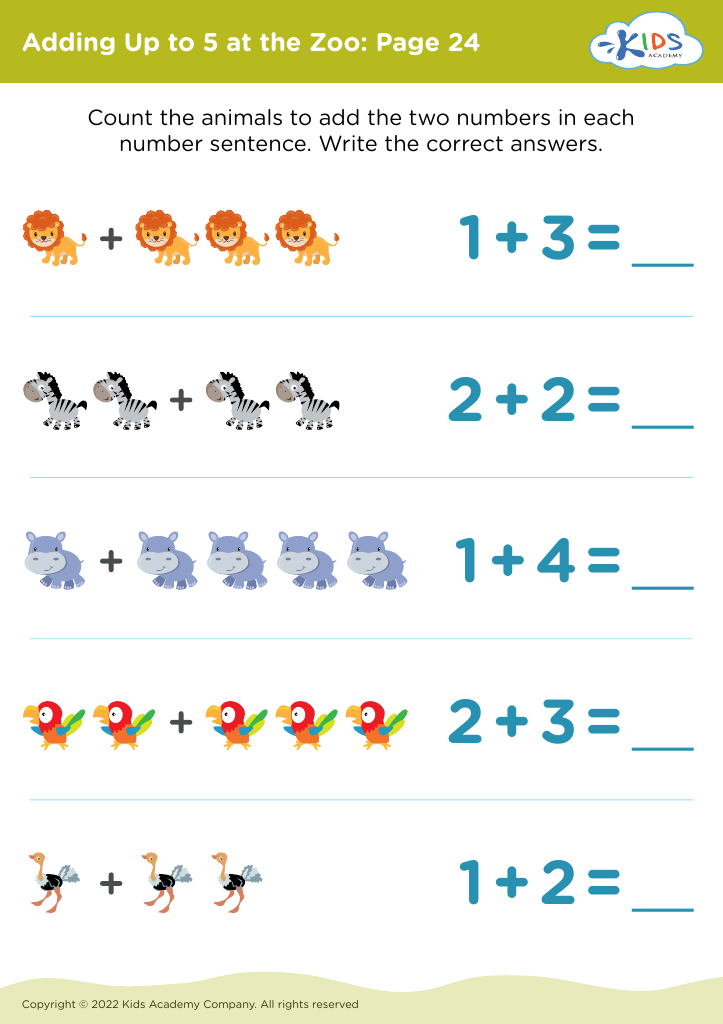
Adding Up to 5 at the Zoo: Page 24
Worksheet
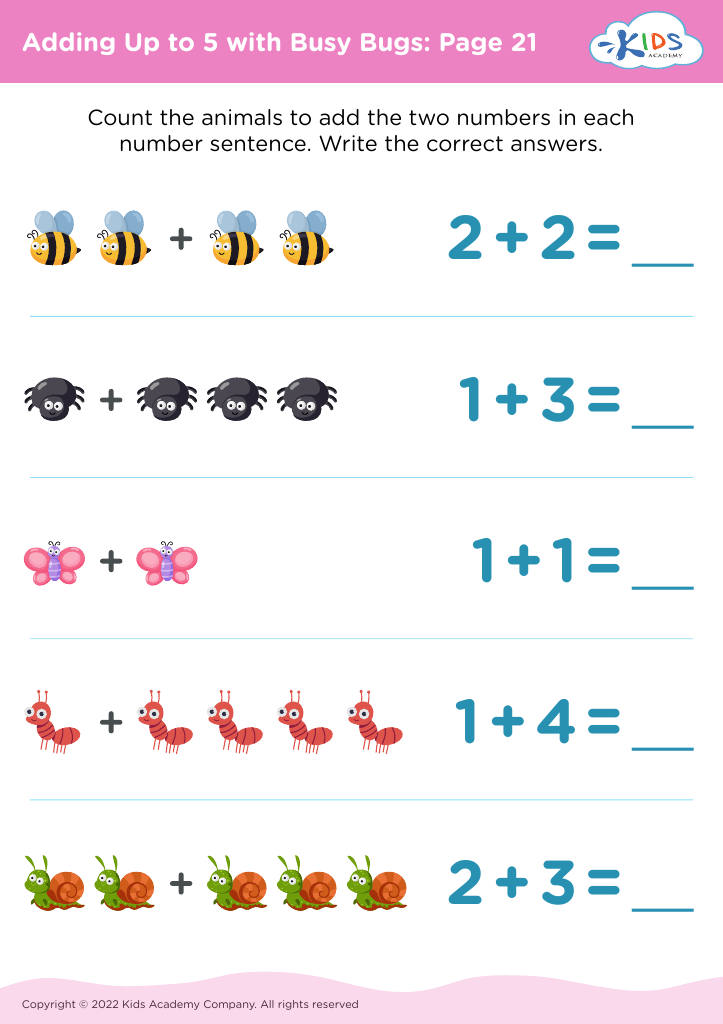
Adding Up to 5 with Busy Bugs: Page 21
Worksheet
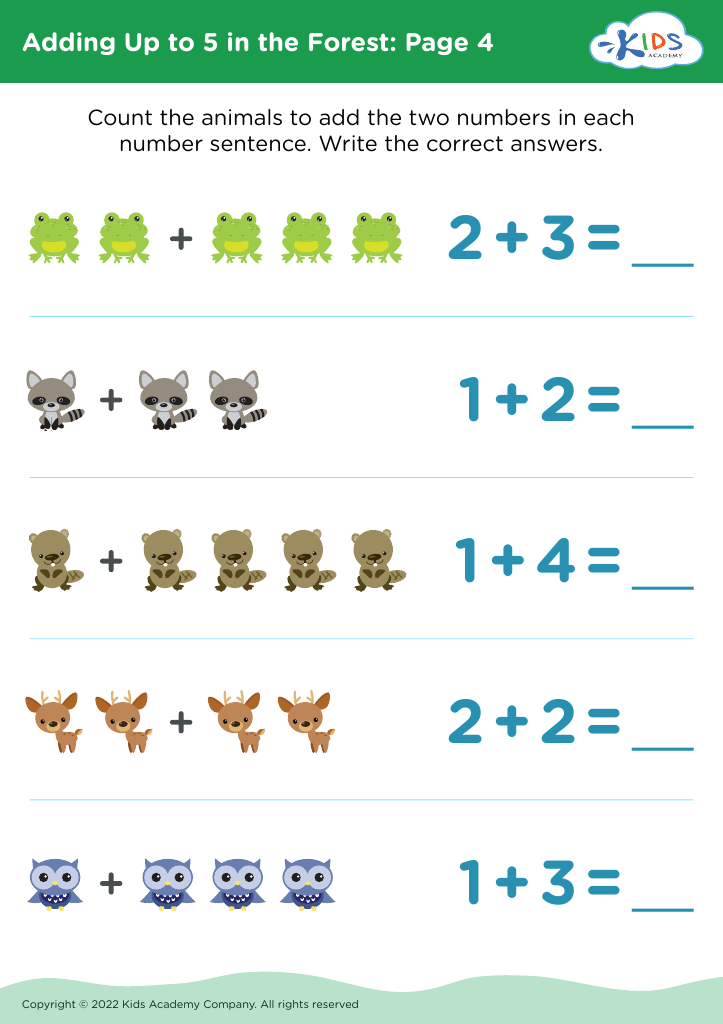
Adding Up to 5 in the Forest: Page 4
Worksheet
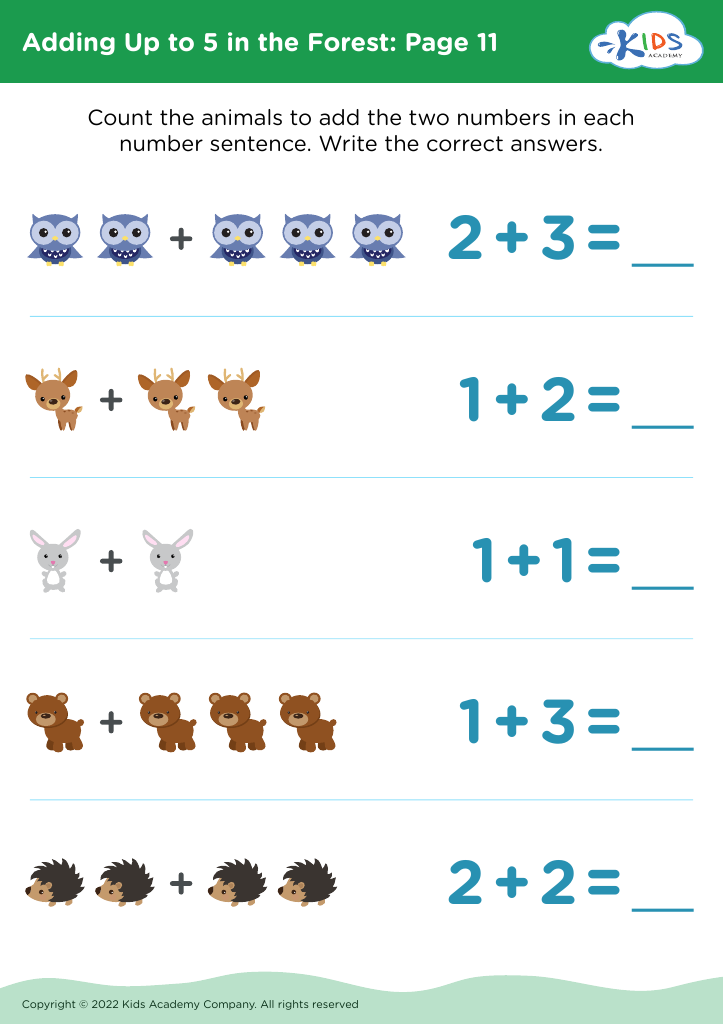
Adding Up to 5 in the Forest: Page 11
Worksheet
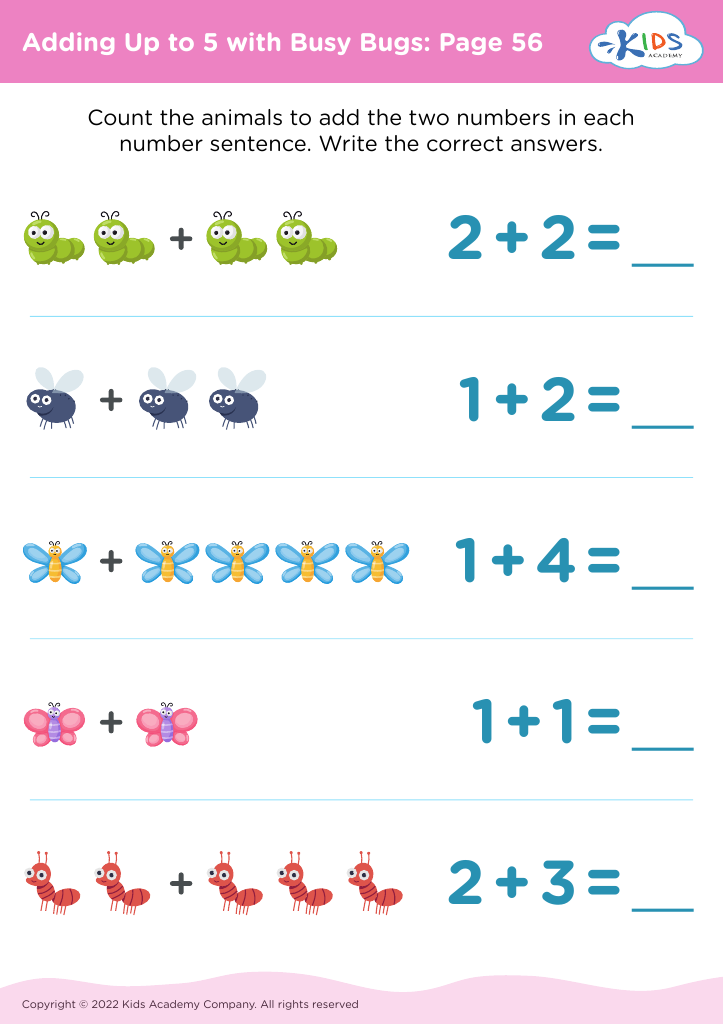
Adding Up to 5 with Busy Bugs: Page 56
Worksheet
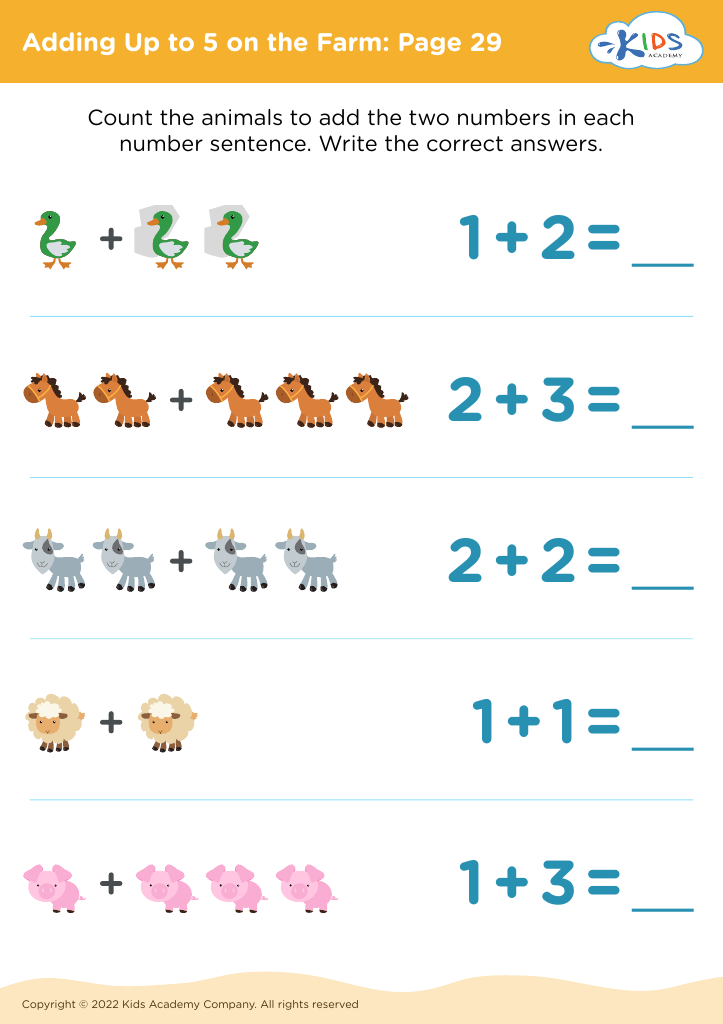
Adding Up to 5 on the Farm: Page 29
Worksheet
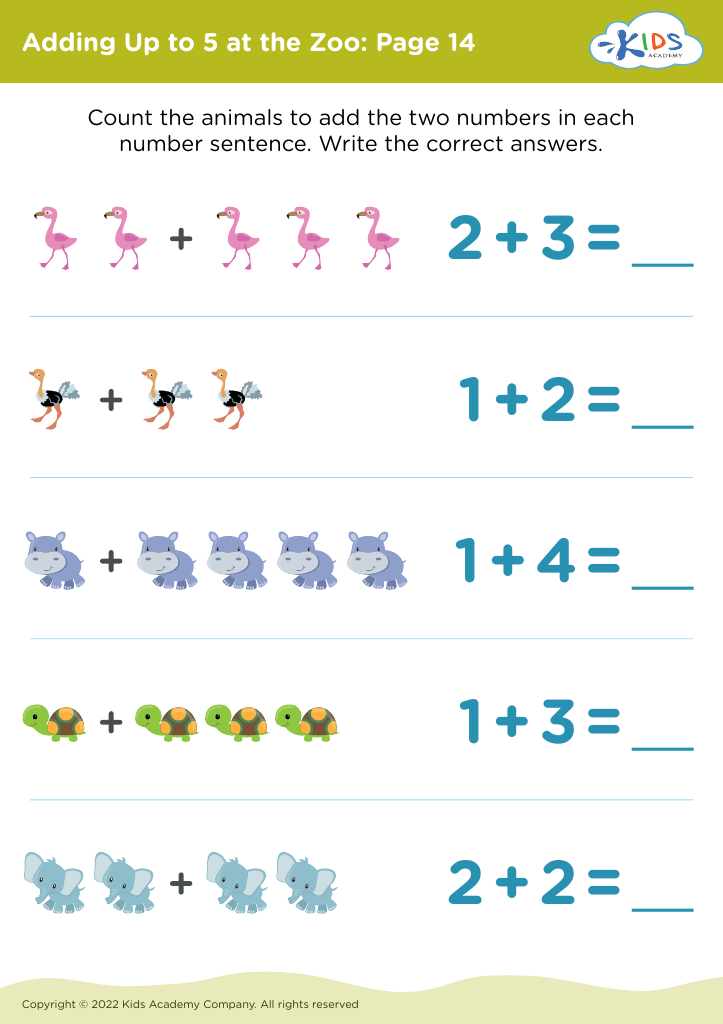
Adding Up to 5 at the Zoo: Page 14
Worksheet


Counting practice and adding up to 5 are vital foundational skills for 3-year-olds that parents and teachers should prioritize. At this age, children are highly curious and naturally eager to learn. Engaging them in counting activities enhances their cognitive development and lays the groundwork for future mathematical understanding. By practicing counting up to 5, young learners develop number recognition, which is crucial for their later success in more complicated math concepts.

Moreover, counting activities sharpen fine motor skills through hands-on experiences, such as threading beads or stacking blocks. These tactile activities encourage children to learn through play, making the process enjoyable and memorable. Additionally, counting helps foster language skills; as children verbalize numbers, they enhance vocabulary and improve their communication abilities.

Emphasizing small quantities like “up to 5” allows for a manageable learning curve, allowing young children to celebrate small successes, thus building their confidence and motivation. Finally, engaging parents in this process promotes a collaborative learning environment, reinforcing the idea that learning can occur anywhere, whether at home or in the classroom. Ultimately, nurturing early counting skills sets a positive tone for continued mathematical exploration and academic achievement.