Problem-Solving Skills Adding Up to 5 Worksheets for 3-Year-Olds - Page 2
37 filtered results
-
From - To
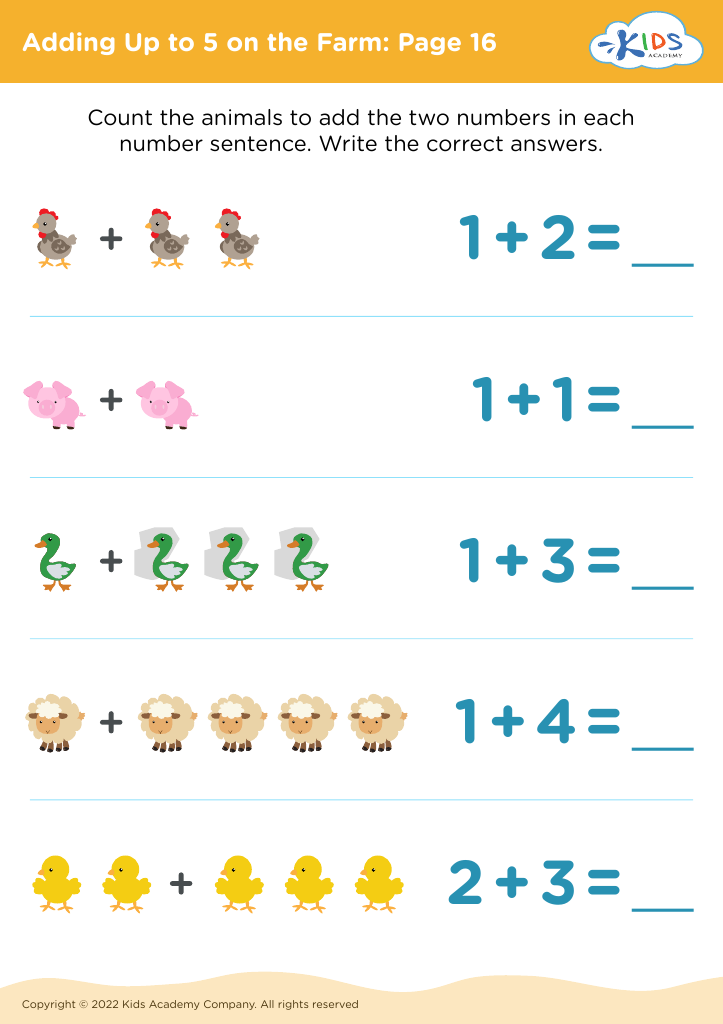
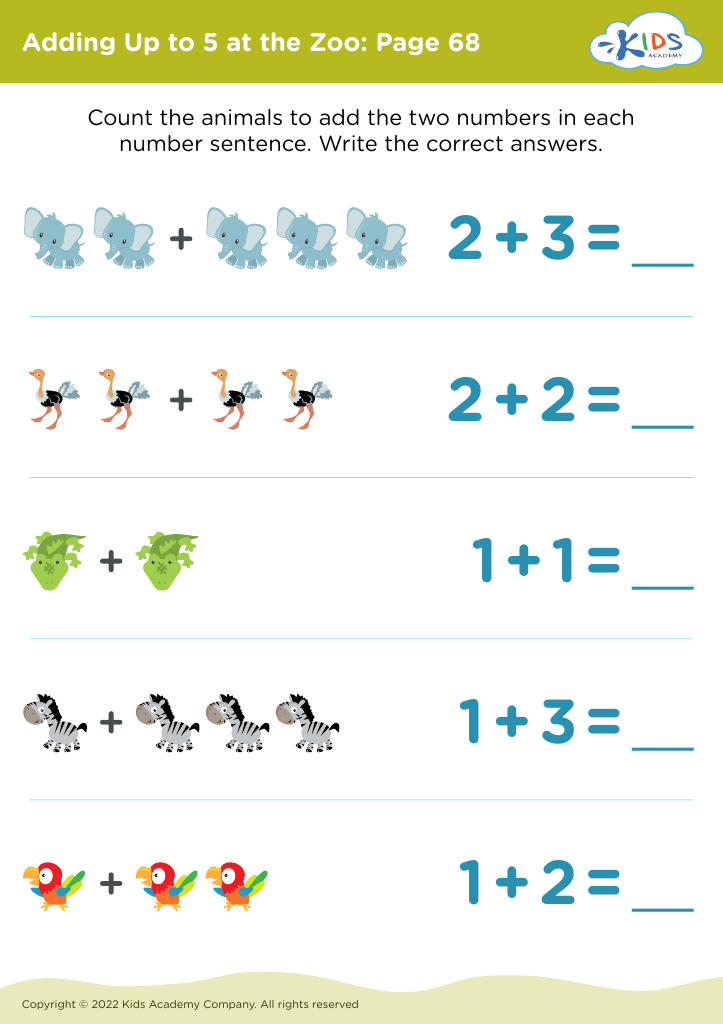
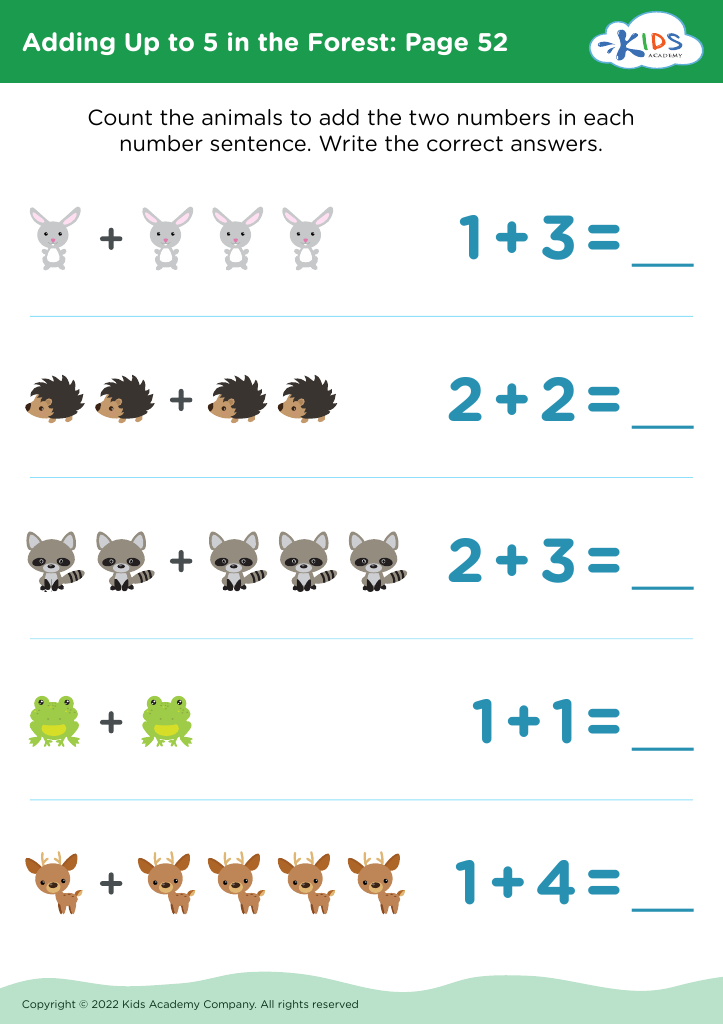
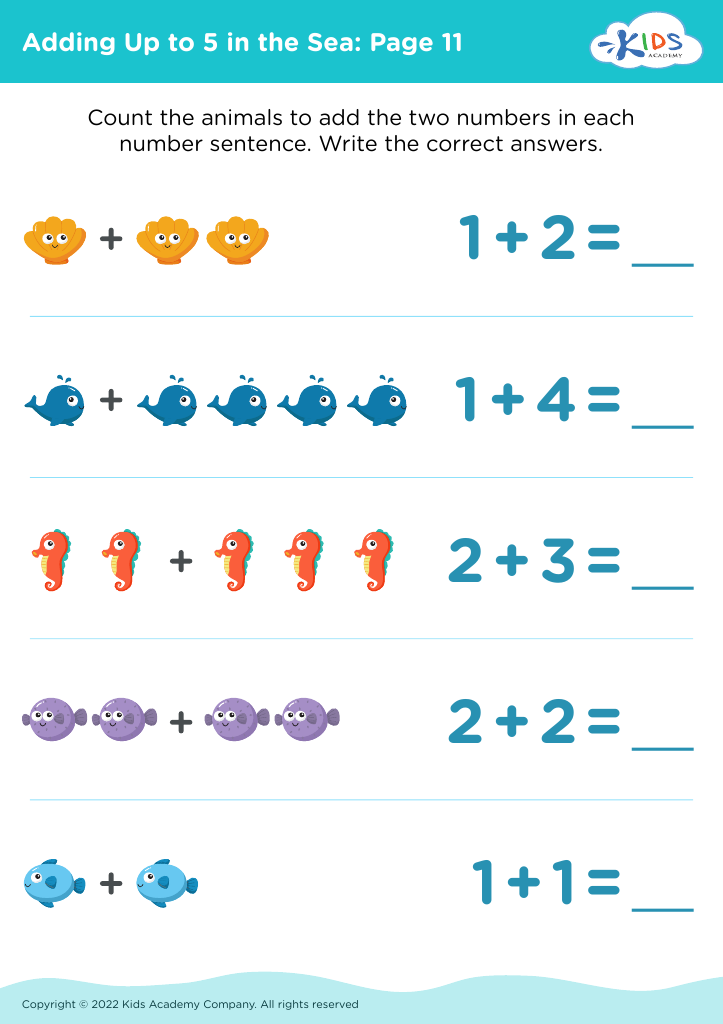
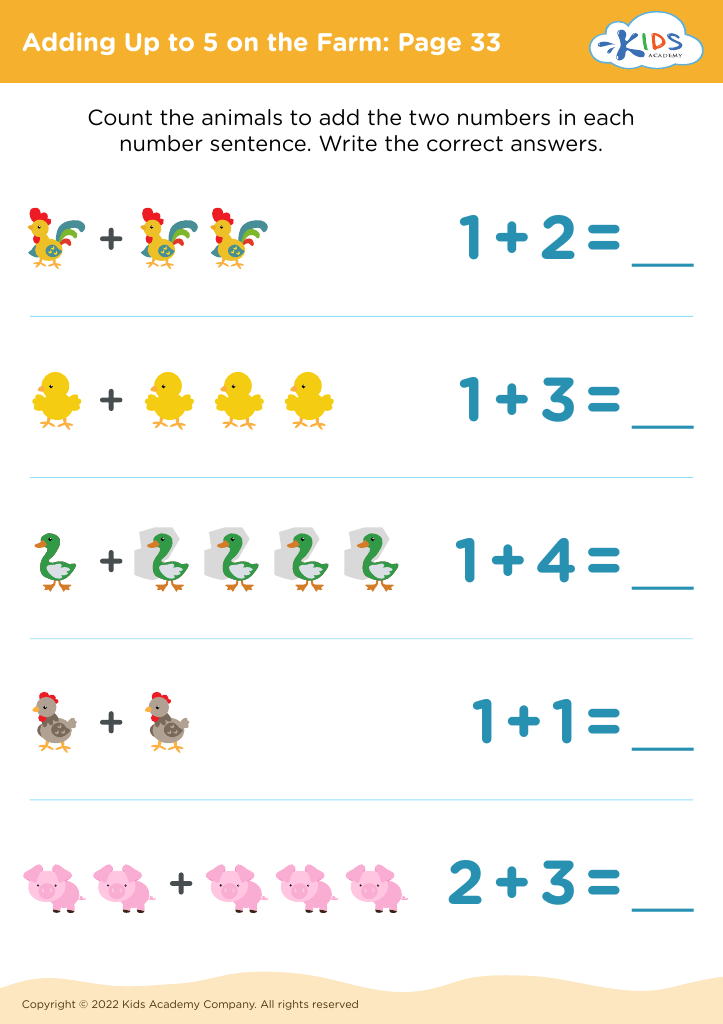
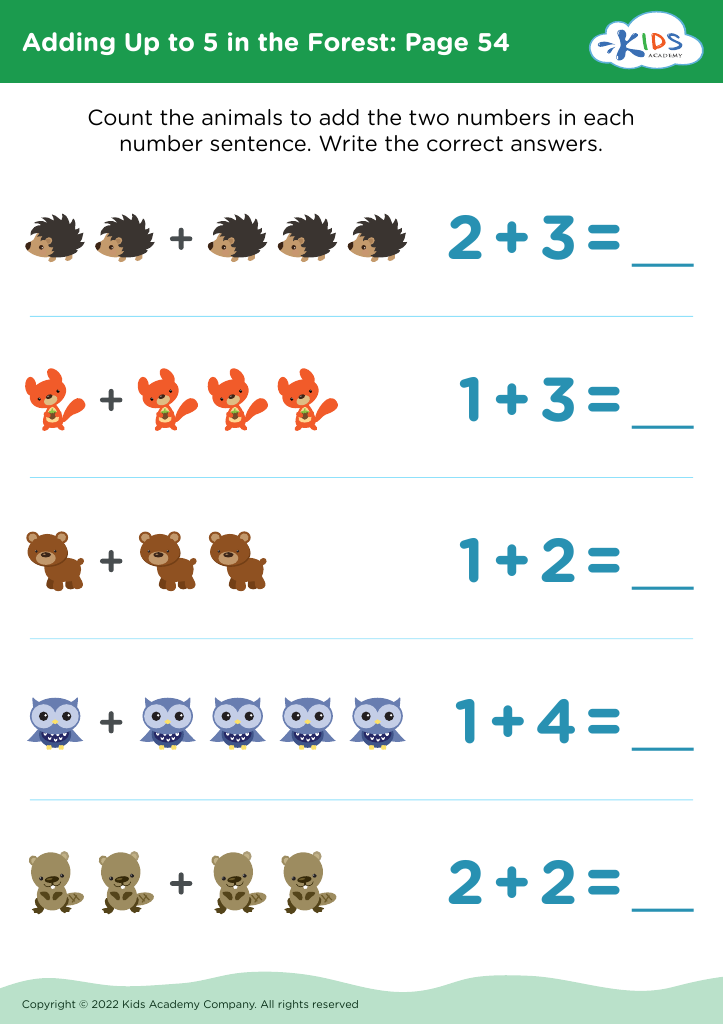
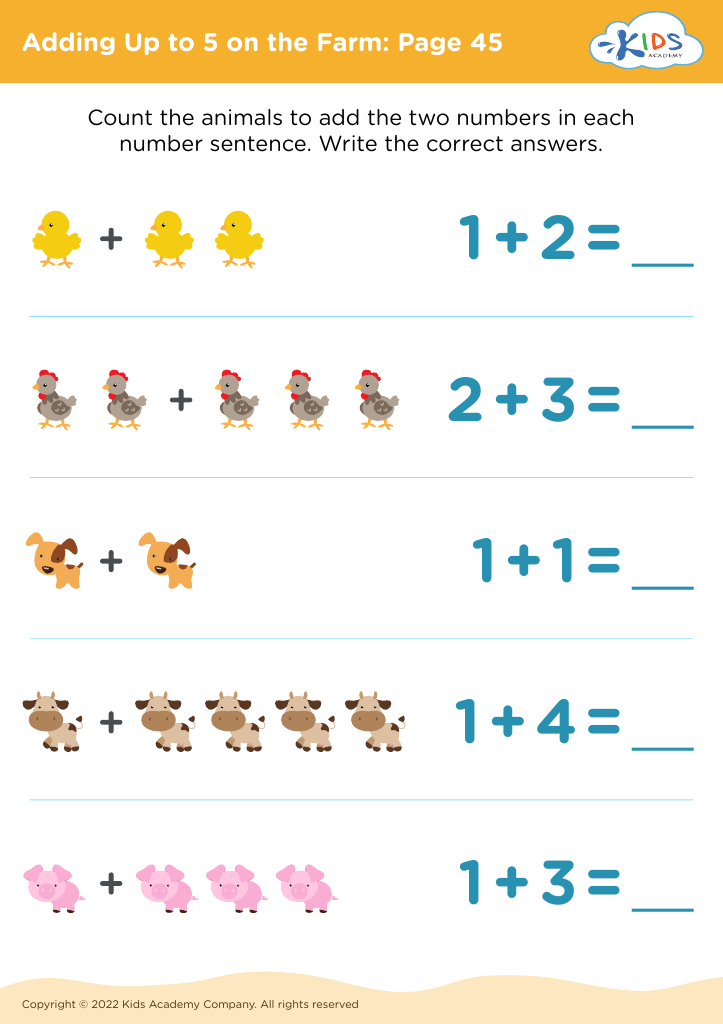
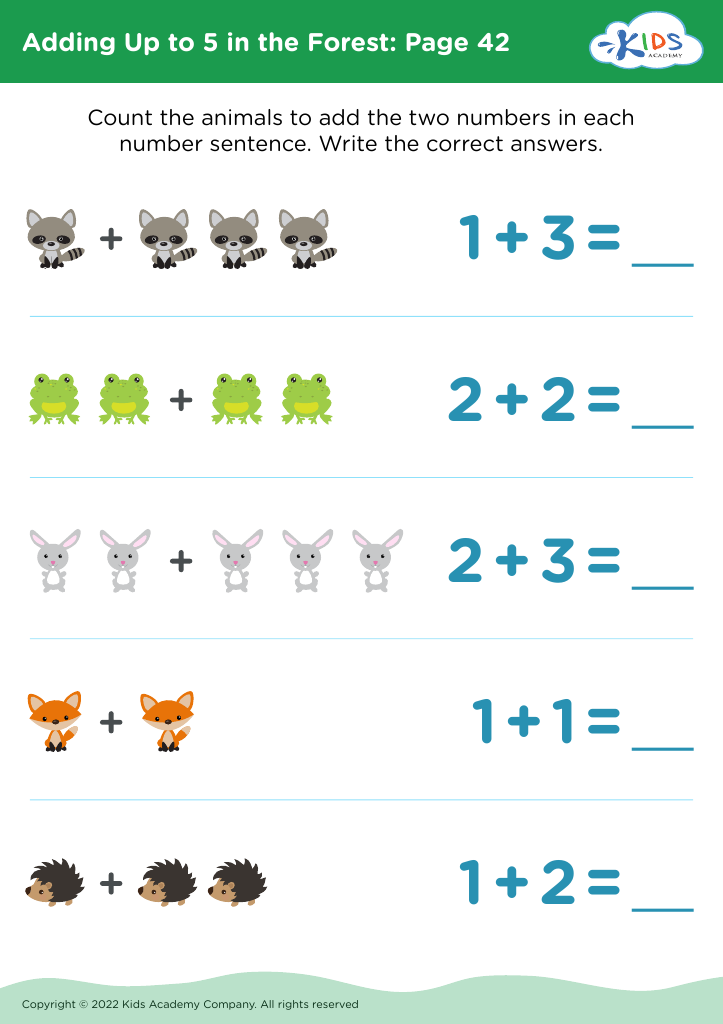
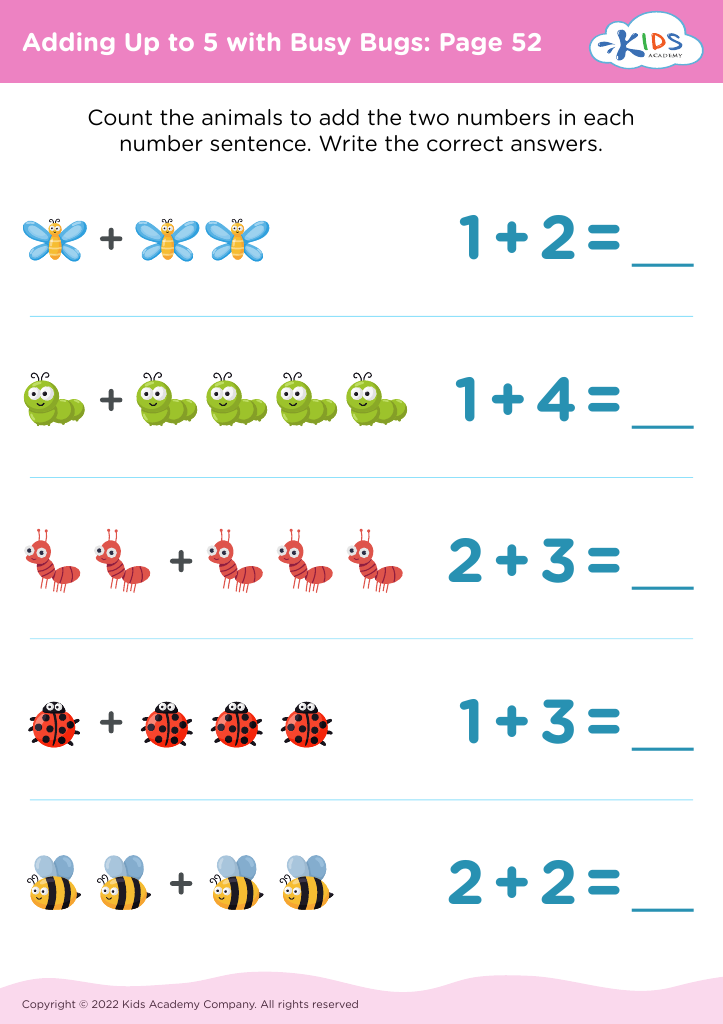





.jpg)


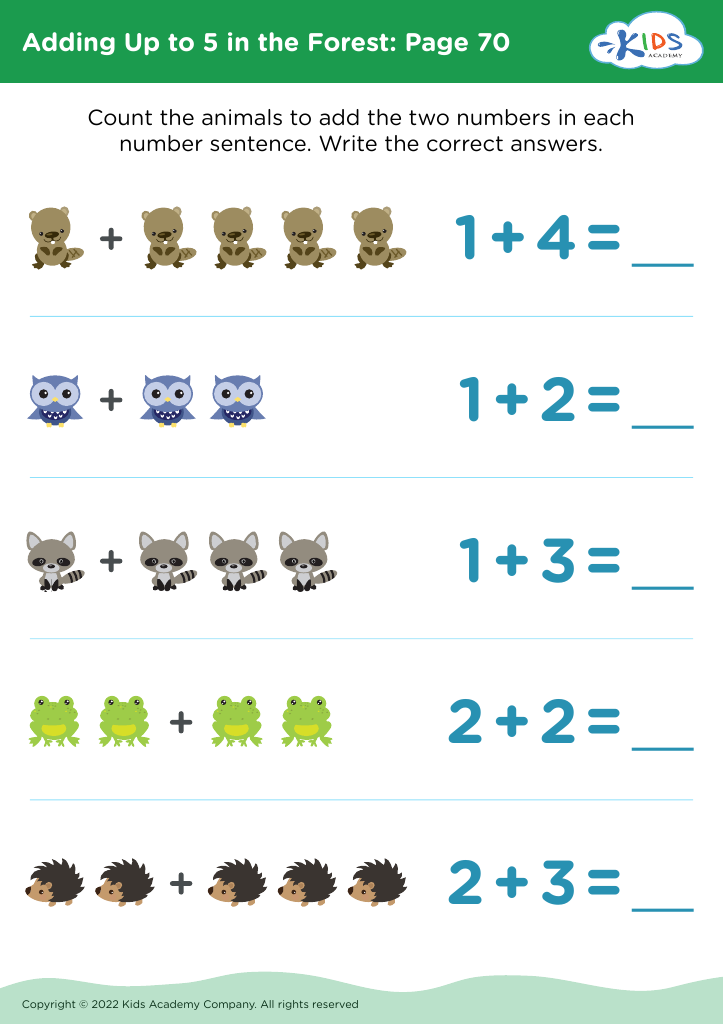
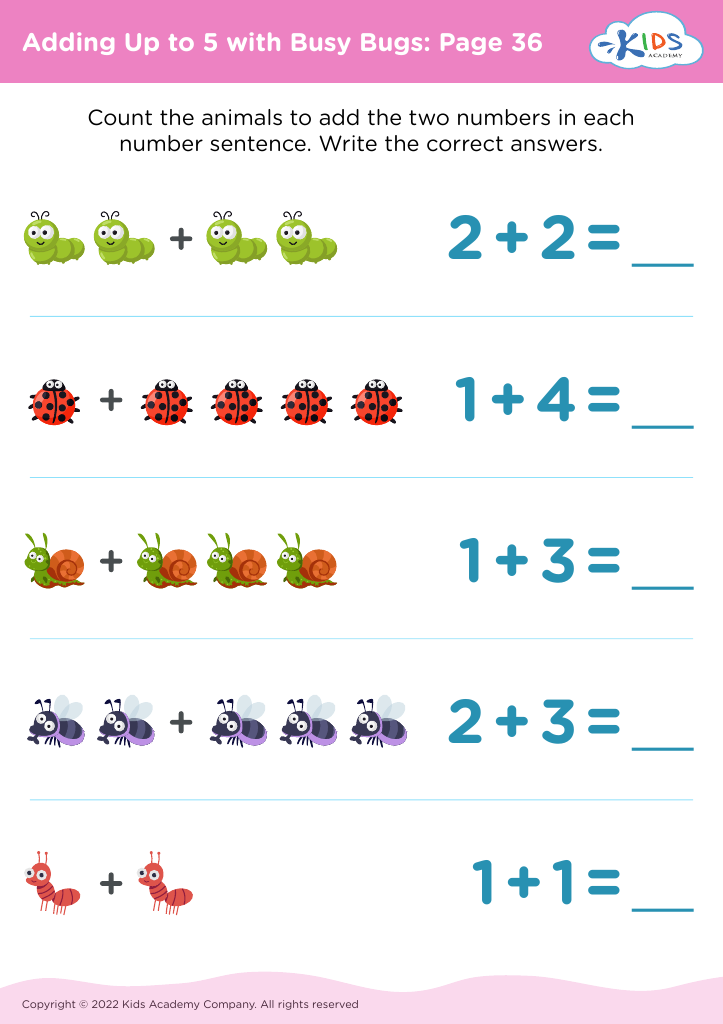
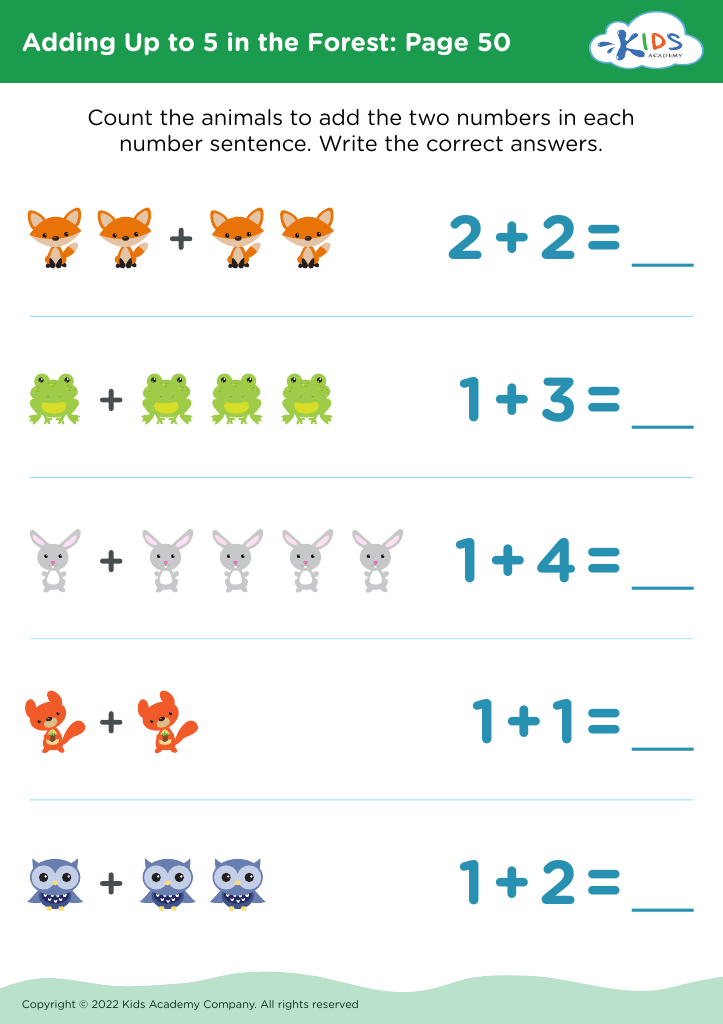
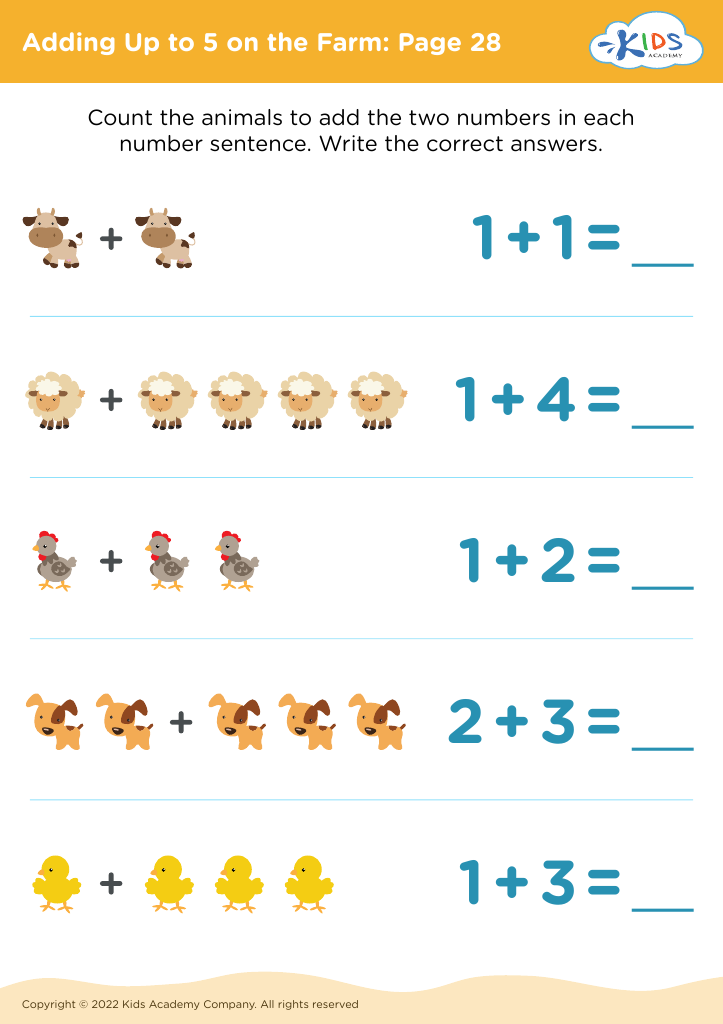
Problem-solving skills are crucial in the early development of 3-year-olds, laying a foundation for future cognitive and social-emotional growth. Fostering an ability to add numbers up to 5 is a key component of these skills. For parents and teachers, encouraging children to engage in simple addition can enhance their number sense, which is essential for later mathematical learning. At this age, children are highly receptive to learning through play. Incorporating counting games, puzzles, and interactive activities presents math in a fun, engaging manner, thus nurturing an early love for learning.
From a developmental perspective, solving addition problems helps in improving concentration, patience, and attention to detail. It also allows children to experience the joy of achievement, building confidence in their abilities. Moreover, working with numbers promotes logical thinking and an understanding of cause and effect, such as how combining two groups leads to a larger group.
Socially, collaborative problem-solving activities, like group counting games, encourage sharing, communication, and cooperative learning. This supports not only cognitive skill-building but also personal development by fostering empathy and teamwork. By prioritizing problem-solving skills, parents and teachers empower young learners with the tools they need for academic success and personal growth.








