Hand-eye Coordination Addition and Subtraction Word Problems Worksheets for 3-Year-Olds
3 filtered results
-
From - To
Introducing our engaging "Hand-eye Coordination Addition and Subtraction Word Problems Worksheets for 3-Year-Olds"! These specially designed worksheets seamlessly blend early math skills with essential hand-eye coordination activities. Little learners will enjoy solving captivating word problems while enhancing their fine motor skills through fun, interactive tasks. Every worksheet encourages critical thinking and problem-solving, allowing children to grasp basic addition and subtraction concepts in a playful context. Whether at home or in preschool, these resources support developmental growth and prepare young minds for future math adventures. Explore our printable worksheets today and watch your child's confidence soar as they enjoy learning through play!
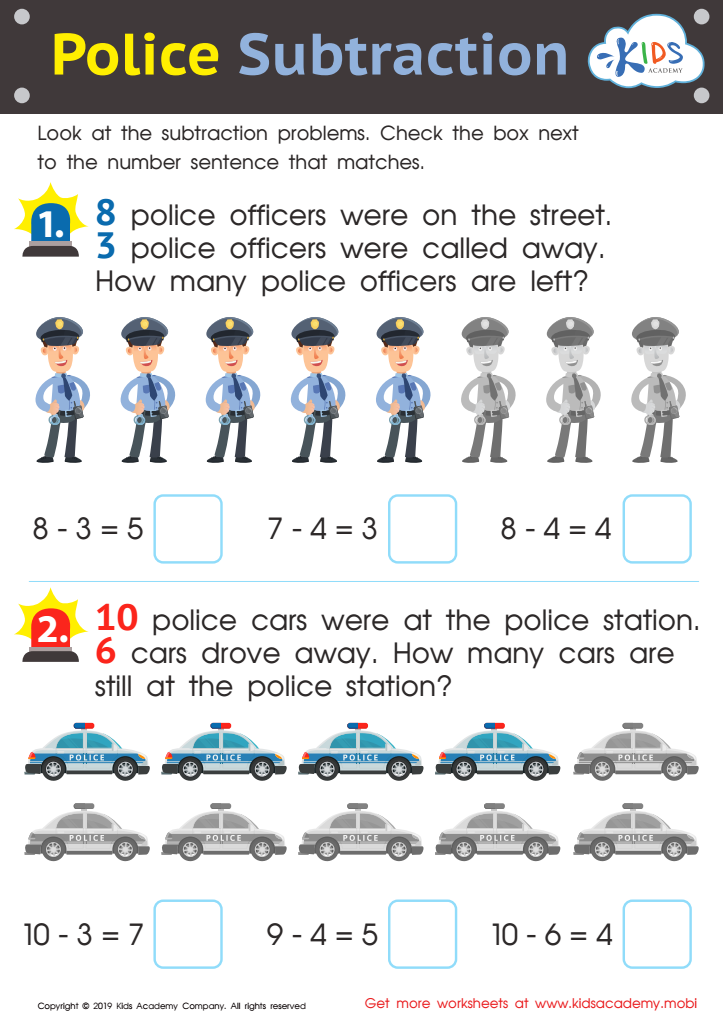
Police Subtraction Worksheet
 Assign to My Students
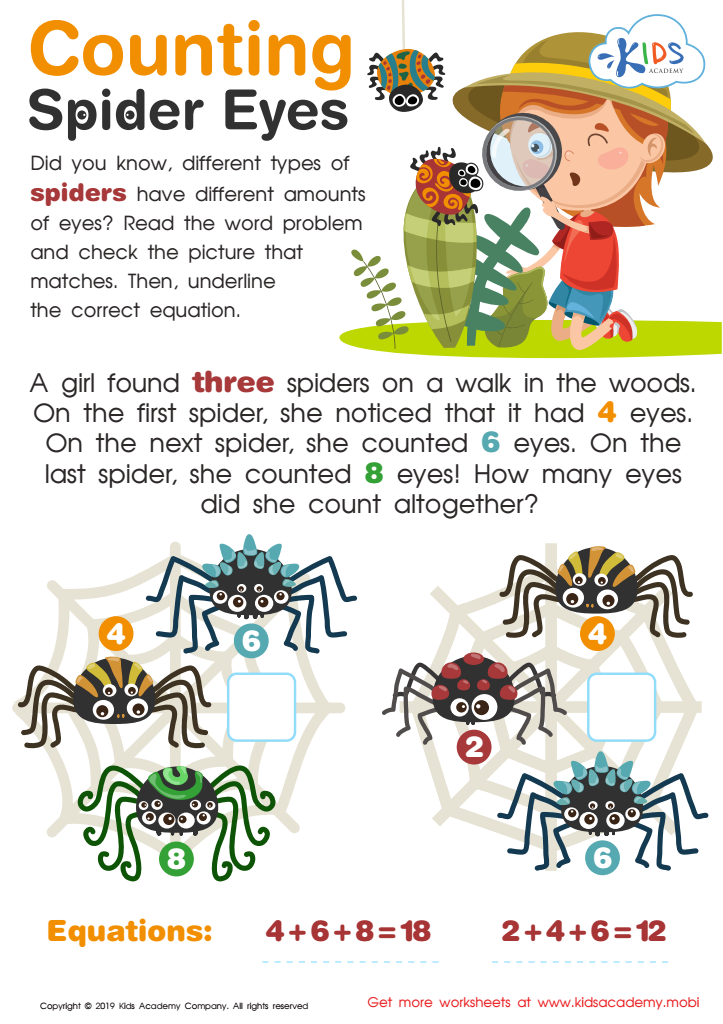
Counting Spider Eyes Worksheet
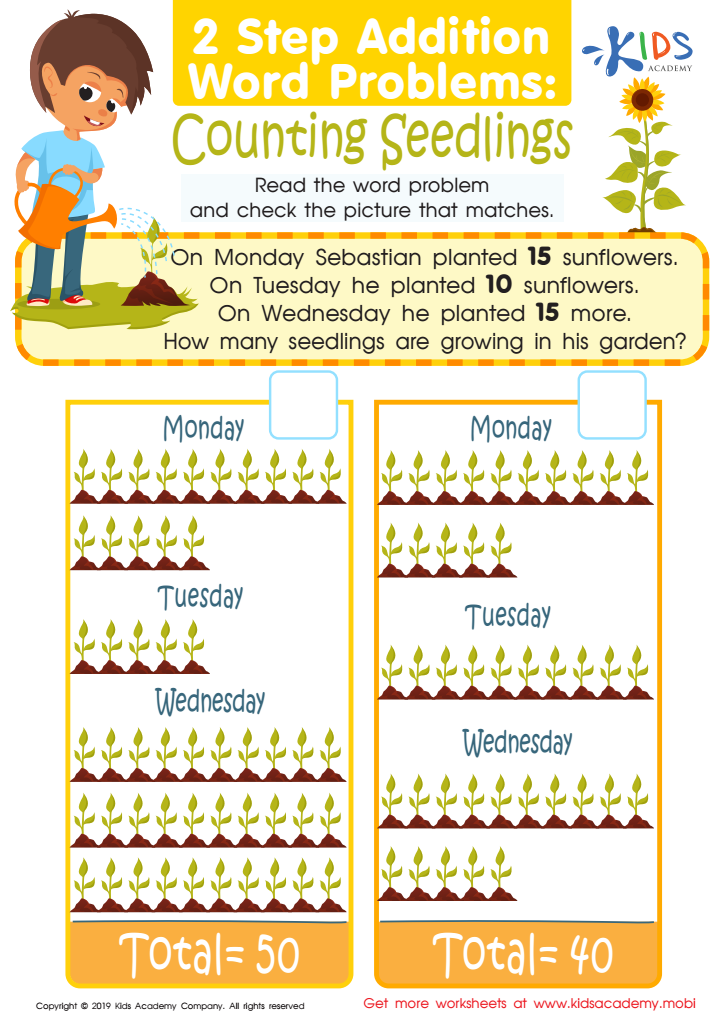
Counting Seedlings Worksheet








Hand-eye coordination is a crucial skill that impacts various areas of a child’s development, particularly in early mathematics. For 3-year-olds, engaging in addition and subtraction word problems enhances not only their arithmetic comprehension but also fosters fine motor skills and cognitive abilities. When parents or teachers incorporate activities that involve hand-eye coordination, such as using physical objects (like blocks or counters) to represent numbers in word problems, children are more likely to develop a deeper understanding of mathematical concepts.
By relating math to physical actions, children learn to visualize numbers, making the abstract nature of addition and subtraction more tangible. Additionally, this multisensory approach helps to keep young learners engaged and motivated. Early math skills set the groundwork for future learning; thus, fostering an interest and comfort with mathematics at such a young age can positively influence academic performance later on.
Moreover, when parents and teachers actively participate in these problems, it strengthens the child’s social and communication skills. It opens the door for discussions about problem-solving strategies and critical thinking, which are essential life skills. Investing time in these developmental activities is key to nurturing well-rounded, confident learners who are ready to tackle future academic challenges.