Mathematical reasoning Addition and Subtraction Word Problems Worksheets for 3-Year-Olds
5 filtered results
-
From - To
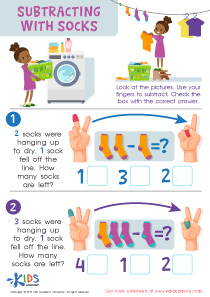
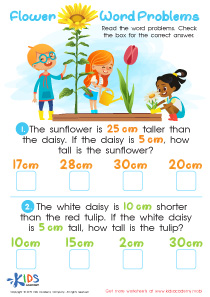
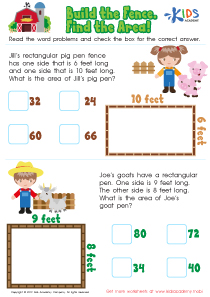
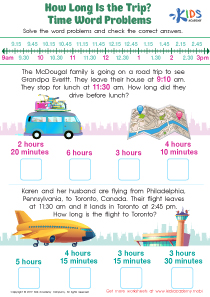
Discover our engaging Addition and Subtraction Word Problems Worksheets tailored specifically for 3-year-olds! Designed to foster early mathematical reasoning, these worksheets use relatable scenarios to introduce young learners to basic addition and subtraction concepts. Each activity encourages critical thinking and problem-solving skills, allowing children to visualize math in everyday situations. Delightful illustrations and age-appropriate language make learning fun and interactive! Whether at home or in the classroom, these worksheets provide an excellent foundation for a lifelong love of math. Empower your little ones to tackle simple challenges and build their confidence in numbers with our delightful and educational resources!
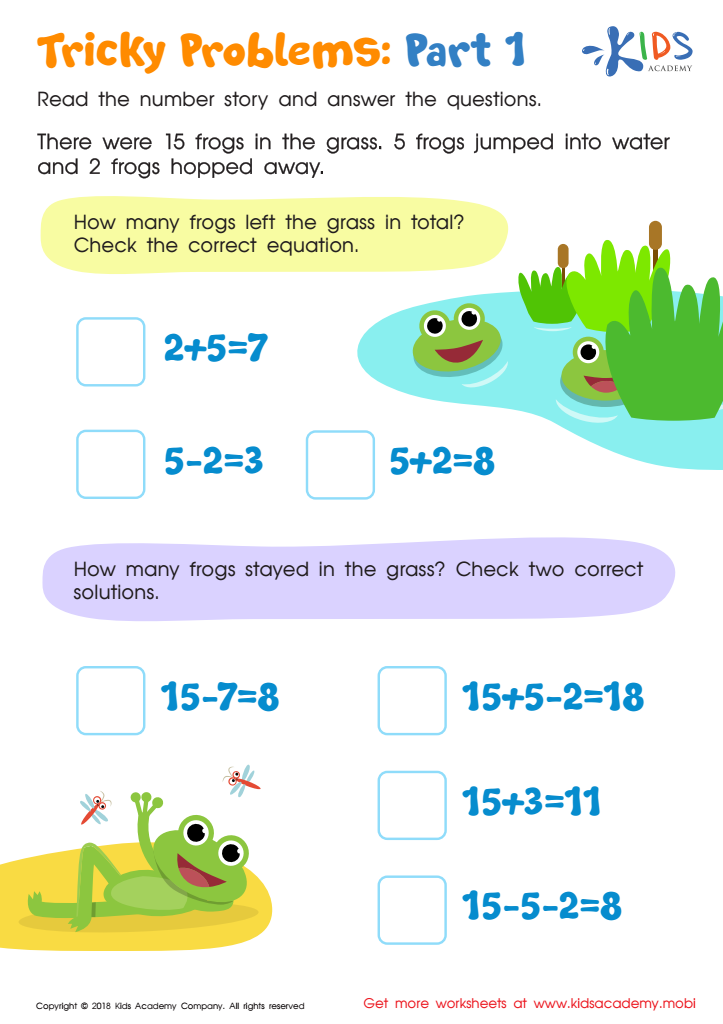
Tricky Problems Worksheet: Part 1
 Assign to My Students
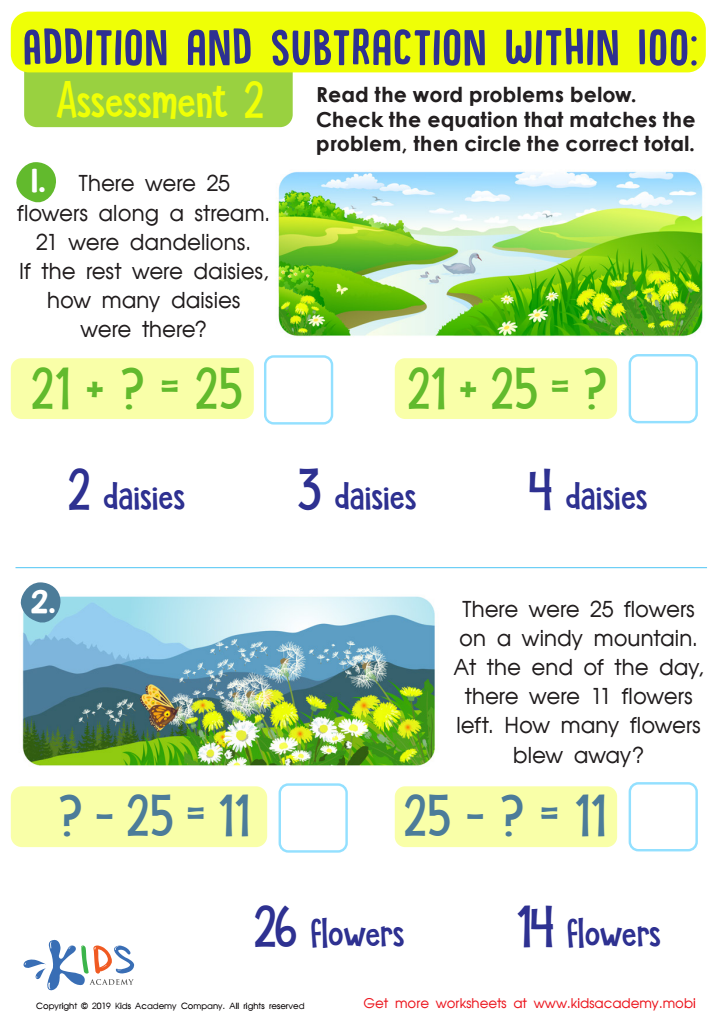
Assessment 2 Math Worksheet
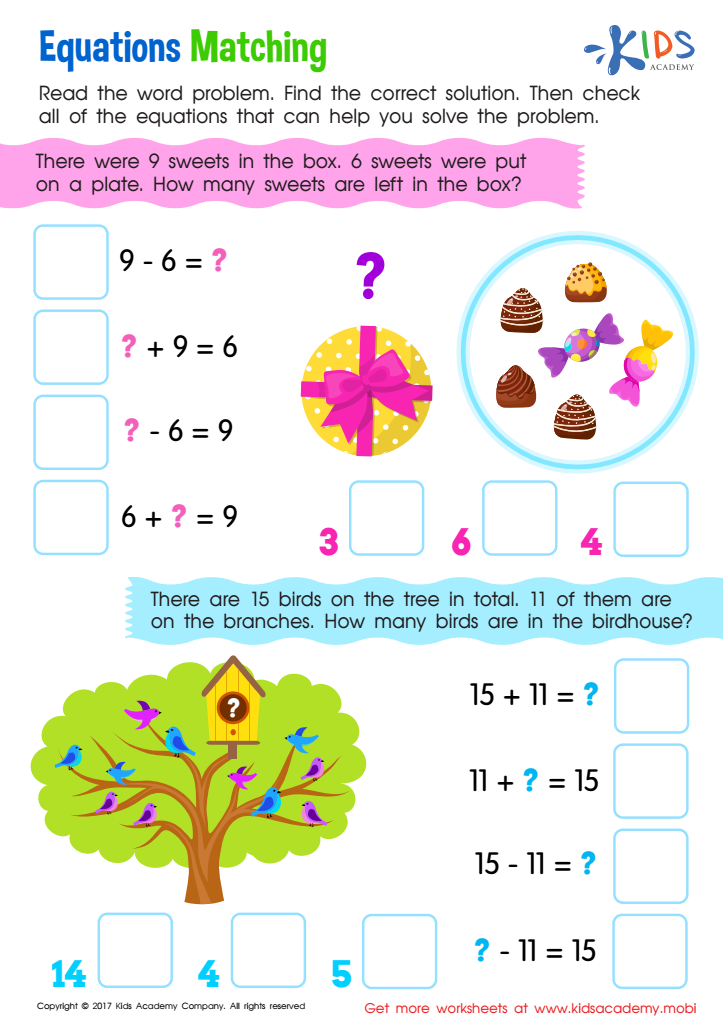
Equations Matching Word Problems Worksheet
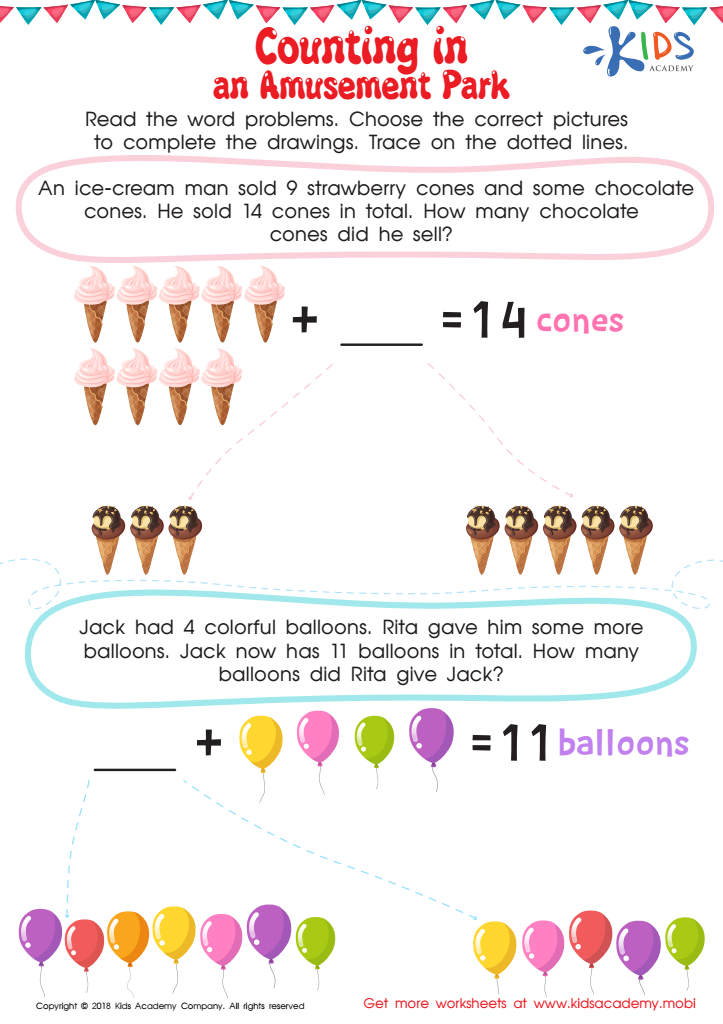
Counting in an Amusement Park Worksheet
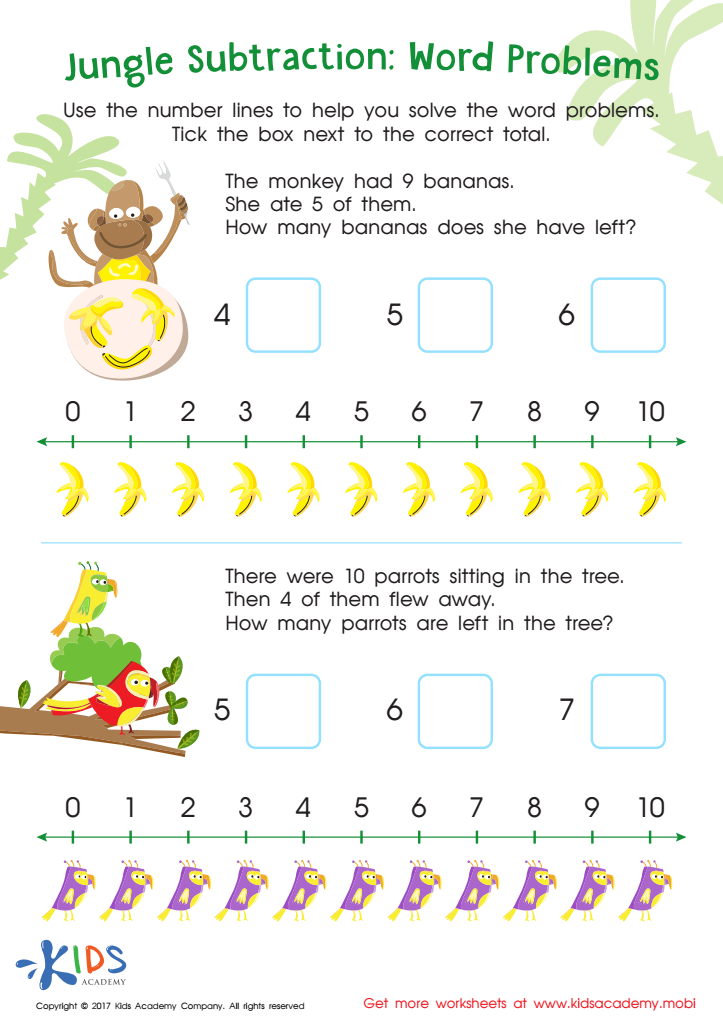
Jungle Subtraction Word Problems Substraction Worksheet








Parents and teachers should pay close attention to mathematical reasoning through addition and subtraction word problems for 3-year-olds, as it sets a strong foundation for future learning. At this stage, children begin to grasp basic mathematical concepts, which enhance their critical thinking and problem-solving skills. Engaging them in simple word problems helps them understand relationships between objects, quantity, and simple operations.
These activities foster cognitive development by encouraging children to think logically and make connections. When adults scaffold these learning moments, such as providing context in stories or using real-life scenarios, it cultivates curiosity and engagement. Word problems also promote language skills, enabling kids to articulate their thoughts and reasoning clearly.
Moreover, early exposure to math through language-rich scenarios prepares children for more complex concepts as they progress through school. Developing a positive attitude toward math in these formative years influences their confidence and willingness to tackle challenges later in life. Therefore, integrating mathematical reasoning into daily interactions and play is invaluable for nurturing a well-rounded early education, making it essential for parents and teachers to prioritize this aspect of learning.